Table of Contents >> Show >> Hide
- So… Can Meditation Reduce Anxiety?
- Why Meditation Helps Anxiety
- Which Type of Meditation Is Best for Anxiety?
- How to Meditate for Anxiety: A Simple Step-by-Step Routine
- Micro-Meditations: Calm Your Body in 60 Seconds
- Common Roadblocks (and How to Get Past Them Without Rage-Quitting)
- How to Build a Meditation Habit That Actually Sticks
- Safety Notes: When Meditation Isn’t the Whole Answer
- Real-Life Experiences: What Meditation for Anxiety Can Feel Like (About )
- Conclusion
- SEO Tags
Anxiety has a talent for showing up uninvitedlike a group chat that won’t stop pinging at 2 a.m. You might be trying to focus on school, work, relationships, or sleep, and your brain is busy running 37 “what if” tabs at once. Meditation won’t erase life’s stressors or turn you into a floating zen cloud, but for many people it can reduce anxiety symptoms, improve stress tolerance, and make worries feel less “sticky.”
In this guide, you’ll learn what the research actually says, which meditation styles help most with anxiety, and exactly how to practiceespecially when your mind is racing. We’ll keep it real, practical, and beginner-friendly. No incense required. (Unless you like incense. Then go off.)
So… Can Meditation Reduce Anxiety?
For many people, yesmeditation (especially mindfulness-based programs) is linked with small-to-moderate improvements in anxiety symptoms and psychological stress. Researchers have found that structured mindfulness meditation programs can help reduce anxiety over weeks, and benefits can persist when people keep practicing.
But here’s the honest version: meditation is a skill, not a switch. You don’t “win” meditation by feeling calm instantly. The real win is learning to notice anxious thoughts and body sensations without automatically getting dragged behind them like a shopping cart with one broken wheel.
What meditation can (and can’t) do
- Can help: reduce stress reactivity, interrupt rumination loops, improve emotional regulation, and build a steadier attention “muscle.”
- Can’t replace: professional treatment when anxiety is severe, persistent, or tied to trauma or panic that feels unmanageable.
- Works best when: practiced consistently in small doses, like brushing your teeth for your nervous system.
Why Meditation Helps Anxiety
Anxiety often lives in the future: “What if I mess up?” “What if something bad happens?” Mindfulness brings attention back to the present moment (the one where you are, in fact, still alive and reading this sentence). That shift alone can soften the intensity of anxious spirals.
1) It trains attention (so you’re not stuck on the worry channel)
Meditation is basically attention training. You practice focusing on an anchor (breath, sounds, body sensations), notice when your mind wanders, and gently return. Over time, you get better at catching the moment you’ve started doom-scrolling in your own thoughts.
2) It changes your relationship with thoughts
A huge part of anxiety is treating thoughts like facts. Mindfulness teaches “I’m having the thought that…” instead of “This is definitely true.” That tiny reframe can create space between you and the panic story your brain is trying to sell you.
3) It supports the body’s relaxation response
Anxiety is not only mentalit’s physical: faster breathing, tight chest, tense shoulders, stomach flips. Slow, steady breathing and mindful body awareness can signal safety to the nervous system. You’re not arguing with anxiety; you’re guiding your body out of red-alert mode.
Which Type of Meditation Is Best for Anxiety?
“Meditation” is a big umbrella. If anxiety is your main concern, these approaches tend to be the most helpful and easiest to start:
Mindfulness meditation (the classic)
You focus on an anchor (often the breath), notice thoughts and sensations, and return without judgment. It’s simplebut not always easyand it’s one of the most studied options for stress and anxiety.
MBSR (Mindfulness-Based Stress Reduction)
MBSR is a structured program (often 8 weeks) that combines mindfulness meditation, body scanning, and gentle movement. It’s commonly used as a complementary tool for stress and anxiety, and it’s a great option if you want a clear plan rather than improvising.
Body scan meditation (great for physical anxiety)
If your anxiety shows up as tight muscles, nausea, or a racing heart, body scans help you notice sensations without immediately labeling them as “danger.” You practice moving attention through the body slowly and kindlylike a check-in, not a search-and-destroy mission.
Loving-kindness meditation (helpful for self-criticism)
Some anxiety is fueled by harsh self-talk. Loving-kindness builds compassion and warmth toward yourself and others. It’s especially helpful if your worry comes with guilt, perfectionism, or “I’m not enough” energy.
How to Meditate for Anxiety: A Simple Step-by-Step Routine
You don’t need to sit perfectly still, empty your mind, or look like a statue. You just need a few minutes and a “good enough” plan.
The 5-minute “anxiety-friendly” meditation
- Set a timer: 5 minutes. Start small. Consistency beats intensity.
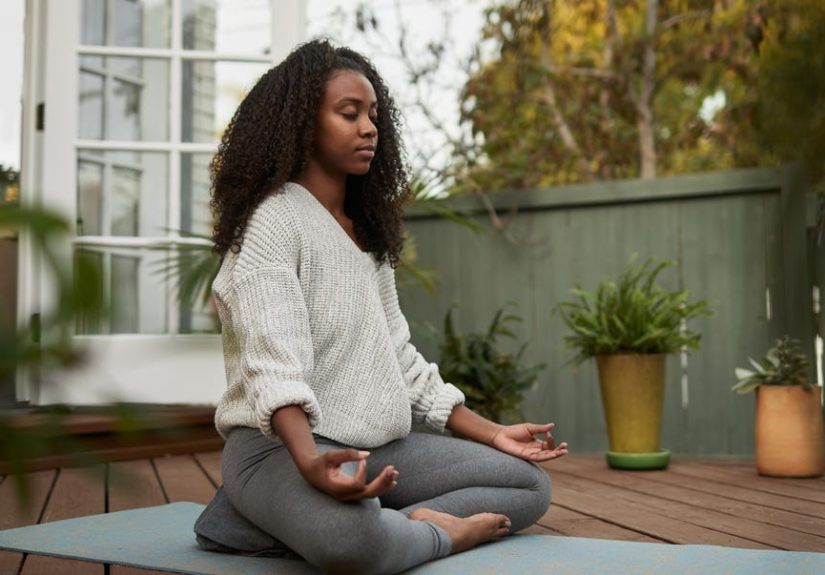
- Choose a posture: Sit in a chair with feet on the floor, or sit on a cushion. You can even lie down if sitting spikes anxiety.
- Pick an anchor: Breath at the nose, the rise/fall of your belly, or sounds in the room.
- Do a 30-second body settle: Unclench jaw. Drop shoulders. Let hands rest. Exhale slowly once or twice.
- Focus on the anchor: Notice one breath at a time. No special breathing required.
- When your mind wanders (it will): Label it softly: “thinking,” “worrying,” or “planning.”
- Return gently: Back to the breath. Not yanking. Guiding.
- End with one sentence: “For the next hour, I’ll do one thing at a time.”
What to do if meditation makes you more anxious
This happens to some people, especially early on or if you have trauma history. If focusing inward feels intense, try:
- Eyes open with a soft gaze.
- Sound anchor (listen to ambient noise) instead of breath.
- Shorter sessions (60–120 seconds) and build slowly.
- Movement mindfulness (slow walking, stretching) instead of sitting still.
Micro-Meditations: Calm Your Body in 60 Seconds
When anxiety is loud, long meditations can feel impossible. Micro-practices are like “emergency snacks” for your nervous systemsmall, fast, and surprisingly effective.
1-minute breath reset
- Inhale gently for about 4–5 seconds.
- Exhale for about 4–5 seconds.
- Repeat 5 cycles.
The goal isn’t to force calm. The goal is to give your body a steady rhythm to follow.
The “name it to tame it” practice
Quietly label what’s happening: “tight chest,” “racing thoughts,” “worrying,” “urge to fix everything right now.” Naming is not denialit’s clarity. And clarity lowers the volume.
Mindful grounding (no mysticism, just senses)
If you feel spun out, anchor in the room: feel your feet, notice the temperature of the air, listen for the farthest sound you can hear. Anxiety hates being dragged back into the present because it loses its dramatic soundtrack.
Common Roadblocks (and How to Get Past Them Without Rage-Quitting)
“I can’t stop thinking.”
Good news: you’re not broken. Meditation is not “no thoughts.” It’s noticing thoughts and returning. Wandering is part of the workoutlike reps at the gym. Every return is a rep.
“I don’t have time.”
Start with 2 minutes. Attach it to something you already do: after brushing your teeth, before your first class, or right after you plug in your phone at night. Tiny habit, big payoff.
“I’m doing it wrong.”
If you sat down and paid attention on purposeeven for 30 secondsyou did it right. There’s no meditation police. (And if there were, they’d probably be too busy meditating to arrest you.)
“My anxiety feels physicallike panic.”
Start with body-based methods: slow breathing, hands on belly, or a brief body scan. If panic attacks are frequent or intense, consider pairing meditation with professional support such as cognitive behavioral therapy (CBT) or other evidence-based care.
How to Build a Meditation Habit That Actually Sticks
The biggest mistake beginners make is going from “no meditation” to “I will become a monk by Monday.” Try this instead:
A simple 2-week plan
- Days 1–3: 2 minutes daily. Focus on “showing up.”
- Days 4–7: 5 minutes daily. Add soft labeling: “thinking,” “worrying,” “planning.”
- Days 8–10: 7 minutes daily. Try one body scan per week.
- Days 11–14: 10 minutes daily. Experiment with loving-kindness once.
Use “tiny proof” to motivate your brain
Keep a simple note: “Minutes meditated today: ____.” That’s it. Seeing your consistency is motivating, and it shifts meditation from “mood-based” to “identity-based”: you’re the kind of person who practices.
Safety Notes: When Meditation Isn’t the Whole Answer
Meditation is generally safe, but it isn’t universally comfortable. Sometimes sitting quietly can bring up strong emotions, distressing memories, fear, or discomfortespecially for people with trauma histories or severe anxiety. If meditation reliably makes you feel worse, scale back, switch to grounding or movement-based mindfulness, and consider talking with a qualified mental health professional.
Also, if anxiety is interfering with school, sleep, relationships, or daily functioning, you deserve more support than a DIY approach. Evidence-based treatments like psychotherapy (including CBT and related approaches) and, when appropriate, medication can be very effective. Meditation can be a powerful complementbut you don’t have to white-knuckle your way through anxiety alone.
Real-Life Experiences: What Meditation for Anxiety Can Feel Like (About )
Because anxiety is personal, meditation experiences vary. Below are a few realistic, anonymized scenarios that reflect what many people commonly report when they start meditating for anxiety. Think of these as “this might happen” examplesnot a guarantee, and definitely not a test you can fail.
Experience #1: The “My Brain Got Louder” Phase. A lot of beginners sit down to meditate and immediately think, “Wow, my mind is chaos.” But here’s the twist: your mind was already doing that. Meditation just turned the lights on. One person might notice that the first week feels like standing next to a highway of thoughtsfast, noisy, relentless. They assume it’s a bad sign, quit, and conclude meditation “doesn’t work.” Another person hears the same mental highway and learns one skill: gently returning. By week two, the thoughts still show up, but they’re less convincing. Not quieter yetjust less bossy.
Experience #2: The “Anxiety Lives in My Body” Discovery. Someone who experiences anxiety mainly as stomach tension or a tight chest might try breath-focused meditation and feel uncomfortable at first. They switch to a body scan with eyes open, noticing sensations like “tight,” “warm,” “buzzing,” without labeling them as danger. Over time, they discover that sensations rise and fall. That realization can be huge: “I don’t have to panic because my chest feels tight. I can observe it, breathe, and let it change.” The anxiety doesn’t vanish, but it stops feeling like an emergency every single time.
Experience #3: The “I’m Not CalmBut I’m Not Spiraling” Win. Meditation often helps in a subtle way. Picture someone who usually spirals for an hour after a stressful text. After a few weeks of practice, they still feel anxious when the text arrives, but the spiral shrinks from an hour to 20 minutesand they recover faster. That’s not nothing. That’s nervous-system progress. They might describe it like this: “I still have anxiety, but it doesn’t hijack my whole afternoon.”
Experience #4: The “Compassion Changed Everything” Surprise. For some people, the most powerful part isn’t the breathit’s learning to be kinder to themselves. They notice how often they think, “What’s wrong with me?” Loving-kindness practice feels awkward at first (as expected). But repeating simple phrases like “May I be safe. May I be steady. May I be kind to myself” can soften shame and self-criticism, which are often gasoline for anxiety. The result isn’t constant calm. It’s a more supportive inner voiceone that helps them cope when anxiety shows up.
The common thread in these experiences is not perfection. It’s repetition. Meditation works the way physical training works: you don’t get stronger during the push-upyou get stronger because you keep practicing, resting, and practicing again. If you’re looking for a sign to start small and stay consistent, this is it.
Conclusion
Meditation can reduce anxiety for many people, especially when practiced consistently and paired with realistic expectations. Start with a short, simple routine, use micro-meditations when anxiety spikes, and choose a style that matches how anxiety shows up for youthoughts, body sensations, or self-criticism. If anxiety feels overwhelming or gets worse with meditation, adjust the approach and consider getting professional support. Calm is not a personality trait. It’s a skill you can practice.