Table of Contents >> Show >> Hide
- So, Can You Laminate Your Medicare Card?
- Why Laminating a Medicare Card Is Not Recommended
- What Is the Best Way to Protect a Medicare Card?
- Original Medicare vs. Medicare Advantage: Which Card Do You Carry?
- What Information Is on a Medicare Card?
- How to Protect Your Medicare Number
- What If Your Medicare Card Is Lost, Damaged, or Stolen?
- Common Myths About Laminating a Medicare Card
- The Smartest Answer: Protect It, Don’t Laminate It
- Real-World Experiences People Commonly Have With Medicare Cards
- Conclusion
- SEO Tags
If you just got your red, white, and blue Medicare card and your first instinct was, “I should laminate this before it turns into a sad little paper napkin,” you are not alone. Medicare cards are important, they live hard lives in wallets and purses, and they somehow seem to attract bent corners like magnets attract paper clips. So the question makes perfect sense: can you laminate your Medicare card?
The practical answer is no, you really shouldn’t. While lamination sounds like a smart way to protect the card from wear and tear, it can create problems that are bigger than the coffee stain you were trying to avoid. A laminated Medicare card may be harder to inspect, harder to read, and more likely to interfere with features meant to help verify the card. In other words, the laminator is not the hero of this story.
This guide explains why laminating your Medicare card is a bad idea, what to do instead, how to protect your Medicare number, and what steps to take if your card is damaged, faded, lost, or stolen. We will also cover the difference between using an Original Medicare card and a Medicare Advantage plan card, because yes, America loves a system with bonus cards.
So, Can You Laminate Your Medicare Card?
If you are asking whether it is a smart move, the answer is no. Medicare guidance points people toward protecting the card, not sealing it in plastic forever. The better strategy is to keep it readable, removable, and easy to replace if needed.
Why does that matter? Because your Medicare card is more than just proof that you are enrolled. It contains your Medicare number, your name, and information about whether you have Part A, Part B, or both. That number is sensitive. It is not just another membership card you toss next to an old grocery rewards tag and a mystery punch card from a sandwich shop you visited once in 2019.
Think of your Medicare card as a working document. It needs to stay intact, legible, and acceptable when you need care. Once you laminate it, you lose flexibility. If the card gets trapped in plastic with glare, bubbles, curling edges, or damaged print, the “protection” starts to look a lot like sabotage.
Why Laminating a Medicare Card Is Not Recommended
1. It can interfere with security and verification
Official Medicare and related government guidance focuses heavily on protecting your Medicare number and preserving the card as an authentic document. Laminating can make it harder to inspect the card properly and may affect features used to confirm that the card is legitimate. That is the big issue. A Medicare card is not meant to become a tiny diner menu sealed in plastic.
2. It may cause readability problems
Plastic sounds protective, but lamination can add glare, distortion, or bubbling over time. If the card is already slightly worn, sealing it may make the print look worse instead of better. That can be frustrating when you are checking in at a doctor’s office, filling a prescription, or trying to read the card in a hurry.
3. It can make future updates more annoying
If you ever need a replacement card because your information changes, your card becomes faded, or you switch how you use your coverage, a laminated card becomes one more thing to replace instead of one more thing to protect. Medicare cards are replaceable, but the goal is to avoid extra hassle, not schedule it for yourself in advance.
4. It solves the wrong problem
Most people want to laminate their Medicare card because they are trying to protect it from ordinary wallet life: friction, bending, moisture, and fading. Fair enough. But lamination is not the best answer. A removable plastic sleeve, a card holder, or safe storage gives you protection without turning the card into a permanent arts-and-crafts project.
What Is the Best Way to Protect a Medicare Card?
If your goal is to keep your Medicare card in good shape, there are smarter options than lamination.
Use a removable plastic sleeve
A clear, removable sleeve is usually the best choice. It shields the card from dirt, scuffing, and bent corners while still allowing the card to be taken out if someone needs to inspect it. It is the “jacket weather” solution for your card: enough protection, no overcommitting.
Store it carefully in your wallet
Do not jam your card into an overstuffed wallet behind six expired coupons, three receipts, and the business card of a plumber you never called. Put it in a flat section where it will not be bent every time you sit down.
Keep it in a safe place when you do not need it
If you have a Medicare Advantage plan, you usually use your plan card for services, not your Original Medicare card. In that case, keep the Medicare card in a safe place at home rather than carrying it around unnecessarily.
Use official replacement and print options when needed
If your card becomes damaged or too faded to use, do not try to rescue it with tape, markers, or a laminator. Log in to your Medicare account to print an official copy or request a replacement card. Clean and simple beats clever and chaotic.
Original Medicare vs. Medicare Advantage: Which Card Do You Carry?
This is where a lot of confusion shows up.
If you have Original Medicare, you should carry your Medicare card when you are away from home and show it when you receive services. If you also have a drug plan or Medigap policy, carry those cards too.
If you have a Medicare Advantage plan, you generally use your plan’s ID card to get services, not your Medicare card. Your Medicare card should still be kept in a safe place because you may need it later if you switch plans or return to Original Medicare.
This is one of the best reasons not to laminate the Medicare card in the first place. For many people on Medicare Advantage, the original card is more of a protected backup document than an everyday wallet card.
What Information Is on a Medicare Card?
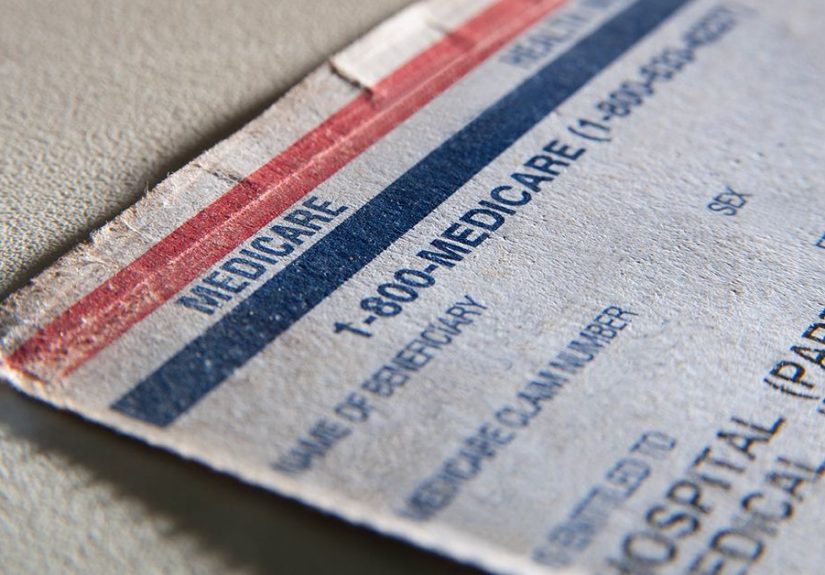
Your Medicare card includes your name, your Medicare number, and information about your Medicare coverage. It also shows when your coverage begins. Years ago, Medicare cards used Social Security numbers, but modern cards use a unique Medicare number instead. That change was designed to improve privacy and reduce fraud risk.
That means the card should be handled with care. You should not treat it like junk drawer material. Your Medicare number is valuable to scammers because it can be misused in fraudulent billing or identity theft schemes. So even though the card is made of paper, the information on it is not casual at all.
How to Protect Your Medicare Number
If there is one rule worth remembering, it is this: treat your Medicare card like a credit card.
Only share your Medicare number with trusted health care providers, your health plan, your insurer, or approved people helping you with Medicare. If someone contacts you unexpectedly by phone, email, text, or at your door asking for your Medicare number, that is a giant red flag wearing a fake mustache.
Do not give your number to get “free” medical equipment. Do not hand it over because someone promises a special benefit. Do not share it because a caller threatens to cancel your coverage. Medicare does not operate like a game show where you have to blurt out your personal information before the buzzer sounds.
Protecting the card matters just as much as protecting the number on it. That is another reason lamination misses the point. The real goal is not simply to stop the card from getting wrinkled. The goal is to keep your information secure, readable, and under your control.
What If Your Medicare Card Is Lost, Damaged, or Stolen?
First, do not panic. Second, do not reach for packing tape. Third, know that replacement is usually straightforward.
You can get another Medicare card by logging into your secure Medicare account. From there, you can print an official copy or order a replacement. You can also call Medicare and request that a replacement card be mailed to you.
If your card is damaged, faded, torn, or mysteriously vanished into the same dimension as missing socks, replacement is usually the best move. In fact, a fresh official copy is almost always a better solution than trying to preserve a damaged card with lamination.
If you think someone else is using your Medicare number, report it right away. Fraud concerns are a much bigger problem than paper wear, and they deserve immediate attention.
Common Myths About Laminating a Medicare Card
Myth: If I laminate it, it will last forever
Not exactly. Lamination can protect against spills and smudges, but it can also trap damage, distort print, and make the card less usable.
Myth: Laminating it makes it more official
Nope. A laminated card is not “upgraded.” It is just a Medicare card in a plastic shell that may create extra problems.
Myth: Everyone should carry the Medicare card daily
That depends on your coverage. Original Medicare beneficiaries should carry it. Medicare Advantage members usually use the plan card instead.
Myth: A damaged card must be saved at all costs
Not true. If your card is hard to read or falling apart, replacing it is smarter than trying to preserve it with office-supply heroics.
The Smartest Answer: Protect It, Don’t Laminate It
If you want the shortest honest answer to “Can you laminate your Medicare card?” here it is: skip the laminator.
Use a removable sleeve. Keep the card flat. Carry the right card for your type of coverage. Guard your Medicare number carefully. Replace the card if it becomes unreadable. And if a scammer comes sniffing around for your information, hang up, delete the email, and keep moving.
In other words, your Medicare card needs sensible protection, not a plastic fossilization process.
Real-World Experiences People Commonly Have With Medicare Cards
One reason this topic keeps coming up is that Medicare cards do not feel like sturdy government IDs. A lot of people expect something that looks and feels like a driver’s license. Instead, they receive a paper card and immediately wonder whether it can survive life in a wallet. That reaction is normal. Many new Medicare beneficiaries open the envelope, hold the card for five seconds, and think, “This thing needs help.”
A common experience is simple wear and tear. People tuck the card behind other cards, slide it in and out during appointments, and after a while the edges soften, the corners bend, and the print may start looking tired. That is usually the moment they start considering lamination. But many also find that a basic removable sleeve solves the problem just fine. It keeps the card neat without locking it in place.
Another common scenario happens during retirement planning. Someone signs up for Medicare, receives the card, and then joins a Medicare Advantage plan. At first, they keep carrying both cards everywhere. Later, they realize they mostly use the Medicare Advantage plan card for appointments and prescriptions. The Original Medicare card becomes more of a backup document that stays in a safe place. In those cases, laminating it would not have provided much value anyway.
Caregivers often run into this issue too. An adult child helping a parent manage appointments may notice that the Medicare card is getting worn, especially if it has been riding around in an overstuffed wallet for years. Their first instinct is often to make it “more durable” permanently. After reading the guidance, they usually switch gears and organize the documents instead: a safe place at home, a protective sleeve, and a Medicare account set up for easy access if a replacement is ever needed.
There are also real-world fraud concerns. Some people do not realize how important the Medicare number is until they learn that it should be treated carefully, much like a financial account number. Once they understand that, the card stops feeling like a flimsy paper inconvenience and starts feeling like sensitive identification. That shift in mindset changes how they store it, share it, and carry it.
Then there is the “faded card” experience. Plenty of people discover the problem only when checking in for care. The front of the card looks a little worn, the print is harder to read than expected, and suddenly they are squinting in a waiting room under lighting that somehow makes everyone look like they are auditioning for a hospital drama. In those moments, replacing the card is far more helpful than laminating the old one.
The most practical experience-based lesson is this: people are happiest when they treat the card as important, but replaceable. Protect it. Do not overhandle it. Use the correct card for your coverage. Keep your Medicare number private. And when the card is too damaged to trust, replace it and move on. That approach is much easier than trying to turn a paper Medicare card into a permanent plastic keepsake.
Conclusion
So, can you laminate your Medicare card? The better answer is: don’t. It is not the recommended way to protect the card, and it may create problems with readability, inspection, and long-term usability. A removable sleeve, careful storage, and quick replacement when needed are better options.
The smartest Medicare card strategy is gloriously boring: protect it, keep your Medicare number private, carry the right card for your coverage, and replace the card when it is damaged. Not flashy, not dramatic, but extremely effective. And for a Medicare card, that is exactly the vibe you want.