Table of Contents >> Show >> Hide
- What Makes a Molcajete Different From a Regular Mortar and Pestle?
- Before First Use: How to Season (Cure) a New Molcajete
- Daily Cleaning: The “Right After You Make Salsa” Routine
- The Soap Question: Is Soap Ever Okay?
- Deep Cleaning: Stains, Odors, and the “My Molcajete Smells Like Yesterday” Problem
- Mold Happens: How to Fix It (and How to Prevent It Forever)
- Storage and Handling: Keep It Happy, Keep It Heavy
- Common Mistakes (So You Don’t Learn the Hard Way)
- Quick FAQ
- Conclusion: A Clean Molcajete Is a Better-Tasting Molcajete
- Real-World Experiences: What It’s Actually Like to Live With a Molcajete ( of Truth)
A molcajete is basically a rock that makes your food taste better. Not a metaphor. Literally: a volcanic rock bowl
that turns tomatoes, chiles, garlic, and salt into salsa that tastes like it has a tiny mariachi band playing in it.
But because it’s porous (read: full of microscopic nooks that love to hold onto whatever you did last weekend),
cleaning and caring for a molcajete is its own delicious little ritual.
This guide covers how to season (cure) a new molcajete, how to clean it after each use, how to fix odors or grit,
how to prevent mold, and how to store it so it lasts for yearspossibly long enough to become a family heirloom and
judge your salsa decisions silently from the counter.
What Makes a Molcajete Different From a Regular Mortar and Pestle?
Traditional molcajetes are carved from volcanic stone (often basalt). That stone texture is the magic: it grips
ingredients, crushes them instead of pureeing them, and helps release aromatic oils for a deeper flavor. It’s why
guacamole made in a molcajete feels chunkier in the best way, and why salsa has that rustic, smoky “restaurant table”
vibe even if you’re eating it in sweatpants.
The trade-off is maintenance. Basalt is rough and porous, which means it can:
- Hold onto moisture (hello, mold risk).
- Trap tiny food bits if you don’t clean it thoroughly.
- Shed grit when it’s brand new (the “crunchy salsa” nobody asked for).
The solution is simple: season it correctly once, clean it smartly every time, and dry it like you mean it.
Before First Use: How to Season (Cure) a New Molcajete
“Seasoning” a molcajete doesn’t mean adding paprika and calling it a day. It means grinding away loose stone dust
and smoothing the inside so your first salsa doesn’t come with a side of gravel.
Step 1: Rinse and Brush (No Fancy Stuff Yet)
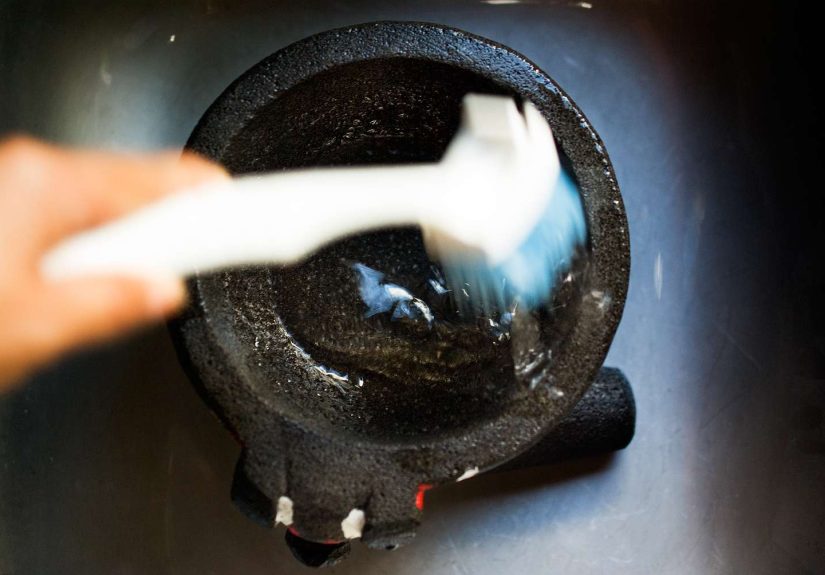
Rinse the molcajete and tejolote (the pestle) under warm water and scrub with a stiff brush dedicated to this tool.
Think “toothbrush energy,” but bigger and with fewer existential regrets.
Step 2: Grind Dry Rice (or Rice + Salt) Until It Stops Turning Gray
Add a small handful of uncooked white rice to the bowl. Grind it firmly across the bottom and up the sides,
working every curve. At first, the rice powder will likely turn graythis is the stone residue you’re evicting.
Dump it out, add fresh rice, and repeat until the powder stays mostly white.
- Tip: Grind with different angles of the tejolote so you “touch” every surface you’ll use later.
- Reality check: Rice may try to escape. This is normal. Your floor will be seasoned too.
Step 3: Optional “Aromatics Round” (Garlic + Salt)
Many cooks like to finish with a sacrificial paste: a clove or two of garlic plus coarse salt (sometimes with spices).
Grind into a paste, then discard it. This helps pull out remaining fine particles and starts building that “seasoned”
character people love.
Step 4: Rinse, Brush, and Air Dry Completely
Rinse thoroughly with warm water, brush again, then let it air dry until there’s no dampness hiding in the pores.
This part matters more than people think: porous stone + trapped moisture = mold’s favorite vacation rental.
How Do You Know You’re Done?
You’re ready when repeated rice grinds stay white-ish, your molcajete doesn’t shed visible grit, and the interior
feels slightly less sandy to the touch. It should still be rough (that’s the point), just not “construction site” rough.
Daily Cleaning: The “Right After You Make Salsa” Routine
Cleaning a molcajete is less like washing a bowl and more like caring for a cast iron skillet’s moody cousin.
The goal is to remove food residue without turning your stone into a soap-scented flavor sponge.
1) Scrape, Then Rinse With Warm Water
First, scrape out what you can (a silicone spatula helps). Then rinse with warm water. Don’t let salsa dry in there
unless you enjoy chiseling.
2) Brush Like You’re Detailing a Tiny Rock Bathtub
Use a stiff brush to scrub the interior and the bottom of the tejolote. Focus on the grooves and pitted spots where
food likes to cling. No wire brushesstone is tough, but you don’t need to gouge it.
3) Skip the Dishwasher. Always.
Dishwashers combine detergent, heat, and long soaking. That’s basically a three-part harmony of “please ruin my molcajete.”
Hand-wash only.
4) Dry Immediately, Then Air Dry Completely
Blot with a towel, then let it air dry in a well-ventilated spot. Rotate it once or twice so air reaches all sides.
If you store it while it’s still damp, you’re inviting mold to move in and start paying rent in salsa aromas.
The Soap Question: Is Soap Ever Okay?
Here’s the honest answer: different reputable cooks disagree, mostly because different stones (and different levels of
porosity) behave differently. The safest flavor-first approach is: avoid soap whenever you can.
The porous rock can hold onto fragrance and taste, especially if the soap is strongly scented.
If you absolutely need soapsay you crushed something extremely oily or funkyuse a tiny amount of mild, unscented dish soap,
scrub quickly, and rinse extremely well. Then plan to do a short re-seasoning round (rice grind) to reset the surface.
Bottom line: warm water + brush handles most situations. Soap is the “break glass in case of anchovies” option.
Deep Cleaning: Stains, Odors, and the “My Molcajete Smells Like Yesterday” Problem
Over time, your molcajete can absorb aromas (sometimes pleasantly). But when garlic-onion-chile perfume becomes
“mystery funk,” it’s time for a refresh.
Option A: Salt Scrub (Simple and Effective)
Add coarse salt and scrub with the brush (or grind lightly). Salt is abrasive enough to lift residue without introducing
detergents. Rinse well and dry completely.
Option B: Baking Soda Paste (For Stubborn Odors)
Mix baking soda with a little water into a paste. Gently scrub the interior, rinse thoroughly, and dry completely.
This can help neutralize lingering smells.
Option C: Re-Seasoning Round (The Reset Button)
If odors persist, do one or two rice-grinding rounds like you did on day one. This is especially helpful if you used soap
and want to remove any trace of it. Think of it as “sanding and rebooting,” but in a culinary, non-terrifying way.
Mold Happens: How to Fix It (and How to Prevent It Forever)
If you ever spot mold, don’t panicand definitely don’t pretend it’s “stone patina.” Mold usually means moisture was trapped
in the pores or the molcajete was stored in a humid spot.
How to Clean Mold Off a Molcajete
- Rinse with hot water and scrub aggressively with a stiff brush.
- Do a salt scrub (coarse salt + vigorous brushing).
- Rinse thoroughly.
- Air dry completely in a bright, well-ventilated area (a few hours is good; overnight is better).
- Finish with a short re-seasoning (one or two rice grinds) if you want extra peace of mind.
Prevention: The “Dry Like It’s Your Job” Rule
- Never store it damp.
- Give it airflowavoid sealing it in an airtight cabinet right after washing.
- If your kitchen is humid, let it sit out longer before putting it away.
Storage and Handling: Keep It Happy, Keep It Heavy
Store It Dry, Store It Stable
A molcajete is heavy and can chip if knocked around. Store it where it won’t be bumped, and don’t stack heavy items
on top of it. If it lives on your counter (and it probably will, because it’s gorgeous), keep it away from constant splashes.
Protect Your Countertops
The rough stone can scratch surfaces. Put a folded kitchen towel or grippy mat underneath when grinding. Bonus: it also
keeps the molcajete from “walking” across the counter when you’re really going at those peppercorns.
Avoid Thermal Shock
Some molcajetes can be warmed, but avoid drastic temperature swings (like rinsing a hot stone with cold water).
Sudden changes can cause cracking.
Common Mistakes (So You Don’t Learn the Hard Way)
- Using it unseasoned: Your salsa shouldn’t crunch unless it’s intentionally served with chips.
- Soaking forever: Short rinses are fine; long soaks can encourage water to settle deep in pores.
- Storing upside down on a towel: It can trap moisture and invite mold. Airflow matters.
- Using strongly scented soap: “Lavender Dawn Guacamole” is not a trend we need.
- Skipping the drying step: The stone remembers. And sometimes it grows science projects.
Quick FAQ
Can I use my molcajete for raw meat?
It’s best to avoid raw meat in porous stone because it’s difficult to fully sanitize. Stick to salsas, guacamole, spices,
aromatics, and cooked ingredients when possible.
Why does my molcajete shed grit again months later?
Some stone surfaces continue to release fine particles if they weren’t fully cured or if you’ve scrubbed very aggressively.
Do a quick rice re-seasoning round to smooth the surface again.
Can I clean it with vinegar or lemon?
A light wipe with acidic ingredients is sometimes used for odors, but don’t soak it. Acid + porous stone + long contact time
can be unpredictable. When in doubt: salt scrub + rice re-seasoning.
Conclusion: A Clean Molcajete Is a Better-Tasting Molcajete
Caring for a molcajete isn’t hardit’s just specific. Season it properly to remove grit, clean it with warm water and a stiff
brush, avoid the dishwasher, and dry it thoroughly every single time. Do that, and your molcajete will keep rewarding you with
bold, textured salsas and guacamole that tastes like you know someone’s abuela (even if you’re just winging it on a Tuesday).
Treat it well and it’ll last for yearspossibly long enough to outlive your blender, your trendy air fryer phase, and at least
three different “favorite hot sauces.”
Real-World Experiences: What It’s Actually Like to Live With a Molcajete ( of Truth)
The first “experience” nearly everyone has with a molcajete is the rice-grinding workout. You start confident, like,
“I lift grocery bags with one trip from the carhow hard can it be?” Then ten minutes later you’re grinding rice into powder,
sweat beading, arm trembling, and you realize you’ve accidentally invented CrossFit: Cocina Edition. The good news is that the
process works. The slightly annoying part is that rice grains have the survival instincts of glitterone escapes, and you’ll
find it a week later in a place rice has no business being.
Another common moment: you make your first salsa, taste it, and it’s spectacular… then you feel a faint crunch. That’s when
you learn the molcajete’s most important life lesson: “Seasoning is not a suggestion.” If you get even a little grit, the fix
is usually simpleback to rice. Two rounds later, your salsa stops sounding like it’s chewing sand at the beach.
Then there’s the cleaning routine, which becomes oddly satisfying. Molcajete people (yes, this is a category of humans) develop
strong opinions about brushes. A dedicated stiff brush feels like the secret weapon; it gets into the pores without turning
your stone into a soap sponge. The first time you try to clean dried chile paste without brushing right away, you’ll understand
why “rinse promptly” is repeated like a mantra. Suddenly you’re using warm water and elbow grease and muttering, “Who let me
become the caretaker of a rock?”
Odors are the next rite of passage. Garlic is wonderfuluntil it lingers so aggressively that your cinnamon toast tastes like
a vampire deterrent. When that happens, a salt scrub feels like magic. You scrub, rinse, dry, and the molcajete goes from
“garlic haunted” back to “neutral stone ready for salsa.” And if you ever used a strongly scented soap (even once), you may
discover a new fear: “floral guacamole.” Luckily, a short re-seasoning round can usually erase the evidence.
Finally, everyone learns the drying lesson. A molcajete can look dry on the surface while hiding moisture in its pores like a
tiny sponge. If it’s stored dampespecially in a humid kitchenmold can appear. It’s not the end of the world, but it is a
strong reminder that airflow is your friend. Once you get into the habit of towel-blotting and then air-drying fully, the tool
becomes low drama and high reward. And that’s the molcajete lifestyle in a nutshell: a little ritual, a lot of flavor, and the
quiet satisfaction of making salsa the old-school way.