Table of Contents >> Show >> Hide
- A Doctor’s House Frozen in Time
- The Uncanny Heart of the House: Exam and Procedure Rooms
- Why Abandoned Medical Spaces Feel Extra Creepy
- What These Creepy Finds Reveal About the Past
- If You Ever Stumble Across a “Doctor’s House” Yourself
- More Creepy Things People Have Found in Old Houses
- Extended Experiences: Imagining a Walk Through the Doctor’s House
- Conclusion: Creepy, Yesbut Also Weirdly Human
Down a long tree-lined driveway, hidden behind a curtain of overgrown vines, there’s a house that looks like it’s been quietly holding its breath for decades. This abandoned home once belonged to a doctor, and if you’ve seen the viral Bored Panda gallery of “Creepy Things I Found In A House That Once Belonged To A Doctor (33 Pics),” you already know it’s less “fixer-upper” and more “Netflix horror pilot waiting to happen.”
Urban exploration photographers who specialize in abandoned places have documented houses like this across the United States and Europe: frozen-in-time doctor’s residences where the office, exam rooms, and family spaces are still crammed with medical tools, dusty books, and unsettling personal relics. In one particularly famous case in Virginia, photographer Bryan Sansivero found an 1800s doctor’s house with exam tables, pill bottles, and personal belongings still in place, echoing the vibe of the Bored Panda photo set.
This article takes you on a tour through that eerie “doctor’s house” aesthetic: the grand but decaying entrance, the living room full of oddities, and the exam rooms that feel like the last patient just never checked out. We’ll also look at why abandoned medical spaces feel especially creepy, what these objects say about the history of medicine, and how similar “creepy things found in old houses” have become a full-blown internet micro-genre.
A Doctor’s House Frozen in Time
The house featured in the Bored Panda gallery and similar photo essays isn’t just a clinicit’s a full domestic time capsule. From the outside, it’s all cracked paint, sagging rooflines, and ivy climbing up the brick like nature is trying to repossess the property. Inside, though, it feels like someone hit pause on daily life and never came back to press play.
The Overgrown Exterior and Grand Entrance
At first glance, the exterior looks like classic haunted-house material: a long driveway, trees closing in overhead, and a front façade slowly crumbling away. The porch is littered with leaves, the doorframe has warped with age, and the windows are either broken or opaque with dust. It’s not hard to picture a black-and-white horror movie title card slapped across the front steps.
Once you step inside, the mood shifts from “spooky” to “deeply personal.” The grand entrance hall still has its staircase, runner rug, and framed pictures on the wall. In many abandoned doctor’s homes, family portraits, religious icons, and school photos sit side by side with professional certificates and anatomical illustrations. It’s a jarring blend of domestic softness and professional seriousness that makes the house feel like it’s still waiting for its owner to hang up a coat and set down a medical bag.
The Family Room: Cozy Meets Creepy
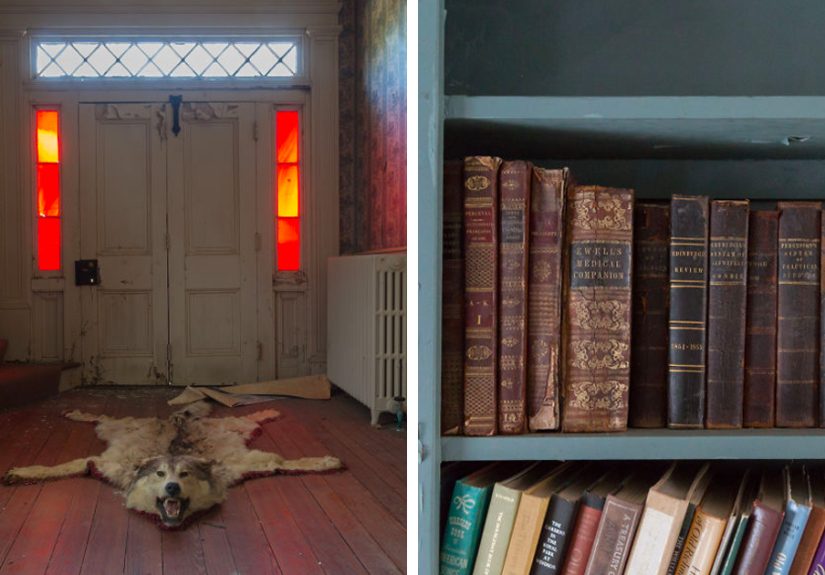
The family room is where you really feel the weight of time. In the Bored Panda photos and similar urbex shoots, you’ll see heavy furniture, patterned wallpaper, and rugs that have faded but not disappeared. Taxidermy rugs and animal heads sometimes lie around as if the doctor was equal parts healer and hobbyist hunter. Old televisions, radios, and shelves full of knickknacks and travel souvenirs hint at evenings spent togetherlong before the dust took over.
That sense of “almost normal” is exactly what makes it so unsettling. A half-finished jigsaw puzzle, a book left open on an armchair, or a pair of slippers by the fireplace suggests a life interrupted. It’s the domestic version of a patient chart left open on a desk: you can see the story, but you don’t get the ending.
Kitchen, Clothing, and Left-Behind Lives
The kitchen in these abandoned homes is often frozen in a strange, mid-century limbovintage appliances, enamel pots, floral curtains, and cabinets still stocked with dishes or rusting canned goods. In the doctor’s house photo set, items like cookware, bottles, and utensils sit exactly where someone last used them, now coated in grime.
Move into the bedrooms, and you’ll often find closets still full of clothing: suits in garment bags, nightgowns on metal hangers, shoes lined up neatly by the wall. Family photographs in frames, wedding portraits, graduation pictures, and baby photos blur the line between “creepy” and “tragic.” These rooms make it clear that this wasn’t just a workplaceit was a home where people celebrated holidays, worried about bills, and argued over what to watch on TV.
The Uncanny Heart of the House: Exam and Procedure Rooms
If the living areas feel eerie, the medical sections of the house upgrade the vibe straight into “nope” territory. The Bored Panda gallery showcases exam rooms and medical procedure areas that look like makeshift clinics embedded within a family home: examination tables, metal carts, and heavy equipment that hasn’t moved in decades.
The Waiting Room That Waits for No One
The waiting room is often the most subtly creepy space. Chairs are lined up in a row, old magazines slump on tables, and perhaps a dusty framed print still hangs on the wallmeant to calm nervous patients. In many historic doctor’s houses, signs, appointment ledgers, and prescription pads still sit out, frozen mid-shift. You can almost hear the muffled coughs and low conversations that once filled the room.
Exam Room Details: Tools of the Trade
Step into the exam room, and things get more clinicaland more unsettling. In real-life abandoned doctor’s houses and clinics photographed in the U.S. and Europe, urban explorers have documented examination tables with cracked vinyl, metal stools, rolling instrument trays, and cabinets full of glass bottles, syringes, and ointments from decades past.
The sight of antique stethoscopes, blood pressure cuffs, and surgical tools laid out as if a patient were due any minute gives these rooms a distinct “ghost of healthcare past” vibe. The rust on the metal and mold on the walls only amplify the sense that something important happened hereand then simply stopped.
The Procedure Room and “Biohazard” Feel
Not every abandoned doctor’s home includes a full-blown operating room, but some do have small procedure rooms: spaces where sutures were done, minor surgeries performed, or intense treatments carried out. In other abandoned medical buildings, explorers have found refrigerators full of labeled samples, cabinets of patient records, and even blood vials and lab materials left behind when hospitals abruptly closed.
The house featured in “Creepy Things I Found In A House That Once Belonged To A Doctor (33 Pics)” leans more toward vintage medical tools and books than modern lab horrors, but it taps into the same unease: the idea that things that should be tightly controlled and meticulously documented have been left to rot in an unlocked, forgotten space.
Why Abandoned Medical Spaces Feel Extra Creepy
It’s one thing to walk into an abandoned farmhouse. It’s another to wander into a place where people once came seeking diagnoses, treatment, and hope. That difference is what makes an abandoned doctor’s house so hauntingand why galleries like the Bored Panda one are so captivating.
Broken Trust in a Place Meant for Healing
Hospitals and clinics are designed around control: sterilized tools, strict recordkeeping, clear protocols. When you see a space like that stripped of orderfiles scattered, instruments rusting, exam tables tornit feels like a broken promise. The environment that once signaled safety now silently announces neglect.
The Time-Capsule Effect
Many people are drawn to these images because they act like unintentional museums. The Bored Panda gallery shows a mix of mid-20th-century furniture, older medical texts, and vintage equipment that together sketch out how medicine and daily life used to look. Other collections of “creepy things found in old homes” share the same appeal: hidden bathtubs under floors, forgotten letters, strange drawings, and relics from previous owners that no one thought to remove.
There’s a bittersweet undertone to it all. Every objectwhether it’s a pill bottle, a stethoscope, or a family photographwas once important to someone. Now it’s just set dressing in a spooky photo set, gathering likes and comments from people who will never know the names behind the prescriptions or the smiles in the frames.
What These Creepy Finds Reveal About the Past
Underneath the goosebumps, these abandoned doctor’s houses tell a real story about how healthcare used to workespecially in smaller towns. In many communities, the doctor lived where they practiced. The waiting room was steps away from the family room. Kids grew up watching patients come and go through the same front door they used for trick-or-treating.
The large collection of medical books seen in the Bored Panda photos and similar houses hints at a time when continuing education meant shelves full of heavy volumes, not online databases. You might see outdated anatomy charts, hand-written notes in the margins of textbooks, or prescription pads from pharmaceutical companies that no longer exist.
The decor, whether it’s floral wallpaper or dark wood paneling, places the home squarely in a particular eraoften mid-1900s. Combine that with the medical tools, and you’ve got a visual crash course in the evolution of bedside manner, technology, and even ethics.
If You Ever Stumble Across a “Doctor’s House” Yourself
Internet photo galleries make urban exploration look glamorous, but real-life abandoned medical sites come with serious risks. Floors can be unstable, mold can be widespread, and there may be sharp or contaminated objects on-site. Old hospitals have been found with patient records, blood samples, and pharmaceuticals still insidenone of which you want to step on, breathe in, or bring home.
There are also legal and ethical issues. Trespassing laws are real, and so are privacy rules around medical information. While photos of long-abandoned records might rack up views, they can also reveal names and sensitive details about real people. Responsible urban explorers usually keep locations secret, avoid disturbing items, and never take anything from the site.
If you’re fascinated by places like this but prefer to stay well within the law (and not inhale 60 years of dust), consuming these stories through curated gallerieslike the Bored Panda collection and similar featuresis the safer option. You still get the chills and the historical curiosity without risking a tetanus shot or a court date.
More Creepy Things People Have Found in Old Houses
The doctor’s house gallery doesn’t exist in a vacuum. It’s part of a bigger trend: people sharing the weird, creepy, and downright baffling things they’ve discovered in old homes, attics, basements, and even inside walls. Bored Panda and similar sites have featured stories of mysterious locked rooms, hidden staircases, strange jars, and forgotten relics that surface during renovations or moves.
One popular theme is “things found in walls”: homeowners tearing down drywall only to discover old toys, handwritten notes, or sometimes unsettling items like knives, children’s drawings with ominous captions, or unknown personal belongings. It’s like getting a bonus episode of a history podcast, but in your living room.
Other lists spotlight creepy surprises from prior ownerslike clown-themed basements, taxidermy collections, or mannequins posed in corners for absolutely no good reason. Some finds are funny, some are gross, and some are the kind you jokingly say you’d move out overand then kind of mean it.
Compared to those, the abandoned doctor’s house is uniquely layered. It has all the standard haunted-house ingredientsdust, decay, old family photosbut it also carries the weight of medical history. Those exam tables, prescription bottles, and surgery tools remind us that real people once trusted this place with their health and their lives.
That’s what makes scrolling the original “Creepy Things I Found In A House That Once Belonged To A Doctor (33 Pics)” gallery so compelling: each image hints at a very human story behind the cobwebs, even if we’ll never fully know it.
Extended Experiences: Imagining a Walk Through the Doctor’s House
To really feel how unnerving this kind of place can be, imagine walking through it step by step. You push open the heavy front door, and it complains loudlyone of those movie-perfect creaks that makes you wonder if you’re being pranked. The air smells like dust, old books, and a little bit of damp wood.
Your flashlight beam cuts across the entrance hall. On one side, there’s a coat rack still holding a few jackets. On the other, a framed family portrait stares back at you: parents, kids, and maybe even a proud doctor in a stiff suit. You realize these people once called this place home, laughed in this hallway, and probably hurried down these stairs on busy mornings.
You peek into the family room. A couch sits under a layer of dust, cushions dented where countless people once sat. On the coffee table, there’s a stack of medical journals mixed with a crossword book and a mug ring permanently etched into the wood. A TV in the corner looks like it hasn’t been turned on since the era of rabbit-ear antennas.
Moving deeper into the house, you find the doctor’s office. The desk still has papers spread out: handwritten notes, perhaps an appointment book, maybe even a letter from a patient. A prescription pad lies nearby with the doctor’s name printed at the top, now yellowed and brittle. The office chair is turned slightly askew, like someone stood up in a hurry and never came back.
Then comes the exam room. The table sits in the center, its pad cracked with age. Cabinets line the walls, some doors ajar, revealing glass medicine bottles and cardboard boxes with faded labels. You might see an old wooden tongue depressor, a jar of discolored cotton balls, or a metal tray that once held gleaming instruments.
Even if you know there’s nothing alive here but spiders, your brain can’t help filling in the missing sounds: the rustle of a paper gown, the click of a stethoscope against a chest, the low murmur of a doctor explaining a diagnosis. It’s a space built for human interaction, now eerily silent.
Upstairs, the bedrooms add another emotional layer. On a dresser, there’s a hairbrush with strands still caught in the bristles. A jewelry box sits open, its contents long gone or simply hidden in the shadows. In the corner, children’s books may still be piled on a small shelf, their bright covers faded but still legible.
The longer you stay, the more your imagination runs away with you. Why was the house abandoned? Did the doctor die suddenly? Did the family move and leave everything? Was there some slow decline until the house simply became too much to maintain? The creepy objectsthe instruments, the photos, the clothesbecome floating clues in a mystery you’ll never fully solve.
That’s the strange magic behind “Creepy Things I Found In A House That Once Belonged To A Doctor (33 Pics) | Bored Panda” and similar galleries. They’re not just about jump-scare horror. They’re about ordinary lives, frozen in their messiness and routine, then rediscovered decades later through a lens that mixes curiosity, nostalgia, and a healthy dose of “I’m glad this isn’t my house.”
Conclusion: Creepy, Yesbut Also Weirdly Human
An abandoned doctor’s house filled with medical equipment, vintage furniture, and personal belongings is undeniably creepy. The Bored Panda gallery captures that tension perfectly: every image is both unsettling and deeply human. We’re drawn in by the eerie exam tables and dusty hallways, but we stay because the story feels real, grounded in the everyday routines of a family and a community doctor who once meant everything to the people who came through that front door.
Whether you’re here for the spooky vibes, the historical details, or the thrill of virtual urban exploration, one thing is clear: these “creepy things” left behind are powerful reminders that behind every abandoned house is a lifeor many livesthat once filled it with noise, light, and ordinary days.