Table of Contents >> Show >> Hide
- Why This Odd Pair of Problems Actually Belongs Together
- How Detecting Cars Running Stop Signs Really Works
- How to Detect Squirrels Running Across the Roof
- The Best Setup for Both Jobs
- Common Mistakes That Make Smart Detection Dumb
- What This Kind of System Is Actually Good For
- Experience: Living With a System That Watches the Street and the Roof
- Conclusion
Some home monitoring problems sound serious. Others sound like a sitcom pitch. Catching cars that blow through a stop sign? Serious. Catching squirrels sprinting across your roof like they pay the mortgage? Ridiculous, but also very real. The funny part is that both problems can be tackled with the same basic idea: smart video detection that understands where motion happens, what kind of object caused it, and whether that movement actually matters.
That is the heart of modern camera analytics. A good system does not just notice that “something moved.” It can watch a specific section of the street, look for vehicles crossing a virtual line, and send an alert when a car behaves in a way you care about. It can also watch roof edges, gutters, vents, and soffits for animal movement, which is a lot more useful than getting 47 notifications because a branch decided to be dramatic in the wind.
In other words, this is not really a story about two weirdly specific events. It is a story about smarter monitoring. Whether you want neighborhood awareness, better home security, or early warning that furry acrobats are planning an attic takeover, the goal is the same: cut false alerts, focus on meaningful motion, and turn raw footage into information you can actually use.
Why This Odd Pair of Problems Actually Belongs Together
On the surface, traffic safety and roof squirrels have almost nothing in common. One involves street behavior, public risk, and stop-control compliance. The other involves wildlife, nuisance prevention, and the slow destruction of your peace of mind. But from a video analytics standpoint, both jobs depend on the same building blocks: object classification, motion analysis, detection zones, event rules, and good camera placement.
That is why the title works better than it looks. A camera watching for stop-sign violations needs to distinguish vehicles from everything else, define a virtual line or zone near the stop bar, and trigger only when a car crosses in a suspicious way. A camera watching the roof needs to distinguish meaningful animal activity from leaves, shadows, and weather. Both jobs require context. A motion blob without context is just digital panic.
This is also where many cheap setups fall apart. They promise “AI detection,” then proceed to send alerts for rain, headlights, bugs, and one very committed plastic bag. The real upgrade is not more alerts. It is better event logic.
How Detecting Cars Running Stop Signs Really Works
Start With the Road, Not the Robot Brain
Before a camera can flag a rolling stop, the monitored intersection has to make visual sense. Stop signs are supposed to be placed close to the intersection they regulate and positioned for good visibility. Visibility matters even more at night or in bad weather, because if the sign is hard to see, driver compliance drops and your video evidence gets murkier too. If the location has poor sight distance or a hard-to-read approach, extra warning treatments matter more than clever analytics.
That means the smartest setup is not “buy a camera and hope.” It is “look at the scene first.” Is the sign visible? Is the stop line clear? Are trees, parked cars, glare, or sharp approach angles hiding the key moment? If the answer is yes, your camera may still record traffic, but it will not reliably tell you which drivers actually failed to stop.
Use a Virtual Line, a Stop Zone, and Timing Logic
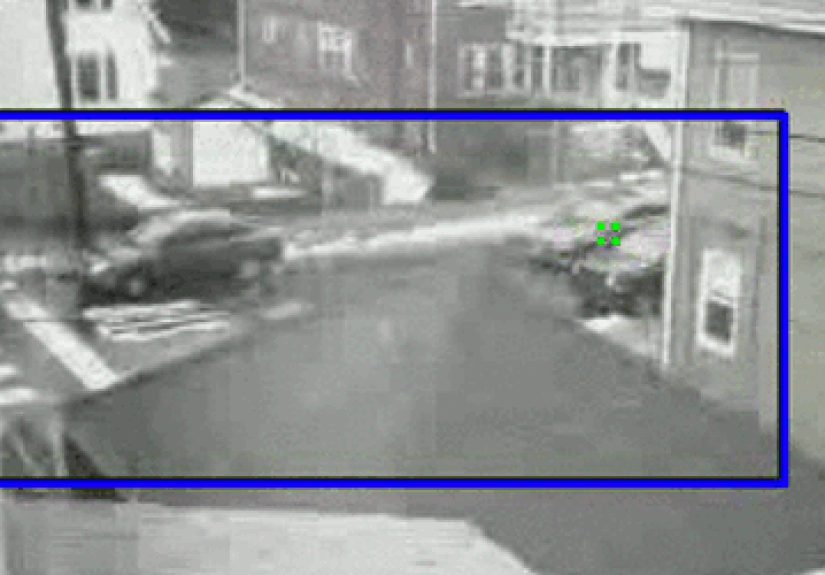
Most useful systems rely on a combination of rules instead of one magical label. The camera watches a defined approach area, tracks a vehicle as it enters the frame, then checks what happens at a virtual stop line or zone. Did the vehicle slow? Did it pause? Did it continue straight through without any meaningful stop event? That is the difference between “car detected” and “possible stop-sign run.”
Advanced analytics platforms can detect, classify, and track vehicles, then trigger actions when objects cross a defined line, move through a protected area, or stay in a zone for too long. For stop-sign monitoring, that translates into a practical workflow: define the lane, define the stop point, filter for vehicles only, and alert when a tracked car crosses the decision point without the expected pause.
Notice the wording there: possible stop-sign run. That matters. A helpful home or neighborhood system can flag likely behavior, but it is not automatically a courtroom-ready traffic citation machine. Real enforcement-grade systems require calibration, legal review, and local policy compliance. Your camera can identify patterns, provide timestamps, and show recurring risk. It should not pretend to be the Department of Instant Justice.
Reduce False Positives Before They Drive You Nuts
Bad stop-sign alerts usually come from lazy setup. Wide camera angles can distort speed and distance. Headlights can create motion confusion at night. Large shadows can look like moving objects. If you monitor an entire intersection instead of the specific approach you care about, you may get alerts every time a car legally passes on the through street.
The fix is gloriously boring: narrow the zone, tighten the line crossing rule, filter for vehicle classification, and avoid busy background areas whenever possible. Smart detection gets a lot smarter when you stop asking it to watch absolutely everything.
How to Detect Squirrels Running Across the Roof
Why Roof Squirrels Matter More Than People Think
A squirrel on the roof can seem harmless until you remember what usually comes next: gnawed openings, attic entry, shredded insulation, droppings, urine stains, and the kind of scratching noise that makes 5:42 a.m. feel personal. Wildlife guidance from universities and humane organizations consistently points to the same pattern: squirrels use overhanging limbs, rooflines, soffits, vents, and eaves as entry routes, and once they settle into an attic, the problem gets more expensive fast.
That is why detection matters. Roof squirrels are not just cute parkour enthusiasts. They are early warning signs. Catching them repeatedly using the same route can tell you where to inspect for openings, where to trim branches, and which parts of your roofline need screening or repair before your attic becomes a woodland condo.
Consumer Cameras Can Detect Animals, But Squirrels Are Tricky
Here is where marketing language and reality have a little argument. Many consumer smart cameras can analyze video for people, vehicles, and animals. That is useful. But some platforms define animal events fairly narrowly, often around dogs and cats, while smaller wildlife may trigger only as general motion or not be labeled consistently at all. Translation: your camera may absolutely notice the squirrel, but it may not politely send a push alert that says, “A tiny gray criminal is on your gutter again.”
If squirrels are a major concern, treat “animal detection” as a bonus, not a guarantee. The more reliable strategy is to combine motion zones with a camera angle focused on the roof edge, known entry points, and the travel path squirrels actually use. A roofline camera with well-defined activity zones will usually outperform a fancy camera pointed vaguely at half the sky.
What to Watch on the Roof
The best roof monitoring scenes are specific. Watch the gutter line. Watch where branches come within jumping distance of the house. Watch dormer corners, attic vents, fascia gaps, and roof-to-wall intersections. Those are the squirrel highways. If you place a camera where the animal must cross a narrow section of roof or reach a vent opening, detection gets easier and alerts get cleaner.
And yes, branch trimming still matters. Guidance varies by source, but a practical takeaway is to keep limbs roughly 6 to 10 feet away from the house when possible. Think of it as removing the wildlife on-ramp.
The Best Setup for Both Jobs
One Camera Can Help, but Two Cameras Work Better
If you are serious about both use cases, use separate views. A street-facing camera should handle the stop-sign zone. A roof-facing camera should handle the eaves and attic-risk areas. Trying to make one camera do both jobs usually creates a weird compromise where the street is too wide, the roof is too small, and the squirrel becomes an abstract theory.
A street camera benefits from a clean view of the approach lane, the stop sign, and the stop line area. A roof camera benefits from a tighter view of the roof edge and likely animal routes. Splitting the workload also lets you create separate alert rules, which is important because “vehicle crossed line without stopping” and “small animal sprinted across shingles” are not really the same kind of urgency unless you are having a very unusual Tuesday.
Use Activity Zones and Event Filters
Activity zones are one of the easiest upgrades in modern home monitoring. They let you mark specific areas in a camera’s view that matter for alerts. That means your street camera can ignore most of the scene except the stop approach, while your roof camera can ignore the neighbor’s yard and focus on the gutter, soffit, and vent area. Some platforms still stream the full view even with zones enabled, but the alerts become much more selective, which is what you actually want.
Pair those zones with event filters. For the street, prioritize vehicles. For the roof, use animal detection when available, but also allow motion-based triggers in the tight roof zone in case your system does not classify squirrels reliably. This mix usually gives better coverage than relying on labels alone.
Night Performance Matters
Cars running stop signs often become more dangerous after dark, and wildlife activity around roofs often becomes more noticeable in low light or around dawn and dusk. That means poor nighttime video quality will ruin both use cases at once. If your system turns every moving object into a glowing blur, you are not getting security; you are getting interpretive cinema.
Choose cameras with strong low-light performance, control glare where possible, and test whether headlights, porch lights, or reflective roofing materials are confusing the scene. A five-minute nighttime test can save you months of meaningless alerts.
Common Mistakes That Make Smart Detection Dumb
The first mistake is mounting a camera too high or too wide because “more view” sounds better. It usually is not. Wider views often reduce detail and make event logic sloppier. The second mistake is leaving default sensitivity alone and praying. The third is failing to review clips and refine rules after installation.
Another common problem is expecting AI to fix a bad scene. If a tree branch constantly swings through the roof zone, if the stop line is invisible, or if the view is blocked by glare, analytics will struggle no matter how expensive the device is. Smart detection is not magic dust. It is scene-dependent pattern recognition.
One more mistake deserves its own paragraph: ignoring security and privacy. If you are using internet-connected cameras, secure them. Look for encryption, change default passwords, use strong Wi-Fi security, and review account access. A camera that catches squirrels but leaks your video feed to strangers is not a win.
What This Kind of System Is Actually Good For
Done well, this setup is useful for homeowners, neighborhood watch groups, property managers, and anyone who wants practical visibility without staring at live feeds all day. It helps you spot recurring stop-sign problems, identify risky times of day, document patterns near a school zone or residential corner, and detect the first signs of roofline wildlife activity before attic damage starts.
It is also a strong example of where modern camera analytics shine. They are best when the question is specific. Not “watch everything.” Not “understand the entire universe.” Just: watch this lane, watch this roof edge, and tell me when the important thing happens.
Experience: Living With a System That Watches the Street and the Roof
In real-world use, the experience tends to start the same way: with optimism, a phone app, and the quiet belief that you are about to become the most informed person on your block. For the first day or two, it feels amazing. You open the app, draw a clean zone near the stop sign, create another one along the roofline, and think, “Excellent. I have outsmarted both traffic chaos and woodland nonsense.” Then the alerts begin.
At first, they are humbling. A delivery truck slows correctly, but your rule is too loose, so it gets flagged anyway. A passing cloud changes the brightness and your roof camera acts like the sky committed a felony. A leaf lands on the gutter and suddenly your phone is vibrating like it has insider information. This is the stage where many people decide smart cameras are overrated. In truth, this is just the calibration phase, also known as the period when your camera learns to stop being dramatic.
Once you refine the zones, the system becomes much more satisfying. You start seeing patterns instead of random clips. The same two or three times of day produce the most aggressive stop-sign behavior. Certain vehicles creep, hesitate, then roll through without ever really stopping. At night, headlights reveal how quickly some drivers approach the corner. You may not be issuing tickets, but you are building a clear picture of what the intersection actually feels like when you live beside it.
The roof camera develops its own personality. Most nights it shows nothing interesting at all, which is exactly what you want. Then one morning there is a fast blur along the gutter, followed by another clip near the vent line, and suddenly the mystery scratching in the ceiling makes sense. You inspect the roof edge and notice the branch you kept meaning to trim is basically a squirrel bridge. You cut it back, seal a gap, and the alerts drop off. That is the moment smart detection stops feeling like a gadget and starts feeling like useful maintenance.
There is also a surprisingly human side to the whole thing. You become more aware of your environment. You notice how weather changes movement, how shadows behave at different hours, how a camera angle that looked perfect at noon becomes useless at 8 p.m. You learn that accuracy has a lot to do with patience. The best setups are rarely perfect on day one. They improve because somebody bothered to review clips, move the camera three inches, redraw the zone, and test again.
And yes, there is humor in it. One camera is helping you observe real traffic risk in a meaningful way. The other is essentially documenting a tiny roof gymnast with an attitude problem. But that is the beauty of modern monitoring. A smart system does not care whether the event is a rolling stop or a squirrel relay race. It just watches the scene you define and tells you when the pattern changes. In a world full of noisy devices, that kind of useful specificity is strangely refreshing.
Conclusion
Detecting cars running stop signs and squirrels running across the roof may sound like two different universes, but they are really two versions of the same challenge: turning motion into meaningful alerts. The best setup combines strong camera placement, narrow activity zones, reliable object filtering, and a little real-world patience. Do that, and your system becomes more than a motion detector with confidence issues. It becomes a practical tool for traffic awareness, home protection, and early problem-solving.
And honestly, that is the sweet spot of smart monitoring. It is not about spying on every pixel. It is about catching the moments that matter, whether that moment is a careless driver at the corner or a squirrel treating your roof like a suburban racetrack.