Table of Contents >> Show >> Hide
- What Happened in the Viral Story?
- Why This Story Hit a Nerve
- Gray Divorce, Repartnering, and Adult Children: Why It Gets So Complicated
- Is the Daughter Overreacting?
- Is the Dad Automatically Wrong?
- What a Healthier Version of This Could Look Like
- The Bigger Lesson Behind the Headline
- Experiences Related to This Topic: What Similar Families Often Go Through
- Conclusion
Nothing detonates the vibe at a family barbecue faster than a surprise introduction that makes everyone suddenly very interested in the potato salad. That is exactly why this headline went viral: a divorced 62-year-old dad reportedly introduces his 23-year-old girlfriend to the family, while his 24-year-old daughter reacts with instant horror. The internet, naturally, did what the internet does best. It judged, psychoanalyzed, memeified, and turned a painfully awkward family moment into a referendum on age-gap relationships, divorce, boundaries, and whether “they’re both adults” really ends the conversation.
But beneath the clicky headline is a more interesting question: what actually makes this situation feel so explosive? Is it just the age gap? Is the daughter being unfair? Is the father chasing happiness after divorce, or acting like a guy who confused “new chapter” with “chaotic reboot”? The truth is messier than the headline, and that is exactly why the story resonated.
What Happened in the Viral Story?
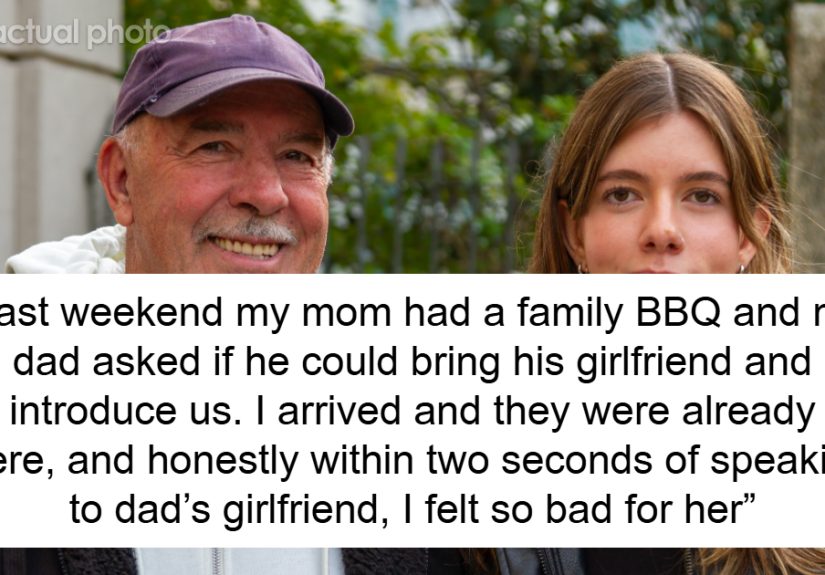
According to the online account that spread widely, a 24-year-old daughter said her 62-year-old father had been struggling after his divorce. Then came the bombshell: he revealed that he was dating a 23-year-old woman, someone younger than his own daughter. The discomfort escalated when he brought the girlfriend to a family gathering and apparently acted as though nothing about this setup might be, you know, emotionally radioactive.
The daughter was disgusted. Her mother was weirded out. Other relatives also found the situation uncomfortable. The father, however, seemed proud, perhaps even eager to show off the relationship. That detail matters. If this had been a quiet, cautious romance handled with humility, the family might still have been uncomfortable, but the emotional temperature likely would have stayed below “call the group chat immediately.” Pride has a way of turning private discomfort into public conflict.
It is also worth saying clearly: an anonymous viral story is not a court transcript. The post is an online account, not a verified documentary record. Still, the reaction it sparked lines up with real patterns experts have discussed for years when divorce, adult children, and new partners all collide in the same emotional kitchen.
Why This Story Hit a Nerve
The age gap is not just large. It is generational.
Age-gap relationships are not automatically doomed, immoral, or fake. Adults can make their own romantic choices. But not every adult relationship feels neutral to the people around it. A 39-year gap does not just create differences in taste, life stage, and cultural references. It raises questions about power, experience, financial leverage, emotional maturity, and motivation. Even when there is no coercion, outsiders tend to notice the imbalance before they notice the chemistry.
That discomfort gets even sharper when the younger partner is younger than the adult child. At that point, the family is not merely processing a new relationship. They are confronting a surreal collapse of generations. The daughter is no longer comparing her father’s new partner to a peer group in the abstract. She is comparing her to herself. That is a psychological jump scare.
Divorce does not end the family system.
One of the biggest misunderstandings in stories like this is the idea that a parent’s dating life belongs only to the parent. Technically, yes, adults are free to date. Emotionally, not so fast. Divorce, especially later-life or “gray divorce,” often reshapes family roles long after the legal paperwork is done. Adult children may still feel loyalty conflicts, grief, confusion, and fear of being displaced. A parent’s new partner can stir all of that up at once.
In other words, the father may believe he is simply starting over. The daughter may feel like the family’s emotional floor just gave way. Both people can be sincere, and both can still end up yelling in the driveway.
The father seems to be performing the relationship, not just living it.
The headline’s key word is not “dating.” It is “proudly.” That suggests an element of display. Maybe he feels rejuvenated after divorce. Maybe he wants validation. Maybe he thinks this relationship proves he is still desirable, still young, still winning. That may be understandable on a human level, but it is terrible family strategy.
When a parent introduces a controversial new partner with swagger instead of sensitivity, adult children often do not hear, “I am happy.” They hear, “Your discomfort is irrelevant, and I would actually like applause.” That is how a relationship becomes a family crisis.
Gray Divorce, Repartnering, and Adult Children: Why It Gets So Complicated
This story also taps into a broader social reality. Later-life divorce has become far more common over the past few decades, and repartnering after age 50 is no longer unusual. But experts who study gray divorce consistently point out that adult children remain deeply connected to what happens next. Repartnering can bring relief, hope, and companionship for a parent, while also triggering loss, resentment, and estrangement in the next generation.
That tension is especially sharp for fathers. Research on parent-adult child relationships after gray divorce suggests that fathers often experience a decline in frequent contact with their adult children after divorce and repartnering. Translation: this is not just a “kids need to grow up” problem. Family bonds can genuinely weaken when a father rushes into a new relationship or introduces it in a way that makes adult children feel replaced, sidelined, or emotionally bulldozed.
And then there is the issue nobody at the barbecue wants to say out loud: if the new partner is almost the same age as the adult child, the relationship may feel less like “Dad found love again” and more like “Dad has entered a bizarre competitive reality show against his own children’s age group.” That perception can be humiliating for everyone involved, including the new girlfriend, who may be walking into a family dynamic she is wildly unprepared to handle.
Is the Daughter Overreacting?
Probably not. “Horrified” may sound dramatic, but in context it makes sense. Her reaction is not necessarily a moral verdict on every age-gap relationship on Earth. It is an emotional response to her own father dating someone younger than she is and then presenting that relationship to the family as though the optics were no big deal.
Adult children are allowed to have boundaries. They are allowed to feel uncomfortable. They are allowed to think, “This is legal, but I still hate it.” That is not hypocrisy. That is being a person with a nervous system.
What the daughter should avoid, though, is assuming she can control her father’s private life. She cannot. She can communicate clearly, set limits on what gatherings she attends, and decide how much emotional energy she wants to invest. But once the relationship moves from “I dislike this” to “I must stop this,” the conflict usually becomes even messier.
Is the Dad Automatically Wrong?
Also no. A later-life divorcee is not forbidden from dating a younger adult. That is not the issue. The real issue is judgment, timing, empathy, and self-awareness. A parent can be technically free and emotionally reckless at the same time.
If the father truly wants a healthy relationship with both his girlfriend and his daughter, he would need to stop treating criticism like jealousy or prudishness. His family is not reacting to the relationship in a vacuum. They are reacting to the age dynamic, the post-divorce timing, the emotional symbolism, and the possibility that he is using this romance as a vanity project with appetizers.
The difference between “Dad found love” and “Dad has become exhausting” often comes down to behavior. Did he prepare his family for the news? Did he acknowledge that the situation might be hard to process? Did he force the girlfriend into a family event too early? Did he act smug when people were clearly uncomfortable? Those choices matter more than any slogan about consenting adults.
What a Healthier Version of This Could Look Like
If a parent in this situation wanted to avoid detonating the family group chat, the playbook would be pretty simple. First, tell adult children privately before making the relationship a public event. Second, acknowledge the discomfort instead of pretending it is irrational. Third, do not demand immediate approval. Fourth, avoid bringing a new partner into major family functions too quickly. Fifth, make it clear that the parent-child bond still matters and is not being downgraded to make room for the new romance.
For adult children, the healthiest move is often honest restraint. Say what you feel. Do not fake enthusiasm. But do not turn every interaction into a tribunal, either. You can say, “I’m having a hard time with this,” without making yourself responsible for managing your parent’s choices. You can also protect your peace by limiting participation in situations that feel disrespectful or emotionally draining.
That may sound unglamorous, but family peace is usually built with boring tools: timing, empathy, direct communication, and not springing a 23-year-old girlfriend on everyone between burgers and dessert.
The Bigger Lesson Behind the Headline
The reason this story spread so quickly is that it is not really about one father, one daughter, or one eyebrow-raising barbecue. It is about what happens when personal freedom collides with family symbolism. A parent can believe they are entitled to happiness. An adult child can believe that happiness should not come packaged like a dare. Both are reacting to something real.
Stories like this also expose how differently people define “problematic.” Some see only two consenting adults. Others see a glaring power gap, unresolved divorce fallout, and a father acting more like a man chasing ego repair than emotional stability. The online outrage lives in that gap between legal choice and relational wisdom.
And that is the takeaway. The scandal here is not just the age difference. It is the absence of emotional intelligence around it. Families can survive surprising new relationships. They struggle much more with arrogance, denial, and the insistence that everybody clap on cue.
Experiences Related to This Topic: What Similar Families Often Go Through
In families dealing with a situation like this, the emotional experience is often less “one big fight” and more “a hundred tiny ruptures.” An adult daughter may not explode right away. Instead, she starts dodging phone calls, skipping Sunday dinners, and feeling a weird pit in her stomach every time her father brings up his girlfriend. She may even feel guilty for being upset, because part of her knows he has the right to move on after divorce. But another part of her cannot stop thinking, “Why does this feel like my dad is auditioning for a second adolescence?” That internal conflict is exhausting.
Adult sons in similar situations often respond differently but not necessarily better. Some joke about it constantly because humor is easier than honesty. Others act indifferent in public but quietly lose respect for their father in private. In many families, one sibling becomes the “reasonable” one who says, “Let him live,” while another becomes the “villain” who refuses to play along. That split can create a second layer of conflict, because now the family is not only divided over the relationship, but also over how much criticism is allowed.
Ex-spouses often experience a separate kind of whiplash. Even if the divorce was final and emotionally overdue, seeing a former partner date someone close to the child’s age can make old wounds feel weirdly fresh. The issue is not always romantic jealousy. Sometimes it is plain disbelief. Sometimes it is embarrassment on behalf of the children. Sometimes it is the uncomfortable realization that a person you once built a life with is now making choices that feel wildly out of step with the family’s emotional reality.
The younger partner can also have a rough experience, even when she entered the relationship willingly. She may walk into family events feeling judged before she has spoken a sentence. She may sense that every smile is forced and every silence is loaded. In many cases, she is not just “the new girlfriend.” She becomes a symbol of the divorce, the age gap, the father’s ego, and the daughter’s disgust, all at once. That is a lot of emotional luggage for someone who just arrived.
Then there are the practical ripple effects. Holidays become negotiations. Weddings become stressful. Grandchildren’s birthdays become strategic seating plans. Adult children may start creating separate celebrations to avoid awkwardness. A father who says, “Why can’t everyone just move on?” often fails to realize that the family did move on. It just moved in different directions.
The common thread in all these experiences is not simply the relationship itself. It is the feeling that no one is naming the emotional truth out loud. When families finally do better, it is usually because somebody stops pretending the issue is only about age and says what it is really about: grief, power, humiliation, replacement, fear, and the longing to still matter to each other after the structure of the family has changed.
Conclusion
“Divorced 62YO Dad Proudly Shows Off His 23YO GF To Family, 24YO Daughter Is Horrified” is a headline built for outrage, but the deeper story is about family boundaries after divorce. Yes, the age gap is the flashing neon sign. But the emotional engine underneath it is far more familiar: a parent wants freedom, a child wants stability, and neither wants to admit how threatened they feel. In that sense, the headline is not just internet bait. It is a case study in how not to introduce change to a family that is still trying to recover from the last one.