Table of Contents >> Show >> Hide
- How Late-Night Comedy Became a Political “Sport”
- Why Seth Meyers Was Always a Likely Target
- What Happened: The Timeline of the “Finally” Moment
- How Seth Meyers Responded (Without Pretending This Is the Biggest Problem on Earth)
- Why This “Feud” Matters Beyond the Punchlines
- So… What Happens Next?
- Experiences Related to “Donald Trump Finally Went After Seth Meyers” (What It Feels Like From the Outside)
- 1) The “Wait, did a president just review a comedy show?” moment
- 2) The group chat becomes a newsroom (and a comedy club)
- 3) The “I came for jokes, why am I learning about catapults?” phenomenon
- 4) The exhaustion of the endless reaction loop
- 5) The uneasy laugh: “This is funny… but also kind of not”
- 6) The “clips as coping” habit
- 7) The moment you realize the fight isn’t really about the comedian
- SEO Tags
There are two reliable ways to know a late-night host is doing their job: the jokes land, and someone powerful gets mad about it.
In this case, the someone is Donald Trumpand the mad is the kind that shows up on Truth Social at hours normally reserved for
raccoons, insomniacs, and people who swear they’re “just checking one thing.”
For a while, Seth Meyers looked like the kid in class who keeps raising his hand while the substitute teacher yells at everyone else.
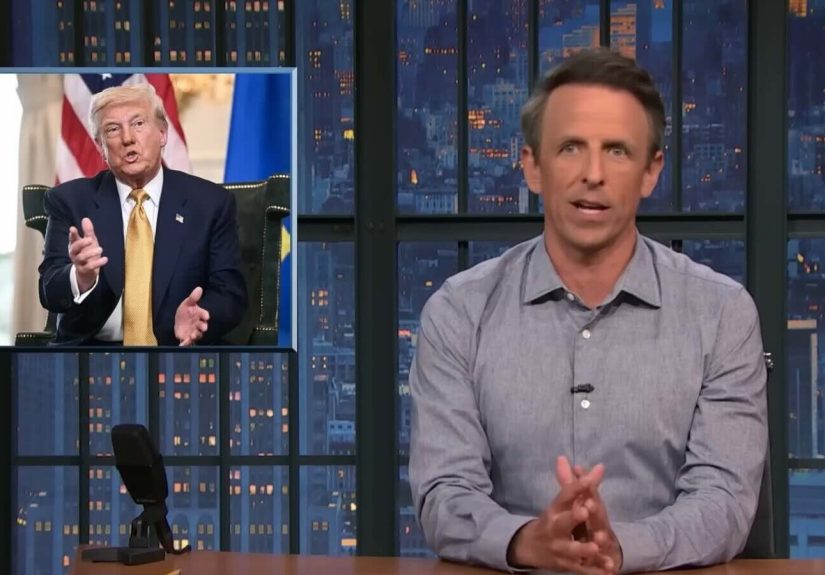
Trump had already been taking swings at late-night comedy broadly, but eventually the spotlight swung to NBC’s Late Night with Seth Meyers.
What followed was a familiar modern ritual: a political figure posts, the internet screenshots, the comedy show responds, and suddenly
we’re debating whether catapults on aircraft carriers are a national emergency.
How Late-Night Comedy Became a Political “Sport”
Presidents get roasted. It’s basically part of the job description.
In the U.S., late-night comedy has long played the role of cultural pressure valve: it takes the day’s headlines, turns them into jokes,
and helps viewers process everything from policy chaos to plain old weirdness. The punchline works because it’s smaller than the problem
a laugh doesn’t fix anything, but it can make the problem feel less unbeatable.
Trump, however, has always treated media attention like oxygen: he wants it, he controls it when he can, and he tends to react strongly
when it turns into mockery instead of admiration. That makes late-night shows a recurring targetespecially when clips travel far beyond TV
into social feeds where they can rack up millions of views without a cable subscription in sight.
Truth Social + late-night jokes = a predictable collision
Trump’s social posts about comedians often follow a template: attack the host’s talent, cite ratings, accuse networks of bias, and hint
(sometimes not so subtly) that consequences should follow. The details change; the tone rarely does. And once he turns his attention to a
specific person, he tends to circle backlike a stand-up heckler who keeps yelling the same line because it got a reaction the first time.
Why Seth Meyers Was Always a Likely Target
“A Closer Look” is built to dissect political nonsense
Meyers isn’t just doing one-liners and moving on. His signature segment, “A Closer Look,” is closer to a comedic breakdown:
longer clips, tighter argumentation, and the kind of structure that makes political messaging easier to fact-checkand easier to mock.
It’s not just “ha-ha”; it’s “ha-ha, and here’s the replay.”
That format can be especially irritating to politicians who prefer to control the narrative. A quick joke is easy to shrug off.
A ten-minute segment with receipts? That can feel like a roast and a book report at the same time.
Meyers has history with Trumplong before the recent posts
If you follow pop culture politics, you already know Meyers has been in Trump’s comedic orbit for years. He’s part of the late-night
ecosystem that treats Trump as both political figure and media spectacle. So the surprise isn’t that Meyers joked about Trump.
The surprise is that it took so long for Trump’s attention to land squarely on him again and again.
What Happened: The Timeline of the “Finally” Moment
The phrase “finally went after” fits because this wasn’t a single drive-by insultit was a run of posts and reactions that turned into a
mini-feud with recurring themes: NBC, Comcast, “ratings,” and one oddly persistent obsession with aircraft carrier catapults.
Here’s the cleanest way to understand it: as a timeline.
January 2025: the Comcast shot and the nickname game
In mid-January 2025, Trump blasted Meyers in a Truth Social rant that didn’t just insult the hostit also aimed at NBC’s corporate parent,
Comcast, with the kind of language that reads like a threat-by-implication. This was also the era of Trump deploying one of his favorite
tactics: slap a nickname on someone and repeat it until it becomes part of the story. (“Marble Mouth” was one of the labels that floated
around this stretch.)
August 2025: contract drama and “why would they extend him?” energy
Later in 2025, Trump publicly complained about NBC extending Meyers’ contract, framing it like a scandal and suggesting he’d “find out”
why the network would do it. Whether you interpret that as bluster, intimidation, or just the world’s pettiest performance review,
the message was clear: this wasn’t just “I don’t like the jokes.” It was “I don’t like that you get to keep telling them.”
November 2025: the “illegal” claim and the catapult spiral
The most headline-grabbing wave arrived in early November 2025, when Trump attacked Meyers againthis time layering insults with the
eyebrow-raising suggestion that being “anti-Trump” might be “probably illegal.” That line is revealing, because it turns a comedy critique
into a power fantasy: the idea that mockery should be punishable rather than protected.
The trigger for that round wasn’t just a vague “he made fun of me.” It centered on a Meyers segment that translated or clarified Trump’s
remarkscomedy’s version of “let’s read the minutes aloud.” The segment also touched on Trump’s own meandering comments involving, yes,
catapults on aircraft carriersspecifically steam vs. electric versionsbecause we apparently live in a timeline where naval engineering
became a meme.
Mid-November 2025: “fire him,” re-runs, and the repeat-offense joke
Trump didn’t stop at complaining. Another post called for NBC to fire Meyers, leaning heavily on the classic talking points:
“ratings disaster,” “no talent,” and the framing of the host as unhinged. The funniest (and most revealing) wrinkle came when Meyers
pointed out on-air that Trump seemed to be reactingagainto the same content, because the episode was a re-run.
That’s the modern feedback loop in its purest form: a president rage-posts about a comedy segment, the host responds, the response becomes
another clip, and now everyone is talking about who watched what, when, and why.
December 2025: NBC draws a line in the sand
As the attention grew, NBC leadership publicly emphasized continued support for late-night programming and framed the tradition as an
“equal opportunity” form of commentary. That matters, because it signals this wasn’t just a celebrity spatit had become a broader conversation
about media independence, corporate pressure, and whether political anger can reshape entertainment decisions.
How Seth Meyers Responded (Without Pretending This Is the Biggest Problem on Earth)
He used the oldest late-night move: “Yes, and…”
Meyers’ on-air response was classic late-night self-defense: accept the insult as content, then pivot to the absurdity behind it.
He framed the situation as less important than real governance issues, while also refusing to let an accusation slide unchallenged
especially the claim that he “talked endlessly” about catapults.
One of the sharper comedic choices was to flip the obsession back onto Trump: if anyone is “the catapult guy,” the argument goes,
it’s the person who keeps bringing it up. Meyers backed that up the way his show often doesby showing clips and building a narrative.
That’s his lane: not just jokes, but jokes plus tape.
He also made it about speechwithout making it a lecture
Meyers leaned into a simple idea: presidents can criticize comedians, and comedians can criticize presidents. That’s the point.
The tension comes when criticism turns into calls for punishment, firings, or regulatory muscle. Comedy doesn’t need to “win” an argument
to make that tension visibleit just needs to put it in front of an audience in a way that’s memorable.
Why This “Feud” Matters Beyond the Punchlines
It’s a case study in attention politics
Trump has always been unusually skilled at forcing the conversation onto his terrain. When he attacks a comedian, the story becomes
“Trump vs. late-night,” not the underlying policy topic that may have been criticized. The result is a media side quest that can still
be politically useful: it rallies supporters, pressures institutions, and floods the zone with conflict.
It raises real questions about power and pressure
When public officials (or people close to them) amplify calls to punish TV contentespecially via regulatory languageit stops being
“celebrity drama” and starts brushing up against free expression norms. Even if nothing formal happens, the message can still land:
“We’re watching, and we want consequences.”
It shows how late-night survives in 2026: clips, not clocks
The old late-night era was built on time slots. The current era is built on segments that travel: YouTube uploads, social reposts, short clips,
and algorithmic discovery. A single “Closer Look” can outlive the broadcast by weeks, popping up in feeds like an uninvited but oddly relevant
party guest. That distribution model is exactly why these clashes escalatebecause the audience is bigger than the TV audience.
So… What Happens Next?
If history is a guide, nothing ends cleanly. Trump’s media conflicts rarely do. Meyers will keep doing what late-night hosts do:
take the day’s chaos, translate it into jokes, and try to keep the audience from feeling like they’re living inside a blender.
Trump will keep doing what he does: treat criticism as personal offense, and treat attention as leverage.
The real question isn’t “Who won the spat?” The real question is what this pattern normalizesespecially when calls to fire comedians
and punish networks become just another headline we scroll past like it’s weather.
Experiences Related to “Donald Trump Finally Went After Seth Meyers” (What It Feels Like From the Outside)
You don’t have to work in politics or TV to recognize the vibe of this whole saga. In fact, the most relatable part may be the way it
mirrors modern life: everyone is watching everyone else react to everyone else. Here are a few experiences people commonly have around
moments like “Trump finally went after Seth Meyers”the kinds of cultural side effects that don’t show up in official timelines.
1) The “Wait, did a president just review a comedy show?” moment
There’s a specific kind of disbelief that hits when political power starts sounding like a comment section. You read a post that seems
like it should end with “smash that like button,” and then you remember: this is someone who can shape real outcomes. The whiplash is
part comedy and part alarm bellbecause it blurs the line between governance and grievance in a way that’s hard to unsee.
2) The group chat becomes a newsroom (and a comedy club)
These stories don’t spread like traditional news anymore; they spread like memes with footnotes. Someone drops a screenshot,
someone else adds the clip, a third person says “context?” and suddenly your friends are doing editorial triage at midnight.
Half the chat is laughing. The other half is asking whether it’s normal to call for someone’s firing over jokes.
Spoiler: the chat never agrees, but everyone keeps reading.
3) The “I came for jokes, why am I learning about catapults?” phenomenon
Late-night comedy has always smuggled information into entertainment, but the modern version is especially weird:
you click a funny segment and walk away knowing far more than you expected about a niche topiclike aircraft carrier launch systems.
It’s absurd, but it’s also the point: comedy highlights the strange details that reveal how a person thinks, what they fixate on,
and how easily a tangent can become the headline.
4) The exhaustion of the endless reaction loop
There’s a distinct fatigue to “reacting to the reaction to the reaction.” A comedian comments on a speech.
A politician posts about the comedian. The comedian responds to the post. Then pundits discuss the response.
Then social media debates whether discussing it is “giving it oxygen.” You can feel yourself becoming a reluctant participant
in a machine that runs on attentionand the only obvious exit is to log off, which nobody does for very long.
5) The uneasy laugh: “This is funny… but also kind of not”
A lot of people experience a double response: the joke is genuinely hilarious, and the situation is genuinely concerning.
When a call to fire a host or punish a network enters the conversation, it changes the temperature. The laughter becomes edged.
You’re entertained, but you’re also aware that power and speech are tangled together in a way that can get ugly fast.
6) The “clips as coping” habit
For many viewers, late-night clips function like a coping tool: a way to digest chaos in a form that feels manageable.
A tight ten-minute breakdown can feel like someone cleaned your mental kitchen. But there’s also a downside:
if the only way you can face the news is through jokes, you may start confusing emotional relief with actual resolution.
The joke ends; the reality doesn’t.
7) The moment you realize the fight isn’t really about the comedian
Eventually, most people sense what’s underneath: it’s less about Seth Meyers as a person and more about the idea of being mocked publicly
without consequences. That’s why the language often drifts from “I don’t like him” to “he shouldn’t be allowed.”
And that’s also why these moments matter: they’re cultural tests of what we think public speech is forpraise only, or criticism too.
If you’ve lived through enough cycles like this, you learn a small survival trick: laugh, yesbut also keep one eye on the underlying ask.
Is the ask “please stop making jokes,” or is it “please stop letting jokes exist”? One of those is just ego. The other is a problem.