Table of Contents >> Show >> Hide
- What is ear cancer?
- Why ear cancer can be tricky to spot
- Symptoms of ear cancer
- Causes and risk factors
- How ear cancer is diagnosed
- Treatment options for ear cancer
- Possible side effects and recovery
- Prevention and early detection
- When to call a doctor
- Experiences people often describe when dealing with ear cancer
- Conclusion
Ear cancer is one of those conditions that most people never expect to hear about. And honestly, that makes sense. It is rare, it can look like several much more common problems, and it does not always arrive with a dramatic neon sign saying, “Hello, I am definitely cancer.” Sometimes it looks like a stubborn sore on the outer ear. Sometimes it acts like an ear infection that simply refuses to leave. Sometimes it shows up as bleeding, drainage, hearing changes, or a skin spot that keeps changing its mind about what it wants to be.
That mix of rarity and sneaky symptoms is exactly why ear cancer deserves a closer look. The good news is that many ear cancers are very treatable when found early. The less-fun news is that people often brush off warning signs because the ear is small, easy to ignore, and frequently blamed for everything from earbuds to allergies to that one cotton swab you absolutely should not have used like a tiny shovel.
This guide breaks down what ear cancer is, where it starts, what symptoms matter, how doctors diagnose it, what treatment may involve, and what real-life experiences often feel like for patients and families. The goal is not to scare you. It is to make the topic understandable, useful, and a lot less mysterious.
What is ear cancer?
“Ear cancer” is not one single disease. It is an umbrella term for cancers that develop in or around different parts of the ear. These cancers can affect the outer ear, the ear canal, the eardrum, the middle ear, and in very rare cases the deeper structures connected to the temporal bone. Some cancers may also spread into the ear from nearby areas, such as the parotid gland or surrounding skin.
In many cases, what people call ear cancer actually starts as skin cancer on the outer ear. That matters because the ear gets a lot of sun exposure and often gets less sunscreen than the nose, cheeks, or forehead. In other words, the ear sometimes gets treated like the forgotten side quest of skincare. Your dermatologist would like a word.
Common types of ear cancer
- Squamous cell carcinoma: Often develops on sun-exposed skin and is one of the most common cancers affecting the outer ear.
- Basal cell carcinoma: Another common skin cancer that can form on the ear, especially after years of sun exposure.
- Melanoma: Less common, but more aggressive. It may appear as a changing pigmented lesion or unusual mole on the ear.
- Adenoid cystic carcinoma and other rare tumors: These may develop in the ear canal or glands associated with the ear and usually require specialized care.
Deeper cancers involving the ear canal or temporal bone are especially rare. Because they are unusual and can resemble infection or inflammation, they may take longer to diagnose than a more obvious skin lesion on the outer ear.
Why ear cancer can be tricky to spot
Ear cancer is a master of bad disguises. A lesion on the outer ear may look like dry skin, eczema, a scab, or a pimple that never learned when to quit. A tumor in the ear canal may act like swimmer’s ear, chronic ear drainage, or recurrent infection. When symptoms overlap with routine ear problems, people often try over-the-counter drops, wait it out, or assume it is a minor issue.
That is understandable. It is also why persistent symptoms deserve attention. If something on or in the ear keeps returning, keeps bleeding, keeps crusting, keeps hurting, or simply refuses to heal, it is worth having a clinician take a closer look.
Symptoms of ear cancer
Symptoms depend on where the cancer begins. Outer-ear skin cancers often behave differently from deeper ear canal tumors. Still, several red flags show up again and again.
Signs on the outer ear
- A sore that does not heal
- A scaly or rough patch
- A shiny bump or pink lump
- A spot that bleeds, itches, or crusts
- A mole or pigmented area that changes in size, shape, or color
- Discoloration or a scar-like patch
Signs deeper in the ear or ear canal
- Ear pain that does not go away
- Bleeding or drainage from the ear
- Hearing loss or muffled hearing
- Ringing in the ear
- A lump in or around the ear
- Dizziness or balance problems
- Weakness in the face
- Swollen lymph nodes nearby
None of these symptoms automatically means cancer. Ear infections, benign growths, dermatitis, trauma, and other conditions can cause similar complaints. But if symptoms persist or worsen, especially over weeks instead of days, it is smart to get them checked.
Causes and risk factors
Doctors do not always know the exact reason one person develops ear cancer and another does not. But several risk factors are strongly linked to cancers in or around the ear.
1. Sun and UV exposure
This is one of the biggest factors, especially for cancers on the outer ear. The ears get a surprising amount of ultraviolet exposure over time, and many people forget to apply sunscreen there. Repeated sun exposure, tanning beds, and a history of sunburns all raise the risk of skin cancer, including cancer on the ear.
2. Fair skin and personal risk profile
People with lighter skin that burns easily, lighter eyes, lighter hair, lots of sun damage, or a personal or family history of skin cancer may have a higher risk. That does not mean darker skin is immune, though. Skin cancer can affect anyone, and delayed diagnosis can happen in every skin tone.
3. Chronic inflammation or long-term ear problems
Long-standing inflammation can matter. Some rare ear cancers have been associated with years of chronic ear infections, persistent drainage, or chronic wounds. The link is especially important when symptoms have been hanging around for the kind of time span usually reserved for houseplants and gym memberships.
4. Prior radiation exposure
Previous radiation therapy to nearby head and neck areas may increase the risk of later cancer involving the ear region.
5. Immune suppression
People with weakened immune systems may face a higher risk of skin cancers, including more aggressive squamous cell carcinoma.
6. Repeated irritation or injury
Doctors also warn against repeatedly traumatizing the ear canal. Constant irritation, including aggressive cotton-swab use, can create chronic injury. That does not mean one misguided swab creates cancer overnight. It means the ear canal is not a place that benefits from repeated DIY excavation.
How ear cancer is diagnosed
Diagnosis starts with suspicion. That may come from a dermatologist, primary care clinician, ear, nose, and throat specialist, or other provider who notices that a spot or symptom is not behaving like an ordinary infection or irritation.
Medical history and exam
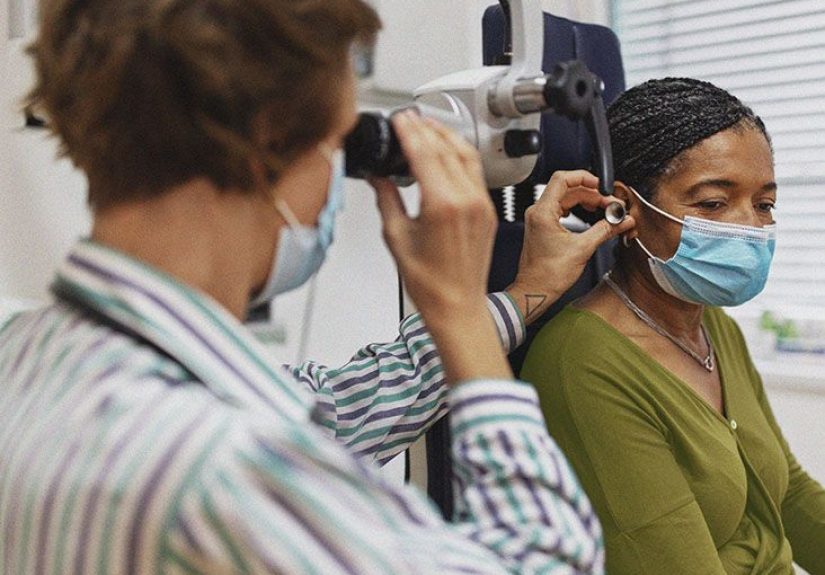
Your doctor will ask when the symptom started, whether it has changed, and whether it hurts, bleeds, drains, or affects hearing. They may examine the outer ear skin closely and use a microscope or otoscope to look inside the ear canal.
Biopsy
The biopsy is the step that answers the big question. A sample of tissue is removed and examined under a microscope to determine whether cancer is present and what type it is. For some small skin cancers, the biopsy may remove the entire visible lesion. For larger or deeper tumors, it mainly confirms the diagnosis and guides treatment planning.
Imaging tests
If cancer is confirmed or strongly suspected, imaging helps map out where it is and whether it has spread. This may include CT scans, MRI, or sometimes PET-CT. These tests help doctors evaluate nearby bone, soft tissue, lymph nodes, and deeper structures.
Hearing tests and additional evaluation
If the tumor may affect hearing or balance, doctors may order hearing tests as part of the workup. In more complex cases, care may involve a multidisciplinary team that includes ENT surgeons, dermatologists, medical oncologists, radiation oncologists, plastic surgeons, and audiologists.
Treatment options for ear cancer
Treatment depends on the type of cancer, where it started, how large it is, whether it has spread, and the patient’s overall health. There is no one-size-fits-all plan, which is probably wise because cancer has never once respected one-size-fits-all anything.
Surgery
Surgery is often the main treatment, especially for early-stage cancers. For outer-ear skin cancers, surgery may remove the lesion with a margin of healthy tissue. Mohs surgery may be used in select skin cancers to preserve as much healthy tissue as possible while confirming clear margins.
For deeper ear canal cancers, surgery may be more complex. Depending on location and extent, doctors may remove part of the ear canal, eardrum, nearby bone, or involved lymph nodes. Some patients also need reconstruction to restore appearance or function after tumor removal.
Radiation therapy
Radiation may be used after surgery to reduce the risk of recurrence, or as a primary treatment in situations where surgery would be difficult because of the tumor’s location or the patient’s health. Tumors on cosmetically or functionally sensitive areas of the ear may sometimes be treated this way.
Systemic treatment
Advanced or higher-risk cancers may require chemotherapy, immunotherapy, targeted therapy, or a combination approach. For some ear canal cancers, major cancer centers now use immunotherapy in selected cases, especially when the disease is more advanced.
Rehabilitation and supportive care
Treatment is not just about removing cancer. It is also about preserving hearing, balance, facial movement, and quality of life. Some patients need hearing support, speech or swallowing care if nearby head and neck structures are involved, or rehabilitation to adapt after surgery or radiation.
Possible side effects and recovery
Recovery varies widely. A small skin cancer on the outer ear may heal with relatively minor downtime. A deeper ear canal or temporal bone cancer can involve a much more demanding recovery. Possible side effects depend on treatment and may include:
- Temporary or permanent hearing changes
- Ringing in the ear
- Dizziness or balance issues
- Changes in ear shape or appearance
- Facial weakness
- Skin irritation from radiation
- Fatigue during or after treatment
This is one reason specialized care matters. Treating a rare cancer in a delicate area is not the time for guesswork, bargain-bin planning, or somebody saying, “Let’s just see what happens.”
Prevention and early detection
Not every case can be prevented, but you can absolutely reduce risk and improve your odds of catching problems early.
Protect your ears from the sun
- Apply sunscreen to the front, top, rim, and back of your ears
- Wear a wide-brimmed hat or other protective headwear outdoors
- Avoid tanning beds
- Reapply sunscreen when swimming or sweating
Check your ears regularly
Skin self-exams matter. Use a mirror to check the front and back of your ears. Ask a partner, family member, or friend to help with areas you cannot easily see. Look for new spots, changing moles, nonhealing sores, crusting, bleeding, or anything that simply looks suspicious.
Get suspicious symptoms evaluated
See a doctor if you notice a spot that changes, itches, bleeds, or does not heal, or if you have persistent ear pain, drainage, or hearing changes. Early evaluation can make treatment simpler and outcomes better.
When to call a doctor
Make an appointment if you have:
- A sore on the ear that does not heal within a few weeks
- A spot on the ear that bleeds, crusts, or keeps coming back
- A changing mole or dark lesion on the ear
- Persistent ear drainage or bleeding
- Ear pain or hearing loss that does not improve
- An “ear infection” that seems stuck on repeat
Persistent symptoms do not deserve endless self-negotiation. If you have already tried treatment and the problem is still hanging around like an uninvited group chat notification, go back and get it reassessed.
Experiences people often describe when dealing with ear cancer
One of the most striking things about ear cancer is how ordinary the beginning can feel. Many people say the first sign seemed too small to matter: a dry patch on the rim of the ear, a rough scab, a little spot that bled when they brushed past it, or ear drainage that looked like a routine infection. Because the symptoms are so easy to explain away, the early experience is often less “This might be cancer” and more “This is annoying and probably nothing.” That delay is common, and it is one reason awareness matters.
Another common experience is frustration before diagnosis. Some patients are treated more than once for infection, inflammation, or irritation before a biopsy finally happens. That can be emotionally exhausting. People may start to feel confused, embarrassed, or even guilty for pushing for another appointment. In reality, going back when symptoms persist is exactly the right move. Persistent symptoms are not a personality flaw. They are useful medical information.
Once cancer is diagnosed, many patients describe a strange mix of fear and relief. Fear, because the word “cancer” lands hard no matter where it appears. Relief, because the mystery is finally over and there is now a plan. Some worry about hearing loss. Others worry more about surgery on a visible part of the body, facial movement, scarring, or what recovery might mean for work, driving, exercise, or sleep. These concerns are not superficial. The ear is small, but it affects communication, balance, appearance, and everyday comfort in a very big way.
Treatment can also be an adjustment emotionally, not just physically. Patients often talk about becoming suddenly aware of things they never thought about before: how often they sleep on one side, how much wind bothers a healing ear, how tiring hearing changes can be, or how awkward it is when everyone says, “But it’s just your ear,” as though that makes cancer sound more convenient. Spoiler alert: it does not.
Recovery stories often include adaptation. Some people get used to a scar faster than they expected. Some discover that hearing support devices or reconstruction options make a major difference. Some become extremely diligent about sunscreen and skin checks after treatment, especially because the ears and surrounding skin are easy to neglect. Many also say the experience changed how seriously they take persistent symptoms, both for themselves and for family members.
Caregivers describe their own learning curve too. They may help monitor wounds, attend appointments, remind loved ones about follow-up visits, or simply act as the second set of eyes needed to check the backs of the ears and scalp. That practical support matters more than it gets credit for.
In the long run, the most hopeful pattern is this: when ear cancer is caught early and treated appropriately, people often move from panic to routine follow-up, from uncertainty to a manageable plan, and from “How did I miss this?” to “I know what to watch for now.” It may not be the journey anyone wanted, but it is one many people get through with expert care, adaptation, and a much greater respect for sunscreen.
Conclusion
Ear cancer is rare, but it is real, and it is easier to treat when spotted early. Most cases involve cancers of the outer ear skin, though rarer tumors can develop deeper in the ear canal or temporal bone. The biggest warning signs are changes that do not heal, symptoms that keep returning, and ear problems that do not respond the way ordinary irritation or infection should.
If there is one takeaway worth keeping, it is this: do not ignore the ear just because it is small. Protect it from the sun, check it regularly, and respect persistent symptoms. A tiny spot can tell a very big story.