Table of Contents >> Show >> Hide
- What Is an Erlenmeyer Flask?
- Why the Erlenmeyer Flask Shape Works So Well
- Common Uses of an Erlenmeyer Flask
- Types of Erlenmeyer Flasks
- What an Erlenmeyer Flask Is Not Good At
- How to Choose the Right Erlenmeyer Flask
- Best Practices for Using an Erlenmeyer Flask
- Why the Erlenmeyer Flask Still Matters
- Practical Experiences with the Erlenmeyer Flask
- Conclusion
- SEO Tags
Some lab tools look like they were designed by a committee. The Erlenmeyer flask looks like it was designed by someone who had actually spilled a chemical on a bench and decided, “Never again.” With its flat bottom, sloped sides, and narrow neck, this iconic conical flask is one of the smartest pieces of laboratory glassware ever invented. It is humble, practical, and quietly brilliant. It does not demand attention the way a shiny instrument does, but ask almost any chemist, biology student, or lab tech to work without one and you will hear the sound of immediate regret.
In this guide, we will unpack what an Erlenmeyer flask is, why its shape matters, where it shines, where it absolutely does not, and how to choose the right one without buying the glassware equivalent of dress shoes for a hiking trip. Whether you are a student, a lab manager, a curious science reader, or someone who simply enjoys oddly satisfying lab equipment, this article covers the essentials in plain American English.
What Is an Erlenmeyer Flask?
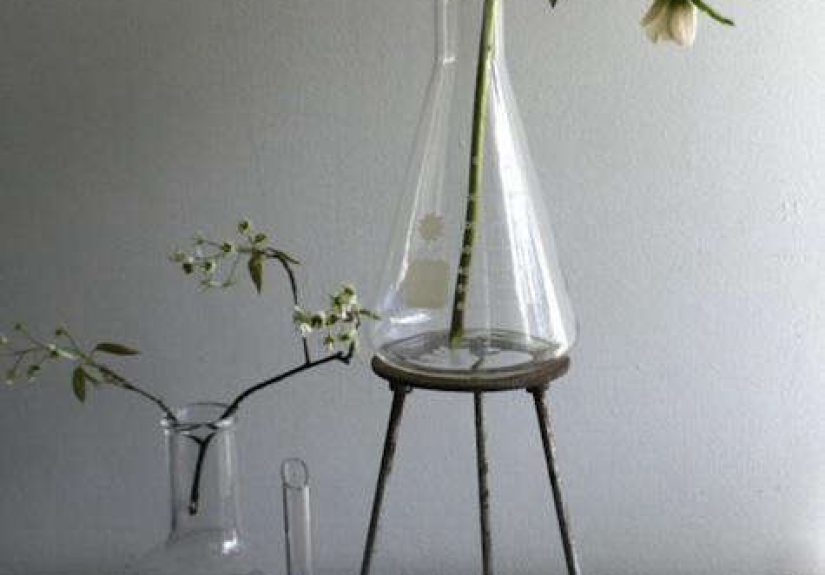
An Erlenmeyer flask is a flat-bottomed laboratory flask with a broad conical body and a cylindrical neck. It is named after the German chemist Emil Erlenmeyer, who introduced the design in the nineteenth century. The shape is not just a style choice. It was built for function: easier swirling, less splashing, better temporary closure, and stable placement on a lab bench or hot plate.
At first glance, it may look like a beaker that got serious about personal growth. But the difference is important. A beaker is open and convenient, while an Erlenmeyer flask is controlled and efficient. The narrower neck makes it easier to reduce splatter, cover the contents, insert a stopper, or run certain procedures with less mess. That one design tweak changes everything.
The Core Design Features
The classic Erlenmeyer flask typically includes a flat base, sloping sides, a narrow mouth, and volume markings. Those markings are useful for approximate volumes, but they are not intended for high-precision measurement. In other words, the flask is excellent for handling liquids, mixing them, and heating them, but it is not the glassware you should trust when exact volume is the whole point of the experiment.
Why the Erlenmeyer Flask Shape Works So Well
The magic of the Erlenmeyer flask is geometry. The wide lower body gives liquids room to move. The sloped walls guide that motion upward and inward rather than outward and onto your hand, notebook, sleeve, or dignity. The narrow neck helps contain splashes during swirling and makes it easier to add a stopper, cotton plug, cap, or transfer accessory depending on the application.
That shape is why the Erlenmeyer flask is so often associated with titrations, solution preparation, culturing, and general mixing. Swirl a solution in a beaker and it can slosh around like it has a grudge. Swirl the same liquid in an Erlenmeyer flask and it behaves more like a professional. The flask is built for motion without drama.
Flat Bottom, Big Advantage
Unlike round-bottom flasks, an Erlenmeyer flask can sit directly on a bench, stir plate, or hot plate without special support. That makes it wonderfully practical for everyday work. You can set it down, pick it up, swirl it, return it, and keep moving. In a busy lab, convenience is not a luxury. It is survival.
Common Uses of an Erlenmeyer Flask
1. Mixing Solutions
This is the flask’s home turf. Need to combine reagents, dissolve a solid, or mix a buffer without launching droplets into the atmosphere? The Erlenmeyer flask is your friend. Its conical body allows efficient swirling by hand, while the neck helps keep the liquid where it belongs.
2. Titration Work
The Erlenmeyer flask is a staple in acid-base and redox titrations because it holds the analyte while the titrant is added from a burette. The user can swirl constantly during the addition without losing solution over the rim. That matters because titrations reward patience, precision, and a refusal to spill your endpoint down the drain.
It is especially useful when an indicator is involved. As the titrant is added drop by drop, the contents can be swirled to distribute each addition quickly and evenly. The result is smoother mixing and easier observation of the endpoint.
3. Heating Liquids
Many glass Erlenmeyer flasks are made from borosilicate glass, which handles thermal stress better than ordinary glass. That makes them suitable for many heating tasks, especially moderate lab heating on a hot plate or in a water bath. The sloped walls also help reduce bumping and splashing compared with more open vessels.
Still, “suitable for heating” does not mean “indestructible.” Sudden temperature changes, visible cracks, or using the wrong flask for pressure or vacuum are excellent ways to turn confidence into cleanup.
4. Temporary Storage and Transport
Because the neck can be stoppered or capped, an Erlenmeyer flask is more secure than a beaker for short-term holding of solutions. It is often used to store prepared media, reaction mixtures, or samples during a workflow. That said, long-term storage depends on the chemical, closure, and material compatibility. The flask is versatile, but it is not a magical universal container.
5. Microbiology and Cell Culture
Modern Erlenmeyer flasks are not just glass. In bioprocessing and cell culture, plastic shake flasks made from materials such as PETG or polycarbonate are widely used for suspension culture, media preparation, mixing, and storage. Many are sterile and available with vented caps to improve gas exchange. Some have baffled bottoms, which increase mixing and aeration during shaking. At that point, the humble chemistry flask has entered its biotech era.
Types of Erlenmeyer Flasks
Glass Erlenmeyer Flasks
Traditional glass models remain common in chemistry labs. They are durable, reusable, and well suited for general solution handling and heating. Borosilicate versions are especially popular because they resist thermal shock better than standard soda-lime glass.
Plastic Erlenmeyer Flasks
Plastic versions are often preferred in life science settings, especially when sterility, break resistance, and lower contamination risk matter. They are common in shaker culture applications and may be supplied ready to use. If your work involves cells instead of strong solvents, plastic may be the smarter choice.
Narrow-Mouth vs. Wide-Mouth
Narrow-mouth flasks are common for routine lab use and help minimize splashing. Wide-mouth designs are convenient when adding solids, cleaning the flask, or using the flask specifically for tasks like titration where accessibility matters.
Plain-Bottom vs. Baffled-Bottom
Plain-bottom Erlenmeyer flasks are the general-purpose standard. Baffled-bottom versions include ridges or contours that improve agitation, mixing, and gas exchange during shaking. In microbial or cell culture work, that can translate into better oxygen transfer and more efficient growth conditions.
What an Erlenmeyer Flask Is Not Good At
Let us save everyone some heartbreak: an Erlenmeyer flask is not precision volumetric glassware. Its graduations are approximate. They are useful for quick estimates and workflow convenience, not for exact analytical measurements. If you need a truly accurate final volume, use a volumetric flask, burette, pipette, or graduated cylinder as appropriate.
It is also not the right default choice for vacuum work. Standard conical flasks are generally not intended for vacuum unless specifically engineered for that purpose. Likewise, certain pressure applications require specially designed vessels, not an everyday Erlenmeyer flask that happened to be nearby and looked available.
In short, the Erlenmeyer flask is brilliant within its lane. Trouble begins when people ask it to become a pressure vessel, a calibration standard, or a superhero.
How to Choose the Right Erlenmeyer Flask
Pick the Right Material
Choose glass for general chemistry, heating, and solvent compatibility when appropriate. Choose plastic for sterile culture work, lighter handling, and reduced breakage risk. The right answer depends on your experiment, not your emotional attachment to classic glassware.
Choose a Sensible Size
Common sizes range from very small flasks to multi-liter culture vessels. As a rule, do not fill the flask to the top if you plan to swirl or shake it. Leave headspace. Liquids need room to move, and the flask performs best when it can do what it was designed to do.
Think About the Closure
For chemistry work, a stopper may be enough. For cell culture, vented caps, filter caps, or transfer caps may matter. The closure is not a minor accessory. It affects contamination risk, gas exchange, spillage, and overall workflow.
Do Not Ignore Markings and Specifications
Reinforced rims, enamel graduations, marking spots, baffled bottoms, sterile packaging, and temperature limits all matter. Buying an Erlenmeyer flask without checking its specifications is a little like buying shoes based only on color. Attractive? Maybe. Wise? Not always.
Best Practices for Using an Erlenmeyer Flask
- Use the volume markings for estimates, not precision analysis.
- Inspect glass for chips, cracks, or stress before heating.
- Leave enough headspace for swirling, shaking, or foaming.
- Use the correct cap or stopper for the application.
- Do not use a standard Erlenmeyer flask under vacuum unless it is rated for that purpose.
- Match the flask material to the chemical or biological process.
- Label contents clearly, because mystery liquids are rarely a charming surprise.
Why the Erlenmeyer Flask Still Matters
Scientific tools survive for a reason. The Erlenmeyer flask has remained relevant not because labs are sentimental, but because the design solves real problems elegantly. It helps chemists swirl with control, helps students learn titration with less mess, helps researchers grow cultures more efficiently, and helps countless experiments proceed with one less headache.
In a world full of high-tech instruments and expensive automation, there is something refreshing about a piece of glassware that still wins on pure practicality. The Erlenmeyer flask does not need a touchscreen. It just works.
Practical Experiences with the Erlenmeyer Flask
Anyone who has spent real time in a lab develops a quiet respect for the Erlenmeyer flask. It is often the first vessel you reach for and the last one you clean at the end of a long day. The reason is simple: it makes everyday work smoother in ways that are easy to overlook until you try doing the same job with the wrong container.
One of the most common experiences is discovering how much easier swirling becomes. New students often start by treating every container like a beaker, which is a fast route to tiny splashes and large regrets. Then they switch to an Erlenmeyer flask and suddenly understand why the sloped sides matter. The liquid rolls in a controlled circle, the neck keeps it contained, and the whole task feels less like damage control and more like actual science.
Titration is where many people fall in love with this flask for the first time. You stand there with one hand on the burette, one eye on the indicator, and just enough anxiety to make the final drop feel dramatic. In that moment, the Erlenmeyer flask is doing heroic work. It lets you swirl confidently after each addition, which means better mixing and a clearer endpoint. Without it, you would spend half the experiment trying not to decorate the bench with analyte.
Another very real experience comes from heating solutions. The flask feels safer and more controlled than open containers because the shape helps keep the contents calm. It does not eliminate risk, of course, but it reduces the little chaotic movements that make heating more annoying than it needs to be. Anyone who has ever watched a warm solution creep toward the lip of a beaker like it is planning an escape immediately appreciates the Erlenmeyer design.
In biology and cell culture settings, the experience is different but equally practical. Large shake flasks become part workspace, part habitat. Researchers care about gas exchange, sterility, mixing, and how easy it is to sample without contaminating precious cultures. That is where baffled bottoms, vented caps, and transfer systems stop sounding like catalog jargon and start feeling like life improvements. The right flask setup can make routine culture work far less stressful.
There is also a cleaning lesson hidden in every lab. Residue loves corners and awkward geometry, which is why the simple contours of an Erlenmeyer flask are so appreciated. Wide-mouth versions are especially satisfying because you can actually clean them without performing advanced wrist acrobatics. This may not sound glamorous, but in real lab life, easy cleaning is a feature worth celebrating.
Perhaps the most memorable experience is how often the flask proves its value in small, unplanned moments. Need a temporary vessel during a transfer? Grab the Erlenmeyer flask. Need to swirl something gently while watching a color change? Erlenmeyer flask. Need a stable container that will sit nicely on a stir plate and not act like a chaos goblin? Once again, the Erlenmeyer flask.
That is why this tool has such staying power. It earns trust through repetition. Not because it is flashy, but because it keeps solving ordinary problems with extraordinary consistency. In lab work, that kind of reliability is not boring. It is beautiful.
Conclusion
The Erlenmeyer flask is one of the great examples of design doing exactly what it should do. Its conical body, narrow neck, and stable base make mixing easier, splashing less likely, and everyday lab work far more efficient. It is excellent for swirling, titrations, general solution handling, heating many liquids, and even modern cell culture applications when specialized versions are used.
Just remember its limits. It is not precision volumetric glassware, and it is not automatically safe for vacuum or pressure work. Used correctly, though, it is one of the most useful vessels in science. Not bad for a flask that looks like it simply got its angles together.