Table of Contents >> Show >> Hide
- What Is a Futagami Brass Towel Hanger, Exactly?
- Why Designers (and Normal Humans) Love It
- Sizes, Specs, and What They Actually Hold
- Where a Futagami Brass Towel Hanger Works Best
- Installation Notes (So It Stays Put When the Towel Is Soaked)
- Living With Brass: Patina, Water Spots, and “Is This Normal?”
- How to Clean a Futagami Brass Towel Hanger Without Ruining the Vibe
- Styling Ideas: Making Brass Look Intentional, Not Random
- Buying Checklist: What to Confirm Before You Click “Add to Cart”
- FAQ
- Real-World Experiences With a Futagami Brass Towel Hanger (About )
- 1) The first week: “Wait, why does it look different in the morning?”
- 2) The guest-bath effect: “Why does my tiny bathroom suddenly look expensive?”
- 3) The practical kitchen test: “Can it survive dish towel chaos?”
- 4) The family reality: “My kid hangs on it like a jungle gym.”
- 5) The patina storyline: “It’s developing ‘hot spots’should I even this out?”
- 6) The long-game satisfaction: “I stopped noticing it… until I replaced something cheap nearby.”
- Conclusion
If your bathroom is feeling a little… emotionally flat, you don’t necessarily need a full renovation. Sometimes you just need
one beautiful, useful object that quietly upgrades the whole room every single day. Enter the Futagami brass towel hanger:
a minimalist, sand-cast brass bar that holds towels with the calm confidence of someone who owns exactly one perfect white T-shirt.
This isn’t shiny “hotel-chrome” hardware that looks identical in every condo from coast to coast. Futagami’s charm is in the texture,
the warmth, and the way the metal changes with time. It starts out golden and matte, then deepens into a richer, moodier patina as your
home lives its lifesteam, fingerprints, water droplets, and all.
What Is a Futagami Brass Towel Hanger, Exactly?
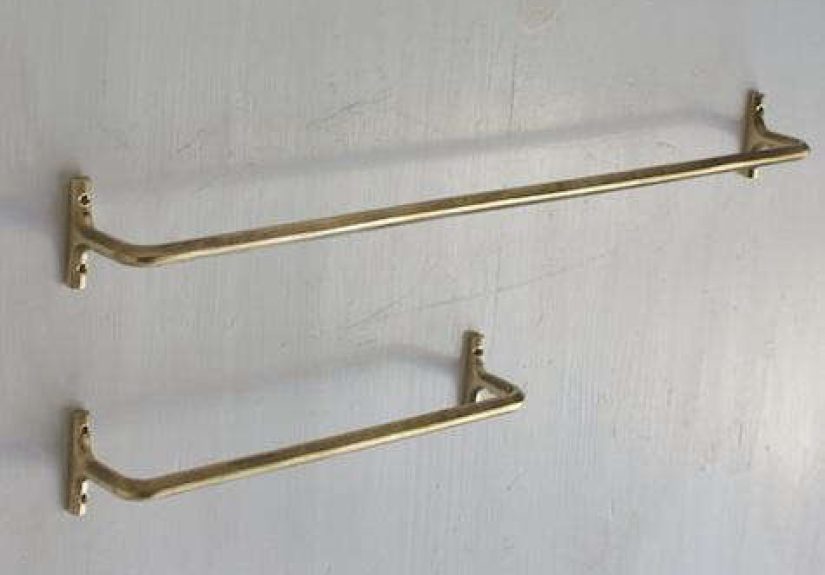
A Futagami towel hanger is a wall-mounted brass towel bar made by Futagami, a long-established Japanese brass foundry.
Unlike many modern towel bars that rely on plated finishes or ultra-polished surfaces, Futagami leans into a more tactile,
“honestly-made” feel. Think: solid metal, understated form, and a surface that looks better because it isn’t trying so hard.
Many Futagami pieces are made using sand casting, a traditional process that can leave a subtly “crude-cast” texture.
That texture is part of the appeal: it catches light softly, hides minor daily scuffs better than mirror-polish finishes, and gives the bar
a handmade character without being fussy.
In plain English: it’s a towel bar that looks like it belongs in a thoughtfully designed home, not a big-box builder bathroom
and it’s built to age, not to stay frozen in “brand-new” mode forever.
Why Designers (and Normal Humans) Love It
1) It’s minimalist without being cold
Minimal can sometimes read as sterile. Futagami’s brass reads as warm. It pairs beautifully with white tile, natural stone,
plaster walls, painted cabinetry, walnut vanities, and basically anything that would look good next to coffee.
2) The patina is the point
With everyday use, brass naturally oxidizes and changes color. In bathroomswhere humidity and water are part of the deal
the aging can happen faster. Instead of fighting that, Futagami embraces it. The hanger becomes more personal over time, like a leather
bag that finally stops looking “new” and starts looking “yours.”
3) It makes small spaces feel intentional
In a powder room, guest bath, or compact apartment bathroom, one well-chosen piece of bathroom hardware can do a lot of heavy lifting.
A Futagami towel bar can act like jewelry for the roomfunctional, yes, but also a focal point.
Sizes, Specs, and What They Actually Hold
Futagami towel hangers are commonly sold in two sizesoften labeled Small and Large.
The exact measurements can vary slightly by retailer listing, but a typical setup looks like this:
- Small: About 7.75 inches wide ideal for a hand towel, face towel, or dish towel.
- Large: About 14 inches wide comfortable for a bath towel or two hand towels folded neatly.
- Projection/height: Often around 1.5 inches in depth/height (the “stands off the wall” dimension).
Some retailers note that the bar comes with brass screws. That’s not just a nice detailit helps the whole thing look consistent,
because nothing ruins a beautiful brass moment like two random silver screws yelling, “I came from a different universe!”
Choosing the right size (without overthinking your life)
- Go Small if it’s next to a sink, in a powder room, or in a kitchen for towels you change often.
- Go Large if it’s your primary bath towel spot, or you want that “hotel fold” without the towel grazing the wall.
- Get both if you like coordinated hardware and enjoy the feeling of being suspiciously put-together.
Where a Futagami Brass Towel Hanger Works Best
Bathrooms
This is the obvious home base. A Futagami towel hanger looks especially good:
- Beside a vanity for hand towels
- Near a shower or tub for bath towels (not so close that it gets constantly soaked)
- In a powder room where it doubles as décor
Kitchens
A brass towel bar in the kitchen is an underrated flex. Hang a linen dish towel by the sink, or place it on an island end panel for quick grabs.
Bonus: brass plays nicely with stainless appliances, as long as you repeat it somewhere else (cabinet pulls, lighting, or even a small utensil hook).
Entryways, mudrooms, and utility spaces
If you’ve got a small laundry zone or mudroom sink, the towel hanger becomes a “tiny luxury” upgradelike switching from paper napkins to cloth,
except you don’t have to do more laundry (well… not much more).
Installation Notes (So It Stays Put When the Towel Is Soaked)
A towel bar’s real job isn’t “holding towels.” It’s “holding wet towels that weigh more than you expect while someone yanks them like a lawnmower cord.”
So installation matters.
Quick tool checklist
- Stud finder (or strong magnet and patience)
- Level
- Drill + bits
- Screwdriver
- Appropriate anchors (if you can’t hit studs)
- Tape measure and pencil
Best practice: mount into studs
If you can align at least one side with a stud, do it. Stud mounting increases strength and reduces the chance of wobble over time.
Mark your holes carefully, pre-drill, keep everything level, and tighten until snug (not “Hulk-tight”).
If studs aren’t available: use strong anchors
Sometimes your dream placement and your studs do not share the same dream. In that case, choose robust anchors designed for drywall load.
Metal toggle-style anchors are a popular option because they can provide serious holding power when installed properly.
Height guidelines that won’t make your towels drag the floor
A common “standard” mounting height for towel bars is around 48 inches from the floor. That height tends to work well for most adults
and helps bath towels hang without brushing the floor. If kids use the bathroom, lowering it can help them reach and re-hang towels themselves
(a small miracle). If you’re planning for accessibility, keep reach ranges in mind as well.
Practical tip: leave enough clearance so towels can breathe. Crowding a towel bar into a tight corner can trap moisture and make towels smell less like
“fresh linen” and more like “sad gym bag.”
Living With Brass: Patina, Water Spots, and “Is This Normal?”
Yes. It’s normal. Brass changes. That’s the deal, and it’s the reason people seek out unlacquered brass patina in the first place.
Over time you may notice:
- Darkening in frequently touched areas (especially where fingers naturally grab)
- Soft variations in tone (more “gold-brown” than “bright yellow”)
- In humid spaces, occasional greenish or bluish oxidation spots
If you love a consistent, shiny finish 24/7, you might prefer a lacquered or polished product. But if you want hardware with personality that looks
better as it lives with you, Futagami’s approach makes a lot of sense.
How to Clean a Futagami Brass Towel Hanger Without Ruining the Vibe
The goal for many owners isn’t to make the brass look “new.” It’s to keep it clean while preserving the character. A smart routine is simple:
Weekly or as-needed maintenance
- Dust and wipe with a soft, dry cloth to remove fingerprints and moisture.
- Use mild soap and water for grimethen rinse lightly (or wipe with clean water) and dry completely.
- Dry thoroughly to avoid water marks and accelerated tarnish.
What to avoid (unless you want a shiny reset)
- Abrasive powders, scouring pads, and aggressive scrubbing
- Strong acids (like vinegar/lemon-based cleaners) if you want to preserve patina
- Heavy-duty metal polishes if you like the aged look (they’ll strip it back)
If you need a gentle “brighten” (not a full makeover)
For spot-treating heavier tarnish while keeping some patina, many people use gentler approaches rather than harsh polishing.
Always test in an inconspicuous area first, and remember: brass has a long memory. What you do today shows up in tomorrow’s finish.
Styling Ideas: Making Brass Look Intentional, Not Random
Brass can either look “designed” or “accidental.” The difference is repetition and context. If the towel hanger is the only brass object in the entire
room, it can look like a beautiful orphan. Give it at least one friend.
Easy pairings
- Warm whites + brass: White tile, creamy paint, and brass reads soft and classic.
- Dark paint + brass: Deep navy, charcoal, or forest green makes brass glow (without screaming).
- Natural wood + brass: Walnut, oak, teakbrass loves wood like a rom-com couple you actually root for.
- Stone: Marble and limestone look especially elevated with warm brass accents.
Mixing metals without chaos
Yes, you can mix metals. The trick is to choose a “lead” metal and a “supporting” metal. Let brass be the lead in a small space (like a powder room),
or let it be the supporting accent in a larger space dominated by stainless or matte black.
Buying Checklist: What to Confirm Before You Click “Add to Cart”
- Solid brass vs. plated: Solid brass will age differently and can be cleaned more confidently than a thin plated finish.
- Finish expectations: Is it meant to patina? Is it matte? Will it arrive already slightly varied in tone?
- Mounting hardware included: Screws provided are great. Anchors may or may not be included depending on the seller.
- Size: Measure your wall space and your towel size. “Large” means nothing if your wall is tiny.
- Lead time: Some Futagami items can be made-to-order, so shipping may take longer than typical mass-market hardware.
FAQ
Will a brass towel hanger rust?
Brass doesn’t rust the way iron-based metals do. It can tarnish and oxidize, which is part of the aesthetic. In very humid environments,
you may see patina develop faster.
Can it handle heavy bath towels?
Typically, yesif installed correctly. A wet towel is heavier than it feels, so mount into studs when possible or use high-quality anchors
rated for the load. Hardware strength is only as good as what it’s attached to.
How long does patina take to show?
It depends on humidity, frequency of touch, and cleaning habits. In a busy bathroom, you may see changes in weeks to months. In a low-use powder room,
it can take longer. Patina isn’t a timerit’s a diary.
Is the textured surface hard to keep clean?
Not usually. Dusting and gentle wiping go a long way. The slightly textured cast surface can actually hide minor daily marks better than a mirror-polished bar.
Real-World Experiences With a Futagami Brass Towel Hanger (About )
Because a towel bar isn’t just “hardware”it’s a daily interaction, like your coffee mug or your front door handle. Here are a few realistic
ways the Futagami brass towel hanger tends to fit into everyday life, with the good, the quirky, and the surprisingly satisfying.
1) The first week: “Wait, why does it look different in the morning?”
Early on, people notice the finish changes with light. In warm evening bulbs it looks honey-gold; in daylight it can read more muted and earthy.
That’s part of the charm of cast brassit’s less “mirror” and more “glow.” If you’re used to shiny fixtures, this softer look can feel like a design upgrade
that doesn’t try to steal the whole room.
2) The guest-bath effect: “Why does my tiny bathroom suddenly look expensive?”
In a powder room, the towel hanger can become the unofficial centerpiece. Guests might not say, “Nice sand-cast brass,” but they’ll pause an extra second,
and you’ll see it in their eyes: this place is cared for. Minimal hardware works especially well in small spaces because it doesn’t clutter the walls.
3) The practical kitchen test: “Can it survive dish towel chaos?”
Kitchens are messy, and dish towels are rarely folded like they’re starring in a catalog. A Futagami hanger holds up well visually because the texture
doesn’t show every tiny scuff. It also looks great next to wood cutting boards and stone counters. The main “learning moment” is placement:
too close to the sink splash zone and you’ll wipe it down more often to avoid water spotting.
4) The family reality: “My kid hangs on it like a jungle gym.”
A towel bar will eventually be tested by gravity and curiosity. Installed into studs, it has a much better chance of surviving enthusiastic towel-yanks,
accidental bumps, and the occasional attempt at a hanging stunt. If you used light-duty anchors, this is where you’ll find out.
(Consider it a character-building exercise. For the wall. And for you.)
5) The patina storyline: “It’s developing ‘hot spots’should I even this out?”
Over time, the most touched area may darken faster. Many people end up liking the lived-in look because it feels authenticlike well-loved leather.
If you prefer a more uniform appearance, gentle, consistent wiping (especially after steamy showers) helps keep the finish more even.
But perfection isn’t really the point here; the point is that it becomes uniquely yours.
6) The long-game satisfaction: “I stopped noticing it… until I replaced something cheap nearby.”
Quality hardware disappears into daily life in a good wayquiet, steady, reliable. But when you swap out a flimsy hook or a wobbly towel ring nearby,
the difference becomes obvious. The Futagami bar feels substantial, and that “solid” feeling tends to be what owners appreciate most after months of use.
It’s the kind of object that slowly turns into a favorite without demanding attention.