Table of Contents >> Show >> Hide
- What Was Skylab, and Why Did It Matter?
- The Launch Disaster: Skylab’s Bad First Day
- Why This Was Space Hacking at Its Finest
- The People Behind the Rescue
- Skylab’s Scientific Payoff
- Lessons in Improvisation: Why Skylab Still Feels Modern
- From Skylab to the International Space Station
- Experiences and Reflections: What Skylab Teaches Anyone Who Builds, Fixes, or Leads
- Conclusion: The Hack That Kept a Space Station Alive
When most people hear the word “hacking,” they imagine hooded figures, glowing keyboards, and somebody typing “I’m in” with dramatic confidence. But long before hacking became a digital buzzword, NASA pulled off one of the greatest real-world hacks in spaceflight history: saving Skylab, America’s first space station, with improvised tools, rapid engineering, and astronauts brave enough to do orbital handyman work at 17,000 miles per hour.
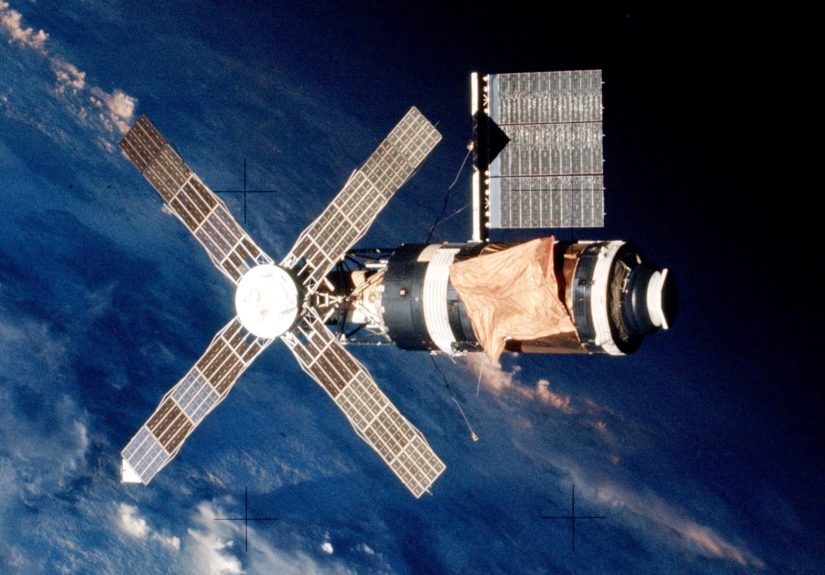
Skylab was supposed to be NASA’s grand post-Apollo laboratory in orbit, a place where astronauts could study the Sun, monitor Earth, test human endurance in microgravity, and prove that people could live and work in space for more than a quick lunar weekend. Instead, within the first minute after launch on May 14, 1973, Skylab became a crisis with solar panels. Its protective micrometeoroid shield tore away, one solar wing ripped off, and another jammed. The station reached orbit overheated, underpowered, and very nearly doomed.
What saved Skylab was not a perfect plan. It was a spectacularly imperfect, deeply human response: diagnose fast, invent faster, test under pressure, and send a crew into orbit with a bag of custom-made fixes. In modern language, NASA hacked the mission. Not with malware, but with metal poles, Mylar fabric, cable cutters, rope, sweat, and the stubborn belief that a broken space station did not have to stay broken.
What Was Skylab, and Why Did It Matter?
Skylab was the United States’ first space station and the first major American attempt to turn spaceflight from a sprint into a long-duration workplace. Built from Apollo-era hardware, including a converted Saturn rocket stage, the station included living quarters, an airlock, docking ports, Earth observation equipment, medical research facilities, and the Apollo Telescope Mount for solar astronomy.
Unlike the Apollo Moon missions, Skylab was not about planting flags and leaving footprints. It was about staying. NASA wanted to learn how the human body handled weeks and months in microgravity. Could astronauts sleep, eat, exercise, shower, perform experiments, and remain sharp over long periods? Could a space station operate like a laboratory instead of a stunt vehicle? These questions shaped later programs, from the Space Shuttle to the International Space Station.
Skylab was also big for its time. It had room for astronauts to float, work, and even perform daily exercise routines that looked suspiciously like the world’s most expensive gym membership. The plan called for three crews to visit the station, conduct hundreds of experiments, and show that orbital living was not science fiction. But the station had to survive long enough for anyone to live in it.
The Launch Disaster: Skylab’s Bad First Day
Skylab launched aboard the final Saturn V rocket. For a few seconds, everything looked normal. Then, about 63 seconds after liftoff, telemetry showed trouble. The micrometeoroid shield, which also served as a thermal blanket, deployed prematurely and was ripped away by aerodynamic forces. That accident triggered a chain reaction. One large solar array was torn off completely, while another was trapped by debris and could not fully open.
In space, shade is not a luxury. Without its shield, Skylab’s workshop absorbed harsh solar heating. Temperatures rose above 130 degrees Fahrenheit, threatening food, film, equipment, experiments, and possibly the safety of the crew. At the same time, the station was starving for power because its main solar arrays were not working properly. Mission controllers faced a brutal balancing act: aim Skylab one way to reduce heat and lose power, or aim it another way to gather power and cook the inside like a cosmic toaster oven.
This was not a “restart your device” kind of problem. Skylab was unmanned, damaged, and in orbit. The first crew had been scheduled to launch quickly after the station, but NASA delayed the mission while teams on the ground scrambled to design rescue hardware. Engineers at Johnson Space Center and Marshall Space Flight Center had to turn a near-total failure into a repairable problem in days, not months.
Why This Was Space Hacking at Its Finest
The Skylab rescue deserves the word “hacking” because it captures the spirit of creative, practical problem-solving under ugly constraints. NASA could not recall the station. It could not manufacture a replacement shield and bolt it on at leisure. It could not count on perfect conditions, perfect tools, or perfect information. The team had to improvise within the shape of the spacecraft, the mass limits of the Apollo capsule, the training time available to the crew, and the physics of orbital mechanics.
Good hacking starts with understanding the system. NASA engineers studied how Skylab was built, where openings existed, what tools astronauts could use, how the crew could reach the damaged areas, and what materials could survive sunlight, vacuum, and temperature swings. The goal was not elegance. The goal was survival.
The First Hack: A Parasol for a Space Station
The most famous Skylab fix was the parasol sunshade. Jack Kinzler, an engineer at NASA’s Johnson Space Center, proposed a clever solution: fold a protective shade like an umbrella, pass it through a small scientific airlock, and open it outside the station to cover the exposed workshop. The device used aluminum poles and layers of nylon, Mylar, and aluminum. In spirit, it was part spacecraft hardware, part camping gear, and part “we need shade immediately, please stop asking questions.”
The beauty of the parasol was that it could be deployed from inside Skylab. That mattered because a full spacewalk added risk, complexity, and training demands. The crew could insert the folded shade through the airlock, let it open outside, and pull it snug against the station’s exterior. It was a hack because it used an existing featurethe scientific airlockfor a purpose far beyond its original role.
After the Skylab 2 crew arrived on May 25, 1973, Commander Charles “Pete” Conrad, Pilot Paul Weitz, and Science Pilot Joseph Kerwin found a station that looked as injured as the telemetry suggested. The gold-colored surface beneath the missing shield was exposed. One solar wing was gone. The other was stuck. After docking and entering the station, the crew encountered intense heat but no dangerous toxic gases. They deployed the parasol, and temperatures began to fall. Within a few days, Skylab became livable.
The Second Hack: Cable Cutters on a Long Pole
Cooling the station solved only half the problem. Skylab still needed electricity. The remaining workshop solar array was jammed by debris from the torn shield. Without more power, the crew’s scientific mission would remain limited, and the future Skylab missions could be at risk.
Before docking, Weitz had attempted a stand-up EVA from the Apollo command module hatch, using cable cutters mounted on a pole to free the jammed array. The attempt did not work, but it provided valuable visual information. Later, Conrad and Kerwin performed a more direct repair spacewalk. They used a 25-foot pole with a cutting tool to sever the metal strap holding the solar wing down. When the hinge still resisted, they attached a rope and pulled. The array finally snapped open with enough force to bounce the astronauts away, a dramatic reminder that in space even success can shove you around.
Fortunately, their tethers held. Mission Control soon confirmed that Skylab was generating power. That moment did more than save one crew’s mission. It rescued the entire program, allowing later crews to complete longer stays and more ambitious science.
The People Behind the Rescue
Skylab’s survival was not the result of one genius moment. It was the product of many people making useful decisions quickly. Engineers designed hardware. Seamstresses fabricated shade material. Astronauts trained on unfamiliar procedures. Flight controllers managed the station’s attitude to balance power and temperature. Managers accepted controlled risk because doing nothing was riskier.
Pete Conrad’s crew also brought the right personality to the job. Conrad was known for confidence and humor, which are useful traits when your destination is a damaged space station. Joseph Kerwin, a physician and astronaut, contributed technical judgment and calm under pressure. Paul Weitz helped inspect the damage and attempted the first improvised repair from the command module. Their mission became less “move in and do science” and more “arrive at the orbital fixer-upper and try not to burn the place down.”
The ground teams deserve equal credit. The parasol solution had to be designed, built, tested, packed, and launched under extreme time pressure. That is the kind of engineering story that rarely looks glamorous in the moment. It is people in rooms, working late, arguing about tolerances, cutting material, checking procedures, and hoping the crew will not have to discover the missing step while floating above Earth.
Skylab’s Scientific Payoff
Because NASA saved Skylab, the station fulfilled much of its purpose. The first crew stayed for 28 days, the second for 59 days, and the final crew for 84 days. Together, they showed that humans could live and work productively in space for long periods. They performed experiments in biomedical science, Earth observation, solar physics, materials processing, and student-designed investigations.
The Apollo Telescope Mount gave astronauts a powerful platform for studying the Sun in X-ray, ultraviolet, and visible wavelengths. Skylab crews returned solar observations that helped scientists better understand solar flares, prominences, and the dynamic behavior of our nearest star. The Earth observation experiments also helped demonstrate the value of orbital remote sensing, an idea now central to weather forecasting, climate science, agriculture, disaster response, and environmental monitoring.
Skylab’s medical research was just as important. Astronauts were monitored for changes in muscle, bone, cardiovascular function, balance, nutrition, and performance. Today, discussions about Moon bases, Mars missions, and long-term space habitats still rely on questions Skylab helped make practical: How do humans adapt to microgravity? How much exercise is enough? What happens when a crew lives together in a confined environment for months?
Lessons in Improvisation: Why Skylab Still Feels Modern
The Skylab rescue feels surprisingly modern because every complex system today has its own version of a jammed solar array. Software platforms fail. Supply chains snap. Hospitals face equipment shortages. Companies discover that a process designed for normal days breaks spectacularly on abnormal ones. In those moments, the best teams do what NASA did: understand the system, identify the constraint, test fast, use what is available, and keep the mission alive.
Skylab also shows the difference between reckless improvisation and disciplined improvisation. NASA did not simply throw random tools into orbit and hope. Engineers modeled options, tested procedures, selected the most feasible solutions, and trained the crew. The fixes looked improvised because they were created quickly, but they were not careless. That distinction matters. Good hacks are not shortcuts around thinking; they are thinking compressed under pressure.
Another lesson is that redundancy matters, but adaptability matters more. Skylab had backup capabilities, including multiple docking ports and rescue planning, but the launch damage created a scenario outside the clean textbook version of the mission. The program survived because people could adapt the hardware to circumstances the original plan had not fully anticipated.
From Skylab to the International Space Station
Modern space stations owe a lot to Skylab. The International Space Station is far more advanced, continuously inhabited, and supported by decades of orbital operations experience. Yet the mindset that keeps the ISS running has roots in missions like Skylab: repair what breaks, adapt tools, train crews for maintenance, and treat spaceflight as an ongoing workplace rather than a single heroic event.
Space history is full of famous rescues, from Apollo 13 to Hubble servicing missions. Skylab belongs in that same conversation. It proved that astronauts were not just passengers in spacecraft. They were technicians, troubleshooters, field scientists, and repair workers. It also proved that ground teams could invent mission-saving hardware under pressure and trust crews to execute complex repairs far from home.
Experiences and Reflections: What Skylab Teaches Anyone Who Builds, Fixes, or Leads
The story of Skylab feels like a space mission, but its deeper lessons are surprisingly down-to-earth. Anyone who has ever repaired a broken machine with the wrong tool, saved a project the night before launch, or patched a failing workflow while everyone watched can recognize the emotional rhythm of this rescue. First comes the sinking feeling: something important is broken. Then comes the argument with reality: perhaps it is not that bad. Then reality wins. Finally, if the team is good, panic turns into action.
One practical experience from the Skylab story is the importance of designing systems with access points. The scientific airlock was not created to deploy an emergency parasol, yet it became the opening that made the rescue possible. In engineering, business, publishing, software, and even home repair, future flexibility often depends on small design choices made early. A removable panel, a documented process, a backup login, a modular component, or a clear chain of responsibility can become the “airlock” through which a solution enters later.
Another experience is that the best fix is often the one that can be executed in time. NASA considered several sunshade ideas, but the parasol won because it could be ready quickly, fit inside the Apollo spacecraft, and be deployed without an immediate EVA. In ordinary work, teams often fall in love with the ideal solution. Skylab reminds us that during a crisis, the best solution is not always the most beautiful one. It is the one that works, ships, and reduces risk before the clock runs out.
There is also a leadership lesson in how Skylab’s rescue blended confidence with humility. The teams did not pretend the situation was fine. They admitted the station was in serious trouble. At the same time, they did not surrender to the damage report. This balance is rare and valuable. Denial wastes time; despair wastes talent. The middle path is disciplined urgency: tell the truth, name the problem, gather the right people, and start testing options.
For creators and technical workers, Skylab is a reminder that expertise is not only knowing the manual. Expertise is knowing when the manual no longer covers the situation and still making good decisions. The astronauts had procedures, but they also needed judgment. The engineers had specifications, but they also needed imagination. The rescue succeeded because NASA combined formal knowledge with practical creativity.
Finally, Skylab shows that a crisis can become a legacy. If the launch had gone perfectly, Skylab would still have been important. Because it went badly and was saved, it became unforgettable. The repair mission gave NASA confidence in orbital maintenance and proved that humans in space could respond to the unexpected. In that sense, Skylab’s broken beginning became part of its greatest contribution. It taught the space program that survival is sometimes built with a parasol, a pole, a rope, and a crew willing to pull.
Conclusion: The Hack That Kept a Space Station Alive
Skylab began as an ambitious laboratory and almost became an expensive piece of space junk before the first crew ever arrived. Its rescue was not magic. It was applied intelligence under pressure. NASA’s teams diagnosed the damage, invented a parasol sunshade, improvised tools to free a jammed solar array, and sent astronauts to perform repairs that had never been attempted in quite that way before.
That is why the phrase “space station hacking” fits. Skylab was saved by people who understood hardware deeply enough to bend it toward survival. They did not hack the mission by breaking rules blindly. They hacked it by finding the hidden possibilities inside the rules of physics, engineering, and time.
The result was more than a repaired station. Skylab went on to support three crews, months of human spaceflight research, solar astronomy, Earth observation, and lessons that shaped future orbital operations. It proved that space stations are not just machines; they are living systems maintained by human skill. And sometimes, when the Sun is cooking your orbital workshop and your solar wing is stuck, the right answer really is an umbrella and a very long pair of cable cutters.