Table of Contents >> Show >> Hide
- What This Family Fight Is Actually About
- Why Free Babysitting Turns Into a Family Land Mine
- The Psychology Behind the Fallout
- Was the Guy Wrong?
- What the Adults Should Have Done Instead
- Why These Blowups Feel So Personal
- The Real Lesson From This Mess
- Experiences Related to This Topic: Why So Many People See Themselves in This Story
- Conclusion
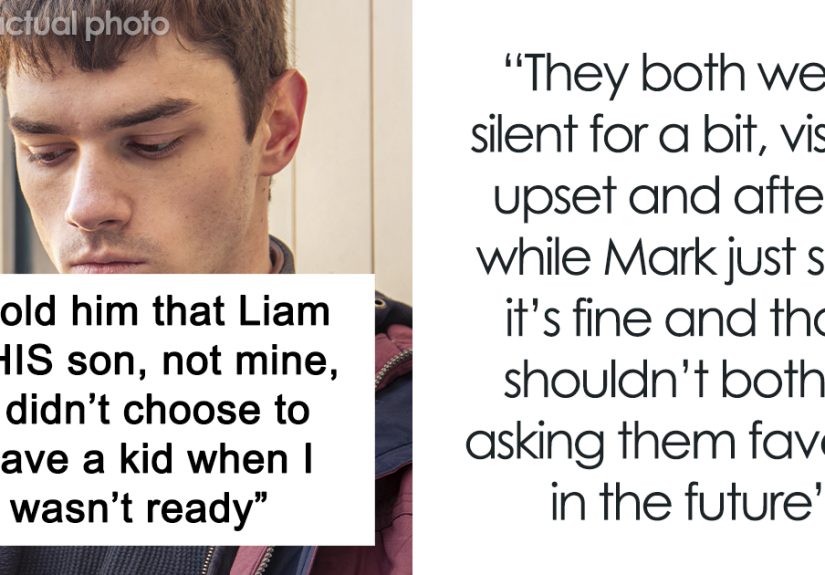
Every family has that one “tiny favor” that shows up wearing sunglasses and a fake mustache, pretending it is harmless. Then three weeks later, it has moved into the house, eaten all the cereal, and become a full-time job nobody agreed to. In this case, the “favor” was babysitting. The explosion came when a guy finally hit his limit and said the quiet part out loud: He is not my responsibility. Cue the slammed doors, offended adults, wounded feelings, and enough family tension to make Thanksgiving feel like a hostage negotiation.
On the surface, this kind of story sounds simple. One person refused to watch a child who was not his. End of drama, right? Not even close. What really makes these situations go nuclear is not one bad afternoon. It is the slow buildup of blurred roles, assumed labor, unspoken expectations, and a household habit of treating one person like the backup plan with legs.
That is why this story resonates. It is not really about babysitting. It is about boundaries in blended families, the emotional cost of unpaid caregiving, and what happens when adults confuse “helping out” with “you now work here.”
What This Family Fight Is Actually About
When a parent starts dating someone new, the family structure changes immediately, even if nobody says it out loud. New routines appear. New kids may be in the house. New authority figures hover awkwardly near the refrigerator. Everyone is trying to figure out what the rules are, who belongs where, and whether they are supposed to be one big happy family or just several stressed people sharing Wi-Fi.
That uncertainty is where conflict thrives. In households like this, the biggest fights are rarely about the stated issue. The babysitting request is just the match. The real fuel is resentment. One person feels used. Another feels unsupported. Someone else thinks family should automatically help family. Meanwhile, the child in the middle is just trying to exist without becoming the human version of a hot potato.
What makes the phrase “He is not my responsibility” feel so sharp is that it challenges a fantasy a lot of adults quietly hold: if we live under the same roof, we should all pitch in whenever needed, no questions asked. That idea sounds warm and noble until “pitching in” always lands on the same person, always on short notice, and always for free.
Why Free Babysitting Turns Into a Family Land Mine
It starts as help and becomes an expectation
Most people do not snap the first time they are asked to help with a child. They snap after the fifth, tenth, or twentieth time, when the request stops sounding like a request and starts sounding like a scheduling decision that has already been made on their behalf. That is the emotional trap. A favor volunteered once becomes the house default forever.
And once that pattern sets in, refusing feels rude even when the expectation itself is unreasonable. Suddenly, the person setting a boundary gets cast as selfish, cold, immature, or “not understanding how family works.” Funny how that speech usually comes from the people not doing the babysitting.
Blended families need clarity, not guesswork
Blended families can absolutely become loving, stable homes, but they usually do not get there through vibes alone. They need clear roles, consistent rules, patience, and adults who communicate before resentment starts renting space in everybody’s head. When nobody defines who is responsible for discipline, childcare, chores, rides, schedules, or emergency coverage, the most available person often gets volunteered without consent.
That is how a son, daughter, older sibling, or young adult in the home ends up functioning like unpaid staff. They are not asked as an equal. They are simply assumed into service because they are there.
The child becomes the emotional center of an adult argument
This is the saddest part. The conflict may be between adults, but the child feels the temperature change. Kids are remarkably good at noticing when they are a source of tension. They may not know the details, but they can tell when an adult resents watching them, when a parent is defensive, or when the room goes weird after a simple request.
That is why this issue has to be handled with care. Saying “I am not your babysitter” is a valid boundary. Making a child feel unwanted is a separate wound entirely. The line between those two things matters.
The Psychology Behind the Fallout
Experts who work with stepfamilies and divorced families often make the same point: adjustment takes time, structure matters, and children usually do better when adults keep conflict low, communicate clearly, and maintain consistent expectations. In other words, chaos is bad for everybody, but it is especially bad for kids who are already adapting to new people and new routines.
There is also an important difference between healthy responsibility and unhealthy role reversal. It is one thing for a teenager or young adult to occasionally watch a child for an hour. That is normal life. It is another thing entirely when that person becomes the regular caregiver because the actual adults have gotten comfortable outsourcing their duties. That is where the dynamic starts looking less like family teamwork and more like parentification with a side of guilt.
And no, giving someone a place to live does not automatically entitle you to endless childcare. Housing, support, and family reciprocity are real things, but they are not a coupon for unlimited unpaid labor. If a family wants regular babysitting, it needs a real conversation, real limits, and often real compensation. Revolutionary concept, apparently.
Was the Guy Wrong?
Emotionally? His delivery may have been harsh. Practically? His point was probably right.
That distinction matters. A lot of family conflicts get stuck because people confuse tone with substance. Yes, snapping can escalate things. Yes, a calmer sentence would have landed better. But a messy delivery does not automatically make the boundary invalid. If someone has been repeatedly treated like the designated free babysitter, frustration is not exactly arriving from outer space.
The stronger moral position is this: he owed the child decency, kindness, and basic human care in the moment. He did not owe indefinite childcare just because his mom was dating the kid’s father. A parent’s romantic relationship does not instantly transfer parental duties onto everyone else in the house. That is not how responsibility works. That is how resentment gets born.
In fact, the guy’s outburst may have been the first honest thing said in the household. Brutal? Maybe. Useful? Also maybe.
What the Adults Should Have Done Instead
Ask before assuming
The first fix is the simplest one. Ask. Do not announce. Do not hint. Do not disappear into the bedroom and leave a child in the living room like a surprise package. Ask clearly, wait for an answer, and respect a no without turning it into a courtroom drama.
Set a babysitting agreement
If childcare is happening regularly, it should be discussed like real labor because that is exactly what it is. How often? For how long? Paid or unpaid? Emergency only, or every Saturday? Does the person have the right to say no? Once families spell this out, a shocking amount of drama loses its oxygen.
Keep parental responsibility with the parent
In blended families, the biological parent usually needs to take the lead, especially early on. That does not mean nobody else can help. It means help should remain help, not an invisible transfer of duty. Adults who are building a household together need to be especially careful not to make children or young adults feel drafted into a caregiving role they never chose.
Protect the child from adult resentment
If there is conflict, take it to another room. The child does not need to hear who is angry, who “always gets stuck” with them, or who refuses to “step up.” Adults can and should have hard conversations, but not by using a kid as the stage prop in their moral showdown.
Why These Blowups Feel So Personal
Babysitting fights in families hit harder than other household arguments because they poke at identity. The person being asked feels taken for granted. The parent feels judged. The new partner feels unwelcome. The grandparent or other relatives often jump in with speeches about loyalty, sacrifice, and “this is what families do.” Before long, a scheduling issue turns into a referendum on whether someone is a good son, good daughter, good partner, or decent human being.
That is why people say crueler things in these moments than they otherwise would. They are not just arguing about one evening. They are arguing about status, respect, obligation, fairness, and whether they matter in the family as a person or merely as a convenient pair of hands.
The Real Lesson From This Mess
The lesson is not that nobody should ever help with a partner’s child. Of course they should help sometimes. Healthy families rely on generosity. The lesson is that generosity dies the second it becomes entitlement.
If you want goodwill in a blended household, do not weaponize availability. Do not turn the most responsible person into the default sitter. Do not assume love equals labor. And for the love of all domestic peace, do not wait until someone explodes before asking what role they actually agreed to play.
Because once someone has to say, “He is not my responsibility,” the family problem is already much bigger than childcare. By then, the babysitting issue is just the smoke. The real fire is a house full of people who never defined responsibility in the first place.
Experiences Related to This Topic: Why So Many People See Themselves in This Story
One reason stories like this spread so fast is that people immediately recognize the pattern. Maybe the details are different, but the emotional script is the same. A college student moves back home to save money and suddenly becomes the “helpful one” who is expected to watch younger kids while everyone runs errands. At first it feels temporary. Then a month later, they cannot make plans without checking whether they are secretly on childcare duty.
Another common version happens in newly blended households where one adult assumes their partner’s teenager should naturally help with younger children. In theory, that sounds like family bonding. In practice, it often feels like being assigned a part in a play nobody auditioned for. The teenager may already be dealing with divorce, divided loyalties, a new adult in the home, and changing routines. Adding regular childcare to that emotional backpack is how ordinary stress becomes full-blown resentment.
There are also adult children who describe becoming the house “backup parent” after a mom or dad starts dating someone with kids. They are old enough to be useful, young enough to be taken for granted, and close enough to feel guilty saying no. They do school pickups, after-dinner cleanup, bedtime help, and weekend supervision, all while being told this is just what caring families do. What nobody says is that caring families also ask, appreciate, and reciprocate.
Then there is the emotional side, which can be even trickier. Some people are not asked to babysit constantly, but they are expected to absorb the household stress that comes with it. They become the listener, the mediator, the one who hears complaints about the boyfriend, the kid, the ex, the schedule, the money, and the general unfairness of life. That person may not be changing diapers, but they are still carrying emotional weight that does not belong to them.
What all these experiences have in common is a boundary problem disguised as a family value. The phrase “We all help each other” can be beautiful when it is mutual. It becomes manipulative when it only travels in one direction. People start feeling less like family members and more like unpaid infrastructure.
And yet, many of these situations improve once someone finally names the issue. Not with a dramatic speech, necessarily, but with a boring, glorious boundary. Please ask me first. I can help on Fridays, not every day. If this is regular childcare, we need a plan. I care about the child, but I am not the parent. Those sentences may not win “Most Fun Family Meeting of the Year,” but they do something better: they replace confusion with clarity.
That is why the biggest takeaway from this story is not that families should stop helping. It is that help works best when it is chosen, not extracted. The moment childcare becomes assumed, respect starts to leak out of the room. And once respect goes missing, family fallout is usually not far behind.
Conclusion
This family clash may have started with one guy refusing to be a free babysitter, but the deeper issue was role confusion in a blended household. He was not wrong to reject an unfair expectation. The adults were wrong to let that expectation grow without a real conversation. In families like this, peace does not come from pretending everyone should “just know” what to do. It comes from spelling out responsibility before resentment writes the script for you.
If there is a silver lining, it is this: blowups like this can become turning points. A family that survives them usually learns one critical lesson. Love and obligation are not the same thing. And when it comes to childcare, the difference is everything.