Table of Contents >> Show >> Hide
- The night Tel Aviv got a rude wake-up call
- How a drone slipped through Israel’s defenses
- Why the Houthis picked this moment
- Israel’s retaliation in Yemen: what was hit and why
- The humanitarian and legal debate: ports are not just ports
- The bigger picture: Red Sea chaos meets Israel’s home front
- What happens next: the uncomfortable menu of options
- Human experiences: what this kind of escalation feels like (a composite from reported accounts)
- Wrap-up
Tel Aviv is a city that’s used to alarmstraffic, espresso machines, the occasional “Where did I park?” panic.
What it’s not used to is waking up to a long-range drone exploding in the heart of town, near a U.S.
diplomatic site, without sirens giving people even a head start on the sprint to safety.
That’s what made the July 2024 Houthi drone strike feel less like “another headline” and more like a
plot twist: a Yemeni rebel movement, already hammering shipping lanes in the Red Sea, demonstrated it could
reach Israel’s coastal core. Israel responded by striking Houthi-linked infrastructure in Yemenopening a new,
highly combustible chapter in a regional story that already had far too many footnotes.
The night Tel Aviv got a rude wake-up call
In the pre-dawn hours of July 19, 2024, an explosive-laden drone hit a building in Tel Aviv, killing one person
and injuring multiple others. The strike landed close to a U.S. Embassy branch office, immediately turning an
already tense period into a high-alert weekend. While Israel had faced missiles and drones aimed at other areas,
this was different: it was a direct, lethal breach in the country’s commercial and cultural hub.
The Houthisan Iran-aligned movement that controls large parts of northern and western Yemenclaimed responsibility.
They framed the attack as part of their campaign tied to the war in Gaza, portraying the strike as “solidarity”
and signaling they intended to keep pressure on Israel as long as the conflict continued.
In practical terms, the message was blunt: distance is no longer a comfort blanket. A weapon launched from Yemen
can threaten Tel Aviv. That realization lands with a special kind of thud in a city where nightlife and beach
mornings are basically civic infrastructure.
How a drone slipped through Israel’s defenses
Israel’s air-defense reputation is built on layerssystems designed to detect, track, and intercept everything
from rockets to cruise missiles. Yet drones can be the annoying exception: smaller signature, lower altitude,
and a talent for showing up where you don’t want them. Think of them as the “quiet sneakers” of airborne threats.
In this incident, Israeli officials said the drone was detected but not intercepted, and that warning sirens did
not soundan outcome Israel attributed in part to human error. That matters because it changes the story from
“our defenses were overwhelmed” to “our defenses had a bad handoff.” In security terms, that’s not comforting;
it’s a troubleshooting ticket with very high stakes.
The Houthis, for their part, claimed the strike involved a new or upgraded drone (they used the name “Yafa” in
public statements), boasting of improved ability to evade detection. Outside analysts and reporting suggested the
platform may have been linked to Iranian-derived designs and modified for long range.
The broader point isn’t just which model flew what route. It’s the trend: inexpensive, adaptable systems can
create strategic shock. A drone does not need to defeat every defense everywhereonly to find one gap once.
Why the Houthis picked this moment
The Houthis didn’t suddenly become interested in Israel in a vacuum. Since late 2023, they had been launching
missiles and drones toward Israel and attacking maritime targets, tying their operations to the Gaza war.
Their Red Sea campaign drew global attention because it threatened international trade routes and raised shipping
costs, forcing rerouting and naval responses.
Strategically, the Tel Aviv strike did several things at once:
- It proved reach. Demonstrating the ability to hit Tel Aviv elevates the Houthis from a regional disruptor to a cross-regional threat.
- It amplified narrative. A strike in a famous city generates more attention than another intercepted projectile over open water.
- It complicated deterrence. If Israel must now consider Yemen as an active launchpad, the map gets largerand response options multiply.
- It fed domestic legitimacy. Militant groups often use high-profile actions to reinforce internal support and recruitment messaging.
In other words, this wasn’t just a tactical strike. It was a communications strategy delivered at high speed,
with a warhead attached.
Israel’s retaliation in Yemen: what was hit and why
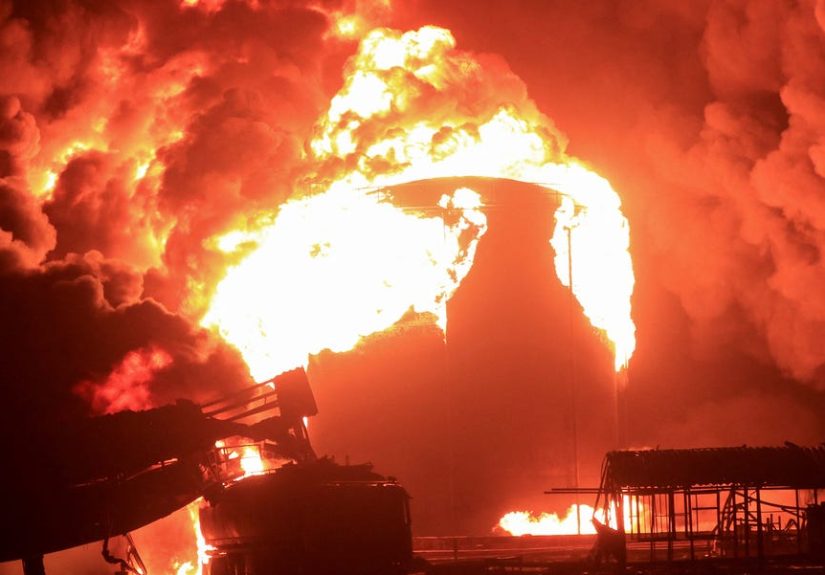
Israel responded quickly. On July 20, 2024, Israeli aircraft struck targets in and around the Houthi-controlled
port city of Hodeidah (Al Hudaydah). Reporting described strikes hitting fuel or oil-related facilities and
power infrastructure, and Israel said the area had been used for military purposesincluding the transfer or
storage of weapons supplied from Iran.
The retaliation was notable not only for what it hit, but for what it represented: Israel’s first publicly
acknowledged direct strike on Houthi-linked targets inside Yemen. That’s a significant escalation because Yemen
is far from Israel, and long-range operations require complex planning, aerial refueling, and careful routing.
Translation: this wasn’t an “impulse purchase” responseit was the kind of mission you keep ready in the drawer
for a day you hope never comes.
Casualty reporting varied across sources and over time, but accounts from Houthi-run health authorities and
international reporting described multiple deaths and dozens of injuries, with many victims suffering severe burns.
Fires at fuel facilities and damage at the port were widely reported, and images of burning infrastructure spread
rapidly onlinefueling anger, fear, and fresh vows of retaliation from the Houthis.
Israel’s logic, as communicated publicly, was deterrence: if the Houthis can hit Tel Aviv, then Houthi assets
and infrastructure that enable attacks are now on the table. The Houthis’ stated logic was persistence: they
said they would continue attacks linked to Gaza. When both sides define “success” as demonstrating resolve,
escalation risk risesbecause resolve is easiest to measure in explosions.
The humanitarian and legal debate: ports are not just ports
Hodeidah is not just a dot on a map. It is a critical entry point for Yemen’s commercial goods and humanitarian
supplies. That’s why strikes there trigger immediate concern from humanitarian organizations: damage to port
operations and fuel storage can ripple outward into food distribution, medical supply chains, electricity access,
and clean water systems.
Human Rights Watch argued that Israel’s strikes on the port area appeared potentially unlawfulwarning the attack
could be indiscriminate or disproportionate and might constitute a war crime, depending on facts such as target
selection, precautions taken, and expected civilian harm. HRW also noted that the Houthi drone attack on Tel Aviv
itself could be unlawful because it struck civilians.
This is where modern conflict becomes morally claustrophobic: militants use or embed within dual-use infrastructure;
states argue those sites become legitimate targets; civilians pay the price either way. International humanitarian
law is built to handle these questions, but “built to handle” does not mean “able to prevent.” It’s a rulebook,
not a force field.
The bigger picture: Red Sea chaos meets Israel’s home front
The Tel Aviv strike and Yemen retaliation didn’t happen in isolation. They were part of a wider pattern of
pressure applied by Iran-aligned actors across the region. Since the Gaza war began, Israel faced sustained
rocket and drone threats from multiple directions, while international shipping faced repeated attacks in and
around the Red Sea.
Analysts have described the Houthis’ campaign as evolving in phasesstarting with declared targeting tied to
Israel, then widening to broader categories of vessels, and drawing U.S. and allied naval responses. This matters
because it shows the Houthis are not improvising randomly; they’re adapting tactics, targets, and messaging based
on what produces leverage.
Meanwhile, the United Nations warned in late July 2024 that the drone strike on Tel Aviv and the subsequent
retaliation risked a “devastating” regional escalation. That warning wasn’t diplomatic theater; it was a summary
of the obvious: when a conflict adds new launch sites and new target sets, miscalculation becomes easier.
For ordinary people, “regional escalation” is an abstract phrase that turns concrete fast. It shows up as flight
disruptions, higher prices, late deliveries, sudden sirens, and the creeping sense that geography no longer
guarantees safety.
What happens next: the uncomfortable menu of options
After the Tel Aviv strike, Israel increased readiness and signaled it was prepared to act again if attacks
continued. The Houthis said they would keep targeting Israel. Those statements create a fragile situation where
every future interceptor failure to interceptcan trigger pressure for a larger response.
There are a few practical realities worth watching:
- Air-defense adaptation: If the breach was partly procedural, Israel will focus on detection-to-decision speed, alerting, and drone-specific tracking.
- Launch-site calculus: Striking Yemen is different from striking closer fronts; long-range operations raise political and logistical stakes.
- Shipping spillover: Even when the headline is Tel Aviv, the Red Sea remains a pressure valve for economic disruption.
- Diplomatic friction: Any strike involving critical civilian infrastructure invites international scrutiny and demands for restraint.
None of these factors “solve” the problem, but they shape how quickly the next incident could escalateor be contained.
Human experiences: what this kind of escalation feels like (a composite from reported accounts)
In Tel Aviv, the first experience people describe isn’t geopolitical. It’s sensory. A sudden blast has a specific
kind of wrongnessan instant that turns night into a question mark. People wake up to shattered glass tinkling
onto sidewalks, car alarms yelping in chorus, and the disorienting realization that no siren warned them. Even
those who live in a country accustomed to alerts can feel newly vulnerable when the usual system doesn’t speak.
Then comes the hyper-practical phase: checking group chats, counting “I’m ok” messages, trying to learn whether
the sound was an accident, a rocket, or something else. Neighbors who barely nod in the elevator suddenly trade
phone chargers and bottled water, because in the first hour after an explosion, community runs on improvisation.
Parents walk children through a calm version of a terrifying sentence: “Stay away from the windows.”
Emergency responders describe a different rhythm. They move into the scene while others move away, stepping over
debris with a kind of trained tunnel vision. Their job is to locate injuries, control hazards, and keep the area
stable even as information remains unstable. When drones are involved, uncertainty lingers: Was it a single
device? Is there another? Are secondary fires possible? They work inside questions that can’t wait for answers.
In Yemen, the “experience” looks nothing like Tel Aviv’s beachfront. Port cities are built on routinesship
arrivals, fuel transfer, cranes moving containers like giant metronomes. When strikes hit fuel depots and power
infrastructure, the aftermath is often described as a harsh combination of flames, smoke, and sudden scarcity.
Burns become a defining injury because fuel fires don’t behave politely. Hospitals already under strain face
another surge, and families scramble to find medicine, transportation, and reliable news.
There’s also the quiet, grinding experience felt far from either blast site: shipping crews rerouting to avoid
risk, insurance costs climbing, supply chains stretching. For small business ownerswhether in the Middle East,
Europe, or the U.S.the conflict arrives as delayed inventory and higher prices for basics. People don’t need to
follow every diplomatic statement to feel the economic tremors.
And finally, there’s the emotional hangover: a persistent vigilance that changes everyday decisions. Some people
avoid crowded areas. Others obsessively refresh alerts. A few respond with gallows humorbecause joking is easier
than admitting fear. Over time, communities adapt, but adaptation has a cost. The new normal is rarely as normal
as it sounds.