Table of Contents >> Show >> Hide
- The Quick Timeline: Where Wicked Fits
- Is Wicked a Prequel to The Wizard of Oz?
- How Wicked Reframes Elphaba, the Wicked Witch of the West
- How Glinda Fits Into the Timeline
- Where Dorothy Fits in Wicked
- How the Scarecrow, Tin Man, and Cowardly Lion Connect to Wicked
- Does Wicked Follow the 1939 Movie or the Original Book?
- Why the Timeline Feels So Clever
- How Wicked: For Good Expands the Timeline
- Specific Example: The House Landing on Nessarose
- Specific Example: The Wizard’s Public Image
- So, Should You Watch Wicked Before The Wizard of Oz?
- Experiences Related to Understanding the Wicked Timeline
- Conclusion
If The Wizard of Oz is the story you grew up withthe tornado, the ruby slippers, the Yellow Brick Road, and Dorothy trying very hard to get home before anyone asks her to solve another kingdom’s political problemsthen Wicked is the story happening just off-camera. It asks a deliciously mischievous question: what if the “Wicked Witch of the West” was not born wicked at all, but was turned into a villain by fear, propaganda, bad leadership, and a spectacularly unfair public relations campaign?
So, how does Wicked fit in The Wizard of Oz timeline? The simplest answer is this: Wicked begins years before Dorothy arrives in Oz, then overlaps with Dorothy’s adventure during its final stretch, and finally reframes what the famous “melting” moment actually means for Elphaba, Glinda, and the future of Oz.
That means Wicked is not just a prequel. It is a prequel, a parallel story, and a revisionist retelling all wearing one very dramatic black hat. It explains how Elphaba becomes known as the Wicked Witch, how Galinda becomes Glinda the Good, why the Wizard may not be as wonderful as advertised, and why the familiar events of The Wizard of Oz look very different when viewed from the witch’s broomstick.
The Quick Timeline: Where Wicked Fits
To make the Oz timeline easier to follow, think of it in four major stages:
1. Before Dorothy: Elphaba and Glinda Meet at Shiz
Wicked begins long before Dorothy’s farmhouse drops into Munchkinland. Elphaba, born with green skin and powerful magical abilities, arrives at Shiz University with her younger sister Nessarose. There, she meets Galinda, a bubbly, ambitious student who treats popularity like an Olympic sport. At first, they clash. Then they become roommates. Then, against all odds and several questionable fashion choices, they become friends.
This early part of the story is important because it humanizes Elphaba before the world labels her. In The Wizard of Oz, the Wicked Witch of the West enters the story already coded as evil. In Wicked, we see a young woman who is smart, protective, angry for good reasons, and desperate to be seen as more than her appearance.
2. The Wizard’s Regime: Oz Is Not as Wonderful as It Looks
After Shiz, Elphaba and Glinda travel deeper into the political machinery of Oz. This is where Wicked begins to challenge the shiny Emerald City image. The Wizard presents himself as a magical savior, but Elphaba discovers that he is not the powerful figure she believed him to be. Worse, his government is involved in silencing Animalssentient creatures in Oz who can speak, teach, and participate in society.
This revelation changes Elphaba’s path. She refuses to serve a corrupt system. Glinda, meanwhile, makes a different choice: she stays close to power, partly because she believes she can do good from inside it and partly because Oz is very good at rewarding people who smile at the right cameras. If Oz had social media, Glinda would be verified by lunchtime.
3. Dorothy Arrives: Wicked Overlaps with The Wizard of Oz
Dorothy’s arrival happens later in the Wicked story. This is where the two timelines collide. Dorothy’s house lands on Nessarose, who has become the ruler of Munchkinland and is identified in the Oz tradition as the Wicked Witch of the East. In The Wizard of Oz, this is the beginning of Dorothy’s journey. In Wicked, it is a personal tragedy for Elphaba.
That difference matters. Dorothy sees a magical accident and a pair of enchanted shoes. Elphaba sees the death of her sister. From Dorothy’s perspective, the Wicked Witch of the West storms in and threatens her. From Elphaba’s perspective, a stranger has arrived, her sister is dead, and the most powerful objects connected to her family have been handed away by Glinda. It is the same event, but emotionally it is a completely different movie.
4. After the Famous Melting: Wicked Rewrites the Ending
The traditional Wizard of Oz story tells us that Dorothy throws water on the Wicked Witch of the West, the witch melts, and Dorothy can continue her journey home. Wicked reframes that moment with a twist: Elphaba’s “death” is not exactly what Oz believes it is. The public gets a clean villain-defeated ending. Glinda gets the burden of political responsibility. Elphaba gets something more complicated: an escape from the story Oz wrote for her.
That is the emotional engine of Wicked. It does not erase The Wizard of Oz; it turns the camera around and asks who benefited from the original version.
Is Wicked a Prequel to The Wizard of Oz?
Yesbut with a giant Oz-sized asterisk. Wicked functions as a prequel because most of its story takes place before Dorothy arrives. We learn how Elphaba becomes the Wicked Witch of the West, how Glinda becomes Glinda the Good, how the Wizard maintains control, and how the political climate of Oz creates the conditions for Dorothy’s famous journey.
However, Wicked is not a straightforward prequel in the same way a superhero origin movie explains how someone got a cape and unresolved parental issues. It is based on Gregory Maguire’s revisionist novel, later adapted into the Broadway musical by Stephen Schwartz and Winnie Holzman. That means it does not simply lead into The Wizard of Oz; it debates it.
The Wizard of Oz presents a fairy-tale morality structure: Dorothy is innocent, the Witch is evil, the Wizard is mysterious, and home is the ultimate goal. Wicked complicates that structure. It asks whether “wickedness” is a fact or a label. It also suggests that public memory can be shaped by whoever controls the loudest megaphoneor in Oz’s case, the largest floating mechanical head.
How Wicked Reframes Elphaba, the Wicked Witch of the West
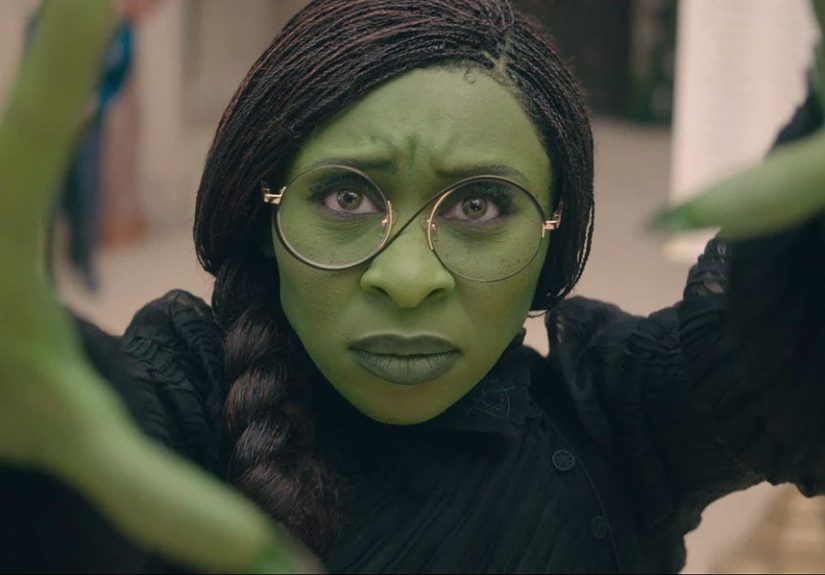
In the 1939 film, the Wicked Witch of the West is one of cinema’s most iconic villains. Green skin, black hat, flying monkeys, excellent cackleshe understood branding. But Wicked gives her a name, a childhood, a family, a moral compass, and a political cause.
Elphaba is not wicked in the beginning. She is marginalized because of her green skin, underestimated by society, and burdened with powers she does not fully understand. Her anger is not random villain energy. It comes from injustice, grief, and the experience of being treated as a problem before she has done anything wrong.
This is why Wicked fits so cleverly into the timeline. By the time Dorothy hears about the Wicked Witch, Oz has already decided what Elphaba is. The label arrives before the person. Dorothy walks into a story already edited for public consumption.
How Glinda Fits Into the Timeline
Glinda’s journey is just as important. In The Wizard of Oz, Glinda appears as a serene, magical guide. She is calm, sparkly, and extremely good at appearing right when Dorothy needs help. In Wicked, we see that this polished Good Witch image has a messy backstory.
At Shiz, Galinda is socially gifted but shallow. Over time, her friendship with Elphaba forces her to develop empathy and moral awareness. Still, when Elphaba rebels against the Wizard, Glinda chooses a more public, respectable path. She becomes the face of goodness in Oz, even while knowing the story is more complicated than the official version.
That makes Glinda one of the most interesting timeline bridges between Wicked and The Wizard of Oz. She is not simply “good” because the title says so. She becomes good through painful choices, mistakes, and the eventual decision to take responsibility for Oz after Elphaba disappears from public view.
Where Dorothy Fits in Wicked
Dorothy is central to The Wizard of Oz, but she is not the main character of Wicked. In fact, that is the point. Wicked treats Dorothy almost like a force of narrative weather. She arrives suddenly, changes everyone’s fate, and mostly has no idea how much drama she has walked into. Honestly, relatable. Most of us have entered a room and immediately sensed that we missed three seasons of backstory.
In Wicked, Dorothy’s major timeline function is to trigger the final overlap between the two stories. Her house kills Nessarose. She receives the magical shoes. She follows the Yellow Brick Road. She becomes part of the Wizard’s attempt to eliminate Elphaba. But the emotional focus remains on Elphaba and Glinda.
This perspective shift is why fans often ask whether Wicked “changes” The Wizard of Oz. Technically, many of the big events still happen. Dorothy still arrives from Kansas. The Witch of the East still dies. Dorothy still travels through Oz. The Witch of the West is still believed to melt. But the meaning behind those events changes dramatically.
How the Scarecrow, Tin Man, and Cowardly Lion Connect to Wicked
One of the most fascinating parts of the Wicked timeline is how it reimagines Dorothy’s famous companions. In The Wizard of Oz, the Scarecrow, Tin Man, and Cowardly Lion are lovable figures who join Dorothy because each believes he lacks something essential: brains, a heart, or courage.
Wicked gives these figures darker, more personal connections to Elphaba’s world. Without spoiling every turn for newcomers, the story ties the Tin Man and Scarecrow to people caught in the consequences of magic, politics, and desperate attempts to protect loved ones. The Cowardly Lion also receives a backstory connected to Elphaba’s early defense of Animals.
These connections are not just Easter eggs. They deepen the idea that Dorothy’s adventure is not happening in a vacuum. Every cheerful stop on the Yellow Brick Road has history behind it. Oz is not a theme park; it is a country with wounds, propaganda, and citizens whose lives were already complicated before a Kansas teenager landed in the middle of everything.
Does Wicked Follow the 1939 Movie or the Original Book?
Wicked draws from multiple Oz traditions, but it is its own version of the story. L. Frank Baum’s original 1900 novel, The Wonderful Wizard of Oz, introduced Dorothy and the magical world of Oz. The 1939 MGM film then became the most famous visual version, shaping how generations imagine the Wicked Witch, the Yellow Brick Road, the Emerald City, and Dorothy’s shoes.
The Broadway musical and the films inspired by it borrow familiar elements from the Oz mythos but do not function as strict canon for either Baum’s books or the 1939 movie. This is especially important because some details differ across versions. For example, Baum’s book uses silver shoes, while the 1939 film made the slippers ruby red for Technicolor impact. Wicked often dances carefully around these legacy details while building its own emotional continuity.
So, the best way to understand the relationship is this: The Wizard of Oz is the famous public legend; Wicked is the alternate history that claims the legend left out the most important witness.
Why the Timeline Feels So Clever
The reason the Wicked and Wizard of Oz timeline works so well is that it does not simply answer trivia questions. It changes the emotional angle. A dead witch under a house becomes a family tragedy. A scary green villain becomes a misunderstood activist. A beautiful Good Witch becomes a woman negotiating guilt, ambition, friendship, and responsibility. The Wizard becomes less of a magical mystery and more of a political operator hiding behind spectacle.
That is why Wicked has lasted so long on stage and why the film adaptations found such a huge audience. It understands that classic stories can be revisited without being destroyed. Sometimes the old story is still there, but a new narrator walks in, clears her throat, and says, “Actually, there is more to this.”
How Wicked: For Good Expands the Timeline
The two-part film adaptation makes the timeline even clearer for modern audiences. The first Wicked film focuses mainly on the Act One material: Elphaba and Glinda at Shiz, their friendship, the trip to the Emerald City, and Elphaba’s decision to defy the Wizard. The sequel, Wicked: For Good, moves into the section that overlaps more directly with Dorothy’s story.
This structure helps viewers understand that the first half of Wicked is largely pre-Dorothy, while the second half runs closer to the timeline of The Wizard of Oz. By giving the story more screen time, the films can expand character motivations, political tension, and the emotional cost of Elphaba and Glinda’s choices.
In other words, if the first film answers “How did Elphaba become the Wicked Witch?” the second answers “What was really happening while Dorothy followed the Yellow Brick Road?”
Specific Example: The House Landing on Nessarose
The house landing is one of the best examples of timeline overlap. In The Wizard of Oz, Dorothy’s house crushes the Wicked Witch of the East almost immediately after Dorothy arrives. The moment is strange, magical, and oddly quick. Dorothy barely has time to process the fact that her house has become an accidental weapon.
In Wicked, that same event lands like an emotional thunderclap. Nessarose is not just an anonymous witch. She is Elphaba’s sister. She has her own history, pain, and complicated relationship with power. Her death pushes Elphaba deeper into grief and anger while also strengthening the public story that Elphaba is dangerous.
This is where Wicked shines. It does not necessarily change the event. It changes whose tears matter.
Specific Example: The Wizard’s Public Image
Another major timeline bridge is the Wizard himself. In The Wizard of Oz, Dorothy eventually discovers that the Wizard is an ordinary man using spectacle to appear powerful. Wicked builds an entire political structure around that idea. The Wizard is not merely a charming fraud behind a curtain; he is a ruler whose image depends on controlling information.
That makes Elphaba dangerous to him. She knows too much. She can read the Grimmerie, the magical book that the Wizard cannot truly command. She also refuses to play along. So the easiest way to neutralize her is to make the public fear her. Once Oz believes she is wicked, her truth becomes easier to dismiss.
So, Should You Watch Wicked Before The Wizard of Oz?
You can watch them in either order, but the experience changes. If you watch The Wizard of Oz first, you get the classic fairy tale and then enjoy Wicked as a behind-the-scenes twist. This is probably the most satisfying order for viewers who want to feel the full “Wait, that is what was happening?” effect.
If you watch Wicked first, you may see The Wizard of Oz with more suspicion. Glinda’s smile may seem more complicated. The Wizard’s booming voice may sound less wondrous and more like a man overcompensating with office equipment. The Wicked Witch may no longer feel like a simple villain. Either way, the timeline becomes richer when both stories are in conversation.
Experiences Related to Understanding the Wicked Timeline
For many viewers, the most memorable experience of discovering how Wicked fits into The Wizard of Oz timeline is the slow realization that childhood stories can grow up with us. As kids, we often accept the simple version: Dorothy is good, the Witch is bad, Glinda is helpful, and the Wizard is impressive until he is not. The moral map seems as brightly marked as the Yellow Brick Road. Then Wicked comes along and quietly removes the road signs.
One common fan experience is rewatching The Wizard of Oz after seeing Wicked and noticing how little we actually know about the Wicked Witch in the original adventure. She is frightening, yes, but the story does not pause to ask why she is feared, how she became powerful, what she lost, or who wrote the official version of events. Wicked turns that gap into a doorway. Suddenly, every familiar scene feels like it has another scene hiding underneath it.
Another experience is feeling differently about Glinda. At first glance, Glinda seems like the easiest character to understand: beautiful, kind, and conveniently airborne in a bubble. But after Wicked, her goodness feels less automatic. It feels chosen, tested, and compromised. Viewers may find themselves wondering how much she knew, how much she regretted, and how difficult it must have been to keep smiling while history simplified her best friend into a monster.
The timeline also creates a richer emotional experience around Dorothy. She remains innocent, but she is no longer the only person whose story matters. She becomes a traveler passing through the final act of someone else’s tragedy. That does not make Dorothy wrong or cruel. It makes the world around her larger. In real life, we often enter situations without understanding the years of conflict, grief, and misunderstanding that came before us. Wicked captures that feeling with theatrical flair and a broomstick.
For longtime fans of musicals, the timeline is satisfying because it rewards attention. The connections to the Scarecrow, Tin Man, Cowardly Lion, Nessarose, the Wizard, and Glinda are not random references tossed in for applause. They are emotional puzzle pieces. Each connection asks viewers to reconsider what they thought they knew. The result is a story that feels familiar and surprising at the same time, like finding a secret room in a house you have visited for years.
For newer fans discovering Oz through the films, the experience can be even more immediate. The two-part structure makes the timeline easier to feel. The first chapter builds Elphaba and Glinda’s friendship before Dorothy appears; the second moves toward the events audiences recognize from the classic story. This gives viewers time to invest in the witches as people before the legend hardens around them.
Ultimately, the best experience of the Wicked timeline is not solving a continuity puzzle. It is realizing that stories depend on perspective. One person’s villain may be another person’s daughter, sister, friend, activist, or misunderstood outsider. One kingdom’s happy ending may require someone else to disappear. That is why the timeline continues to fascinate audiences: it turns Oz from a simple destination into a living world full of competing truths.
Conclusion
Wicked fits into The Wizard of Oz timeline by beginning before Dorothy’s arrival, overlapping with her journey near the end, and reinterpreting the famous events through Elphaba and Glinda’s relationship. It is both a prequel and a parallel story, but more importantly, it is a perspective shift. It asks who gets called good, who gets called wicked, and who gets to write the history everyone else repeats.
That is why the timeline matters. Wicked does not simply explain where the Witch came from. It transforms Oz from a colorful fairy tale into a world of politics, friendship, grief, image-making, and moral ambiguity. Dorothy may still follow the Yellow Brick Road, but after Wicked, audiences know there are footprints underneath it.