Table of Contents >> Show >> Hide
- Why One Comic Explains So Much
- Media Is Not Just About Truth. It Is Also About Attention
- The Real Assembly Line: Event, Frame, Distribution, Reaction
- Why Headlines Feel So Loud
- The Audience Is Part of the Machine Too
- Where Journalism Still Matters Most
- How Social Media Changed the Entire Game
- What the Clever Comic Gets Right About Bias
- How To Read Media Without Getting Played
- Experiences That Make This Topic Feel So Real
- Conclusion: The Comic Is Funny Because the System Is Complicated
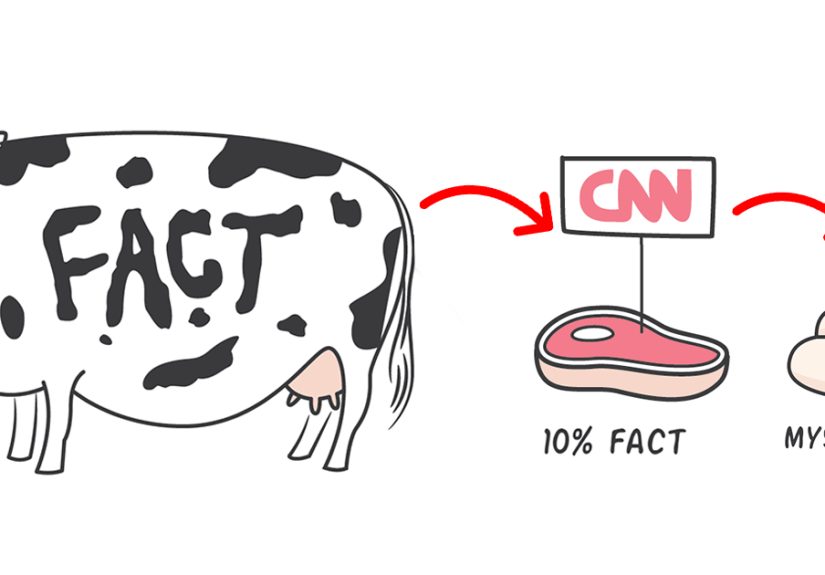
Every once in a while, a comic comes along, raises one perfectly drawn eyebrow at society, and says more in a few panels than a thousand cable news chyrons ever could. That is exactly why the idea behind How Media Actually Works, Summed Up In One Clever Comic still lands so well. The joke is funny because it feels painfully familiar. News gets packaged, polished, pushed, debated, reposted, weaponized, meme-ified, and then somehow served back to us as if it arrived fresh from the truth farm five minutes ago.
And to be fair, media is not one giant villain twirling a mustache in a studio basement. It is a messy ecosystem made up of journalists, editors, publishers, platforms, advertisers, creators, owners, algorithms, audiences, and people in comment sections who somehow type like they are being chased. The reason one clever comic can summarize it so well is simple: modern media often works less like a straight line and more like a loop. Something happens, somebody frames it, somebody amplifies it, somebody monetizes it, everybody reacts, and then the reaction becomes the next story.
That loop is not just a punchline. It is the operating system. If you want to understand how media actually works today, you have to look at what gets attention, who pays for it, how platforms distribute it, why trust keeps wobbling, and what happens when audiences confuse speed with truth. Let’s break down the comic’s larger point without losing the humor, because honestly, if we can’t laugh a little at the chaos, the chaos wins.
Why One Comic Explains So Much
A sharp comic works because it compresses a complicated system into one memorable metaphor. In this case, the underlying message is that media does not simply “deliver facts.” It processes reality. Raw events go through selection, framing, editing, branding, timing, and emotional packaging before they reach the public. That does not automatically make journalism dishonest. It does mean that every story is shaped by decisions.
Those decisions start with obvious questions: Is this newsworthy? Is it useful? Is it urgent? But they quickly become business questions too: Will people click? Will they share it? Will it keep them on the page? Will it work as a video, a newsletter blurb, a push alert, a podcast segment, and a three-slide social carousel? In other words, the modern newsroom is not just producing information. It is producing formats.
That is why the comic feels clever instead of cynical. It hints at a truth people already sense: media is part public service, part storytelling craft, part technology product, and part attention economy blood sport. Yes, that is a weird recipe. Yes, somehow it is still breakfast, lunch, and dinner for the internet.
Media Is Not Just About Truth. It Is Also About Attention
If you had to summarize modern media in one sentence, here it is: attention decides what survives. A story can be important and still disappear if it cannot compete with outrage, novelty, celebrity, fear, or conflict. That does not mean serious journalism is dead. It means serious journalism now has to fight for oxygen in the same room as viral nonsense, algorithm-friendly drama, influencer commentary, and headlines that sound like they were written by a caffeinated raccoon.
Attention is valuable because attention can be monetized. That is the part many audiences understand instinctively but do not always say out loud. News outlets need revenue. Some rely on ads. Some rely on subscriptions. Some rely on donors, events, sponsorships, licensing, or a mix of all of the above. The business model matters because it shapes incentives. An ad-supported outlet may be more exposed to traffic pressure. A subscription-driven outlet may lean harder into exclusivity, loyalty, and identity. A nonprofit newsroom may focus more on civic value but still struggle with sustainability.
So when the comic implies that media goes through a grinder before the public consumes it, that is not just about editorial spin. It is also about economics. News has always been produced under constraints, but today those constraints are tied tightly to clicks, shares, rankings, retention, and conversion.
The Real Assembly Line: Event, Frame, Distribution, Reaction
Step 1: Something happens
An election result. A court ruling. A celebrity breakup. A housing report. A viral TikTok. A weirdly aggressive goose in a Walmart parking lot. Raw reality is full of possibilities, but not everything becomes a story.
Step 2: Someone chooses the angle
This is where framing enters. The same event can be presented as a political turning point, a culture-war flashpoint, a human-interest story, an economic signal, or a cautionary tale. Framing is not automatically manipulation. It is often necessary. Audiences need context. But the chosen frame changes what people notice first and what they remember later.
Step 3: Platforms decide who sees it
This is the modern twist that older media models did not fully anticipate. Publishers no longer control distribution the way they once did. Search engines, social platforms, recommendation systems, video feeds, and app notifications help determine what surfaces and what sinks. A smart investigation can get buried while a half-baked hot take takes off wearing jet boots.
Step 4: The audience reacts
Now the comments roll in. The reposts begin. The quote-posts sharpen their knives. People respond not only to the facts but to the framing, the headline, and each other. Suddenly the reaction becomes its own event. “Internet furious over headline” is now a second story. “Backlash to backlash grows” becomes a third. We are no longer consuming news. We are consuming the social performance around news.
Why Headlines Feel So Loud
Headlines are tiny emotional machines. They have to summarize, compete, and provoke curiosity in a space roughly the size of a cough. That is why they can feel dramatic, simplified, or suspiciously overcaffeinated. A headline is not the whole article. It is the hook designed to win a split-second contest for your thumb.
This does not mean every headline is clickbait. But it does explain why readers often feel manipulated. When people say, “The media only wants attention,” what they often mean is, “I can feel the packaging.” They notice the wording choices, the urgency, the selective emphasis, and the emotional temperature. In a crowded media environment, subtlety does not always perform well. Unfortunately, democracy still needs subtlety. That is one of the central tensions of modern journalism.
And then there is the ancient internet ritual of reacting to the headline without reading the article. A tradition as old as time, if time began in a Facebook thread circa 2011. This habit supercharges misinformation because it rewards speed, certainty, and emotion over comprehension. The comic’s satire works precisely because so much media consumption now happens at the level of impression rather than understanding.
The Audience Is Part of the Machine Too
It is comforting to imagine that media is something done to us. In reality, we help shape it. We click certain stories. We ignore others. We reward rage, novelty, and confirmation. We share articles that flatter our worldview and skim past stories that complicate it. We complain about sensationalism, then accidentally make sensationalism trend before lunch.
This does not make audiences foolish. It makes audiences human. People are busy. They use shortcuts. They rely on social cues. They trust familiar voices. They scroll when tired, distracted, irritated, or bored. Media companies know this, platforms know this, and political communicators definitely know this. So media output is constantly being optimized for actual human behavior, not ideal human behavior. That gap explains a lot.
In that sense, the comic is not just mocking “the media.” It is also quietly mocking us, the consumers, the commenters, the loyalists, the doomscrollers, and the people who say, “I hate the news,” while checking it seventeen times before dinner.
Where Journalism Still Matters Most
Here is the important part: if media can distort reality, it can also clarify it. That is why the conversation cannot stop at satire. Real journalism still does work that no algorithmic sludge pile can replace. Investigative reporting uncovers corruption. Local reporting explains school boards, zoning fights, water safety, court records, and city budgets. Beat reporting turns complicated systems into understandable information. Good editing slows down errors. Verification protects the public from rumor dressed as fact.
When people lose trust in media, they often lose trust in the loudest, most commercial, most theatrical parts of it. That is understandable. But the answer is not to give up on journalism. The answer is to distinguish between journalism as a civic practice and media as a noisy commercial ecosystem. Those are related, but they are not identical twins wearing matching blazers.
That distinction matters because communities still need reporting even when they are exhausted by the media circus. If nobody is covering local institutions, power gets quieter and less accountable. Ironically, the less trustworthy the information environment feels, the more valuable real reporting becomes.
How Social Media Changed the Entire Game
Social media did not just speed up media. It changed who counts as media. Now a reporter, a YouTuber, a newsletter writer, a podcaster, a subject-matter expert, a partisan personality, and a guy filming in his truck can all compete for authority in the same feed. That has democratized voice, which is good. It has also democratized confusion, which is less ideal.
Platforms reward different traits than traditional newsrooms once did. Personality often beats institutional voice. Speed beats deliberation. Familiarity beats formal authority. A creator who explains complex issues clearly may earn trust faster than a legacy outlet with a giant newsroom. At the same time, a charismatic figure can spread nonsense with terrifying efficiency if the content feels authentic enough.
That is why the comic’s insight keeps aging well. Media is no longer a neat top-down pipeline. It is a hybrid ecosystem where institutions, creators, bots, communities, brands, and recommendation systems all compete to shape public understanding. Some of that competition produces better information. Some of it produces an online fog machine with Wi-Fi.
What the Clever Comic Gets Right About Bias
People often talk about bias as if it were only partisan. In reality, media bias can also be structural. There is bias toward conflict because conflict keeps attention. Bias toward simplicity because complexity takes time. Bias toward novelty because repetition feels boring even when the story is ongoing. Bias toward elite voices because they are easier to quote quickly. Bias toward metrics because numbers look objective even when they hide messy reality.
The smartest reading of the comic is not “all media lies.” It is “all media processes.” Once you understand that, you stop asking for impossible purity and start asking better questions. What is missing here? Who benefits from this framing? What is the source? What evidence is offered? What incentive is operating in the background? Is this informing me, persuading me, entertaining me, or provoking me into sharing it before I breathe?
Those questions do not make you cynical. They make you media literate. And media literacy is not anti-journalism. It is pro-reality.
How To Read Media Without Getting Played
Read past the headline
Yes, this sounds obvious. Yes, millions of people still do not do it. Headlines are clues, not conclusions.
Compare coverage
If one event matters, see how multiple outlets frame it. Patterns emerge quickly. So do omissions.
Separate reporting from commentary
Analysis has value, but it is not the same thing as verified reporting. Confusing the two is how people end up arguing with a column as if it were a police report.
Watch for emotional bait
If a story instantly makes you furious, terrified, or smug, pause before sharing. Emotion is not proof. It is often the packaging.
Value local journalism
National media tells you what everyone is yelling about. Local media tells you what is actually changing near your house.
Experiences That Make This Topic Feel So Real
Most people do not need a lecture on media theory to understand what the comic is getting at. They have lived it. They have felt that weird moment when a breaking-news alert hits their phone, only for the story to change three times in two hours because early details were incomplete. They have seen a headline race across social media, watched friends argue about it, and then realized half the argument was based on a screenshot, not the article itself. That experience alone explains more about modern media than a semester of jargon.
Another familiar experience is the “wait, why is this everywhere?” moment. A story that seems minor suddenly dominates every feed, every panel show, every video clip, and every group chat. Meanwhile, a far more important local issue gets almost no oxygen because it is not flashy enough, angry enough, or famous enough. People notice this imbalance. They may not use phrases like editorial incentives or platform amplification, but they know when the information diet starts feeling like candy for dinner.
There is also the everyday experience of emotional whiplash. You open your phone to check the weather and somehow end up reading about a scandal, a celebrity feud, a war update, a suspicious wellness trend, a real estate panic, and a raccoon stealing donuts from a convenience store. All of it arrives in the same visual format, with the same urgency, on the same glowing rectangle. Serious reporting and trivial distraction stand shoulder to shoulder like they bought tickets together. That flattening effect changes how people feel about reality itself. Everything looks equally immediate, even when it is not equally important.
Then there is the group-chat problem. One person shares a dramatic claim. Another replies with a meme. A third person says, “I saw the opposite on TikTok.” Nobody is entirely sure what is true, but everybody is suddenly participating in media production by selecting, reframing, reacting, and redistributing. It is not just journalists and publishers anymore. Ordinary users now help shape the narrative environment every day, often without realizing it.
Many people have also had the sobering experience of depending on local news during a storm, a school closure, a traffic emergency, or a public safety issue. In those moments, the value of solid reporting becomes crystal clear. You do not want vibes. You do not want a hot take thread from a guy with a ring light. You want verified facts from people who know the community. That contrast helps explain why the clever comic stings. It captures the absurdity of the media machine, but lived experience reminds us that journalism still matters deeply when the stakes are real.
That is why the smartest response to media satire is not to throw up your hands and declare everything fake. It is to become a better reader, a calmer sharer, and a more intentional consumer of information. The comic makes people laugh because it exaggerates the machine. It stays memorable because the machine, on its worst days, barely needs exaggeration.
Conclusion: The Comic Is Funny Because the System Is Complicated
How Media Actually Works, Summed Up In One Clever Comic succeeds because it turns an abstract problem into something instantly recognizable. Media today is not just a pipeline for facts. It is a collision between journalism, commerce, technology, identity, speed, and performance. Stories are selected, framed, distributed, reacted to, monetized, and recycled at a dizzying pace. Sometimes that produces excellent public-interest reporting. Sometimes it produces a circus in business casual.
The smartest takeaway is not blind distrust. It is sharper awareness. Media can inform you, manipulate you, serve you, annoy you, enlighten you, and occasionally make you want to throw your phone into a decorative pond. Usually it does several of those before breakfast. The goal is not to become too cynical to believe anything. The goal is to become informed enough to recognize the difference between journalism that serves the public and content that merely harvests attention.
In other words, the comic may be clever, but the real lesson is even better: once you understand the machine, you do not have to be fed by it quite so blindly.