Table of Contents >> Show >> Hide
- ChatGPT Is Best at “Scoped Programming”
- Where ChatGPT Starts to Struggle
- Benchmarks Say “Impressive,” Real Life Says “It Depends”
- What ChatGPT Can Do Today That Feels Legitimately Advanced
- What Developers Should Actually Use It For
- Can ChatGPT Replace Programmers?
- So, How Much Programming Can ChatGPT Really Do?
- Experiences From the Real World of AI-Assisted Coding
- Conclusion
- SEO Tags
Ask ten developers how much programming ChatGPT can really do, and you will get eleven opinions. One person will say it is a glorified autocomplete with a confidence problem. Another will say it built a weekend app, fixed a nasty bug, wrote the tests, and still had time to explain why their SQL query looked like it had been assembled during a power outage.
The truth lives in the middle, where most useful technology lives. ChatGPT can do a surprising amount of programming work well, especially when the task is clear, the scope is controlled, and a human is still steering the ship. It can explain unfamiliar code, write boilerplate, generate tests, refactor functions, translate code between languages, scaffold features, and even help debug messy errors. In stronger coding setups, it can also review repositories, run through changes, and handle chunks of engineering work that used to eat an entire afternoon.
But there is a catch the size of a production outage: programming is not just typing code. Real software work includes understanding requirements, making tradeoffs, handling ambiguity, preserving security, testing edge cases, coordinating with teammates, and making sure today’s quick fix does not become next month’s legendary mistake. ChatGPT is increasingly good at the code part. It is less reliable at the judgment part.
So how much programming can ChatGPT really do? Enough to be genuinely useful. Not enough to be left unsupervised like a raccoon in a server room.
ChatGPT Is Best at “Scoped Programming”
If you give ChatGPT a well-defined task, it can be impressively productive. This is where it shines brightest and earns its developer snacks.
1. Writing first drafts of code
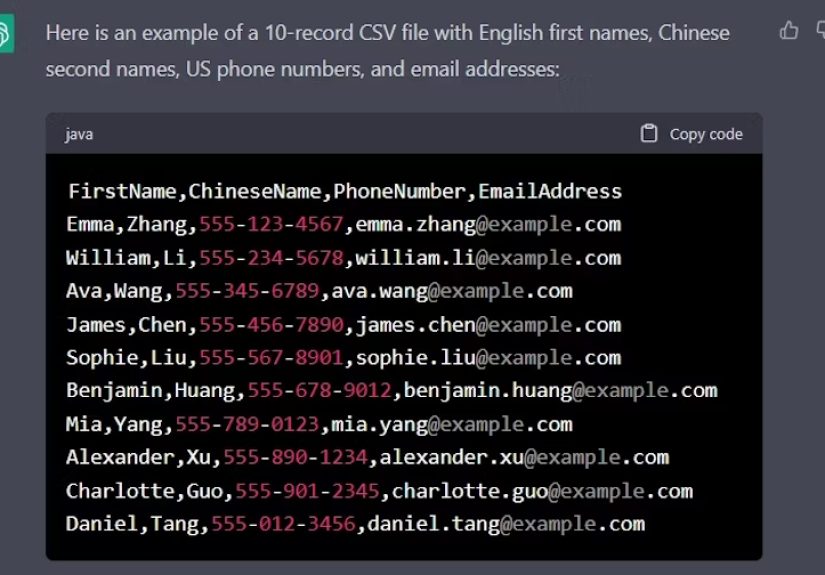
Need a Python script to parse CSV files, a React component for a pricing table, a Bash command to rename files in bulk, or a SQL query to group sales by month? ChatGPT is very good at generating functional first drafts. It is especially strong when the request is concrete: language, framework, input format, output format, edge cases, and constraints.
This makes it excellent for the kinds of jobs that are annoying, repetitive, or easy to forget after six months away from a stack. It can build API request examples, form validation logic, CRUD routes, regex patterns, utility functions, and starter test cases without much drama.
2. Explaining and summarizing code
For many people, the biggest productivity boost is not “write code for me,” but “please explain what on earth this code is doing.” ChatGPT is often strong at code comprehension. It can walk through functions, identify likely bugs, describe control flow, compare two implementations, and translate dense logic into plain English.
That matters because a huge amount of programming is reading, not writing. Developers spend plenty of time deciphering old modules, onboarding to unfamiliar repositories, or figuring out why a function named handleData secretly controls half the app. ChatGPT can act like a patient code tour guide that never sighs dramatically.
3. Refactoring and cleanup
ChatGPT is also useful for code cleanup. It can suggest clearer variable names, split long functions into smaller pieces, reduce duplication, improve comments, modernize syntax, and help migrate old styles to newer conventions. If you ask it to preserve behavior while improving readability, it can often produce a decent refactor.
This does not mean every refactor is safe. It means ChatGPT is good at generating candidate improvements faster than most humans want to type them by hand.
4. Test generation
One of the most practical uses for ChatGPT is creating unit tests, integration test ideas, and edge-case checklists. When given a function and expected behavior, it can generate useful test coverage quickly. It is especially handy for finding forgotten corners: null inputs, empty arrays, malformed payloads, off-by-one conditions, weird date values, and permission-related paths.
In other words, it can be the annoying coworker who keeps asking, “Okay, but what happens if the user uploads a blank file from a phone in airplane mode?” That coworker is often right.
5. Debugging with conversation
Debugging is where ChatGPT feels more like a collaborator than a code machine. You can paste an error message, describe the behavior, add the relevant code, and ask for a step-by-step diagnosis. It can suggest hypotheses, isolate likely causes, explain stack traces, and recommend targeted fixes. Even when it is not correct on the first try, it can still help structure the investigation.
That conversational back-and-forth is part of the magic. Traditional search gives you pages. ChatGPT gives you a working theory.
Where ChatGPT Starts to Struggle
Now for the less glamorous part. ChatGPT can code, but it does not “understand” a software project the way a seasoned engineer does. That gap becomes obvious as tasks become more open-ended, stateful, or organization-specific.
Ambiguous requirements
If the task is fuzzy, ChatGPT can sound more certain than it should. “Build the billing system” is not a programming task. It is a small existential crisis. The model may produce something polished-looking, but polished-looking and production-ready are cousins, not twins.
It performs best when the spec is explicit. When the spec is vague, it tends to invent reasonable-sounding assumptions. That is helpful for brainstorming, risky for shipping.
Large, messy codebases
Small examples are easy. Giant legacy systems with odd naming, tribal knowledge, weird dependencies, half-finished migrations, and “temporary” hacks from 2019 are another story. ChatGPT can still help, but it needs context, and lots of it.
Modern coding workflows are improving here. In agentic setups, ChatGPT-based tools can inspect repositories, read files, compare diffs, and run tests. That is a major leap from the early chatbot days, when people pasted random code snippets and hoped for divine intervention. Even so, big codebases introduce hidden assumptions that the model may miss, especially when business rules live outside the visible code.
Verification and correctness
ChatGPT can write plausible code that is wrong in subtle ways. Sometimes the bug is obvious. Sometimes it is the kind that passes casual inspection and then quietly ruins your Friday. The bigger issue is not just correctness, but confidence. AI-generated code often looks clean enough to earn trust before it deserves it.
This is why experienced developers treat ChatGPT as a fast draft generator, not a final authority. They read the output, run tests, challenge assumptions, and verify dependencies. They do not clap because the indentation is pretty.
Security and package hallucinations
One of the most serious limitations is hallucination, especially around libraries, APIs, and implementation details. ChatGPT may suggest a package that does not exist, misremember a method, or combine concepts from multiple frameworks into one impossible Frankenstein solution. That is not just inconvenient. It can create security and supply-chain risk if someone installs a fake or malicious dependency with a hallucinated name.
So yes, ChatGPT can write code. It can also confidently recommend nonsense now and then. That is why dependency verification, documentation checks, and test-driven validation still matter.
Benchmarks Say “Impressive,” Real Life Says “It Depends”
This is where the conversation gets interesting. Benchmark scores for coding have improved fast, and that is real progress. Modern models are far better at software tasks than they were in the first wave of AI coding hype. They can solve more repository-level issues, follow instructions better, and make fewer pointless edits.
But benchmarks do not magically transform into business outcomes. A model that performs well on a curated engineering test is not automatically a reliable stand-in for a human developer working inside a real organization with deadlines, unclear requirements, legacy systems, and a manager who says things like “just a tiny change” right before everything catches fire.
That is why the best answer is nuanced. In constrained settings, AI assistance can absolutely speed up programming. In messy, expert-level, real-world tasks, the results can vary wildly. Sometimes AI helps. Sometimes it slows people down because they spend extra time prompting, reviewing, correcting, and untangling bad suggestions.
That contradiction is not weird. It is the actual story.
What ChatGPT Can Do Today That Feels Legitimately Advanced
When paired with stronger coding workflows, ChatGPT can move beyond “write me a function” and into more meaningful engineering support.
Repository-aware assistance
Instead of guessing from isolated snippets, it can work with a broader code context, compare files, trace references, and reason about how a change might affect surrounding modules. That makes it much better at targeted bug fixes and safer refactors.
Diff-based editing
Rather than rewriting whole files, ChatGPT can propose smaller, surgical edits. That matters because developers do not want a 600-line replacement when the bug lives in six lines. Small diffs are easier to review, easier to test, and far less likely to create accidental chaos.
Iterative test-and-fix loops
In more agentic environments, ChatGPT-based tools can run tests, inspect failures, revise code, and try again. That is a big jump in usefulness because the model is no longer just predicting text. It is participating in a feedback loop. The result is closer to junior engineer behavior than autocomplete behavior.
Frontend prototyping
One area where ChatGPT often feels almost unfairly useful is frontend scaffolding. Given a decent prompt, it can quickly generate landing pages, dashboards, forms, cards, tables, and responsive layouts. The results are not always design masterpieces, but they are often solid enough to prototype fast and iterate from there.
If your job involves turning “Can we just make a simple admin page?” into a working interface, ChatGPT may save you a meaningful chunk of time and several muttered complaints.
What Developers Should Actually Use It For
The smartest way to use ChatGPT is not to ask it to replace software engineering. It is to offload the parts of software engineering that are repetitive, mechanical, or easier to verify than to author from scratch.
- Generate starter code, then review it carefully.
- Explain confusing logic before you edit it.
- Create tests before and after refactors.
- Draft migration plans, implementation checklists, and debugging steps.
- Use it to compare approaches, not just produce one answer.
- Ask it to identify risks, assumptions, and edge cases.
That workflow treats ChatGPT like a very fast assistant with uneven judgment. Which, frankly, is a pretty accurate job description.
Can ChatGPT Replace Programmers?
Not in the way social media headlines love to imply. It can replace some programming tasks, especially lower-level drafting and repetitive implementation work. It can compress the time required for prototyping, documentation, test writing, code explanation, and routine bug fixing. It can make individuals more productive in many scenarios.
But programmers do far more than produce lines of code. They clarify requirements, choose tradeoffs, evaluate risk, understand users, coordinate with teams, review architecture, handle production constraints, and decide what not to build. Those responsibilities become more important, not less, when AI makes code generation cheap.
In practice, ChatGPT shifts the shape of programming work. There is usually less blank-page coding and more reviewing, steering, verifying, and integrating. The bottleneck moves from “how do I write this?” toward “is this the right thing, and is it safe to ship?”
That is not the end of programming. It is programming with a new power tool.
So, How Much Programming Can ChatGPT Really Do?
A lot more than a toy, and a lot less than a full autonomous engineer.
ChatGPT can competently handle many everyday programming tasks: writing utilities, generating tests, scaffolding features, explaining code, debugging common issues, drafting refactors, and helping developers move faster. In advanced workflows, it can also navigate repositories, propose code changes, and iterate through feedback loops that look surprisingly close to real engineering work.
Still, it is not reliable enough to own important software decisions by itself. It does not consistently understand product context, hidden requirements, organizational constraints, or long-term consequences. It can hallucinate. It can overreach. It can miss the one edge case that matters most.
The real answer, then, is this: ChatGPT can do a meaningful share of programming labor, especially the parts that are structured and checkable. Humans are still needed for judgment, architecture, validation, and accountability. The teams that win will not be the ones that worship AI or reject it. They will be the ones that know when to trust it, when to test it, and when to tell it, politely but firmly, to try again.
Experiences From the Real World of AI-Assisted Coding
Talk to developers who use ChatGPT regularly, and a pattern appears fast. The first experience is usually amazement. Someone asks for a quick script, a regex, a test suite, or a bug explanation, and ChatGPT returns something that feels shockingly competent. That first success often creates a sense that the machine can do nearly everything. Then comes phase two: humility. The code works on a toy problem, but the real project has odd conventions, missing documentation, old dependencies, and business rules buried in Slack messages from two years ago. Suddenly the model is not a wizard. It is an intern with a fantastic memory, zero office context, and a dangerous amount of confidence.
Newer developers often describe the experience as empowering. ChatGPT lowers the intimidation barrier. It helps them understand syntax, compare approaches, and get unstuck without waiting for someone to answer in a team chat. Instead of freezing in front of an error message, they can ask follow-up questions until the fog clears. For learning and momentum, that is a big deal. It turns coding from “stare and panic” into “test, ask, revise, repeat.”
More experienced developers usually describe a different experience. They do not treat ChatGPT as a teacher so much as a speed layer. It writes the boring parts, drafts the obvious parts, and suggests paths they may not have considered. It is useful for generating a first pass on documentation, review comments, migration steps, or repetitive code that nobody wants to type manually. But seasoned engineers also notice where the model burns time: half-correct fixes, extra code that was never requested, packages that need checking, and answers that sound better than they perform.
Product teams tend to see the same split. ChatGPT is great for prototypes, admin tools, scripts, experiments, dashboards, internal pages, and feature scaffolding. It is less magical when the task involves deep architecture, compliance, security hardening, multi-service coordination, or subtle domain logic. The more a system depends on hidden context and careful tradeoffs, the more human supervision matters.
There is also an emotional side to the experience that does not get enough attention. For some programmers, ChatGPT makes work more fun because it removes drudgery. For others, it can feel mentally noisy. You are no longer only solving a problem. You are also evaluating a second mind that keeps handing you strong opinions in code form. That can be exhilarating on a good day and exhausting on a bad one.
The most balanced users usually land in the same place: ChatGPT is neither fake magic nor fake useless. It is most valuable when developers stay in charge. They frame the task well, ask for alternatives, inspect the output, run tests, and use the model as a collaborator rather than a substitute. In that setup, the experience is not “AI took my job.” It is closer to “AI took the annoying 30 percent, and I still own the hard parts.” Honestly, that is a pretty decent deal.
Conclusion
ChatGPT can now do a real slice of programming work, and pretending otherwise is outdated. It can write code, explain code, improve code, test code, and help debug code with impressive speed. That is not science fiction anymore. It is part of everyday development.
At the same time, programming is not just code generation. It is understanding systems, navigating ambiguity, protecting users, and making careful decisions under messy constraints. ChatGPT helps most when the work is structured and reviewable. It helps less when the problem is vague, political, legacy-heavy, or loaded with hidden context.
So the best answer to the title question is simple: ChatGPT can do plenty of programming, but not the whole job. It is a powerful assistant, not a magical replacement. Used wisely, it can make developers faster, sharper, and less buried in routine work. Used carelessly, it can generate beautiful nonsense at industrial speed.