Table of Contents >> Show >> Hide
- The moment mindfulness stopped sounding fluffy
- What mindfulness actually is, and what it definitely is not
- Why mindfulness hit so hard for one physician and so many others
- The research says mindfulness is more than a pretty idea
- How mindfulness changes patient care
- How a busy physician can actually build a mindfulness practice
- Mindfulness is helpful, but it is not an excuse to ignore broken systems
- What the rest of us can learn from this physician’s story
- Conclusion
- Extended reflections: what mindfulness feels like in real clinical life
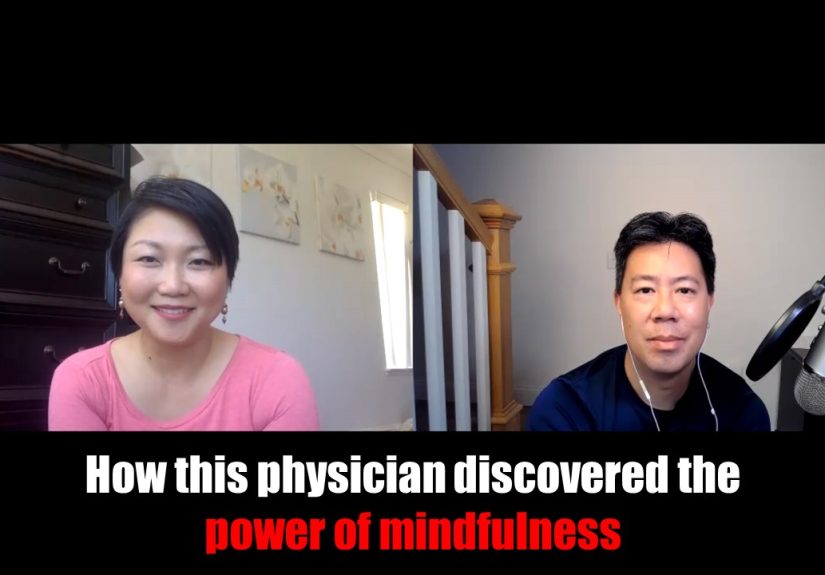
Medicine loves heroes, but it is not always kind to humans. It trains physicians to move fast, think clearly, absorb suffering, answer impossible questions, and somehow still remember their lunch exists. That last part often fails spectacularly. In that world, mindfulness can sound suspiciously soft, like something that belongs in a yoga studio with a fountain and exactly three pebbles. But for at least one physician, mindfulness was not a luxury item or a trendy buzzword. It became a practical tool for surviving modern medicine without losing the part of himself that wanted to heal people in the first place.
That physician is internal medicine hospitalist Dr. Hugo Davila-Grijalva, whose journey into mindfulness reflects a much bigger truth about health care today: many doctors do not discover mindfulness because life is calm and lovely. They discover it because stress, burnout, and emotional overload leave them hungry for a better way to practice medicine. His story, along with growing evidence from medical institutions and academic research, helps explain why mindfulness has become more than a wellness fad. For many clinicians, it is a way back to focus, compassion, and professional sustainability.
The moment mindfulness stopped sounding fluffy
Dr. Davila-Grijalva’s path into mindfulness did not begin as a branding exercise for “wellness.” It deepened during the pandemic, when he, like many frontline clinicians, was dealing with stress and burnout. He and his wife, Dr. Michelle Davila, formally entered Mindfulness-Based Stress Reduction, or MBSR, an eight-week program developed by Jon Kabat-Zinn. That decision mattered because it moved mindfulness out of the abstract and into lived experience. It was no longer a nice idea floating above daily life like a motivational poster. It became a structured practice for dealing with suffering, fatigue, and the emotional weight of clinical work.
What makes this story powerful is that the transformation was not dramatic in a movie-trailer kind of way. No thunderclap. No angelic choir. No stethoscope flying in slow motion. Instead, mindfulness worked in the way many effective things work: quietly, repeatedly, and with enough consistency to change how a person meets the day. For Dr. Davila-Grijalva, mindfulness helped him reconnect with what was fulfilling and joyful about caring for patients. That is a huge shift in a profession where many clinicians end up feeling fragmented, rushed, and emotionally flattened by the pace of care.
His experience also fits a pattern seen across medicine. Physicians often enter training with a sense of purpose, curiosity, and commitment. Then the machinery of health care shows up with charting burdens, staffing shortages, time pressure, sleep disruption, and the subtle expectation that competent people should simply absorb all of it. Mindfulness does not erase those pressures. What it can do is help physicians notice what is happening internally before they become consumed by it.
What mindfulness actually is, and what it definitely is not
Mindfulness is awareness, not escape
One reason mindfulness gets dismissed is that people imagine it means clearing the mind, becoming blissfully blank, or pretending stress is not real. That is not the assignment. In clinical and psychological settings, mindfulness is generally understood as paying attention to the present moment with openness and without harsh judgment. In plain English, it means noticing your thoughts, emotions, body sensations, and surroundings without instantly letting them run the show.
That distinction matters for physicians. Medicine does not need more detachment masquerading as toughness. It needs more skillful awareness. Family physician and mindfulness researcher Dr. Ronald Epstein has argued that mindfulness is not about disconnecting from stress; it is about becoming more aware of stress so you can respond more creatively. That is a very different proposition. It is less “float above your problems” and more “notice your mental autopilot before it drives you into a ditch.”
It can be formal, but it can also be surprisingly ordinary
Mindfulness can happen in a formal meditation session, but it can also show up in very ordinary moments: one slow breath before entering a patient’s room, a deliberate pause before answering a tense question, noticing the sensation of your feet on the floor after a difficult family meeting, or catching your mind sprinting into catastrophe before it has even finished the first lap. Mayo Clinic guidance makes this point well: mindfulness is not limited to sitting cross-legged in silence. It can be practiced while walking, eating, brushing your teeth, or doing routine daily tasks. That is good news for busy people and especially good news for doctors, whose schedules are not exactly known for spa-like spaciousness.
Why mindfulness hit so hard for one physician and so many others
Because medicine rewards speed, certainty, and self-neglect
Physicians are trained to focus outward. Notice the patient. Spot the pattern. Catch the abnormal lab. Manage the crisis. What gets neglected is the clinician’s internal state. Yet that internal state affects everything: tone of voice, listening quality, emotional regulation, decision-making, patience, empathy, and even the ability to transition from one patient encounter to the next without carrying emotional static like a human power line.
That is where mindfulness becomes useful. For Dr. Davila-Grijalva, it did not merely reduce stress in a generic sense. It helped him become less scattered and more fully present in patient encounters. That may sound subtle, but subtle changes in attention can transform care. A mindful physician is more likely to notice when they are interrupting, rushing, bracing, or reacting. They are more likely to stay grounded in difficult conversations instead of becoming defensive, numb, or mentally absent.
Because stress changes how clinicians think and feel
Stress is not just an emotion; it is a whole-body event. Chronic stress can affect sleep, attention, mood, patience, and physical health. NIMH and Mayo Clinic both emphasize that unrelieved stress can spill into concentration problems, irritability, exhaustion, and broader mental and physical strain. In medicine, those costs are especially high because burned-out clinicians are not just miserable; they are also at greater risk of disengagement, depersonalization, and reduced job satisfaction.
Mindfulness offers a counter-skill. Instead of being dragged around by every thought or bodily alarm bell, a clinician learns to observe internal signals earlier. The feeling may still arrive, but it does not automatically become destiny. The stress response can be noticed, named, and softened. That can create just enough space for a better choice, which is often how real change starts.
The research says mindfulness is more than a pretty idea
Mindfulness is not magic, and it should not be oversold like a miracle vitamin in a suspiciously enthusiastic ad. But the research is strong enough to take seriously. The National Center for Complementary and Integrative Health notes that mindfulness and meditation practices may influence brain function and are linked to benefits in several areas, though not every claim is equally proven and not every study is definitive. That nuance matters. Good science is not a hype machine.
What does the evidence show? Mindfulness-based programs have moderate evidence for improving anxiety and depression symptoms in some populations. There is better evidence for chronic pain than for acute pain. Mindfulness practices may also improve sleep quality and help reduce insomnia. These findings help explain why mindfulness appeals to physicians whose stress often does not stay politely in one category. It leaks into sleep, relationships, attention, and physical symptoms.
More importantly for this story, physician-specific research is encouraging. A well-known 2009 study in JAMA found that a program combining mindfulness, communication, and self-awareness was associated with improvements in primary care physicians’ well-being and burnout-related measures. Later studies in health care settings found that even shorter mindfulness programs could reduce stress and anxiety among health professionals during work hours. Another pilot trial involving surgical residents found higher mindfulness, lower stress, and better executive function among participants who completed mindfulness-based training.
That last point is especially interesting because medicine is a profession built on executive function. Doctors rely on attention, working memory, emotional regulation, and cognitive flexibility all day long. When mindfulness appears to support some of those functions, it stops looking like a side hobby and starts looking like performance support with a human soul.
How mindfulness changes patient care
It improves presence, which patients can feel immediately
Patients are remarkably good at sensing whether a doctor is truly with them or merely standing nearby while mentally wrestling the electronic health record. Mindfulness can strengthen the quality of attention in the room. Dr. Davila-Grijalva has described mindfulness as helping him connect more deeply with the full experience of caring for people. That kind of presence is not cosmetic. It shapes trust.
When clinicians are more grounded, they tend to listen better, interrupt less, and tolerate uncertainty with more grace. They are less likely to react impulsively when a patient is angry, frightened, or overwhelmed. They are also better positioned to “bear witness” to suffering without instantly trying to outrun it. That matters because not every medical problem can be fixed quickly, but nearly every patient benefits from feeling seen.
It helps clinicians regulate themselves before they try to help others
A dysregulated clinician can still be competent, but the work becomes heavier. Everything takes more effort. Mindfulness helps with self-regulation by teaching doctors to notice thoughts, body tension, and emotional escalation before they spill into behavior. That can mean pausing instead of snapping, breathing instead of bulldozing, or listening instead of performing the kind of half-listening that deserves its own warning label.
In that sense, mindfulness is not self-indulgent. It is practical. A physician who can regulate themselves more effectively often becomes more useful to patients, coworkers, and trainees. Calm is contagious. So is panic. Health care already has enough of the second one.
How a busy physician can actually build a mindfulness practice
Start smaller than your inner overachiever would prefer
One of the most helpful findings from mainstream medical guidance is that mindfulness does not require heroic amounts of time. Harvard Health has highlighted that even 10 to 15 minutes a day can be meaningful when practiced consistently. That is encouraging because a lot of clinicians hear the words “eight-week program” and immediately assume they need a second life, a third arm, and a scheduler with supernatural powers.
Formal programs such as MBSR can be deeply valuable, especially for people who want structure, teaching, and accountability. But smaller practices matter too. A physician might try a one-minute breathing pause before opening the chart, a short body scan between patients, or a transition ritual before driving home. The goal is not perfection. The goal is repetition.
Use mindfulness where the stress actually lives
Mindfulness works best when it shows up in the exact spots where stress tends to bite. For doctors, that might mean:
- taking one deliberate breath before entering a patient room,
- noticing jaw tension while charting,
- labeling an emotion after a difficult case instead of pretending nothing happened,
- walking to the next task without replaying the last conversation like an unwanted podcast,
- creating a small end-of-day ritual to mark the transition out of clinical mode.
These are not glamorous techniques. They do not look impressive on social media. They are useful anyway.
Mindfulness is helpful, but it is not an excuse to ignore broken systems
This is the part that deserves honesty. Mindfulness can help physicians cope better, listen better, and recover better. But it is not a moral bandage for organizational dysfunction. It does not replace staffing, sane scheduling, workflow reform, or administrative simplification. Recent physician well-being research has continued to emphasize that institutional interventions matter. In other words, teaching doctors to breathe is good; building systems that stop strangling them is also recommended.
The most responsible view is both-and. Physicians benefit from individual skills like mindfulness, coaching, reflection, and self-awareness. They also need workplaces that do not grind those strengths into dust. A meditation app cannot fix a toxic culture any more than a stethoscope can fix the parking situation. Let us be serious.
What the rest of us can learn from this physician’s story
You do not need to practice medicine to recognize yourself in this story. Many people live in a low-grade sprint: too many tabs open in the brain, too many demands, not enough recovery, and an unfortunate tendency to call that “normal.” The lesson from physicians who discover mindfulness is not that everyone should become perfectly serene. That would be unrealistic and, frankly, suspicious. The lesson is that attention is trainable.
Mindfulness teaches people to come back to the present moment without drama, even after the mind wanders for the 700th time. That skill is useful in hospitals, offices, kitchens, schools, and anywhere humans are trying to function while being gloriously imperfect nervous systems.
Conclusion
Dr. Hugo Davila-Grijalva’s story captures why mindfulness has become so compelling in modern medicine. He did not discover it because he wanted a trendy side hobby or a more photogenic morning routine. He discovered it because stress and burnout created a need for a better way to live and practice. Through structured mindfulness training, he found a path back to presence, meaning, and a more grounded relationship with patients and with himself.
That is the real power of mindfulness. It does not make medicine easy. It does not erase grief, pressure, uncertainty, or loss. What it can do is help a physician stay awake inside the life they are already living. And in a profession that often rewards speed over presence, that might be one of the most radical and practical skills a doctor can build.
Extended reflections: what mindfulness feels like in real clinical life
Here is the part that often gets missed in polished wellness conversations: mindfulness in medicine usually does not feel profound in the moment. It feels small. A physician finishes a difficult conversation with a family, steps into the hallway, and notices their chest is tight. In the past, they might have powered straight into the next task while carrying that tension like invisible luggage. With mindfulness, they pause for one breath, maybe two, and name what is happening: grief, frustration, fear, fatigue. Nothing has been fixed yet. The patient is still sick. The pager may still go off in ten seconds. But something important has changed. The doctor is no longer completely fused with the stress.
Another moment comes at the computer, that glowing rectangle of modern destiny. The inbox is full, the notes are late, and the clinician’s mind starts producing its greatest hits: I’m behind. I’m failing. I’ll never catch up. Mindfulness does not magically turn the inbox into a meadow. It does, however, make it easier to notice the mental spiral before it becomes the whole atmosphere. The physician may feel their shoulders rise, unclench their jaw, put both feet on the floor, and return to one task instead of ten imagined disasters. It is not glamorous, but it is stabilizing.
Then there is the exam room moment. A patient is upset, talking fast, and clearly carrying more than one problem. The rushed version of the clinician might interrupt in minute one, steer the conversation too quickly, and leave with the uneasy feeling that something essential was missed. A more mindful version is not slower in an inefficient way; they are simply more present. They notice the urge to rush. They let the patient finish one extra sentence. They catch a detail that would have been lost in a blur. Often, the patient feels that difference immediately, even if they cannot name it. They just know the doctor seemed truly there.
Mindfulness also matters after work, when the body leaves the hospital but the mind keeps doing rounds. Many clinicians carry home a residue of unfinished conversations, hard cases, and subtle moral stress. A mindfulness practice can become a bridge between roles. It may be a quiet drive without a podcast, a few minutes of breathing before walking through the front door, or a short reflection that says, Today was hard, and now I am home. That kind of transition is not trivial. It helps protect relationships, sleep, and the ability to return the next day without feeling like a phone battery permanently stuck at 3%.
Most of all, mindfulness gives physicians permission to be human without becoming less professional. It allows sorrow to be sorrow, fatigue to be fatigue, and joy to be joy. It reminds clinicians that paying attention is not weakness. In many cases, it is how they keep compassion from turning into numbness. And over time, that may be the deepest experience of all: not becoming a different person, but becoming more fully present as the one who was there all along.