Table of Contents >> Show >> Hide
- Why a Vintage Mail Sorter Makes a Great Shoe Cubby
- Planning the Size of Your DIY Shoe Cubby Shelf
- Tools and Materials You Will Need
- Choosing the Right Wood
- Step-by-Step: How to Build the Vintage Mail Sorter DIY Shoe Cubby Shelf
- Step 1: Sketch the layout
- Step 2: Cut the outer case pieces
- Step 3: Cut shelves and dividers
- Step 4: Dry-fit everything
- Step 5: Assemble the outer frame
- Step 6: Install horizontal shelves
- Step 7: Add vertical dividers
- Step 8: Attach the back panel
- Step 9: Cover plywood edges
- Step 10: Sand the entire shelf
- Step 11: Apply paint, stain, or a vintage finish
- Step 12: Add vintage details
- Step 13: Seal the shelf
- Step 14: Anchor it to the wall
- Design Ideas for a More Authentic Vintage Mail Sorter Look
- Common Mistakes to Avoid
- Practical Ways to Use Your Shoe Cubby Shelf
- Maintenance Tips for Long-Term Use
- Real-Life Experience: What Building a Vintage Mail Sorter Shoe Cubby Teaches You
- Conclusion
If your entryway currently looks like a sneaker convention got interrupted by a backpack tornado, a vintage mail sorter DIY shoe cubby shelf may be exactly the kind of charming, practical project your home needs. Inspired by old post office sorting cabinets, this tall, narrow cubby shelf turns everyday shoe storage into something with character, warmth, and just enough “found at an antique market” personality to make guests ask, “Where did you buy that?”
The best part? You do not need an actual antique mail sorter, which can be expensive, heavy, oddly sized, and sometimes smell like it spent 80 years in a basement arguing with mothballs. With plywood, basic trim, wood glue, nails or screws, and a vintage-style finish, you can build a custom shoe cubby shelf that fits your entryway, mudroom, closet, hallway, or garage drop zone.
This guide walks through the full process: planning dimensions, choosing materials, cutting cubby parts, assembling the structure, adding vintage details, finishing the wood, and making the shelf safer for everyday use. The goal is simple: a DIY shoe organizer that looks old in the best possible way but works like it was designed by someone tired of tripping over sandals.
Why a Vintage Mail Sorter Makes a Great Shoe Cubby
Old mail sorting cabinets were designed for one purpose: dividing chaos into neat little compartments. That is also the exact job of a shoe cubby shelf. Each slot gives one pair of shoes a home, so the floor stops being the default storage system.
A mail sorter-inspired design works especially well because it is vertical. Instead of using a wide bench-style shoe rack that eats up wall space, a tall cubby shelf uses height. This makes it useful for small entryways, apartments, mudrooms, narrow hallways, and family drop zones where every inch matters.
Key benefits of this DIY shoe cubby shelf
- It saves floor space: A narrow vertical build keeps shoes organized without taking over the room.
- It gives every pair a place: Sneakers, flats, sandals, slippers, and small accessories each get their own cubby.
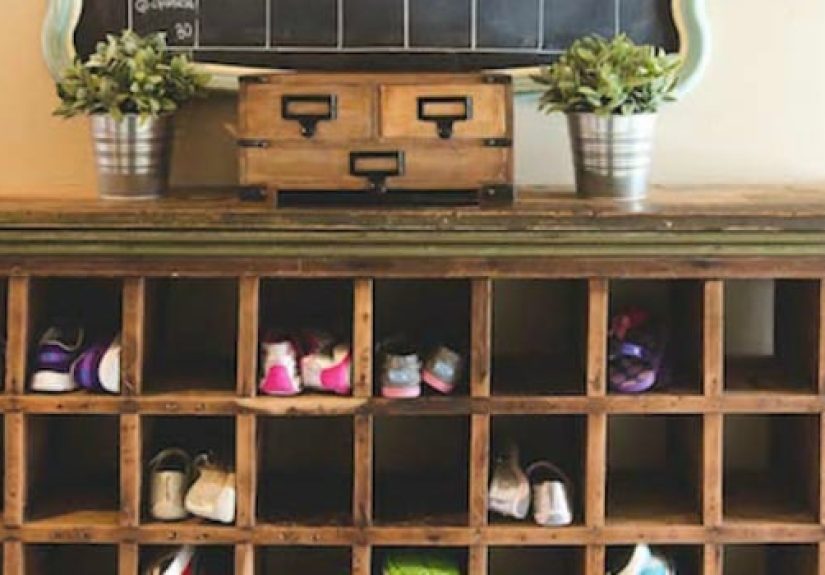
- It adds vintage charm: Trim, labels, stain, and distressed details create the look of an old mail sorter.
- It is customizable: You can adjust cubby size, height, width, color, finish, and hardware.
- It is beginner-friendly: Straight cuts, simple assembly, and basic joinery are enough for a sturdy result.
Planning the Size of Your DIY Shoe Cubby Shelf
Before cutting wood, measure the space where the shelf will live. A vintage mail sorter shoe cubby works beautifully near the front door, inside a coat closet, beside a mudroom bench, or against a garage entry wall. Measure width, height, and depth, then subtract a little breathing room so the shelf does not look wedged in like it owes rent.
A practical shoe cubby depth is usually around 12 inches for many adult shoes, though larger shoes may need 13 to 14 inches. For cubby width, plan about 8 to 10 inches per slot for everyday shoes. Taller footwear, like boots or high-top sneakers, may need a few oversized cubbies at the bottom.
Sample dimensions for a tall narrow shoe cubby
For a compact entryway organizer, consider a shelf about 24 inches wide, 12 inches deep, and 48 to 60 inches tall. This size can hold multiple rows of cubbies without overwhelming a small wall. A wider mudroom version might be 36 inches wide with larger cubbies for family use.
One smart layout is to build smaller cubbies on top for flats, sandals, mail, gloves, and dog leashes, then larger cubbies near the bottom for sneakers and boots. That combination gives the piece the authentic “sorted compartments” feeling while making it more useful than a one-size-fits-all grid.
Tools and Materials You Will Need
You can build this project with basic woodworking tools. A table saw makes ripping plywood easier, but many home improvement stores can cut plywood sheets down into manageable pieces. A circular saw with a straightedge guide also works well.
Recommended materials
- 3/4-inch plywood for the outer case, shelves, and main dividers
- 1/4-inch plywood or hardboard for the back panel
- Wood glue
- 1-inch to 1 1/2-inch brad nails or finish nails
- Wood screws for added strength
- Wood filler
- Sandpaper in medium and fine grits
- Edge banding, screen molding, or thin trim strips
- Stain, paint, or tinted finishing wax
- Clear protective topcoat
- Vintage-style label holders, numbers, or drawer pulls
- Furniture anti-tip hardware for wall anchoring
Helpful tools
- Tape measure
- Carpenter’s square or speed square
- Pencil
- Circular saw, table saw, or miter saw
- Drill and countersink bit
- Brad nailer or hammer
- Clamps
- Orbital sander or sanding block
- Level
- Stud finder
Wear eye protection, use dust control when cutting or sanding, and follow the instructions for your tools and finishes. If you are new to power tools, practice on scrap wood first. Scrap wood is the woodworking equivalent of rehearsal dinner: mistakes are expected, and nobody has to see the crooked cut afterward.
Choosing the Right Wood
Plywood is a strong, practical choice for this project because it is stable, available in large sheets, and easier to keep square than many solid boards. Cabinet-grade birch plywood looks clean when stained, while sanded plywood or paint-grade plywood can work well for a painted finish.
If you want a rustic farmhouse look, pine boards can also be used, but pine often absorbs stain unevenly. A pre-stain wood conditioner can help reduce blotchiness, especially on softwoods. For a painted cubby shelf, plywood with simple trim is usually the most budget-friendly option.
Painted vs. stained finish
A painted finish is forgiving. It hides filler, plywood edges, and minor imperfections. White, cream, charcoal, sage green, navy, or muted gray can all look great in an entryway. A stained finish shows off the grain and feels more like an old post office sorter, but it requires more careful sanding and prep.
For the most authentic vintage mail sorter look, try a warm medium-brown stain, a dark walnut tone, or a layered finish with stain underneath and dry-brushed paint on top. Add small metal label holders, and suddenly your shoe shelf looks like it once sorted letters from 1912. It did not, but let it have its moment.
Step-by-Step: How to Build the Vintage Mail Sorter DIY Shoe Cubby Shelf
Step 1: Sketch the layout
Start with a simple drawing. Decide the overall height, width, depth, number of rows, and number of columns. For example, a 24-inch-wide shelf might have two columns of larger cubbies or three narrower columns. A 36-inch-wide version might have three or four columns.
Mark which cubbies will be standard shoe slots and which will be taller spaces for boots, baskets, or seasonal items. This is also the time to decide whether you want a flat top shelf, decorative crown trim, or a raised back lip.
Step 2: Cut the outer case pieces
Cut two side panels, one top panel, and one bottom panel from 3/4-inch plywood. For a tall rectangular shelf, the side panels determine the height, while the top and bottom panels determine the width. Keep the pieces square and label them as you cut.
If you are using a circular saw, clamp a straightedge guide to the plywood for cleaner cuts. Slightly uneven cuts can make cubby assembly frustrating later, so measure twice and cut once. Then measure again because wood has a way of humbling confident people.
Step 3: Cut shelves and dividers
Cut the horizontal shelves and vertical dividers according to your layout. For a beginner-friendly build, you can make a simple grid where shelves run full width and vertical dividers fit between them. This approach is easier than cutting dozens of interlocking slots.
If you have more woodworking experience, dadoes can make the cubbies stronger and cleaner. A dado is a shallow groove cut into one board so another board can sit inside it. Dados help align shelves and dividers, but they require careful setup. For many DIYers, glue, nails, screws, and square assembly will be enough.
Step 4: Dry-fit everything
Before reaching for glue, assemble the pieces without fasteners. Check that the sides, shelves, and dividers fit properly. Use a square to confirm that the corners are 90 degrees. If a divider is a little too long, trim or sand it now.
This step may feel slow, but it saves time. Wood glue is wonderful until you discover the middle divider is upside down and the shelf looks like abstract furniture. Dry-fitting prevents that tiny emotional adventure.
Step 5: Assemble the outer frame
Apply wood glue to the ends of the top and bottom panels. Clamp them between the side panels, making sure everything is square. Secure the joints with screws or brad nails. Screws provide more strength, while brad nails are faster and easier to hide. Many builders use both: glue for strength, nails for holding power, and screws where extra support is useful.
Wipe away excess glue with a damp cloth before it dries. Dried glue can block stain, leaving pale patches that announce, “Someone got excited with the bottle.”
Step 6: Install horizontal shelves
Mark the shelf locations on both side panels. Use a square to carry the lines across the interior. Apply glue to the shelf ends, place each shelf on its marks, then nail or screw through the side panels into the shelf edges.
Work from bottom to top. After each shelf, check for square. If one shelf is slightly off, the mistake can multiply as you move upward. A small error at the bottom can become a dramatic lean at the top, which is not the vintage charm we are aiming for.
Step 7: Add vertical dividers
Measure the space between shelves, then cut dividers to fit. Apply glue to the top and bottom edges of each divider, slide it into place, and secure it with nails through the shelves. Use a spacer block to keep cubbies consistent. A spacer block is simply a scrap piece cut to the exact width you want between dividers.
For a true mail sorter look, vary some cubby sizes. Perfect grids look modern; slightly varied compartments look collected, historic, and more interesting. Just keep the structure balanced so the shelf still feels intentional.
Step 8: Attach the back panel
Cut a 1/4-inch plywood or hardboard back panel to fit the shelf. Lay the cubby face down, check that the frame is square, then attach the back panel with glue and small nails or staples. The back panel helps keep the shelf rigid and prevents shoes from sliding into the wall.
If you want extra vintage flair, paint the back panel a slightly darker color, use beadboard, or add peel-and-stick wallpaper with a subtle aged pattern. Small details make the piece feel less like “garage project” and more like “custom entryway furniture.”
Step 9: Cover plywood edges
Raw plywood edges can look unfinished. To upgrade the piece, add iron-on edge banding, thin screen molding, lattice strips, or simple 1×2 face trim. Mail sorters often have strong front edges around each cubby, so trim is not just decorative; it helps sell the vintage style.
Cut trim carefully and attach it with glue and brad nails. Fill nail holes with wood filler. Once dry, sand smooth. This is the stage where the project starts looking less like a box of boxes and more like a piece of furniture.
Step 10: Sand the entire shelf
Sand all surfaces, corners, and edges. Start with a medium grit if the wood is rough, then move to a finer grit for a smooth finish. Break sharp corners lightly so the shelf feels comfortable to touch and so paint or stain adheres better.
Vacuum dust from the cubbies, then wipe the surface with a tack cloth or slightly damp cloth. Dust left behind can ruin a finish faster than a muddy boot on a white rug.
Step 11: Apply paint, stain, or a vintage finish
For stain, test the color on scrap wood first. If using pine, birch, maple, or another wood that may stain unevenly, apply a wood conditioner before staining. Follow the product directions, work in a ventilated area, and wipe off excess stain evenly.
For paint, apply primer first, especially if you are painting raw plywood. Then apply two thin coats of durable interior paint. A satin or semi-gloss finish is easier to wipe clean than flat paint, which matters because shoes are not exactly known for their commitment to cleanliness.
Step 12: Add vintage details
This is where the mail sorter personality shows up. Add metal label holders, small number plates, aged brass pulls, stamped tags, or tiny chalkboard labels. You can number the cubbies, label them by family member, or assign categories like “Sneakers,” “Sandals,” “Dog Walk,” and “Mystery Shoe That Belongs to Nobody.”
For a more authentic aged look, lightly distress corners with sandpaper after painting. Focus on edges where natural wear would happen. Do not distress every surface equally; real vintage furniture wears unevenly. Randomness is your friend, but chaos is not invited.
Step 13: Seal the shelf
A clear topcoat protects the finish from scuffs, moisture, and everyday entryway abuse. Use water-based polyurethane for a clear finish that dries relatively fast, or oil-based polyurethane for a warmer tone. Apply thin coats and sand lightly between coats if the product instructions recommend it.
Let the finish cure fully before loading the shelf with shoes. Dry to the touch does not always mean ready for heavy use. Give the finish time, and your shelf will stay better-looking longer.
Step 14: Anchor it to the wall
A tall narrow shelf should be anchored to wall studs or secured with appropriate anti-tip hardware. This is especially important in homes with kids, pets, or anyone who might tug, climb, bump, or dramatically fling a backpack. Store heavier shoes and boots near the bottom to keep the center of gravity low.
Use a stud finder, level the shelf, and attach the anti-tip hardware according to the manufacturer’s directions. Safety is not the glamorous part of DIY, but neither is explaining why your shoe shelf tried to become a floor shelf.
Design Ideas for a More Authentic Vintage Mail Sorter Look
Use aged labels
Small metal label holders instantly give a cubby shelf an old office or post office feel. Slip in kraft paper labels, handwritten numbers, or printed tags with typewriter-style fonts.
Add a warm wood tone
Medium brown, walnut, honey, and antique oak stains all work well for vintage style. If your room already has wood tones, choose a finish that complements nearby floors, doors, or furniture.
Try two-tone color
Paint the outside frame a muted color and stain the cubby interiors, or paint the back panel darker than the face. Two-tone finishes add depth and make simple construction look more custom.
Include mixed cubby sizes
A real sorting cabinet often has compartments in different sizes. Mix small, medium, and tall cubbies to store shoes, gloves, pet supplies, mail, sunglasses, and small baskets.
Common Mistakes to Avoid
Making cubbies too shallow
A shelf that is too shallow may look sleek, but shoes will stick out awkwardly. Measure your largest everyday shoes before deciding on depth.
Skipping the back panel
The back panel adds strength and keeps the shelf square. It also prevents shoes from scuffing the wall behind the organizer.
Ignoring plywood edges
Visible plywood edges can make the project look unfinished. Edge banding or trim gives the shelf a more polished, furniture-like appearance.
Using one cubby size for everything
Not all shoes are shaped the same. Mix cubby heights or create a bottom row for larger footwear.
Forgetting daily use
A shoe cubby shelf should be easy to clean. Choose a finish that can handle dust, dirt, and the occasional “I stepped in something suspicious” moment.
Practical Ways to Use Your Shoe Cubby Shelf
Although this project is designed for shoes, it can do much more. In an entryway, use the top cubbies for keys, mail, sunglasses, wallets, and dog leashes. In a mudroom, assign each family member a row. In a closet, use it for folded sweaters, small bags, hats, or seasonal accessories.
You can also place baskets in a few cubbies to hide clutter. Open cubbies are convenient, but baskets are helpful for items that do not look cute on display. Nobody needs to admire a pile of mismatched mittens like it belongs in a museum.
Maintenance Tips for Long-Term Use
Vacuum the cubbies regularly to remove dirt and dust. Wipe painted or sealed surfaces with a damp cloth and mild cleaner. Avoid soaking the wood, especially if the shelf is made from plywood.
Use small mats or removable liners in cubbies that hold wet shoes. If your household deals with snow, rain, or muddy sports gear, consider adding a boot tray under the shelf or creating taller bottom cubbies with waterproof liners.
Check the wall anchor occasionally, especially after moving the shelf or heavily loading it. Tighten loose hardware and touch up scuffed paint or finish as needed.
Real-Life Experience: What Building a Vintage Mail Sorter Shoe Cubby Teaches You
One of the biggest lessons from building a vintage mail sorter DIY shoe cubby shelf is that organization projects are secretly lifestyle projects wearing a tool belt. You start out thinking, “I need somewhere to put shoes,” and halfway through you realize you are designing traffic flow for your entire entryway. Where do people drop bags? Which shoes are worn every day? Does the dog leash need a cubby? Why is there one flip-flop with no partner? These are the mysteries that reveal themselves once you stop accepting floor chaos as a decorating style.
The second lesson is that perfect symmetry is not always the goal. A perfectly even grid can look clean, but the vintage mail sorter charm often comes from slight variation. A taller cubby at the bottom for boots, a narrow slot near the top for mail, or a small compartment for keys makes the piece feel collected and useful. The trick is to make variation look intentional. Repeat certain measurements, line up major shelves, and keep the outside frame square. Then let the inside layout have a little personality.
Another practical experience: sanding always takes longer than expected. Always. You may think the shelf is ready for stain, then a bright light reveals rough edges, glue spots, and tiny scratches having a party on the surface. Take the time to sand properly and remove dust before finishing. A good finish does not magically hide poor prep; it highlights it with excellent lighting and zero mercy.
Finishing also teaches patience. Stain needs testing. Paint needs thin coats. Clear topcoat needs curing time. If you rush, the shelf may look good for one day and then collect dents, tacky spots, or weird shiny patches. A vintage-inspired piece should look aged on purpose, not like it lost a wrestling match with a paintbrush.
Using the finished cubby shelf is the most satisfying part. Shoes that used to migrate across the entryway suddenly have assigned parking spaces. Kids can find their sneakers faster. Guests have a place to put shoes without guessing whether they are breaking a house rule. The top becomes a landing zone for mail and keys. The whole room feels calmer, and no one has to perform an obstacle-course jump over sneakers just to answer the door.
The final experience is this: building your own furniture changes how you look at storage. Instead of buying something close enough, you begin noticing exact needs. Maybe your hallway needs a narrow shelf. Maybe your mudroom needs taller cubbies. Maybe your closet needs a shorter version with baskets. Once you build one useful piece, you start seeing solutions everywhere. That is the happy danger of DIY: one shoe cubby today, and tomorrow you are measuring the laundry room with suspicious enthusiasm.
Conclusion
A vintage mail sorter DIY shoe cubby shelf is a smart blend of storage, style, and weekend woodworking satisfaction. It helps control entryway clutter, gives shoes a dedicated home, and adds a warm, nostalgic look that feels far more interesting than a plain plastic rack. With plywood, trim, labels, a thoughtful layout, and a durable finish, you can build a custom organizer that fits your space and your household habits.
The secret is planning. Measure your shoes, design cubbies that match real daily use, keep the structure square, cover raw edges, and choose a finish that can handle life near the door. Add vintage labels, number plates, or distressed paint for character, then anchor the shelf safely to the wall. The result is a practical DIY shoe cubby shelf that looks like it has a story, even if that story begins with you, a saw, and a heroic amount of sanding.