Table of Contents >> Show >> Hide
- Step 1: Understand Canada’s Firearm Categories
- Step 2: Decide Why You Want a Firearm
- Step 3: Check Your Basic Eligibility
- Step 4: Take the Canadian Firearms Safety Course
- Step 5: Pass the Written and Practical Tests
- Step 6: Prepare Your PAL Application
- Step 7: Choose Reliable References
- Step 8: Submit the Application and Wait for Processing
- Step 9: Learn Storage and Transportation Rules Before Buying
- Step 10: Select a Lawful Firearm That Matches Your Licence
- Step 11: Complete the Legal Transfer
- Step 12: Keep Your Licence, Records, and Habits Up to Date
- Common Mistakes New Buyers Should Avoid
- Practical Experience: What the Process Feels Like for a First-Time Buyer
- Conclusion
Buying a gun in Canada is not like picking up a fishing rod, a camping stove, or a suspiciously discounted canoe from a weekend sale. It is a tightly regulated process built around licensing, safety training, background screening, lawful purpose, storage rules, and transfer approval. In other words, the Canadian system is less “grab and go” and more “learn, apply, wait, verify, store responsibly, and keep your paperwork cleaner than a freshly Zambonied rink.”
This guide explains how to buy a firearm in Canada legally and responsibly, with a practical 12-step roadmap for new buyers. It focuses on lawful civilian ownership, especially non-restricted firearms such as many rifles and shotguns used for hunting, sport shooting, pest control in lawful rural settings, or collecting where allowed. Because Canadian firearms law changes and enforcement details may vary by province or territory, always confirm the latest requirements with the Royal Canadian Mounted Police Canadian Firearms Program, your provincial or territorial Chief Firearms Officer, and local hunting or range authorities before taking action.
Most importantly, this article is about compliance and safety. It does not help anyone bypass the law, avoid screening, misuse a firearm, or treat ownership casually. A firearm is not a lifestyle prop. It is a serious responsibility that comes with legal, ethical, and practical duties from day one.
Step 1: Understand Canada’s Firearm Categories
Before asking how to buy a gun in Canada, you need to understand what kind of firearm Canadian law is talking about. Firearms generally fall into three broad classes: non-restricted, restricted, and prohibited.
Non-restricted firearms
Non-restricted firearms commonly include many hunting rifles and shotguns, though not every long gun automatically qualifies. Classification depends on design, barrel length, action type, and whether the firearm is specifically listed or affected by current regulations.
Restricted firearms
Restricted firearms include certain firearms such as some handguns that are not prohibited, some semi-automatic centerfire firearms with shorter barrels, and firearms specifically prescribed as restricted. Restricted firearms come with extra registration, transport, and purpose requirements.
Prohibited firearms
Prohibited firearms are heavily limited. Many people cannot newly acquire them at all unless they have very specific grandfathered privileges or fall under narrow legal exceptions. For a first-time buyer, the smart approach is simple: do not assume anything. Check classification before you buy.
Step 2: Decide Why You Want a Firearm
Canadian law treats firearm ownership as a regulated privilege, not an impulse purchase. Your reason matters. Common lawful reasons may include hunting, sport shooting, target practice at an approved range, collecting, or work-related needs in limited circumstances. If your only plan is “because it looks cool,” pause. Canada is not impressed by vibes alone.
For many beginners, a non-restricted firearm for hunting or sport shooting is the most straightforward legal path. Restricted firearms are much more regulated and often tied to approved ranges, target shooting, collecting, or narrow occupational authorizations. Handguns are subject to a national freeze for most individuals, meaning new acquisition by ordinary individuals is generally not available except under specific exemptions.
Step 3: Check Your Basic Eligibility
To legally acquire a firearm in Canada, you generally need the correct licence. For adults, that usually means a Possession and Acquisition Licence, commonly called a PAL. A PAL allows a person to possess and acquire the class of firearm listed on the licence.
Eligibility involves more than age. Applicants go through screening related to public safety, personal history, references, and other information requested as part of the licensing process. If you have a prohibition order, serious criminal history, unresolved safety concerns, or issues involving violence or threats, your application may be refused or delayed. This is not bureaucracy for sport; it is the core of Canada’s firearms system.
Minors may be eligible for a minor’s licence in certain circumstances, but that does not work the same way as an adult PAL and does not mean a minor can simply purchase firearms. For buying, adults should expect to need the correct adult licence.
Step 4: Take the Canadian Firearms Safety Course
First-time applicants must complete safety training before applying for a PAL. For non-restricted firearms, that means the Canadian Firearms Safety Course, often shortened to CFSC. The course covers basic safety, firearm parts, ammunition, safe handling, safe storage, transportation, user responsibilities, and practical handling skills.
If you want restricted firearm privileges, you must also complete the Canadian Restricted Firearms Safety Course, or CRFSC. That extra course focuses on restricted firearms and their additional handling, storage, transportation, and legal responsibilities.
Do not treat the course like a hoop to jump through. Treat it like the first serious test of whether firearm ownership is right for you. If safe direction, unloading, storage, and transport rules feel annoying, that is useful information. Responsible ownership is mostly careful habits repeated forever.
Step 5: Pass the Written and Practical Tests
After the required in-class instruction, applicants complete written and practical testing. The practical portion matters because firearm safety is physical as much as intellectual. Knowing the rules in your head is good; demonstrating safe handling with your hands is better.
Examples of safety principles include keeping the firearm pointed in the safest available direction, treating every firearm as if it is loaded, confirming the firearm’s condition, controlling the muzzle, and keeping ammunition separate when required. These habits may sound simple, but simple is not the same as optional. Many serious accidents are caused by people who “knew better” right up until the moment they did not act better.
Step 6: Prepare Your PAL Application
Once you have completed the proper safety training, prepare your PAL application carefully. A first-time applicant may be able to apply online if eligible. Required information can include a digital licence photo, two pieces of government-issued identification, proof of safety training, payment information, references, and contact details for current or former conjugal partners where applicable.
Accuracy matters. Do not guess, skip, or “round off” important details. Firearms licensing is not the place for creative paperwork. If something does not apply, follow the official instructions. If something is unclear, ask the Canadian Firearms Program or your Chief Firearms Officer before submitting.
Step 7: Choose Reliable References
References are part of the safety screening process. Choose people who actually know you, can be contacted, and understand that they may be asked questions related to your application. Do not list a casual acquaintance from a barbecue who remembers you mostly as “the guy who brought the spicy dip.”
Your references should be prepared to confirm basic information and speak honestly. The purpose is not to coach them. The purpose is to help determine whether licensing you is consistent with public safety. If a reference has concerns, that concern may matter. Again, this is the point of the system.
Step 8: Submit the Application and Wait for Processing
After submission, your application is reviewed. First-time licence applications are subject to processing rules and waiting periods. During review, authorities may contact references, review safety concerns, confirm information, or request clarification.
This waiting stage can test your patience, but patience is part of responsible firearm ownership. Do not buy before you are legally eligible. Do not arrange informal transfers. Do not borrow outside the law. Keep your plans boring and compliant. “Boring and compliant” may not sound exciting, but in firearms law it is basically a superpower.
Step 9: Learn Storage and Transportation Rules Before Buying
Many new buyers focus on the purchase itself and forget the obvious question: where will the firearm safely live? Before buying anything, set up proper storage.
For non-restricted firearms, Canadian rules generally require the firearm to be unloaded and either made inoperable with a secure locking device, made inoperable by removing the bolt or bolt-carrier where applicable, or stored in a locked container, receptacle, or room designed to resist easy break-in. Ammunition must not be readily accessible unless stored properly in a locked container or equivalent secure place.
Restricted firearms have stricter storage requirements, including secure locking and locked storage, or storage in a safe, vault, or room built or modified for secure firearm storage. Transport rules also differ by class. Non-restricted firearms generally must be unloaded during transport, while restricted firearms must be unloaded, secured with a locking device, and placed in a locked opaque container that cannot easily be opened or broken into during transport.
In plain English: buy the safe, lock, case, and storage equipment before the firearm. Otherwise you are trying to build the barn after the horse has already become a legal problem.
Step 10: Select a Lawful Firearm That Matches Your Licence
Once you have the correct licence and storage plan, choose a firearm that matches your legal privileges and intended use. For a new owner, the most common route is a non-restricted firearm suitable for lawful hunting, target shooting, or sport use.
Do not rely on looks, online comments, or a seller’s casual “yeah, it’s fine.” Confirm the firearm’s classification. A model that appears similar to another model may not have the same legal status. Canadian classification can depend on exact design, variant, features, and regulatory listings. When in doubt, check before transferring ownership.
Also consider practical factors: fit, weight, recoil, ammunition availability, safe storage space, legal hunting rules in your province, and whether you have access to a proper range or hunting education. The best first firearm is not necessarily the flashiest one. It is the one you can lawfully own, safely store, confidently handle, and responsibly use.
Step 11: Complete the Legal Transfer
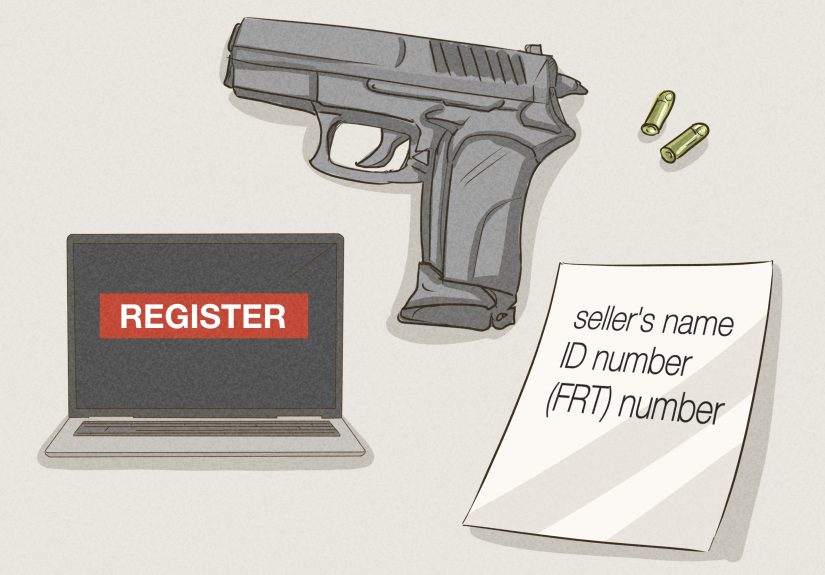
Buying a firearm in Canada is legally a transfer. The seller must verify that the buyer has the proper licence privileges for the class of firearm being transferred. For non-restricted firearms, sellers must verify the buyer’s licence through the Canadian Firearms Program and obtain the required reference number before completing the transfer.
For restricted and prohibited firearms, the process is more involved. These firearms must be registered, and the firearm should remain with the seller until the Canadian Firearms Program approves the transfer and the new registration certificate is issued. Both buyer and seller may need to provide licence information and firearm details as part of the transfer process.
Handguns deserve special caution. Due to the national handgun freeze, most individuals cannot newly acquire handguns unless they meet a specific exemption, such as certain elite sport shooting requirements or an authorization connected to a lawful occupation. Do not assume that holding a PAL with restricted privileges means you can buy a handgun today. For most people, that door is closed.
Step 12: Keep Your Licence, Records, and Habits Up to Date
Owning a firearm in Canada does not end at purchase. You must follow storage, transport, use, and renewal requirements. Keep your address current with the Chief Firearms Officer. Renew your licence before it expires. Keep documentation organized. Follow hunting rules, range rules, municipal bylaws, and provincial regulations.
Also keep training. Take range safety briefings seriously. Ask qualified instructors for help. Practice safe handling with unloaded firearms only where lawful and appropriate. If your life changes in a way that affects safe ownership, take action early. Responsible firearm owners do not wait until a problem becomes a headline.
Common Mistakes New Buyers Should Avoid
Assuming American rules apply
Canada is not the United States with maple syrup. Firearms laws are different, terminology is different, and legal assumptions can get expensive quickly. Do not use U.S. gun forums as your legal compass for Canadian ownership.
Shopping before licensing
Research is fine. Attempting to acquire before you are licensed is not. Get trained, apply, wait, and then proceed legally.
Ignoring local rules
Federal law is only part of the picture. Provinces, municipalities, hunting authorities, ranges, and clubs may have additional rules. If you plan to hunt, you may need hunter education, tags, seasons, and species-specific permissions.
Treating storage as an afterthought
A firearm without safe storage is not a bargain; it is a liability with a serial number. Plan storage first.
Practical Experience: What the Process Feels Like for a First-Time Buyer
For many first-time buyers, the Canadian firearm process feels slower and more formal than expected. That is normal. The first surprise is usually the safety course. A new applicant may walk in thinking the class will be mostly legal theory, then discover that a big part of the day is about careful, repeated handling habits. That repetition is not filler. It builds muscle memory around checking, controlling, and safely handling firearms.
The second surprise is paperwork. A PAL application is not difficult in the way a university exam is difficult, but it rewards careful reading. You need the right identification, accurate personal information, proper references, and proof of training. People who rush often lose more time fixing avoidable mistakes. A good practical tip is to gather everything before opening the application: course reports, identification, reference contact details, photo, and partner information if applicable. Put it all in one folder. Future you will send past you a thank-you card.
The third experience is waiting. New applicants often check their status more often than weather in a snowstorm. That is understandable, but it does not speed things up. Use the waiting period wisely. Research storage options. Visit an approved range as a guest if allowed. Read your province’s hunting or transport rules. Learn the difference between what is legal, what is wise, and what is merely someone’s loud opinion online.
When choosing a first firearm, many responsible buyers benefit from trying different options under supervision before purchasing. Fit matters. A firearm that is too heavy, awkward, or uncomfortable can lead to poor handling. Recoil matters too. Beginners sometimes overbuy because they want something “powerful,” then discover that confidence disappears quickly when every shot feels like shaking hands with a freight train. A modest, lawful, appropriate firearm that you can control safely is often the better starting point.
Another real-world lesson is that safe storage changes your home routine. You need to think about who lives with you, who visits, where keys are kept, whether ammunition is accessible, and how the firearm is secured during transport. Responsible ownership is not only about what happens at the range or in the field. It is about the quiet Tuesday night when the firearm is locked away properly and nothing dramatic happens. That uneventful outcome is the goal.
Finally, new owners often learn that the best firearm communities are not the loudest ones. Good instructors, reputable ranges, experienced hunters, and safety-focused clubs tend to be calm, patient, and rules-oriented. They do not mock basic questions. They do not encourage shortcuts. They care about safe direction, documentation, lawful transport, and respectful conduct. Find those people. Avoid anyone who treats legal compliance as optional or safety as a personality flaw.
Conclusion
Learning how to buy a gun in Canada is really learning how to become a lawful, safety-minded firearm owner. The 12 steps are not just a purchase checklist. They are a responsibility checklist: understand firearm classes, decide on a lawful purpose, complete safety training, apply for the right PAL, wait for approval, plan secure storage, verify transfers properly, and keep your habits sharp after the sale.
The simplest advice is also the most useful: do not rush. Canadian firearms law is detailed, and mistakes can have serious consequences. Start with official guidance, take training seriously, buy only what your licence allows, and treat safe storage as part of the purchase price. A responsible firearm owner is not the person with the biggest collection or the loudest opinion. It is the person who follows the law, respects the risks, and keeps safety boringly consistent.
Note: This article is general educational content, not legal advice. Canadian firearms laws and administrative requirements can change. Confirm current requirements with the Canadian Firearms Program, your provincial or territorial Chief Firearms Officer, and qualified legal counsel when needed.