Table of Contents >> Show >> Hide
- Why Mushroom Cleaning Is Its Own Tiny Science Project
- The Big Myth: “Never Wash Mushrooms” (Let’s Calm Down)
- What You Need: A Simple Mushroom-Cleaning Kit
- The Best “Default” Method for Most Mushrooms
- How to Clean Specific Types of Mushrooms
- Drying: The Step Everyone Rushes (and Then Regrets)
- What Not to Do (Your Mushrooms Will Thank You)
- When to Clean Mushrooms Based on How You’ll Use Them
- Storage After Cleaning (and Before Cleaning)
- Quick FAQ: The Stuff People Argue About at the Stove
- Kitchen “Experience” Notes: What Real Mushroom Cleaning Looks Like (500+ Words)
- Conclusion
Mushrooms are the weird little introverts of the produce aisle. They’re not exactly vegetables, they’re not exactly
“wash-and-go” berries, and they definitely don’t want a long soak like they’re at a spa day in cucumber water.
Clean them the right way, though, and you’ll get sautéed mushrooms with golden edges (not gray sadness), portobellos
that don’t paint your cutting board with mud, and morels that won’t surprise you with a mouthful of grit.
This guide breaks down the most reliable, kitchen-tested ways to clean mushrooms properlywhen to brush, when to
rinse, when to do the “quick dunk,” and how to dry them so they cook the way you want. We’ll also cover specific
mushroom types (button, cremini, portobello, shiitake, oyster, and the famously sandy morel), plus storage and
food-safety basics that keep your fungi fabulous.
Why Mushroom Cleaning Is Its Own Tiny Science Project
Mushrooms grow close to growing medium (often composted materials), so you may see flecks of dirt, peat, or
“mystery specks.” That debris isn’t usually dangerous, but it can be unpleasantespecially in smooth sauces,
creamy risottos, and anything where “gritty” is not the vibe.
The trick is balancing two truths:
- Yes, mushrooms can handle water. A quick rinse won’t instantly turn them into soggy sponges.
- But wet mushrooms cook differently. Extra surface moisture encourages steaming, which slows browning.
So “clean mushrooms properly” isn’t one ruleit’s choosing the right method for your mushroom type and your
cooking plan.
The Big Myth: “Never Wash Mushrooms” (Let’s Calm Down)
You’ve probably heard mushrooms “absorb water like sponges,” therefore you should only wipe them with a towel while
whispering apologies for even thinking about the faucet.
Reality is more reasonable: quick rinsing is generally fine, but soaking is where quality starts to slideespecially
for delicate, gilled, or frilly mushrooms. The most important part isn’t avoiding water at all costs; it’s
not letting mushrooms sit wet and drying them well before cooking.
If you’re sautéing or roasting and you want browning, you’ll usually prefer dry-cleaning (brush/wipe) or a fast rinse
followed by aggressive drying. If you’re serving mushrooms raw (hello, salads), cleanliness matters more than
perfect browningso rinsing can be a smart move.
What You Need: A Simple Mushroom-Cleaning Kit
Good news: you don’t need a gadget drawer that looks like a cooking show prize table. Grab:
- Soft brush (mushroom brush, pastry brush, or a clean, soft toothbrush reserved for food)
- Damp paper towel or clean kitchen towel
- Paring knife for trimming ends and tough stems
- Colander for quick rinses
- Salad spinner (optional but surprisingly great for certain mushrooms)
- Spoon (optional, for scraping portobello gills)
The Best “Default” Method for Most Mushrooms
For everyday button mushrooms and creminis (and honestly most cultivated mushrooms), this is the most reliable,
least dramatic routine.
Step 1: Sort and inspect
Spread mushrooms on a cutting board or sheet pan. Toss any that are slimy, strongly funky, or deeply bruised.
A little cosmetic scuffing is fine; “this feels like a wet handshake” is not.
Step 2: Trim only what needs trimming
Trim the dry, dirty end of the stem if it’s crusty. Don’t automatically hack off half the stem like you’re pruning a
hedge. Most stems are edible and delicious.
Step 3: Choose your cleaning lane (brush/wipe vs rinse)
Lane A: Brush/Wipe (best for sautéing, roasting, grilling)
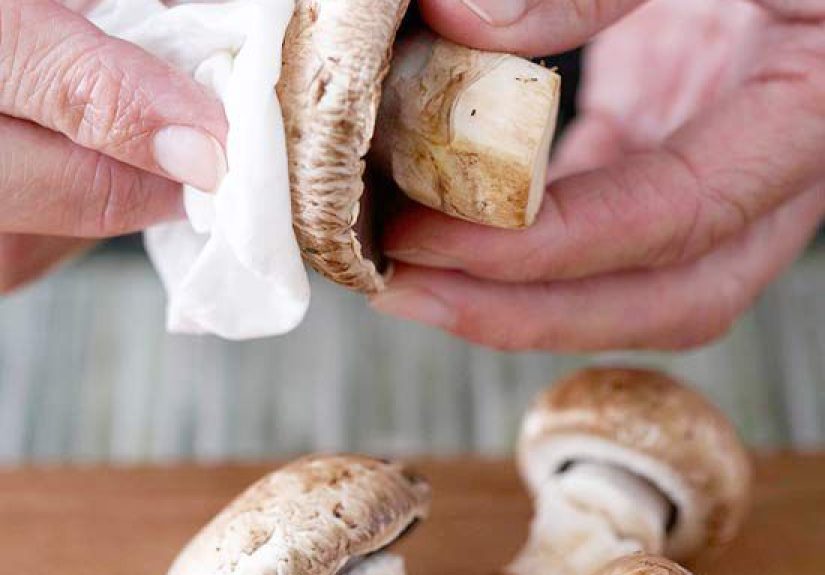
- Use a soft brush or damp paper towel to wipe away visible dirt.
- Pay attention to the stem area and any creases where debris hides.
- Proceed to slicing/cooking.
Lane B: Quick Rinse (best for visibly dirty mushrooms or raw uses)
- Place mushrooms in a colander.
- Rinse briefly under cool running water while rubbing dirty spots with your fingertips.
- Drain immediatelyno “let’s soak while I answer a text.”
- Dry thoroughly (see the drying section below).
If you’re on the fence, ask yourself: “Do I need maximum browning?” If yes, brush/wipe or rinse + ultra-dry.
If no (or you’re eating them raw), quick rinse is totally reasonable.
How to Clean Specific Types of Mushrooms
Button and cremini mushrooms (the weeknight MVPs)
These are usually the easiest. Brush/wipe is often enough. If they’re dirty, quick rinse in a colander and dry fast.
Try to wash them whole before slicing; sliced mushrooms have more exposed surface area, which makes drying
more annoying.
Portobello mushrooms (aka “the gill situation”)
Portobellos are just mature creminis, but they come with dramatic dark gills and a bigger surface area for dirt to
cling to.
- Wipe the cap with a damp towel or brush off debris.
- Remove the stem by twisting or cutting it out (stems can be chopped for stock or stuffing).
- Optional: Use a spoon to gently scrape out the dark gills if you want a cleaner look (this can help prevent
sauces or fillings from turning “brownish gray”). - If needed, do a very quick rinse and dry thoroughly.
Tip: If you’re making portobello “burgers,” drying matters. Wet caps will steam and soften before they sear.
Shiitake mushrooms (cap yes, stem nomostly)
Shiitake caps are flavorful and meaty. Their stems, however, are often tough and woody.
- Wipe caps with a damp towel or briefly rinse and dry.
- Remove stems by trimming with a paring knife (save stems for broth or stock).
- Slice caps or leave whole depending on the dish.
Oyster mushrooms (the frilly, delicate cluster)
Oyster mushrooms grow in clusters attached to a central base. Dirt often hides where the cluster meets the stem.
Avoid soaking; they’re delicate and can get waterlogged more easily.
- Use a knife to cut around the firm central base so the caps separate.
- Brush gently to remove debris.
- If needed, a quick rinse is okaybut dry carefully with towels.
Morel mushrooms (the “grit is guaranteed” exception)
Morels are delicious, expensive, and basically designed to store sand in tiny honeycomb pockets. This is one case
where a controlled wash makes sense.
- Brush the outside first to remove loose dirt.
- Slice lengthwise (they’re hollow) and check for debris or tiny hitchhikers.
- Swish briefly in a bowl of cool water (some cooks use lightly salted water).
- Lift out, rinse quickly if needed, and dry thoroughlyideally in a salad spinner or on towels.
With morels, the goal isn’t “never touch water.” The goal is “get the grit out without turning them to mush.”
Drying: The Step Everyone Rushes (and Then Regrets)
If you rinse mushrooms and toss them straight into a pan, here’s what happens: instead of browning, they steam. You
don’t get deep flavor; you get “soft beige.” Drying is what turns “clean” into “cooks beautifully.”
Fast, effective drying options
- Paper towels: Spread mushrooms in a single layer and pat dry. Replace towels if they get soaked.
- Clean kitchen towel: Roll mushrooms gently and pat (don’t crush delicate varieties).
- Air-dry briefly: A few minutes on a towel can help surface moisture evaporate.
- Salad spinner: Surprisingly useful for sturdy mushrooms and especially morels after a swish-clean.
Pro move: If you’re cooking a big batch, dry them on a sheet pan so they don’t pile up and re-wet each other. Yes,
mushrooms can absolutely be clingy.
What Not to Do (Your Mushrooms Will Thank You)
Don’t soak them “just in case”
Soaking makes it harder to dry mushrooms and can dull flavor in delicate varieties. Use a quick rinse or quick swish
only when the mushroom’s shape practically guarantees hidden grit (morels) or when they’re obviously dirty.
Don’t wash mushrooms hours (or days) ahead
Washing early leaves moisture on the surface, which can speed up spoilage. Clean mushrooms right before cooking or
serving whenever possible.
Don’t use soap, detergent, or “produce wash”
Standard food-safety guidance is clear: rinse produce under running water rather than washing with soap or
detergents, which aren’t meant to be eaten and may leave residues.
When to Clean Mushrooms Based on How You’ll Use Them
For sautéing and roasting
- Prefer brush/wipe if they’re only lightly dirty.
- If rinsing, dry aggressively.
- Cook in batches so moisture can evaporate and browning can happen.
For grilling (portobello steaks, skewers)
- Wipe clean, scrape gills if you want a tidier look.
- Dry well so the surface sears instead of steaming.
For raw preparations (salads, crudité-style mushroom plates)
- Quick rinse can be the most confidence-inspiring option.
- Dry thoroughly so they stay crisp and don’t water down dressings.
Storage After Cleaning (and Before Cleaning)
If you want mushrooms to last, store them unwashed until you’re ready to use them. Moisture trapped in
plastic packaging can speed up slime and spoilage. A breathable setuplike a paper bag in the fridgeoften keeps
mushrooms fresher longer than sealed plastic.
Simple storage tips
- Keep mushrooms in the refrigerator, ideally in breathable packaging (paper bag works well).
- Avoid sealing them in an airtight container unless they’re already cooked.
- Use them sooner if they’re delicate (oyster) or already very mature (large portobellos).
Quick FAQ: The Stuff People Argue About at the Stove
Should I peel mushrooms?
Usually, no. Peeling is time-consuming and removes edible surface. If a mushroom has a damaged or leathery patch,
trim that part instead of peeling the whole thing.
Are packaged mushrooms already clean?
Many store-bought cultivated mushrooms arrive fairly clean. If you don’t see dirt, a quick wipe or even no cleaning
beyond inspection may be enoughespecially if they’ll be cooked.
Can I wash pre-sliced mushrooms?
You can, but it’s harder to dry them well. If browning matters, you’ll get better results washing mushrooms whole,
drying, then slicing.
What about vinegar water?
For mushrooms, it’s usually unnecessary. Cool running water and good handling (clean hands, clean tools, avoiding
cross-contamination) are the practical priorities.
Kitchen “Experience” Notes: What Real Mushroom Cleaning Looks Like (500+ Words)
Mushroom cleaning sounds like a simple choreuntil you’re actually doing it in a real kitchen, with real time
pressure, and a pan that’s already heating because someone (you) is hungry. Here are a few common “experience
scenarios” that show how cleaning choices affect the final dish, plus what tends to work best.
Experience #1: The farmers’ market surprise. You bring home a paper bag of beautiful creminis that look
rustic and charming… which is another way of saying “these are wearing tiny dirt boots.” If you try to wipe each one
perfectly clean with a paper towel, you’ll still be there when the next season rolls around. This is where a
quick rinse wins: toss them in a colander, rinse under cool water, rub off the obvious grit, then dry like you’re
prepping them for a photo shoot. Spread them on towels, pat dry, and give them a few minutes of air time while you
chop onions. The result: clean mushrooms without the exhausting, one-by-one spa treatment.
Experience #2: The weeknight sauté that won’t brown. A classic frustration is watching mushrooms release
water and turn pale instead of caramelized. The usual culprit isn’t the rinseit’s what happens after. If the
mushrooms go into the pan wet (or the pan is crowded), they steam. The fix is surprisingly unglamorous: dry the
mushrooms thoroughly, cook in batches, and give them space. Think “single layer” rather than “mushroom pile.”
Suddenly you get browning, deeper flavor, and that savory, almost meaty aroma people rave about.
Experience #3: Portobellos that dye everything. Portobello gills can make fillings and sauces look muddy,
especially if you’re stuffing caps with cheese, spinach, or a lighter-colored mixture. Some cooks don’t care (and
honestly, the taste is what matters), but if presentation matterssay you’re serving guests or photographing foodtry
scraping the gills with a spoon. It’s not required, but it’s a quick way to keep the final dish from going full
grayscale. Also: wipe the cap well and dry it before grilling so you get sear marks instead of soggy patches.
Experience #4: Oyster mushrooms that fall apart. Oyster mushrooms are delicate, with frilly edges that
can tear if you treat them like button mushrooms. If you rinse them hard under a blasting faucet, you can bruise
them or leave them waterlogged. A gentler approach works better: trim the base, separate the cluster, then use a
soft brush or a lightly damp towel. If there’s stubborn debris, do a fast rinse and dry carefullythink patting, not
wringing.
Experience #5: The morel grit incident. Morels are the one mushroom that can humble even confident home
cooks. Their honeycomb structure loves to trap sand, and no amount of gentle wiping will fully solve it. The
practical method is to brush first, slice lengthwise, then swish briefly in cool water (some people use lightly
salted water), and dry well. The “experience lesson” here is that cleaning should match the mushroom’s shape: a
mushroom full of nooks and crannies needs a method that reaches those nooks and crannieswithout turning dinner into
a science fair.
Across all these situations, the best takeaway is simple: clean quickly, dry thoroughly, and match your method
to your dish. That’s how you get mushrooms that taste earthy and richwithout the bonus texture of garden
soil.
Conclusion
Cleaning mushrooms properly isn’t about following one strict ruleit’s about choosing the smartest method for the
mushroom type and the way you’re cooking. For most cultivated mushrooms, a brush or damp towel is perfect when you
want maximum browning. When mushrooms are visibly dirty (or you’re serving them raw), a quick rinse under cool water
is fine as long as you dry them thoroughly. For morels and other grit-prone varieties, a brief swish-clean
is the sanity-saving exception.
Do that, and mushrooms stop being “that ingredient that makes everything wet” and start being what they’re supposed
to be: a deeply savory, weeknight-friendly flavor booster that acts like the secret handshake of good cooking.