Table of Contents >> Show >> Hide
- What Makes a Pot Roast “The Best”?
- Start Strong: Choosing the Right Cut of Beef
- Flavor Fundamentals: The Building Blocks of Great Pot Roast
- The Best Pot Roast Method: Dutch Oven (Oven-Braised)
- Ingredients (Flexible, But Trust the Structure)
- Step-by-Step: Tender, Flavorful, No-Regrets Pot Roast
- Step 1: Preheat and Prep
- Step 2: Sear the Roast
- Step 3: Build the Flavor Base
- Step 4: Deglaze Like a Pro
- Step 5: Braise Low and Slow
- Step 6: Add Carrots and Potatoes at the Right Time
- Step 7: Rest the Meat (Yes, Even Pot Roast)
- How to Make the Gravy Taste Restaurant-Level
- Best Pot Roast Variations (So You Don’t Get Bored in February)
- Common Pot Roast Problems (And How to Fix Them)
- Food Safety and Storage (Quick, Important, No Scolding)
- Serving Ideas: Make It a Whole Moment
- of Real-World Pot Roast “Experience” (The Stuff You Only Learn by Doing)
- Conclusion
Synthesized from reputable U.S.-based cooking and food-safety references, including:
USDA Food Safety and Inspection Service (FSIS), Serious Eats, America’s Test Kitchen (archival PDF),
Simply Recipes, Food Network, The Kitchn, Allrecipes, Better Homes & Gardens, Bon Appétit,
Epicurious, and Taste of Home.
Pot roast is proof that patience is a seasoning. You take a tough, hardworking cut of beef, give it a quick tan in a hot pan,
then let it lounge for hours in a cozy bath of aromatics and broth until it turns fork-tender and dramaticin the best way.
The goal isn’t just “cooked.” The goal is “how is this meat basically velvet?”
This guide shows you exactly how to cook the best pot roastdeeply browned, richly sauced, and tender enough to make
your carving knife feel optional. We’ll cover the smartest cut to buy, the method that actually works (spoiler: braising),
the timing traps that break hearts, and the little upgrades that make your roast taste like it had a personal chef.
What Makes a Pot Roast “The Best”?
The best pot roast hits three marks: (1) bold, browned flavor, (2) juicy, shreddable tenderness, and (3) a gravy you’d
happily eat with a spoon when nobody’s looking. That magic comes from a classic technique called braising:
sear first for flavor, then cook low-and-slow with a small amount of liquid in a covered pot.
Start Strong: Choosing the Right Cut of Beef
The MVP: Chuck Roast
If you want reliably tender pot roast, buy chuck (beef shoulder). Chuck has marbling and collagen that melt
into lusciousness during long cooking. Look for labels like chuck roast, chuck eye, chuck roll, or
shoulder roast. A 3–5 pound roast is the sweet spot for most Dutch ovens and most families.
Also Good: Brisket (Different Vibe), Short Ribs (Fancy Mode)
Brisket can work, but it slices differently and can be slightly drier if rushed. Short ribs are incredible but priceylike
pot roast wearing a tuxedo.
Be Careful With “Round” Cuts
Bottom round/top round can be lean and can dry out if you’re not careful. You can braise them, but you’ll need extra
attention to temperature and timingand you may not get that “buttery shred” effect as easily.
Flavor Fundamentals: The Building Blocks of Great Pot Roast
1) Salt Like You Mean It
If you have time, salt the roast ahead (even a few hours helps; overnight is great). This seasons the meat more deeply and
helps it retain moisture. If you’re cooking right now, salt generously right before searing.
2) Browning Is Not Optional (It’s the Plot)
That dark crust from searing creates the deep, savory flavor you can’t fake later. Pat the meat dry, heat oil until shimmering,
and sear each side until properly browned. If your pan isn’t sizzling, it’s not searingit’s steaming, and steaming is for dumplings.
3) Use “Enough” Liquid, Not “A Swimming Pool”
Braising works best when the liquid comes partway up the roastthink about 1/3 to 1/2 of the height, not fully
submerged. Too much liquid can dilute flavor and rob you of a concentrated gravy.
4) Aromatics + Deglazing = Free Flavor
Onions, garlic, carrots, and celery create a savory base. Tomato paste adds depth. A splash of wine, broth, or even a bit of
vinegar helps dissolve the browned bits stuck to the bottom of the pot. Those bits are basically flavor stickers. Peel them up.
The Best Pot Roast Method: Dutch Oven (Oven-Braised)
This is the gold-standard method for consistent tenderness and a sauce that tastes like it’s been working on itself emotionally.
The oven’s steady heat braises gently and evenly.
Ingredients (Flexible, But Trust the Structure)
- 3–5 lb chuck roast
- Salt + black pepper
- 2–3 tbsp oil (neutral oil or olive oil)
- 2 onions, chunked
- 4–6 carrots, cut into big pieces
- 2–3 ribs celery (optional but classic)
- 4–6 cloves garlic
- 2–3 tbsp tomato paste (optional, highly recommended)
- 2–3 cups beef broth (or mix of broth + wine)
- Fresh herbs (thyme/rosemary) or 1–2 bay leaves
- Potatoes (Yukon Gold or red potatoes), optional
Step-by-Step: Tender, Flavorful, No-Regrets Pot Roast
Step 1: Preheat and Prep
Heat oven to 300°F to 325°F. Lower temps are more forgiving; 300°F is “slow and steady,” 325°F is “still gentle,
just slightly impatient.” Pat the roast dry. Season generously with salt and pepper.
Step 2: Sear the Roast
Heat a Dutch oven over medium-high heat. Add oil. Sear the roast on all sides until deeply brownedusually 4–5 minutes per large
side, plus a little time on the edges. Transfer roast to a plate.
Step 3: Build the Flavor Base
Lower heat to medium. Add onions (and celery if using). Cook until they pick up color. Stir in tomato paste and cook 1–2 minutes
until it darkens slightly (that “toasty tomato” smell is your cue). Add garlic for the last 30 seconds.
Step 4: Deglaze Like a Pro
Pour in a splash of broth or wine and scrape the bottom of the pot to loosen browned bits. Add remaining broth until the liquid
reaches about 1/3 to 1/2 up the roast once it’s back in the pot.
Step 5: Braise Low and Slow
Return roast to the pot. Add herbs/bay leaves. Cover tightly and place in the oven.
Cook until fork-tender, typically:
- 3 lb roast: ~3 hours
- 4 lb roast: ~3.5–4 hours
- 5 lb roast: ~4–5 hours
Timing varies by cut and shape. The real test is tenderness: a fork should slide in easily and twist with minimal resistance.
For many roasts, the “falls-apart” zone often happens when internal temps climb into the 195–205°F neighborhood
not because you’re chasing a number, but because collagen has finally surrendered.
Step 6: Add Carrots and Potatoes at the Right Time
If you add vegetables at the beginning, they can turn into sweet, savory mush (which is delicious, but texturally… committed).
For distinct chunks:
- Add carrots about 60–90 minutes before the roast is done.
- Add potatoes about 60 minutes before the roast is done (cut large).
Step 7: Rest the Meat (Yes, Even Pot Roast)
Pull the roast out and let it rest 10–15 minutes before slicing or shredding. Resting helps juices redistribute and keeps the
meat from leaking its whole personality onto the cutting board.
How to Make the Gravy Taste Restaurant-Level
Option A: Classic Thickened Gravy
Strain out vegetables if you want a smooth gravy, or leave them in for rustic charm. Bring braising liquid to a simmer on the stove.
Thicken with:
- Cornstarch slurry: 1 tbsp cornstarch + 1 tbsp water, whisk in gradually
- Flour roux: 2 tbsp butter + 2 tbsp flour cooked briefly, then whisk in liquid
Option B: “No-Thickener” Sauce That Still Feels Rich
Reduce the liquid uncovered at a simmer until it coats a spoon. You can also mash a few cooked potatoes into the sauce for gentle
thickening. It’s not cheating. It’s resourceful.
Flavor Boosters (Use One or Two, Not the Whole Pantry)
- A teaspoon of soy sauce or Worcestershire for umami depth
- A splash of balsamic vinegar for brightness
- A spoon of mustard for subtle tang
- Fresh herbs at the end for lift
Best Pot Roast Variations (So You Don’t Get Bored in February)
Red Wine Pot Roast
Replace 1 cup of broth with a dry red wine. Add tomato paste and thyme. This leans classic and cozylike a sweater with good taste.
Slow Cooker Pot Roast (Easy, Very Forgiving)
Sear the roast first if you can (it’s worth it). Then cook with onions, carrots, and broth:
8–10 hours on LOW or 4–6 hours on HIGH depending on your slow cooker.
Add potatoes halfway through if you want them intact.
Instant Pot / Pressure Cooker Pot Roast (Fast-ish Comfort Food)
Sear using sauté mode, deglaze, then pressure cook a 3–4 lb chuck roast for roughly 60–75 minutes with a natural
release. You’ll still want enough liquid for pressure (follow your model’s minimum). Finish by reducing the sauce on sauté mode.
“Something Different” Pot Roast
- Coffee or espresso powder for roasty depth (a little goes a long way)
- Beer (stout/porter) for malty richness
- Italian-style with tomatoes, herbs, and a splash of vinegar
- French-onion vibe with lots of caramelized onions and beef stock
Common Pot Roast Problems (And How to Fix Them)
“My pot roast is tough.”
It’s almost always undercooked. Tough means collagen hasn’t broken down yet. Put it back in the oven, covered, and check again in
30–45 minutes. Pot roast gets tender on its own schedule.
“My pot roast is dry.”
Lean cut, too hot, or cooked uncovered too long. Next time: choose chuck, keep the lid tight, and braise at 300–325°F. For today:
slice thinly across the grain and bathe it in gravy like it’s at a spa.
“The gravy tastes flat.”
Add salt in small pinches, then add a little acid (vinegar or wine) to wake it up. If it still tastes shy, simmer to reduce and
concentrate flavor.
“My vegetables turned to mush.”
Add them later, in the last 60–90 minutes. Big cuts help. If you like firmer carrots, keep them chunky and don’t over-stir.
Food Safety and Storage (Quick, Important, No Scolding)
Use a thermometer when you can. For safety, whole beef roasts are generally considered safe at
145°F with a 3-minute rest, but pot roast is typically cooked much longer for tenderness.
Refrigerate leftovers promptly (don’t let them hang out at room temp for hours).
Pot roast leftovers are a gift to Future You. Store in airtight containers with some gravy (moisture insurance).
Reheat gently on the stove or in the oven with a splash of broth. The flavor often gets even better the next day.
Serving Ideas: Make It a Whole Moment
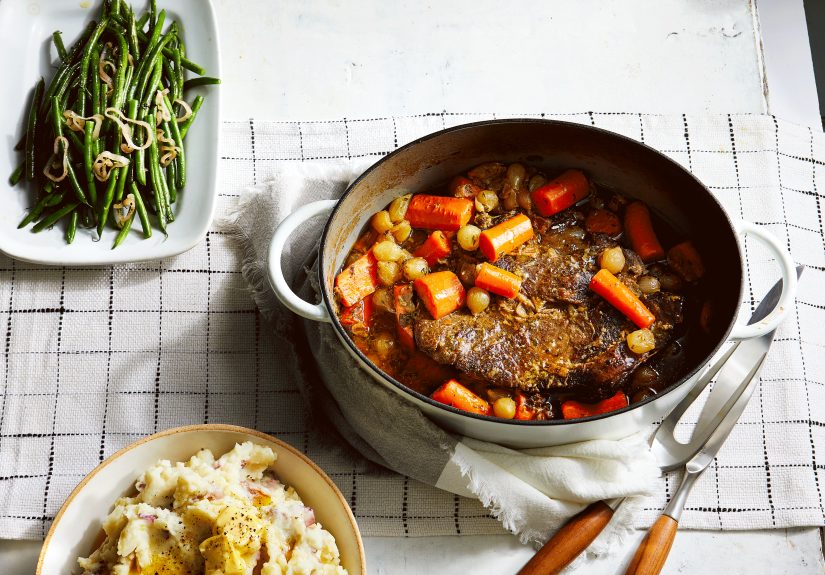
- Classic: mashed potatoes + carrots + gravy waterfall
- Cozy upgrade: buttered egg noodles or polenta
- Sandwich mode: shredded pot roast on a roll with horseradish
- Taco night plot twist: shred, crisp slightly, top with onions and salsa
of Real-World Pot Roast “Experience” (The Stuff You Only Learn by Doing)
Pot roast is one of those dishes that feels simpleuntil you’ve made it a few times and realized it’s basically a gentle lesson
in kitchen psychology. The first “experience” most home cooks share is the smell: that slow, savory perfume that starts as
browned beef and onions and gradually becomes “why does my house smell like a hug?” It’s also the first time you understand why
people keep opening the oven even though they know they shouldn’t. (You’re not checking the roast. You’re checking your happiness.)
Another classic pot roast moment: discovering the difference between time and tenderness. Recipes can say “3 hours,”
but the roast doesn’t read. Some days, your chuck is a cooperative extrovert and becomes fork-tender right on schedule. Other days,
it’s an introvert in a hoodie who needs another 45 minutes to open up. The lesson is consistent: if it’s tough, it’s not done.
Pot roast rarely gets tender by cooking it less. It gets tender by cooking it longergentlyuntil collagen breaks down and the meat
finally relaxes. This is also why pot roast is the ultimate weekend dish: it rewards patience with smug satisfaction.
Then there’s the searing debate, which usually ends the same way: you skip searing once, and the roast tastes fine… but kind of
one-note. The next time you sear properlydeep brown, not “light tan”the sauce tastes richer and the whole dish suddenly has
backbone. That’s the “ohhh” moment. The browned bits stuck to the bottom of the pot (the fond) are like tiny flavor receipts
proving you did the work. Deglazing feels fancy, but it’s really just you refusing to leave deliciousness behind.
Vegetables teach their own lesson. Put carrots and potatoes in too early and you get a delicious, gravy-soaked softness that’s
borderline baby food (again: tasty, but not always the vibe). Add them later and you get distinct chunks that hold their shape and
soak up flavor without giving up their identity. Many cooks end up choosing based on mood: some nights you want neat, photogenic
pieces; other nights you want everything to melt together like a cozy casserole without the paperwork.
Finally, pot roast is the king of leftovers. The “experience” here is waking up the next day, reheating a bowl with a splash of
broth, and realizing it tastes even betterdeeper, rounder, more pulled-together. It’s the culinary equivalent of a good story
that improves with retelling. And once you’ve turned leftover pot roast into sandwiches, tacos, or a quick beef-and-noodles dinner,
you start making pot roast not just for tonight, but for the future. Which is honestly the most powerful cooking skill there is.
Conclusion
The best pot roast isn’t about fancy ingredientsit’s about choosing a collagen-rich cut (hello, chuck), browning it properly,
braising with just enough liquid, and giving it the time it needs to become tender. Once you nail the method, you can spin
the flavors a dozen ways, from red wine and herbs to balsamic brightness or slow-cooker convenience. Make it once, and you’ll
understand why pot roast is comfort food with a long-term fan club.