Table of Contents >> Show >> Hide
- What Are Negative Numbers?
- The Golden Rule for Multiplying and Dividing Negative Numbers
- How to Multiply Negative Numbers
- Why Does a Negative Times a Negative Equal a Positive?
- How to Divide Negative Numbers
- What About Zero?
- A Fast Trick for Remembering the Sign Rules
- How to Solve Word Problems With Negative Numbers
- Common Mistakes Students Make
- Practice Problems With Answers
- How to Build Confidence Fast
- Experiences Students Commonly Have With Negative Numbers
- Final Thoughts
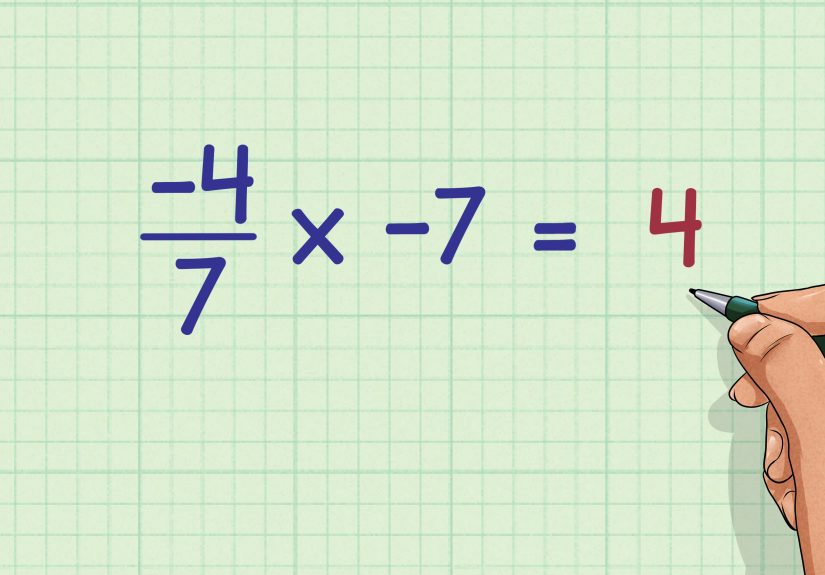
Negative numbers have a way of making otherwise confident math students stare at a worksheet like it just insulted their family. One minute you are happily multiplying 4 × 3, and the next minute you meet something like -4 × -3 and wonder why two gloomy numbers somehow create a cheerful positive answer. The good news is that multiplying and dividing negative numbers is not difficult once you understand the pattern. It is less about memorizing random rules and more about recognizing how signs behave.
In this guide, you will learn how to divide and multiply by negative numbers step by step. We will cover the sign rules, explain why they work, walk through clear examples, and point out the most common mistakes students make. By the end, you should be able to solve problems with confidence, check your own work, and stop treating negative signs like tiny mathematical jump scares.
What Are Negative Numbers?
Negative numbers are numbers less than zero. On a number line, they sit to the left of 0. You can think of them as representing values below a starting point: temperatures below zero, debt, elevation below sea level, or a drop in points. Positive numbers go to the right of zero, negative numbers go to the left, and zero is the neutral zone where nobody is arguing.
When you multiply or divide negative numbers, the number part and the sign part both matter. A smart way to stay organized is to split the process into two questions:
- What is the sign of the answer?
- What is the basic multiplication or division fact?
For example, in -18 ÷ 3, you first decide the sign, then compute 18 ÷ 3 = 6. That makes the full answer -6.
The Golden Rule for Multiplying and Dividing Negative Numbers
Here is the rule that does most of the heavy lifting:
| Signs | Operation | Result |
|---|---|---|
| Positive × Positive | Multiply | Positive |
| Negative × Negative | Multiply | Positive |
| Positive × Negative | Multiply | Negative |
| Negative × Positive | Multiply | Negative |
| Positive ÷ Positive | Divide | Positive |
| Negative ÷ Negative | Divide | Positive |
| Positive ÷ Negative | Divide | Negative |
| Negative ÷ Positive | Divide | Negative |
The shortcut is simple: same signs give a positive result, different signs give a negative result. That rule works for both multiplication and division of integers.
How to Multiply Negative Numbers
Step 1: Ignore the signs for a moment
First, multiply the absolute values. In plain English, that means multiply the numbers as if they were positive.
Example:
-6 × 4
First compute 6 × 4 = 24
Step 2: Determine the sign
Because one number is negative and one is positive, the signs are different. Different signs give a negative result.
So:
-6 × 4 = -24
Step 3: Write the final answer
Put the sign and the number together. That is it. No smoke, no mirrors, no secret wizard council.
More multiplication examples
Example 1: -3 × -7
Multiply 3 × 7 = 21
Same signs: negative and negative
Result: 21
Example 2: 8 × -5
Multiply 8 × 5 = 40
Different signs: positive and negative
Result: -40
Example 3: -9 × 2
Multiply 9 × 2 = 18
Different signs
Result: -18
Example 4: -1 × 12
Multiplying by -1 gives the opposite of a number
Result: -12
Example 5: -1 × -12
Opposite of -12 is 12
Result: 12
Why Does a Negative Times a Negative Equal a Positive?
This is the part that often feels suspicious at first. Students can accept that a positive times a negative becomes negative, but when a negative times a negative becomes positive, the brain sometimes files a complaint.
One helpful way to think about it is through patterns. Look at this sequence:
3 × 2 = 6
2 × 2 = 4
1 × 2 = 2
0 × 2 = 0
-1 × 2 = -2
-2 × 2 = -4
Each time the first number goes down by 1, the product goes down by 2. That pattern stays consistent. Now try the same idea with a negative multiplier:
3 × -2 = -6
2 × -2 = -4
1 × -2 = -2
0 × -2 = 0
-1 × -2 = 2
-2 × -2 = 4
To keep the pattern consistent, the answer must rise by 2 each time, which is why -1 × -2 becomes 2. In other words, math is not being weird for fun. It is protecting the pattern.
How to Divide Negative Numbers
Division follows the same sign rule as multiplication. That is great news because your brain only has to carry one sign chart instead of two.
Step 1: Divide the absolute values
Ignore the signs and do the basic division fact.
Example:
-20 ÷ 5
First compute 20 ÷ 5 = 4
Step 2: Decide the sign
One number is negative and one is positive, so the signs are different. Different signs give a negative result.
So:
-20 ÷ 5 = -4
Step 3: Check with multiplication
A great way to verify any division problem is to multiply the quotient by the divisor.
Check:
-4 × 5 = -20
More division examples
Example 1: -24 ÷ -6
Divide 24 ÷ 6 = 4
Same signs
Result: 4
Example 2: 35 ÷ -7
Divide 35 ÷ 7 = 5
Different signs
Result: -5
Example 3: -42 ÷ 6
Divide 42 ÷ 6 = 7
Different signs
Result: -7
Example 4: 81 ÷ -9
Divide 81 ÷ 9 = 9
Different signs
Result: -9
What About Zero?
Zero has its own personality, and it does not always play nicely.
- Any number multiplied by 0 equals 0.
- 0 divided by any nonzero number equals 0.
- Any number divided by 0 is undefined.
Examples:
-8 × 0 = 0
0 ÷ -5 = 0
9 ÷ 0 = undefined
If you ever forget that last one, remember this: division asks, “What number times 0 gives 9?” There is no such number. Zero wipes everything out, which makes division by zero impossible.
A Fast Trick for Remembering the Sign Rules
Many teachers use this simple phrase: same signs, positive; different signs, negative. It works for both multiplying and dividing integers.
You can also use the “friendship test”:
- Two positives are friends: positive answer.
- Two negatives are weirdly also friends: positive answer.
- One positive and one negative are not getting along: negative answer.
Is it mathematically formal? No. Does it help your brain remember the rule during a quiz? Absolutely.
How to Solve Word Problems With Negative Numbers
Negative numbers show up in real-world situations all the time. Once you connect the signs to meaning, word problems get much easier.
Example 1: Money
If a person owes $6 each month for 4 months, the total change in money can be written as 4 × -6 = -24. The result is negative because the money is leaving, not arriving.
Example 2: Temperature
If the temperature drops 3 degrees every hour for 5 hours, the change is 5 × -3 = -15 degrees. Again, the result is negative because it represents a decrease.
Example 3: Reversing a loss
If a game rule says each penalty removes 2 points, then undoing 4 penalties can be modeled as -4 × -2 = 8. Two negatives create a positive because you are reversing a loss.
Common Mistakes Students Make
1. Forgetting to separate the sign from the number
Students often rush and mix up the sign rule with the multiplication fact. Slow down. First decide the sign, then calculate the number.
2. Thinking negative always means the answer is negative
Not true. Two negatives multiplied or divided together make a positive result.
3. Confusing subtraction with a negative sign
In 7 – 3, the minus sign means subtraction. In -3 × 4, the minus sign is part of the number itself. Those are different jobs, and the symbol likes to keep people guessing.
4. Forgetting parentheses
Compare these:
-32 = -(3 × 3) = -9
(-3)2 = (-3) × (-3) = 9
Those parentheses matter a lot. They are not decoration.
5. Dividing by zero
It is undefined. Do not try to negotiate with it.
Practice Problems With Answers
Try these on your own before checking the answers.
- -5 × 6 = -30
- -7 × -8 = 56
- 48 ÷ -6 = -8
- -63 ÷ -9 = 7
- -1 × -14 = 14
- 0 ÷ 9 = 0
- -36 ÷ 4 = -9
- 9 × -9 = -81
How to Build Confidence Fast
If negative numbers still feel slippery, use this routine:
- Circle the signs.
- Decide whether the signs are the same or different.
- Find the sign of the answer.
- Multiply or divide the absolute values.
- Check with a quick mental estimate.
For instance, with -56 ÷ 8, you see different signs, so the answer must be negative. Then 56 ÷ 8 = 7, so the full answer is -7. Clean, quick, and drama-free.
Experiences Students Commonly Have With Negative Numbers
One of the most common experiences students describe when learning how to divide and multiply by negative numbers is that the rules seem easy until they actually start doing problems. Reading “same signs are positive, different signs are negative” feels simple enough. But once the worksheet appears with parentheses, variables, and a timer, confidence can disappear faster than a donut in a teacher’s lounge. This is normal. Negative-number operations are often one of the first times students realize that math is not just about calculation. It is also about patterns, structure, and precision.
Many learners say the biggest turning point happens when they stop trying to memorize every possible problem and start using a repeatable method. A student might struggle with -8 × -3, 36 ÷ -6, and -4 × 7 because each one looks different at first glance. But once that student learns to separate the sign from the basic fact, everything gets easier. Suddenly, 8 × 3, 36 ÷ 6, and 4 × 7 are all familiar. The only extra job is deciding whether the answer should be positive or negative. That small shift in thinking often turns confusion into momentum.
Another common experience is that students understand multiplication with negatives sooner than division, or the other way around. Some learners like multiplication because it feels more concrete and can be practiced through patterns. Others prefer division because they can check their answers using multiplication. There is no universal order in which the brain decides to cooperate. What matters is repeated exposure and good examples. Short practice sessions usually work better than one giant marathon in which every negative sign begins to look like an enemy.
Teachers and tutors often notice that real improvement happens when students connect negative numbers to situations they already understand. Debt, temperature drops, elevator floors below ground, sports penalties, and changes in score can all make the math feel less abstract. When students realize that -5 is not just a symbol but can represent losing five points or owing five dollars, the sign starts to mean something. That meaning helps them remember the rule and use it correctly.
Students also frequently experience a strange but useful moment: they start catching their own mistakes. At first, they may write -4 × -6 = -24 and move on. Later, after more practice, something feels off. They pause and think, “Wait, two negatives should make a positive.” That moment of self-correction is huge. It means understanding is replacing guessing. The student is no longer just following instructions but actually noticing patterns and applying logic.
Finally, many learners discover that negative numbers become much less intimidating once they show up in algebra, fractions, and equations. By then, the sign rules start to feel normal rather than shocking. What once looked like advanced math becomes a routine skill. The experience is similar to learning to ride a bike: awkward at first, slightly dramatic in the middle, and eventually so automatic that you wonder why it ever seemed impossible. That is the encouraging truth about learning how to divide and multiply by negative numbers. Confusion at the beginning is common, but mastery absolutely happens with practice, pattern recognition, and a little patience.
Final Thoughts
Learning how to divide and multiply by negative numbers is one of those math skills that feels tricky right up until the moment it clicks. Once you understand the sign rule, the process becomes much easier. Remember the core idea: same signs give a positive result, different signs give a negative result. Then multiply or divide the number parts as usual.
Use patterns, check your division with multiplication, and do not be afraid to slow down when signs pile up. With a bit of practice, negative-number problems stop feeling like traps and start feeling like easy points on a quiz. And that is a beautiful thing.