Table of Contents >> Show >> Hide
- What You’ll Need
- Before You Start: 3 Quick Tips That Save You From Redrawing the Entire Bottle
- How to Draw a Water Bottle: 11 Steps
- Step 1: Draw a Light Vertical Centerline
- Step 2: Mark the Overall Height and Width
- Step 3: Sketch the Main Body Shape
- Step 4: Add the Shoulders and Neck
- Step 5: Draw the Ring and Cap
- Step 6: Add Ellipses to Show the Round Form
- Step 7: Draw the Label and Water Line
- Step 8: Add Grooves, Indentations, and Bottle Details
- Step 9: Clean Up the Outline and Refine Symmetry
- Step 10: Shade the Bottle to Create Form
- Step 11: Add Highlights, Final Contrast, and Optional Color
- Common Mistakes (and How to Fix Them)
- How to Make Your Water Bottle Drawing Look More Realistic
- Quick Practice Variations
- Conclusion
- Experience Notes: What Usually Happens When People Practice This (And Why It Helps)
A water bottle is one of those “simple” things that becomes suspiciously complicated the moment your pencil touches paper. It looks like a basic object… until you realize it has curves, symmetry, transparent plastic, reflections, a cap, a label, and that weird squishy shape in the middle that makes your hand cramp.
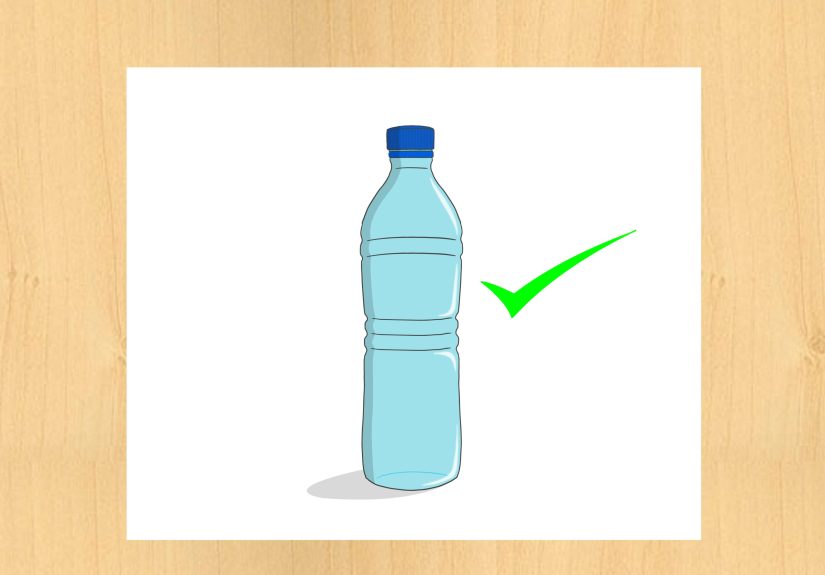
The good news? It’s actually a fantastic beginner subject. A water bottle helps you practice proportion, symmetry, ellipses, line control, and shading without requiring a PhD in dragon anatomy. In this step-by-step guide, you’ll learn how to draw a water bottle in a clean, believable way using a simple 11-step process. We’ll start with a basic outline, build structure, add details like the cap and label, and then finish with shading and highlights so it looks three-dimensional instead of like a sad sticker.
Whether you’re drawing traditionally with pencil and paper or sketching digitally, this tutorial is designed to be easy to follow, beginner-friendly, and detailed enough that you can actually improvenot just copy shapes and hope for the best.
What You’ll Need
- Pencil (HB or 2H for sketching, 2B/4B for shading)
- Eraser (a kneaded eraser is great for highlights)
- Paper or sketchbook
- Ruler (optional, for centerline/symmetry)
- Black pen or fineliner (optional, for final line art)
- Colored pencils/markers (optional, if you want to color it)
Before You Start: 3 Quick Tips That Save You From Redrawing the Entire Bottle
1) Start light
Make your first lines light and erasable. You’re building a structure first, not engraving a monument. Light sketch lines make it easier to fix proportions and symmetry before you commit.
2) Use a centerline
A water bottle is usually symmetrical (unless it’s been living in your backpack for three weeks). A vertical centerline helps keep both sides even and prevents the classic “one shoulder is in another zip code” problem.
3) Think in simple forms
The bottle is basically a cylinder with variations: neck, shoulder, body, grooves, cap. If you think “shapes” instead of “bottle,” the drawing becomes much easier.
How to Draw a Water Bottle: 11 Steps
Step 1: Draw a Light Vertical Centerline
Begin with a straight, light vertical line in the middle of your page. This is your alignment guide. It helps you keep the bottle balanced and symmetrical as you build both sides.
If you want a more dynamic drawing, tilt the centerline slightly instead of making it perfectly vertical. Just keep everything consistent around that tilt.
Step 2: Mark the Overall Height and Width
Add light marks for the top and bottom of the bottle. Then lightly mark the widest part of the body on both sides. Think of this as placing the bottle inside an invisible rectangle.
This step keeps proportions under control before details show up and start bossing you around.
Step 3: Sketch the Main Body Shape
Draw the left and right sides of the bottle body using long, smooth curves. Most plastic water bottles are not perfectly straight cylindersthey often taper slightly near the middle or flare at the shoulders.
Keep the lines loose. If your bottle has ribbed or wavy sides, don’t draw every groove yet. Just capture the overall silhouette first.
Step 4: Add the Shoulders and Neck
From the upper body, curve inward to form the shoulders, then draw the narrower neck section. The transition should feel smooth, not angular.
A common beginner mistake is making the neck too long. Keep it proportionate to the body, and remember you still need room for the ring and cap.
Step 5: Draw the Ring and Cap
Add the small ring (the band below the cap) and then the cap itself. Use slightly curved horizontal lines rather than flat onesthis helps show the bottle’s round form.
If you want a realistic look, add subtle vertical ridges on the cap. If you want a cartoon style, keep it simple with a clean cap outline and a few texture lines.
Step 6: Add Ellipses to Show the Round Form
This is the secret sauce. Add curved/elliptical edges where neededespecially the cap top, neck ring, and bottom contour. A bottle is round, so flat lines can make it look oddly cut out.
Keep your ellipses consistent. If the bottle is viewed straight on, the ellipses will be shallow. If you’re looking more from above or below, they’ll appear wider.
Step 7: Draw the Label and Water Line
Add a label band around the middle using two gently curved horizontal lines. Curve them to match the bottle’s form.
If you’re drawing a transparent bottle with water inside, add a water line slightly below the neck or at any level you want. Make that line gently curved tooit follows the round surface and perspective of the container.
Step 8: Add Grooves, Indentations, and Bottle Details
Now add the fun plastic stuff: ribbing, grip grooves, wavy sections, slight dents, or panel lines. Use your reference (or an actual bottle on your desk) and keep the details mirrored across the centerline when appropriate.
Don’t overdo it. A few well-placed grooves look more realistic than drawing every tiny wrinkle like you’re documenting a fossil.
Step 9: Clean Up the Outline and Refine Symmetry
Step back and check both sides of the bottle. Is one shoulder higher? Is the cap centered? Is the bottom wider on one side? Fix those issues now.
Erase extra construction lines, especially the centerline (unless you want to keep it faint as a guide for shading placement).
Step 10: Shade the Bottle to Create Form
Pick a light source (for example, top-left). Then shade the opposite side slightly darker. Build values gradually with light layers.
For a plastic bottle, you’ll usually see:
- A light side (facing the light)
- A midtone area across the curved body
- A darker edge or shadow band on the far side
- Cast shadow on the surface beneath the bottle
Use hatching, cross-hatching, or smooth blendingwhatever suits your style. If you hatch, curve the strokes around the bottle form to reinforce roundness.
Step 11: Add Highlights, Final Contrast, and Optional Color
Use an eraser to lift highlights along the bottle edge and on the cap. A narrow vertical highlight often makes plastic look shiny right away. You can also add tiny bright accents near curves and label edges.
If coloring:
- Cap: blue/green/white (common bottle cap colors)
- Plastic: very light gray or almost colorless
- Water: pale blue tint
- Label: any color scheme you like
Keep the highlights visible. Realistic bottles look better when you preserve those bright areas instead of coloring everything evenly.
Common Mistakes (and How to Fix Them)
Uneven sides
Fix: Use a centerline and compare left/right distances at several points (top, shoulders, middle, bottom).
Flat-looking bottle
Fix: Add curved lines/ellipses, and shade around the form instead of using random dark patches.
Cap looks crooked
Fix: Check that the cap’s top ellipse and bottom edge align with the same center axis.
Too many details too early
Fix: Build big shapes first. Groove lines come later. Always later. (This is how we avoid starting over at Step 3 with dramatic sighing.)
How to Make Your Water Bottle Drawing Look More Realistic
Use a real reference
Put a bottle on your desk and shine a lamp on it. You’ll notice reflections, tiny distortions, and shadow shapes that photos often flatten. Observing real objects improves your drawing fast.
Squint to simplify values
Squinting reduces detail and helps you see the big light-and-dark shapes. This makes shading much easier and keeps you from overworking minor textures.
Vary line weight
Slightly thicker lines on the shadow side and lighter lines on the lit side can add depth even before shading. It’s a subtle trick, but it works.
Draw multiple versions
Try one bottle upright, one tilted, and one partially crushed. Same subject, different challenge. Great practice, and honestly kind of fun.
Quick Practice Variations
- Cartoon bottle: Simplify the shape, exaggerate curves, bold outline, bright colors.
- Realistic bottle: Add transparent plastic effects, subtle label shadows, and stronger highlights.
- Sports bottle: Add a nozzle, grip panels, and a wider cap.
- Glass bottle version: Use stronger reflections and sharper contrast.
Conclusion
Learning how to draw a water bottle is more than a beginner exerciseit’s a compact lesson in shape construction, symmetry, perspective, ellipses, and shading. In just 11 steps, you can go from a basic outline to a clean, dimensional water bottle drawing that actually looks like it belongs in the real world (instead of a science fair logo).
Start light, build the structure, keep your curves consistent, and save the details for later. Most importantly, draw a few versions. Your second bottle will be better than your first, your third will be smoother, and by the fourth you’ll be casually adding highlights like you meant to do that all along.
Experience Notes: What Usually Happens When People Practice This (And Why It Helps)
In beginner drawing practice sessions, a water bottle often starts as a “quick warm-up” and somehow turns into a full lesson on patience. A lot of people begin with confidence because the subject seems familiar. Everyone has seen a bottle a thousand times, so it feels easy. Then the sketch reveals the truth: familiarity is not the same thing as observation. That moment is actually useful. It teaches artists to slow down and look instead of drawing a symbol from memory.
One common experience is that the first attempt looks lopsided. The neck drifts to one side, the cap leans, and the body becomes wider at the bottom on only one side. This is usually not a “lack of talent” issueit’s a measurement issue. Once people add a centerline and compare widths at a few checkpoints, the drawing improves immediately. That quick improvement is motivating because it proves that better results come from process, not magic.
Another thing people notice is how hard it is to draw smooth curves on demand. Straight lines feel manageable; smooth mirrored curves are a different beast. Many artists end up sketching several light passes before finding the final contour. That’s normal. In fact, it’s one of the best habits to develop. Clean drawings often come from messy beginnings. The polished line is usually the result of searching, correcting, and refiningnot one heroic stroke while dramatic music plays in the background.
Shading is where the biggest “aha” moments happen. At first, beginners often shade evenly and accidentally flatten the bottle. Then they try again with a clear light source and suddenly the form pops. Even a simple shift from light to midtone to dark edge can make the bottle look round. Adding a cast shadow under the base makes it feel grounded on a surface instead of floating in empty space. That change is small but powerful, and it builds confidence fast.
Transparent plastic also teaches restraint. Many people expect to draw every reflection and every wrinkle, but the most effective drawings usually simplify. A few strategic highlights, a soft shadow band, and a hint of the water line are often enough. This is a valuable experience because it trains artists to select information rather than copy everything. Realism is often about choosing the right details, not all the details.
Finally, drawing a water bottle repeatedly is surprisingly practical. It improves observation, line control, ellipse confidence, and value handlingall skills that transfer to cups, cans, jars, vases, and more complex still-life setups. So yes, it’s “just” a bottle. But it’s also a sneaky little training tool wearing a label and a cap.