Table of Contents >> Show >> Hide
- Before You Begin: The Golden Rule of Urbex (That Keeps You Out of Trouble)
- Step 1: Define “Abandoned” (Spoiler: It Usually Isn’t)
- Step 2: Choose the “Legal Yes” Route
- Step 3: Research Like a Detective (Not Like a Trespasser)
- Step 4: Do a Hazard Reality Check (From the Outside First)
- Step 5: Understand the “Invisible Hazards” (The Ones That Don’t Look Scary Until They Are)
- Step 6: Get Permission (Real Permission) and Put It in Writing
- Step 7: Plan a Safe, Boring Visit (Boring Is the Goal)
- Step 8: Leave It Better Than You Found It (And Know When to Walk Away)
- Common Mistakes (A.K.A. How People Turn a Cool Idea Into a Bad Week)
- Quick FAQ
- Experience Notes: What Responsible Exploring Feels Like (About )
- Conclusion
- SEO Tags
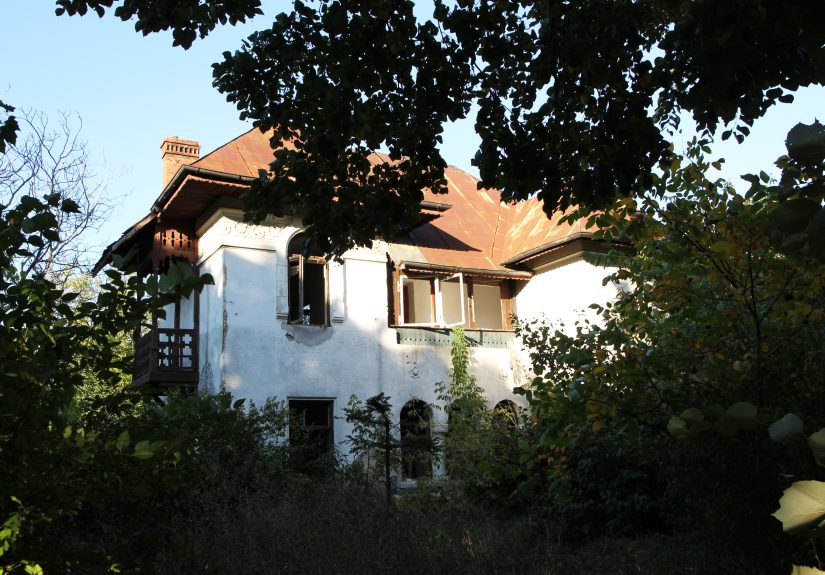
Abandoned structures have a weird kind of charisma. A boarded-up theater still looks ready for its encore. A rusting factory window catches the light like it’s posing for a moody album cover. And yesyour brain immediately whispers, “I bet there’s a story in there.”
There often is. But here’s the not-so-cinematic truth: “abandoned” doesn’t mean “safe,” and it usually doesn’t mean “free to enter.” This guide is built for legal, permission-based exploringthink historic sites, sanctioned tours, restoration projects, and owner-approved visits. If you’re under 18, treat that as a hard rule: no permission, no entry. Your curiosity is valuable; your bones are not replaceable.
Before You Begin: The Golden Rule of Urbex (That Keeps You Out of Trouble)
If you remember nothing else, remember this: look for “yes,” not loopholes. A legit “yes” comes from the property owner, a land manager, or an official program. A “maybe” from a broken fence is not a “yes.” It’s a “future conversation with someone wearing a badge.”
Step 1: Define “Abandoned” (Spoiler: It Usually Isn’t)
Plenty of places that look deserted still have owners, insurance policies, security systems, and very strong feelings about strangers entering. Buildings can be:
- Vacant (temporarily empty, still actively managed)
- Condemned (unsafe by official determinationoften illegal to enter)
- Awaiting redevelopment (actively monitored, even if it looks sleepy)
- Historic or protected (entry allowed only under specific rules)
Your job is to figure out what category you’re dealing with before your sneakers touch anything that isn’t public sidewalk.
Step 2: Choose the “Legal Yes” Route
If you want the thrill of discovery without the thrill of tetanus-adjacent decisions, start here:
- Historic sites and ruins open to visitors: Many cities and states maintain properties that feel “abandoned” in the best wayquiet, atmospheric, and legal.
- Sanctioned tours: Some preservation groups, historical societies, and museums run limited-access tours of old schools, mills, theaters, or forts.
- Open-house events: Adaptive reuse projects sometimes offer public walkthroughs before renovations ramp up.
- Owner-approved photography visits: Some owners allow exterior-only or limited interior access for photographersespecially if you’re respectful and insured (or accompanied by an adult who is).
Pro tip: “exploring” doesn’t have to mean “entering.” Exterior documentationphotos, sketches, research, oral historiescan be just as satisfying and a whole lot safer.
Step 3: Research Like a Detective (Not Like a Trespasser)
Your best adventures start with homework, not hopscotch through broken glass. Research can include:
- Property status: Who owns it now? Is it city-managed, privately owned, or part of a redevelopment plan?
- Local rules: Some areas treat certain vacant buildings as restricted, even if they’re not fenced off.
- History: What was the building used for? (This matters for hazards, too.)
- Community context: If it’s in a neighborhood that’s already dealing with vandalism or dumping, don’t become one more problem people have to solve.
If you’re looking at public lands (parks, monuments, preserved ruins), treat signs and closures as non-negotiable. Closures are there for safety, preservation, or both.
Step 4: Do a Hazard Reality Check (From the Outside First)
Old structures don’t “age” like fine cheese. They age like… fine drywall. Here’s what can go wrong even before you step inside:
- Structural instability: sagging roofs, cracked load-bearing walls, shifting foundations
- Fire damage: weakened beams and floors can look normal until they don’t
- Open shafts and drops: missing stairs, elevator shafts, floor holes
- Weather effects: rot, ice, flooding, wind damage
If the building looks like it’s trying to return to the earth one plank at a time, let it. From a respectful distance.
Step 5: Understand the “Invisible Hazards” (The Ones That Don’t Look Scary Until They Are)
The most dangerous stuff in abandoned places often isn’t dramatic. It’s dust. It’s fibers. It’s tiny spores that do not care that your photo composition is excellent.
Lead paint and lead dust
Many older buildings (especially those built before the late 1970s) may have lead-based paint. If it’s peeling, chipping, or turning into dust, that’s a serious hazardespecially for kids and teens. The big rule: don’t disturb it. No scraping. No “souvenir” paint chips. No messing with old windows and doors that grind paint into dust.
Asbestos-containing materials
Older structures can include asbestos in insulation, tiles, and other building materials. Asbestos is most dangerous when disturbed and fibers become airborne. Translation: a “quick look” that kicks up dust can be a bad idea. If you suspect asbestos, the safest move is to not enter and to leave assessment to trained professionals.
Mold and dampness
Water intrusion plus time equals mold. Mold can irritate eyes, skin, and airways, and can be especially rough on people with asthma or allergies. Abandoned basements, bathrooms, and any room that smells like “wet paperback” are waving a bright red flag.
Bird/bat droppings and fungal risk
Attics, lofts, bell towers, and quiet upper levels can attract birds and bats. Disturbing droppings can release particles into the air. If you see droppings or signs of roosting, treat it as a reason to back awayslowly and responsibly.
Wildlife (especially bats)
Abandoned doesn’t mean uninhabited. Animals may be living there. Avoid touching wildlife, and if you might have had contact with a bat, treat that as a medical follow-up situationnot a “wait and see” moment.
Step 6: Get Permission (Real Permission) and Put It in Writing
If you want to enter an abandoned structure, do it the grown-up way:
- Find the owner or managing agency.
- Ask what’s allowed: exterior only, specific rooms, guided only, hard “no” zones.
- Ask about hazards: known asbestos, lead, mold, unstable floors, wildlife issues.
- Get written permission: email is fine; clarity is priceless.
If the answer is “no,” that’s not a challenge. It’s a boundary. Respect it.
Step 7: Plan a Safe, Boring Visit (Boring Is the Goal)
The safest exploration plan is the one that sounds least exciting in a movie trailer:
- Go in daylight so you can see hazards clearly.
- Never go alone. If you’re under 18, go only with a responsible adult and explicit permission.
- Tell someone where you’ll be and when you’ll be back.
- Stay out of confined spaces (tunnels, tanks, crawlspaces) and anywhere air quality could be dangerous.
- Avoid heights like roofs, upper floors with visible damage, and staircases that look “vintage” in the worst way.
- Don’t disturb materialsespecially dust, insulation, or peeling paint.
Think of it like visiting a museum where the exhibits are fragile and the floor might also be an exhibit.
Step 8: Leave It Better Than You Found It (And Know When to Walk Away)
Ethical exploration is basically: take pictures, take notes, take nothing else.
- No vandalism (yes, that includes carving initials and “just one sticker”).
- No souvenirs (objects often have historical value or are part of a protected site).
- No location-drops that invite damage (if a place is fragile, broadcasting it can ruin it).
- Report serious hazards if appropriate (open shafts, active fires, major structural issues), especially if the site is public-facing.
And if anything feels offnew cracks, shifting debris, strong chemical smells, lots of droppings, aggressive animalsleave. Curiosity is great. So is going home.
Common Mistakes (A.K.A. How People Turn a Cool Idea Into a Bad Week)
- Assuming “nobody lives here” means “nobody owns this.”
- Entering because “the door was open.” That’s not an invitation; it’s a warning label.
- Going at night. Darkness doesn’t add mystery; it subtracts visibility.
- Climbing for a better view. Gravity is undefeated.
- Touching everything. Old dust has zero interest in being your friend.
Quick FAQ
Is exploring abandoned buildings illegal?
It can be. If you enter without permission, you may be trespassingeven if the building looks forgotten. Laws vary by location, and some buildings are also officially condemned or restricted.
What if it’s on public land?
Public land isn’t a free-for-all. Closures, restrictions, and protected cultural sites can make certain areas off-limits. Follow posted rules and respect barriers.
What’s the safest way to start?
Start with legal locations: open historic sites, ruins with marked paths, guided tours, or exterior-only photography from public rights-of-way. You’ll learn the rhythm of documenting places without taking risks that don’t pay.
Experience Notes: What Responsible Exploring Feels Like (About )
The internet loves the fantasy version of abandoned-structure exploring: a lone wanderer, a flashlight beam, a perfectly placed shaft of light, and zero consequences. Real responsible exploring is less “action hero” and more “well-prepared museum nerd with comfortable shoes.” And honestly? That’s part of the charm.
Picture a small-town preservation society hosting a once-a-month tour of an old theater that’s been closed for decades. You arrive in daylight and sign in. The guide is cheerful but firm, like a favorite teacher on field-trip duty. You’re allowed into the lobby and the front rowsnowhere else. Someone asks about going backstage and the answer is a polite, immediate no. Not because they hate fun, but because the backstage floor has water damage, and the building is mid-assessment. You learn more from that “no” than from any risky detour: the best explorers respect limits because they want the place to survive long enough to tell its story.
Or imagine an exterior-only photography walk around an abandoned mill that’s slated for redevelopment. You have written permission to be on a specific adjacent lot, and the owner asks you to stay outside the fence line. You notice how many details still shine without entering: the faded company name painted on brick, old loading docks, vines tracing window frames like nature’s graffiti (the legal kind). You practice capturing textures and angles, and you realize the building doesn’t need you inside to be interesting. The story is on the surfaceif you slow down enough to read it.
Then there are the moments that teach you to trust your instincts. A group on a permitted site visit reaches a corridor with a musty smell and visible water stains. Nothing dramatic happensno jump scare, no collapsing ceiling. The group leader simply says, “We’re turning around.” It’s almost anticlimactic. But that’s the point: responsible exploring often feels like choosing the sensible option before the situation becomes a problem. It’s the kind of decision you’re grateful for later, when you’re editing photos at home instead of explaining yourself to emergency responders.
Over time, people who explore legally and ethically tend to develop a quiet pride in doing it right. They keep notes. They read local history. They talk to longtime residents who remember what the building was like when it wasn’t “abandoned,” just “Tuesday.” They learn that preservation isn’t only about dramatic accessit’s about documentation, respect, and not being the reason a fragile place gets locked down forever.
Conclusion
Abandoned structures can teach you a lotabout architecture, local history, community change, and how time leaves fingerprints on everything it touches. The best way to explore them is the way that keeps you safe, keeps you legal, and keeps the site intact for the next curious person. Chase the story, not the risk. The photos will still be cool. Your future self will be even cooler.