Table of Contents >> Show >> Hide
- First: What “Abuse” Can Look Like (It’s Not Only Bruises)
- Before You Jump In: Safety First, Always
- How to Start the Conversation (Without Sounding Like a Police Interrogation)
- What Actually Helps (and What Backfires)
- Help Them Create a Safety Plan (Because “Be Careful” Is Not a Plan)
- When to Involve Professionals, Adults, or Authorities
- If This Is Dating Abuse: Extra Tips for Friends (Especially Teens)
- Supporting Them After They Leave (and If They Return)
- How to Protect Your Own Mental Health (Because This Is Heavy)
- Real-World “Friend Support” Experiences (Composite Scenarios)
- Conclusion: The “Steady Friend” Checklist
Generated by GPT-5.2 Thinking
Finding out (or even just suspecting) that your friend is being abused can make your brain do that
“error message” thing: What do I say? What if I make it worse? What if they don’t leave?
Take a breath. You don’t need the perfect speech, a law degree, or a superhero cape.
What your friend needs most is something simplerand rarer: a steady person who believes them,
respects their choices, and helps them get safer one realistic step at a time.
This guide is built for real life: the messy emotions, the confusing back-and-forth,
the “but they’re so nice sometimes” moments. You’ll learn how to start the conversation,
what to avoid, how to support safety planning, and when to involve professionals or emergency help.
You’ll also get practical phrases you can borrow (because you’re allowed to use a script when it matters).
First: What “Abuse” Can Look Like (It’s Not Only Bruises)
Abuse is often about power and control, not just physical harm.
That’s why someone can be “never hit” and still be living in a situation that’s scary, unsafe,
and exhausting. Abuse can show up as:
- Emotional abuse: insults, humiliation, constant criticism, mind games, gaslighting, threats, intimidation.
- Coercive control: “rules” about what they wear, who they see, where they go, how they spend money, how they talk.
- Isolation: slowly cutting them off from friends/family, creating drama every time they try to leave the house.
- Financial abuse: controlling bank accounts, sabotaging jobs, running up debt, “allowances,” keeping them dependent.
- Sexual abuse: pressuring, coercing, or forcing sexual activity; ignoring consent; refusing protection as a control tactic.
- Technology-facilitated abuse: monitoring phones, demanding passwords, tracking location, using social media to harass or threaten.
- Physical violence: hitting, choking, pushing, restraining, throwing objects, blocking exits, damaging property, hurting pets.
- Stalking: showing up uninvited, constant calls/texts, monitoring routines, threats if they don’t respond immediately.
Some signs you might notice: your friend seems anxious about “making them mad,” cancels plans a lot,
checks their phone with panic, withdraws from friends, or suddenly needs “permission” to do normal things.
They may defend their partner repeatedly, blame themselves, or sound like they’re walking on eggshells.
A quick reality check
Abuse often escalates over time. The “good days” aren’t proof it’s safe; they can be part of the cycle that
keeps people stuckespecially when apologies, gifts, or “I’ll change” moments show up right after harm.
Before You Jump In: Safety First, Always
When you care, your instinct may be to storm in like an action movie side character.
Real life is not an action movie. Confronting the abusive person or “calling them out” publicly can
increase danger for your friend and for you. Your best move is quieter: plan for safety.
If you think there is immediate danger
If your friend is in immediate danger, call 911. If you’re with them,
prioritize getting to a safe place. If you’re not sure, trust your gut. It’s better to be embarrassed
than for someone to be hurt.
Choose the right moment to talk
- Pick a private time and place where the abusive person is not around and is unlikely to interrupt.
- Avoid talking where they might be overheard or where devices might be monitored.
- If you’re texting, assume messages could be seen. Keep it simple and non-risky.
If your friend’s devices might be monitored, encourage safer options: talking in person, using a friend’s phone,
or contacting a hotline from a safe device. (And yessome “private browsing” myths are exactly that: myths.
Safety is about reducing risk, not achieving invisibility.)
How to Start the Conversation (Without Sounding Like a Police Interrogation)
You don’t need to “prove” abuse. You need to open a door.
The most effective approach is specific, calm, and caring.
Try these openers
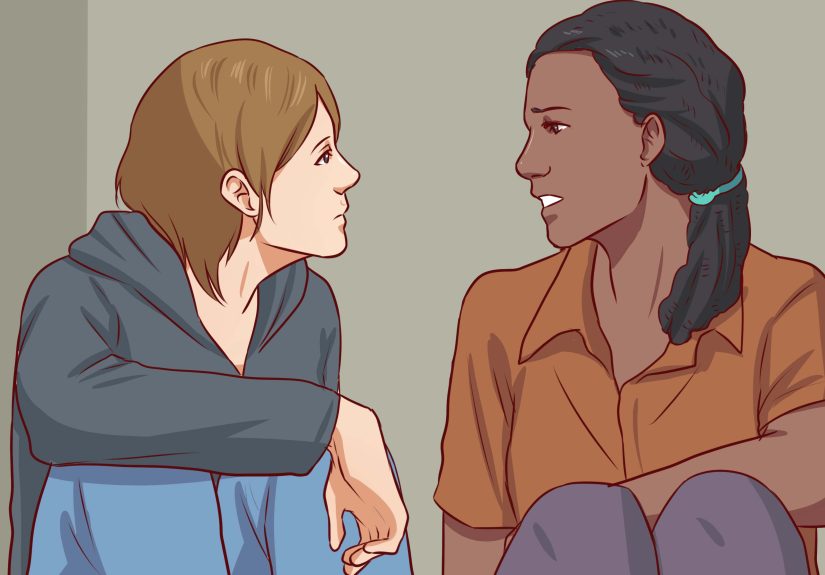
- “I’ve noticed you seem stressed lately, and I’m worried about you. Are you okay?”
- “When you said they wouldn’t ‘let’ you come, that didn’t sit right with me. Do you feel safe?”
- “I’m not here to judge your relationship. I’m here for you.”
- “You don’t deserve to be treated like that. What’s been going on?”
What helps them keep talking
- Believe them. Even if details are confusing, the feelings are real.
- Listen more than you speak. Let them set the pace.
- Offer choices. “Do you want advice, help making a plan, or just someone to listen?”
- Validate without taking over. “That sounds scary. I’m glad you told me.”
What to avoid (even if you mean well)
- “Why don’t you just leave?” (Leaving can be dangerous and complicated.)
- “That’s not abuse.” (If they feel afraid or controlled, it matters.)
- “If you go back, I’m done.” (Ultimatums increase isolation.)
- “Tell me everything right now.” (Pressure can feel unsafe.)
Your job isn’t to deliver the perfect diagnosis. Your job is to be a safe place where the truth can exist.
That alone is powerful.
What Actually Helps (and What Backfires)
Do: Become a reliable point of connection
Abuse thrives in isolation. Consistent, gentle check-ins can be lifesaving.
Try: “Thinking of you. No need to respond if it’s not safejust sending care.”
Create a simple code word or emoji that means “Call me” or “I need help now.”
Do: Offer practical support (small, concrete, doable)
- Give rides or help them plan safe transportation.
- Offer your place as a temporary safe spot if it’s appropriate and safe.
- Help them gather important documents or make copies (only if it won’t increase risk).
- Go with them to talk to a counselor, advocate, campus office, or clinic.
- Help them research local resources and save key numbers under neutral names.
Do: Respect their paceeven if it’s slow
People may leave and return more than once. That’s not weakness; it’s often what happens when fear,
finances, kids, immigration concerns, social pressure, love, hope, and safety risks are all tangled together.
Staying connected (without judgment) increases the chance they’ll reach for help when they’re ready.
Don’t: Confront or “negotiate” with the abusive person
Meeting them to “talk it out” can put you in danger and can increase retaliation against your friend.
Even well-intended messages like “If you hurt them again…” may trigger escalation.
Focus on your friend’s safety and support network.
Don’t: Turn into a full-time investigator
You can help your friend notice patterns and options, but avoid pushing them to collect “proof” if doing so
could be dangerous. If they want to document incidents for legal or safety reasons, encourage them to do it
with professional guidance (an advocate can help them think through risk).
Help Them Create a Safety Plan (Because “Be Careful” Is Not a Plan)
A safety plan is a personalized set of steps to reduce risk while they’re in the relationship, preparing to leave,
or after leaving. It can be tiny and still useful. Think practical, not perfect.
Core safety-planning ideas
- Emergency contacts: a short list of safe people; decide who to call first.
- Code word: a signal for “call 911,” “come get me,” or “pretend you need me urgently.”
- Safe places: where they can go quickly (a neighbor, a store, a friend, a public place).
- Exit practice: if they live together, identify exits and ways to leave during arguments.
- Go-bag: essentials (ID, keys, meds, cash, spare charger, copies of documents) kept somewhere safe.
- Kids/pets: plan how to get them out safely; decide a meeting point; teach kids how to call for help (age-appropriate).
- Technology safety: consider location sharing, shared accounts, device tracking, and social media settings.
Encourage your friend to talk with a trained advocate for personalized safety planning. Advocates can help them
think through local options like shelters, legal protections, counseling, and support groups.
When to Involve Professionals, Adults, or Authorities
This is where it helps to be honest: as a friend, you can offer support, but you can’t replace professionals
trained in safety planning, trauma support, and legal options.
If your friend is a teen
Encourage a trusted adult: a parent/guardian (if safe), school counselor, nurse, coach, teacher, or another adult
who takes safety seriously. Many schools and youth programs have staff who are mandated reportersmeaning
they may be required to report certain abuse involving minors. That can be helpful, but it’s important your friend
understands what might happen next. You can help by saying:
- “We can talk to someone who knows how to help, and we can ask what they have to report before sharing details.”
- “You deserve support. We can choose someone who will take you seriously.”
If there’s immediate danger or serious injury risk
Call 911. Safety outranks awkwardness.
If your friend isn’t ready to call police
They can still get confidential support and options from hotlines and victim services. In the U.S.,
options include the National Domestic Violence Hotline (call 1-800-799-7233, or text
“START” to 88788) and RAINN (National Sexual Assault Hotline: 800-656-HOPE).
Another option is VictimConnect (call/text 1-855-4VICTIM).
A useful approach is: “You don’t have to decide today. Let’s talk to someone who can lay out options,
and you stay in control of what happens next.”
If This Is Dating Abuse: Extra Tips for Friends (Especially Teens)
Dating abuse can be sneaky because it often looks like “jealousy” or “intensity” at first. It can also happen
digitally: nonstop texts, password demands, location tracking, threats to share private photos, or public
humiliation online.
What you can do that actually makes a difference
- Name the behavior, not the person: “It’s not okay to control your phone.”
- Help them reconnect: encourage safe time with friends, clubs, family, and trusted adults.
- Plan safe communication: short check-ins, code words, and meeting in places the partner can’t control.
- Point them to teen-focused resources: loveisrespect and One Love have friend-forward guidance.
If you’re also a teen, remember: you’re not supposed to carry this alone. Getting a trusted adult involved
isn’t “betrayal”it’s safety.
Supporting Them After They Leave (and If They Return)
Leaving isn’t a single moment; it’s a process. It can also be the time when risk increases, especially if the abusive
person feels they are losing control. Your friend may need extra support during transitions.
Helpful ways to show up after leaving
- Offer to help change routines: rides, walking them to class/work, staying with them when they feel unsafe.
- Encourage privacy and tech safety: review location sharing, shared accounts, and social media visibility.
- Support legal/medical steps if they choose them: going with them, helping them write questions down, taking notes.
- Keep your tone steady: “I believe you. I’m here. What would help today?”
If they return
This is where friends sometimes accidentally do damage with disappointment. Try to avoid “I told you so.”
Instead: “I’m glad you’re talking to me. Are you safe tonight?” and “Do you want to revisit a safety plan?”
Staying connected keeps the lifeline open.
How to Protect Your Own Mental Health (Because This Is Heavy)
Supporting someone being abused can bring fear, anger, and helplessness. You can care deeply and still need boundaries.
Consider:
- Set limits on what you can do safely (you can’t be on-call 24/7 without burning out).
- Get your own support from a counselor, trusted adult, or hotline (friends of survivors can call too).
- Keep yourself safe by avoiding direct conflict with the abusive person.
The goal isn’t to become your friend’s entire support system. The goal is to help them build a safer web of support.
Real-World “Friend Support” Experiences (Composite Scenarios)
The stories below are compositescommon patterns advocates describemeant to show what helping can look like in real life.
They’re not about perfect outcomes. They’re about practical moves that kept connection and safety growing.
Experience #1: “They keep going back, and I’m losing it.”
A friend confided that their partner screamed at them, broke their belongings, and then apologized with tears and gifts.
After a blow-up, the friend would say, “I’m done,” then return a week later. The helper’s first approach was logic:
spreadsheets of red flags, long speeches, and a firm “If you go back, I can’t watch this.”
The result? Silence. Not because the friend didn’t carebecause shame loves ultimatums.
What worked better was switching from courtroom mode to lifeline mode:
“I’m not judging you. I’m worried about your safety. Can we make a plan for what you’ll do if things get scary again?”
They set a code word, agreed on a late-night pickup plan, and saved hotline numbers under neutral names.
The friend still had setbacks, but they stopped disappearing completely. Connection stayed open, and that’s often the bridge
that makes leaving possible later.
Experience #2: “They don’t think it counts as abuse.”
Another friend didn’t describe their relationship as abusive because there weren’t visible injuries.
But they were monitored constantly: location sharing they “couldn’t turn off,” password demands,
and a daily interrogation about who they spoke to. The helper avoided labels at first and focused on the behavior:
“That sounds exhausting. Do you feel like you can make choices without being punished?”
That question landed. Once the friend admitted they felt afraid to disappoint their partner, they could see the pattern:
control, punishment, apology, repeat. The helper suggested talking to an advocate “just to hear options.”
The friend ended up making small changes firstturning off some sharing settings, creating a new email,
telling a counselor. Those were not dramatic movie moments, but they were real progress.
Experience #3: “It’s a teen situation, and adults will freak out.”
In a teen dating scenario, a friend worried that telling an adult would mean instant chaos:
parents confiscating phones, school discipline, rumors. The helper did two smart things.
First, they asked what outcome the friend wanted: “Do you want safety, privacy, support, or all three?”
Second, they helped the friend choose a trusted adult who would focus on safety rather than punishment.
They also talked about mandated reporting in a calm, practical way: “Let’s ask what they have to report before we share details.”
The friend felt more in control, which made it easier to reach out. The adult helped coordinate safe pick-ups and school supports.
The big lesson: teens don’t need more drama; they need more safety.
Experience #4: “I tried to help and accidentally made it worse.”
One helper posted a vague social media message about “abusers” after a scary incident. They meant well.
Unfortunately, the abusive partner saw it, suspected the friend, and tightened control. The helper learned a hard rule:
public pressure can increase private danger. They apologized, removed the post, and shifted to quiet support:
rides, check-ins, a safety plan, and professional resources.
If you make a mistake, it doesn’t mean you’ve failed. It means you adjustand keep showing up in safer ways.
Conclusion: The “Steady Friend” Checklist
Helping a friend who is being abused isn’t about having the perfect answer. It’s about being consistent, calm,
and safety-focused. If you remember nothing else, remember this:
- Believe them. Listen with respect.
- Don’t confront the abusive person. Prioritize safety.
- Offer choices, not ultimatums. Keep the door open.
- Support a safety plan. Small steps matter.
- Use professional resources. Hotlines and advocates exist for a reason.
- Call 911 if there’s immediate danger.
- Get support for yourself, too. You’re a helper, not a solo rescue team.
Your friend may not be ready to change everything today. But your steady presence can help them believe a safer life is possible.
Sometimes that belief is the first real exit door.