Table of Contents >> Show >> Hide
- Introduction: Splitting Water Without a Magic Wand
- What Is Water Electrolysis?
- Why Pure Water Is a Poor Conductor
- What Happens at the Cathode and Anode?
- Common Types of Water Electrolysis
- Why Electrolysis Matters for Clean Hydrogen
- Safety First: Why This Is Not a Casual Home Experiment
- What Students Usually Observe in a Supervised Demonstration
- Electrolysis vs. Fuel Cells: The Reverse Relationship
- Real-World Uses of Hydrogen from Electrolysis
- Advantages of Water Electrolysis
- Limitations and Challenges
- Misconceptions About Making Hydrogen and Oxygen from Water
- Educational Experience: What Learning Electrolysis Feels Like in Practice
- Conclusion: Electrolysis Makes Water’s Hidden Chemistry Visible
Note: This article is written for educational publishing and safe science literacy. It explains how electrolysis works, why it produces hydrogen and oxygen, and what safety principles matter. It does not provide a do-it-yourself gas-collection protocol, because hydrogen is highly flammable and oxygen can make fires burn more intensely.
Introduction: Splitting Water Without a Magic Wand
Water looks calm, clear, and almost suspiciously simple. Yet inside every drop is a tiny chemical partnership: two hydrogen atoms bonded to one oxygen atom. Electrolysis is the process of using electrical energy to separate those atoms, producing hydrogen gas and oxygen gas. In other words, it is the scientific version of politely telling a water molecule, “You two sit over there, and oxygen, you take that chair.”
The basic idea is not new, but it has become much more important as the world looks for cleaner ways to produce hydrogen. Hydrogen can be used in fuel cells, industrial processes, energy storage, and research. When electrolysis is powered by renewable electricity, it can create hydrogen with low or near-zero carbon emissions. That is why water electrolysis appears in high school chemistry lessons, university labs, clean-energy reports, and serious conversations about the future of fuel.
Still, “how to make oxygen and hydrogen from water using electrolysis” should be understood carefully. This is not a casual kitchen-counter trick. Hydrogen is easy to ignite, and a mixture of hydrogen and oxygen can be dangerous. Oxygen itself is not fuel, but it helps other materials burn faster. So the safest way to learn this topic is through supervised demonstrations, animations, simulations, or professional laboratory equipment designed for gas separation and ventilation.
What Is Water Electrolysis?
Water electrolysis is an electrochemical process that uses electricity to split water into hydrogen and oxygen. The overall chemical equation is:
2H2O(l) → 2H2(g) + O2(g)
This equation tells an important story. For every two molecules of water that are split, two molecules of hydrogen gas and one molecule of oxygen gas are produced. That is why a properly controlled demonstration shows roughly twice as much hydrogen gas as oxygen gas by volume. The ratio is not a random party trick; it comes directly from the chemical formula of water.
The Role of Electricity
Water molecules do not normally split apart on their own. They need an outside push. In electrolysis, that push comes from electrical energy. A power source drives electrons through an external circuit and forces chemical reactions to happen at two electrodes. One electrode is called the cathode, where reduction takes place. The other is called the anode, where oxidation takes place.
At the cathode, hydrogen-containing particles gain electrons and form hydrogen gas. At the anode, water is oxidized and oxygen gas forms. The exact half-reactions can vary depending on whether the system is acidic, alkaline, or uses a special membrane, but the big picture stays the same: hydrogen appears on one side, oxygen appears on the other, and electricity makes the separation possible.
Why Pure Water Is a Poor Conductor
Here is where water gets a little dramatic. Pure water does not conduct electricity very well because it contains very few ions. Ions are charged particles that help carry electrical current through a liquid. Without enough ions, electrolysis is inefficient and slow.
In professional and educational settings, an appropriate electrolyte may be used to improve conductivity. However, this is not a place for random household chemistry. Some substances can create unwanted byproducts or hazards. For example, chloride-containing salts can lead to unsafe side reactions under certain conditions. In a real laboratory or classroom, the electrolyte is chosen by someone trained to understand both the chemistry and the safety requirements.
What Happens at the Cathode and Anode?
At the Cathode: Hydrogen Forms
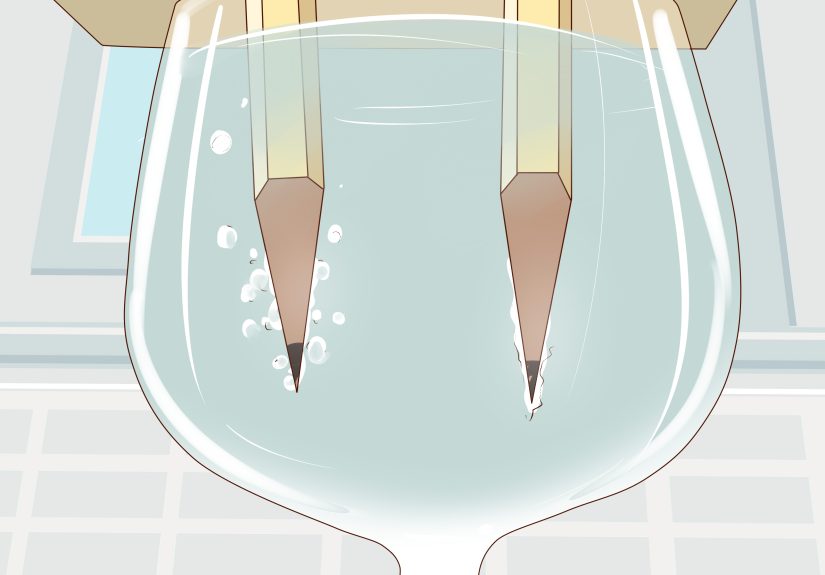
The cathode is the electrode where reduction occurs. In simple terms, particles gain electrons there. During water electrolysis, this is the side associated with hydrogen production. Bubbles may form as hydrogen gas is generated. Because hydrogen is the lightest element and highly flammable, it must never be collected, stored, or tested casually.
At the Anode: Oxygen Forms
The anode is the electrode where oxidation occurs. This is the side associated with oxygen production. Oxygen supports combustion, meaning it can make flames burn more vigorously. That does not make oxygen “flammable” in the same way hydrogen is, but it does make oxygen-rich environments risky around sparks, flames, oils, grease, or combustible materials.
The 2-to-1 Gas Ratio
One of the most useful observations in a supervised electrolysis demonstration is the gas volume ratio. Hydrogen gas forms at about twice the volume of oxygen gas. This matches the composition of water: H2O contains two hydrogen atoms for every one oxygen atom. When students see that ratio, chemistry stops being a dusty textbook chapter and starts behaving like a visible, bubbling argument for atomic theory.
Common Types of Water Electrolysis
Alkaline Electrolysis
Alkaline electrolysis is one of the older and more established approaches. It uses an alkaline electrolyte and electrodes separated in a way that helps manage gas formation. This type of system has been used in industrial hydrogen production and remains relevant because it is comparatively mature.
PEM Electrolysis
PEM stands for proton exchange membrane. In a PEM electrolyzer, a membrane helps move hydrogen ions while keeping the hydrogen and oxygen gases separated. PEM systems can respond quickly to changing electricity supply, which makes them interesting for renewable energy applications such as wind and solar power.
Solid Oxide Electrolysis
Solid oxide electrolysis operates at high temperatures and can be highly efficient in certain industrial contexts. Because it involves elevated heat and advanced ceramic materials, it belongs firmly in the world of specialized equipment, trained operators, and controlled facilities.
Why Electrolysis Matters for Clean Hydrogen
Hydrogen is already widely used in industry, including refining, fertilizer production, and chemical manufacturing. Traditionally, much of the world’s hydrogen has been made from fossil fuels, especially natural gas. Electrolysis offers a different pathway: use electricity to split water. If the electricity comes from renewable or low-carbon sources, the resulting hydrogen can have a much smaller carbon footprint.
This is why the phrase “green hydrogen” appears so often in energy discussions. Green hydrogen generally refers to hydrogen made by electrolysis using renewable electricity. It is not magic fuel dust sprinkled over the economy, but it can be valuable in areas that are difficult to electrify directly, such as certain heavy industries, long-duration energy storage, and some transportation sectors.
Safety First: Why This Is Not a Casual Home Experiment
Electrolysis may sound simple: water plus electricity equals bubbles. Unfortunately, the safety story is not that cute. Hydrogen gas can ignite easily. When hydrogen mixes with air or oxygen, it can create an explosion hazard. Oxygen can intensify combustion. Electricity near liquids adds another layer of risk. Some electrolytes are irritating, corrosive, or capable of producing unwanted side reactions.
For these reasons, electrolysis demonstrations should be handled by trained teachers, lab supervisors, or qualified professionals using proper equipment, ventilation, eye protection, and risk assessment. A safe educational article can explain the science, but it should not encourage readers to build improvised gas-producing devices or store gases in containers.
Important Safety Principles
Safe electrolysis education focuses on observation, not improvisation. Gases should not be collected in sealed containers without proper equipment. Flames and sparks should be kept away. Unknown chemicals should not be added to water. Any demonstration should follow institutional safety guidelines. When in doubt, use a classroom simulation, a professionally designed demonstration kit, or a video from a reputable science education organization.
What Students Usually Observe in a Supervised Demonstration
In a controlled classroom setup, students may observe bubbles forming at both electrodes. They may notice that one side produces more gas than the other. The side with more gas corresponds to hydrogen, while the side with less gas corresponds to oxygen. Students may also learn how indicators can show changes near each electrode because the local chemistry can become more acidic or basic depending on the system.
The most important learning moment is that electricity is not “stored inside” the water. Instead, electricity drives a chemical change that would not happen spontaneously under ordinary conditions. This connects electrolysis to broader topics like energy conversion, oxidation-reduction reactions, batteries, fuel cells, and renewable energy systems.
Electrolysis vs. Fuel Cells: The Reverse Relationship
Electrolysis and fuel cells are like science siblings who borrowed each other’s clothes. Electrolysis uses electricity to split water into hydrogen and oxygen. A hydrogen fuel cell does nearly the reverse: it combines hydrogen and oxygen to produce electricity, heat, and water. That reverse relationship makes the topic especially useful for understanding energy storage.
Imagine a windy night when a power grid has more renewable electricity than it can use immediately. In theory, that extra electricity could power electrolyzers to produce hydrogen. Later, the hydrogen could be used in fuel cells or industrial processes. This idea is one reason researchers and energy planners are paying close attention to electrolysis technology.
Real-World Uses of Hydrogen from Electrolysis
Industrial Feedstock
Hydrogen is used to make ammonia, refine fuels, and produce chemicals. Cleaner hydrogen could reduce emissions in some of these industries if it replaces hydrogen made from fossil fuel processes.
Energy Storage
Hydrogen can store energy for longer periods than many batteries. While batteries are excellent for many short-term uses, hydrogen may be useful for seasonal storage or applications where large amounts of energy need to be stored and moved.
Transportation and Fuel Cells
Hydrogen fuel cells can power vehicles, buses, forklifts, ships, and backup power systems. However, hydrogen transportation requires careful infrastructure, compression, storage, and safety management. The technology has promise, but it is not a universal replacement for batteries or direct electrification.
Advantages of Water Electrolysis
One major advantage of electrolysis is that it can produce hydrogen without direct carbon dioxide emissions at the point of production. If the electricity is clean, the hydrogen can also be low-carbon. Electrolysis can be paired with renewable power, and it produces oxygen as the main co-product.
Another advantage is flexibility. Some electrolyzer systems can ramp production up or down based on electricity availability. This may help balance power grids with large amounts of wind or solar energy. Electrolysis also offers a pathway for producing hydrogen in locations where transporting fossil fuels is expensive or impractical.
Limitations and Challenges
Electrolysis is promising, but it is not free from challenges. It requires electricity, and electricity costs matter. If the power comes from fossil fuels, the climate benefit may shrink. Electrolyzers also require capital investment, water management, maintenance, and safety systems. Some advanced electrolyzers use materials that can be expensive or supply-constrained.
Efficiency is another important issue. Every energy conversion has losses. Electricity becomes chemical energy in hydrogen, and if that hydrogen later becomes electricity again in a fuel cell, more energy is lost along the way. That does not make hydrogen useless; it simply means hydrogen should be used where it makes practical sense, not where a simpler electric solution would do the job better.
Misconceptions About Making Hydrogen and Oxygen from Water
Misconception 1: Water Is a Fuel
Water is not a fuel in the ordinary sense. It is already the low-energy product formed when hydrogen burns or reacts with oxygen. Electrolysis puts energy into water to separate hydrogen and oxygen. The hydrogen can later release energy, but the original energy came from the electricity used in the electrolysis process.
Misconception 2: Electrolysis Creates Free Energy
Electrolysis does not violate physics, no matter how many dramatic internet thumbnails try to convince viewers otherwise. You cannot get more usable energy out than you put in. Electrolysis is an energy conversion process, not a free-energy machine.
Misconception 3: More Bubbles Always Means Better Science
Lots of bubbles may look exciting, but safe, accurate science is not a bubble contest. Gas purity, electrode materials, electrical control, temperature, pressure, and separation all matter. In professional settings, quality and safety beat dramatic fizz every time.
Educational Experience: What Learning Electrolysis Feels Like in Practice
The first memorable experience many students have with electrolysis is not the equation. It is the bubbles. A quiet liquid suddenly begins to show signs of invisible forces at work. The class leans forward, the teacher asks which side is producing more gas, and someone in the back whispers, “So water is secretly two gases wearing a trench coat?” Honestly, not the worst summary.
What makes the topic powerful is that it connects tiny particles to big-world energy questions. Students can see that molecules are not just drawings in a textbook. They are structures with bonds, charges, and behavior. When electricity is applied in a controlled way, chemical bonds can be rearranged. The result is not a magic trick but a physical process governed by conservation of mass, charge balance, and energy requirements.
Another useful experience is comparing electrolysis with everyday assumptions about water. Most people think of water as something that puts out fires, fills bottles, and ruins phone screens. Electrolysis reveals that water also contains hydrogen, a flammable gas, and oxygen, a gas that supports combustion. That contrast is fascinating, but it also teaches respect for chemistry. Substances can behave very differently when separated, concentrated, or combined under different conditions.
In a classroom discussion, the 2-to-1 gas ratio often becomes the “aha” moment. Before seeing it, the formula H2O may feel like a symbol to memorize. After seeing that hydrogen forms in about twice the amount of oxygen, the formula becomes evidence. The visible result matches the invisible structure. That is the kind of science lesson that sticks because it turns an abstract idea into an observation.
Teachers and science communicators often find that electrolysis works best when framed as a story of energy conversion. Electricity does not disappear. Water does not become fuel for free. Instead, electrical energy is used to produce hydrogen, which stores some of that energy in chemical form. Later, hydrogen can react with oxygen and release energy, often forming water again. This cycle helps students understand why fuel cells, renewable energy storage, and clean hydrogen are connected.
A good learning experience also includes the limits. Electrolysis is not automatically clean unless the electricity source is clean. Hydrogen is not automatically practical unless storage, transport, cost, and safety are managed. Oxygen is useful but can increase fire risk. These details may sound less glamorous than “turn water into fuel,” but they are exactly what makes the topic real. Science becomes more interesting, not less, when the fine print shows up wearing safety goggles.
For web readers, the best takeaway is this: electrolysis is a beautiful example of chemistry, but it deserves respect. Learn the concepts. Watch reputable demonstrations. Explore animations. Study the role of electrolyzers in clean energy. But leave gas production, gas collection, and equipment design to supervised labs and trained professionals. Curiosity is wonderful; curiosity plus safety is even better.
Conclusion: Electrolysis Makes Water’s Hidden Chemistry Visible
Water electrolysis is one of the clearest ways to understand how electricity can drive chemical change. By applying electrical energy in a controlled system, water can be split into hydrogen and oxygen. Hydrogen forms at the cathode, oxygen forms at the anode, and the gases appear in a roughly 2-to-1 volume ratio that reflects the formula H2O.
The process matters far beyond the classroom. Electrolysis is central to discussions about clean hydrogen, renewable energy storage, industrial decarbonization, and fuel cell technology. At the same time, it must be treated with care. Hydrogen is highly flammable, oxygen can intensify fires, and electrical systems near liquids require proper safety controls.
The smartest way to approach this topic is as a science lesson, not a casual home project. Electrolysis teaches us that water is simple on the surface but chemically rich underneath. It also reminds us that clean-energy technologies are not magic buttons; they are carefully engineered systems shaped by chemistry, physics, economics, and safety.