Table of Contents >> Show >> Hide
- Why Horse Height Matters
- What You Need Before You Start
- How to Measure the Height of Horses: 11 Steps
- Step 1: Put the horse on a flat, level surface
- Step 2: Halter the horse and ask a helper to hold it
- Step 3: Stand the horse square
- Step 4: Find the withers
- Step 5: Use a measuring stick if possible
- Step 6: Keep the measuring tool vertical
- Step 7: Read the height in inches or hands
- Step 8: Convert inches to hands correctly
- Step 9: Double-check the measurement
- Step 10: Note whether the horse is shod, recently trimmed, or growing
- Step 11: Know when the standard method changes
- Common Mistakes When Measuring Horse Height
- Horse vs. Pony: Why 14.2 Hands Matters
- Can You Measure a Horse Without a Measuring Stick?
- Quick Example Measurements
- Final Thoughts
- Real-World Experiences Measuring Horses
- SEO Tags
Measuring a horse sounds simple until you realize the horse has opinions, the ground has a slope, and your tape measure is acting like it was trained in interpretive dance. Still, learning how to measure the height of horses is a practical skill every owner, rider, breeder, and horse-shopping daydreamer should know. A horse’s height affects everything from class eligibility and breed registration to blanket sizing, tack choices, rider fit, and basic bragging rights at the barn.
The good news is that horse measurement is not mysterious. It follows a traditional system, a few simple rules, and one very important landmark on the horse’s body: the withers. Once you know where to measure, how to convert inches to hands, and how to keep your horse standing properly, you can get a reliable number without turning the barn aisle into a geometry exam.
This guide walks you through 11 clear steps for measuring horse height the right way, plus common mistakes to avoid, conversion examples, and a real-world experience section at the end for readers who enjoy learning the human side of horse care. Let’s get to it.
Why Horse Height Matters
Horse height is more than trivia. It can influence whether a horse is considered a pony or a horse, whether it fits a certain competition division, and whether a rider feels balanced and safe in the saddle. Height also helps when buying tack, choosing trailers and stalls, comparing growth in young horses, and discussing conformation with trainers, breeders, or veterinarians.
In the United States, horse height is usually expressed in hands. One hand equals 4 inches. So when someone says a horse is 15.2 hands high, that does not mean 15.2 in decimal form. It means 15 hands and 2 inches. Think of it as barn math, not calculator math.
What You Need Before You Start
- A horse measuring stick with a level is best
- A soft measuring tape can work in a pinch
- A helper to hold the horse
- A halter and lead rope
- A flat, firm, level surface such as concrete or packed pavement
- A calm attitude, because horses can smell chaos from three counties away
How to Measure the Height of Horses: 11 Steps
-
Step 1: Put the horse on a flat, level surface
This is the foundation of an accurate measurement. If the horse stands on a slope, uneven dirt, soft bedding, or a surface with one hoof in a crater and the other on a tiny mountain, your number will be off. A concrete wash rack, paved barn aisle, or level driveway usually works well.
If you only have dirt available, do your best to find the firmest, flattest patch possible. But for the most reliable result, especially when accuracy matters for showing or registration, level hard ground is the gold standard.
-
Step 2: Halter the horse and ask a helper to hold it
A tied horse might lean, fidget, or reposition at exactly the wrong moment. A helper holding the horse at the shoulder is usually safer and more effective. The horse should be calm, attentive, and standing naturally instead of craning its neck like it just heard someone open a grain bin.
If the horse is nervous, walk it around for a minute and let it settle. Accuracy improves a lot when your horse is not performing interpretive theater.
-
Step 3: Stand the horse square
A square stance means the horse is standing evenly on all four feet, not parked out, camped under, leaning, or twisting like a pretzel with hooves. The front legs should be straight and balanced, and the horse should not be stretching forward or sinking back.
Why does this matter? Because body position changes measurement. A horse standing awkwardly can appear taller or shorter than it actually is. You want the horse in a natural, balanced stance.
-
Step 4: Find the withers
The withers are the highest point of the horse’s back at the base of the neck, between the shoulder blades. This is the standard point used to measure most horses. You do not measure to the top of the head, the ears, or the mane. If you did, every alert horse in the barn would suddenly become an NBA draft prospect.
Run your hand along the neck toward the back until you feel the highest fixed point. That is your target. On some horses, especially those with heavy muscling, round backs, or lots of mane, the withers may take a little more feeling to locate.
-
Step 5: Use a measuring stick if possible
A horse measuring stick is the easiest and most accurate tool. It has a vertical ruler and a horizontal arm that slides over the withers. Many also include a bubble level, which helps ensure the stick is straight and the crossbar is truly level.
Place the stick beside the horse’s front leg and raise or lower the crossbar until it just touches the highest point of the withers. Do not mash the horse down like you are trying to compress a couch cushion. The arm should rest lightly on the correct point.
-
Step 6: Keep the measuring tool vertical
Whether you use a stick or tape, the line of measurement must be straight up and down from the ground. A crooked stick or angled tape can change the result. If your measuring stick has a built-in level, center the bubble. If you are using a tape, keep it vertical and as steady as possible.
This is one reason a helper is useful. One person can keep the horse still while the other checks the measuring device.
-
Step 7: Read the height in inches or hands
Once the crossbar is on the withers and the tool is straight, read the measurement. Many horse sticks show both inches and hands. If yours reads only inches, you can convert the number yourself.
For example:
- 58 inches = 14.2 hands
- 60 inches = 15.0 hands
- 62 inches = 15.2 hands
- 66 inches = 16.2 hands
Remember, the number after the period in horse height is inches out of four, not tenths. So 15.3 means 15 hands and 3 inches, not fifteen-point-three hands.
-
Step 8: Convert inches to hands correctly
If you measured in inches, divide by 4. The whole number is the number of hands, and the remainder is the extra inches.
Example: a horse measuring 61 inches is 15 hands plus 1 extra inch, so the height is 15.1 hands. A horse measuring 63 inches is 15.3 hands.
You will never see 15.4 hands in correct horse notation, because 4 inches simply becomes another hand. So 64 inches is 16.0 hands, not 15.4. Barn mathematicians may act dramatic about this, but they are right.
-
Step 9: Double-check the measurement
Take the measurement at least twice. Horses shift weight, lift their backs, drop their heads, and generally find creative ways to change shape at the exact moment you need precision. A second or third reading helps confirm you are getting the true height.
If your numbers differ, reposition the horse, recheck the withers, and measure again. Consistency is more important than speed.
-
Step 10: Note whether the horse is shod, recently trimmed, or growing
For everyday barn use, this is a smart detail to record. Hoof length, fresh trimming, and shoeing can slightly affect the horse’s standing posture or how the measurement reads. Young horses can also change quickly as they grow.
If you are measuring regularly for growth tracking, write down the date, age, condition of the feet, and surface used. Those notes make your measurements much more useful over time.
-
Step 11: Know when the standard method changes
Most horses are measured at the withers. However, some equines, especially certain height-restricted breeds like Miniature Horses, may be measured differently under breed rules. For example, some miniature horse standards use the base of the last mane hair rather than the traditional withers method, and the result may be recorded in inches instead of hands.
If you are measuring for a show, registration, sale, or breed paperwork, always check the applicable registry or competition rules first. The barn phrase “close enough” is charming for cookies, not for official records.
Common Mistakes When Measuring Horse Height
Measuring the head or ears
This is the classic beginner mistake. Horses are not measured to the top of the head because head position changes constantly. A horse looking at a butterfly should not become two inches taller.
Using uneven ground
Even a slight slope can throw off the result. If accuracy matters, fix the footing before you measure.
Letting the horse stand crooked
A horse leaning, reaching, or resting a hind leg can change the reading. Get the horse balanced and square first.
Guessing the withers
Take time to feel for the highest point. Thick mane and certain body types can hide the correct spot.
Reading horse height like a decimal
Again, 14.2 does not mean fourteen-point-two hands. It means 14 hands, 2 inches. This one trips up lots of people, so if you got it wrong before, congratulations: you are normal.
Horse vs. Pony: Why 14.2 Hands Matters
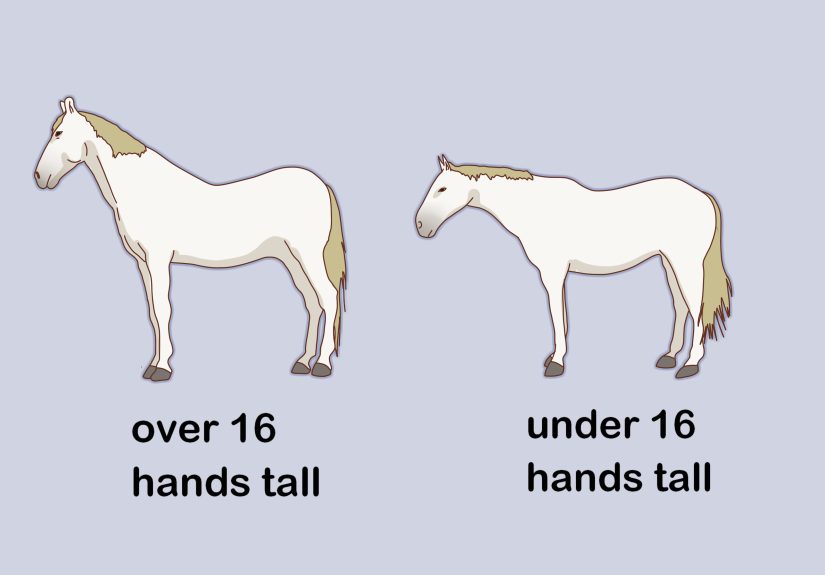
In general use, equines measuring 14.2 hands and under are considered ponies, while those measuring 14.3 hands and up are considered horses. This distinction matters in some competitions, breed discussions, and buying decisions.
That said, height is not the whole story. Temperament, bone, body type, movement, and training matter just as much in real life. A 14.1 pony can have the confidence of a battleship captain, while a 16.2 horse may act personally offended by a plastic bag.
Can You Measure a Horse Without a Measuring Stick?
Yes. If you do not have a measuring stick, you can use a soft measuring tape, a carpenter’s level, or even a straight object and wall mark. One simple method is to stand the horse square on level ground, place a level or ruler across the highest point of the withers, mark that height on a wall, and then measure from the ground to the mark.
This method can work well for casual use, but it is usually less efficient and less precise than a proper horse stick. If you measure horses often, a stick is worth the investment.
Quick Example Measurements
- 56 inches = 14.0 hands
- 57 inches = 14.1 hands
- 58 inches = 14.2 hands
- 59 inches = 14.3 hands
- 64 inches = 16.0 hands
- 65 inches = 16.1 hands
Final Thoughts
Learning how to measure the height of horses is one of those horse-world skills that seems tiny until you need it, and then suddenly it becomes very important. The process is straightforward: use level ground, keep the horse standing square, measure at the highest point of the withers, read the result carefully, and convert it properly into hands if needed.
Once you do it a few times, it becomes second nature. Better yet, it gives you confidence when discussing horse size with trainers, sellers, veterinarians, farriers, and fellow riders. And if someone confidently announces that their horse is 15.7 hands, you will smile politely, because now you know better.
Real-World Experiences Measuring Horses
The first time many people measure a horse, they expect a neat, scientific moment. What they get instead is a lesson in horse personality. One horse stands like a statue and makes you feel like a professional. The next decides the measuring stick is either a dragon, a suspicious tree branch, or a deeply offensive life choice. That contrast is part of the experience, and it teaches patience as much as technique.
At barns, measuring horses often becomes a group event. Someone holds the horse, someone reads the stick, someone else offers strong opinions nobody requested, and one person inevitably says, “He was definitely taller last summer.” Those moments are funny, but they also show why consistency matters. Measuring on the same kind of surface, with the horse standing properly, gives you a result you can actually trust instead of a guess based on memory and optimism.
Owners of young horses often become especially invested in the process. They measure every few months, hoping to see whether a promising prospect will mature into the size they expected. A growing horse can seem to change overnight, especially during awkward stages when the hindquarters shoot up first and the rest of the body tries to catch up later. Tracking height over time gives owners a clearer picture of development and can help them make better decisions about training, nutrition, and future goals.
People shopping for horses also learn quickly that listed heights are not always measured with perfect precision. A horse advertised as 16 hands may turn out to be 15.2, or a “large pony” may be standing on a very flattering patch of ground in the sale photo. Measuring the horse yourself removes uncertainty. It is not about being picky; it is about matching horse and rider honestly. A couple of inches can affect stride, rider comfort, tack fit, and competition eligibility more than beginners realize.
Some of the most memorable experiences happen with ponies and miniatures. Small equines seem to know they are the center of attention and often behave accordingly. Measuring them can feel like a comedy routine, especially when they puff up dramatically or scoot sideways just as the crossbar settles into place. Yet those moments also remind handlers to stay calm, work gently, and avoid turning measurement into a stressful event. Horses and ponies respond better when the humans act like this is normal business instead of a courtroom hearing.
In the end, measuring horse height is about more than getting a number. It is a practical skill wrapped in observation, handling, and horse sense. You learn to read posture, find landmarks, notice footing, and work with the animal in front of you instead of against it. That is why even a simple barn chore can feel oddly satisfying. You start with a stick and a tape, and you end with a better eye for horses, a better feel for accuracy, and usually at least one story worth retelling in the tack room.