Table of Contents >> Show >> Hide
- Before You Change Anything: Lock Down the “Baseline” Rules
- Official Alternate Rules That Actually Work
- House Rules: The Good, the Bad, and the “Why Is There So Much Money?”
- Build Your Own Alternate Rules Pack (Without Starting a Family Feud)
- Ready-to-Use Alternate Rule Sets
- FAQ: Common Alternate-Rule Arguments (Settled Peacefully)
- Conclusion: Alternate Rules Make Monopoly BetterIf You Choose Them on Purpose
- of Real-World Game Night Experiences (So You Can Picture It)
Monopoly has two reputations: (1) “classic family fun,” and (2) “the reason Uncle Dave isn’t invited to game night anymore.” The funny part? A lot of the “Monopoly takes forever” problem comes from alternate rules people didn’t agree onor from skipping a few official rules that quietly keep the game moving.
This guide shows you how to play Monopoly with alternate rules on purposewhether you want a faster game, a wilder game, a more strategic game, or a “we’re finishing before the pizza arrives” game. We’ll cover official variants (like the Short Game and the Speed Die), popular house rules (including the infamous Free Parking jackpot), and how to build a custom rule set that fits your group.
Before You Change Anything: Lock Down the “Baseline” Rules
Here’s the truth nobody wants to admit: many “alternate rules” are actually just the official rules people forgot. If you skip them, the game can balloon into an all-night landlord simulation with snacks.
The three official rules that secretly control game length
- Auctions happen when a player doesn’t buy an unowned property. If you land on an unowned property and pass on buying it, the bank auctions it right then. This sells properties faster and gets rent flowing sooner.
- Free Parking is a rest stop, not a payday. By the official rulebook, landing on Free Parking gives you nothing. It’s the board’s equivalent of a water break.
- You can still do business while you’re in Jail. You can collect rent, trade, and manage properties while incarcerated (which is… not a legal strategy, but an excellent board game strategy).
If your group wants alternate rules, greatjust start by agreeing whether you’re playing the baseline rules above. Then you can customize intentionally instead of arguing mid-game like it’s a courtroom drama starring a thimble.
House rule safety tip: write your rules down
Put your chosen rule set on one note card (or a phone note) before the first roll. If someone tries to introduce a new rule later, they must defeat the banker in single combat. (Or, you know, wait until next game.)
Official Alternate Rules That Actually Work
Want alternate rules that feel “real” because they are real? These options come from official rule sets and product variants. They’re designed to speed play or change pacing without turning the economy into a money sprinkler.
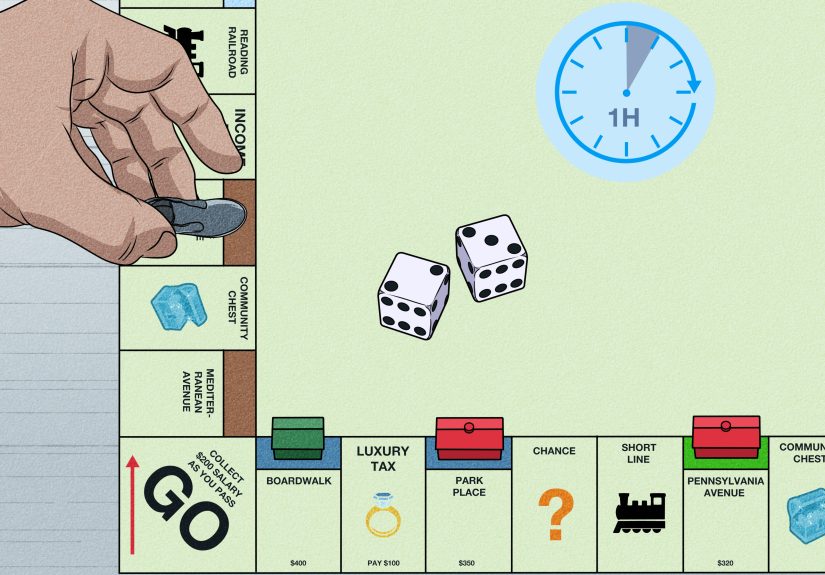
Option 1: The Official Short Game (about 60–90 minutes)
If your goal is “Monopoly, but I still like my family afterward,” the Short Game is your best friend. It’s a compact rules package that accelerates early ownership, speeds up Jail, and ends the game earlier using a simple scoring method.
- Deal properties at setup. Shuffle Title Deed cards and deal each player a small set of properties for free. This jump-starts trading and building.
- Hotels arrive sooner. You need fewer houses on each property before you can buy a hotel, so the “rent spikes” show up faster.
- Jail is one-and-done. If you land in Jail, you must exit next turn (by paying, rolling doubles, or using a card). No three-turn vacation behind bars.
- Simplify Income Tax. Use a flat tax amount so turns don’t get stuck in “wait, what’s my total net worth” accounting.
- End the game at first bankruptcythen score. When one player goes bankrupt, the remaining players total up cash and asset values. Highest total wins.
This format keeps the fun partstrading, building, brinkmanshipwhile trimming the endless “we’re all kind of broke but nobody is dead yet” middle.
Option 2: The Speed Die (the “yes, we can finish tonight” upgrade)
Many modern sets include a third die called the Speed Die. It’s an official alternate rule system that increases movement and forces faster property turnoverespecially early.
How it works (simple version):
- Start with extra cash. Each player gets additional starting money because the game moves faster and buying/building happens sooner.
- Don’t roll the Speed Die until you’ve passed GO once. After you collect your first $200 salary, you start using it every turn.
- When you use it, you roll three dice. The Speed Die result changes your movement:
- 1, 2, or 3: add that number to your normal roll and move farther.
- Bus: choose your movement based on one die, the other die, or their sumso you can aim for a property, railroad, or “please not Boardwalk” landing.
- Mr. Monopoly: make your normal move, resolve the space, then move to the next property that’s still bank-owned and choose to buy it (or trigger an auction). If everything’s owned, you move to the next space where you’d owe another player money. Yes, it’s delightfully ruthless.
- Doubles still use only the two white dice. The Speed Die doesn’t count for doubles.
- Triples (all three dice matching) can let you move anywhere. It’s rare, chaotic, and usually leads to dramatic laughter or dramatic rent.
The Speed Die is great when your table likes the “movement” feeling and wants more decisions per hour. It also reduces the slow early game where players do laps without meaningful purchases.
Option 3: “Mega” Style Rules (big board energy, faster ramp-up)
Some official variants (like Mega Edition-style rules) use the Speed Die from the start and add extra movement effects. You can borrow pieces of this idea even with a standard board if you want a punchier pace:
- Use the Speed Die immediately instead of waiting for the first pass of GO.
- Add a “bonus move” concept when Mr. Monopoly shows up: after resolving your landing space, move to a nearby purchase/rent event to keep turns active.
- Keep “doubles logic” clean by only checking doubles on the two standard dice.
Think of this as “Monopoly: Espresso Shot.” Same flavor, faster heartbeat.
House Rules: The Good, the Bad, and the “Why Is There So Much Money?”
House rules are a proud American tradition. So is over-inflation. Sometimes these overlap. The key is knowing what a house rule changes: game length, luck vs. strategy, negotiation power, and elimination speed.
House rules that speed up the game without wrecking it
- Enforce auctions (seriously). If someone doesn’t buy a property, auction it immediately. This single rule can cut game time dramatically because the board fills faster.
- Time-box trading. Example: each player can propose trades only at the end of their turn, with a two-minute timer. More deals, fewer debates.
- Bid for turn order. If your group enjoys spicy decisions, let players bid money to go first, second, etc. It’s an elegant way to “price” the advantage of being early.
- Turn timer. Classic rule: if you can’t decide in 60 seconds, you must roll. This prevents analysis paralysis over Baltic Avenue.
House rules that usually make Monopoly longer
These are fun, popular, and often responsible for games that last longer than some streaming series. Use them if your goal is a social hangbut consider adding a time limit if you also like sleep.
- Free Parking Jackpot. Taxes, fees, and card penalties go into a pot. Whoever lands on Free Parking wins it. This pumps money back into the system, keeping players alive longer.
- Double salary for landing on GO. Extra cash = fewer bankruptcies = longer game.
- Loans between players. It sounds friendly, but it keeps struggling players afloat and delays the endgame.
- No auctions. If properties can “stay unsold,” it slows the whole economy.
If you love the “long-game” house rules, here’s how to keep them playable
You don’t have to ditch your traditions. You just need guardrails:
- Cap the Free Parking pot (example: max $500). Overflow goes to the bank.
- Set a hard end time (example: 75 minutes). When time’s up, score assets like the Short Game does.
- No loans, but allow tradescash, properties, and Get Out of Jail Free cards only. Keep it clean.
- Keep housing shortages real. Limited houses/hotels create strategy and force tough choices.
Build Your Own Alternate Rules Pack (Without Starting a Family Feud)
Designing a custom Monopoly ruleset is basically balancing three sliders: money, property churn, and elimination speed. Adjust them intentionally, and your game will feel “custom” instead of “chaotic.”
Slider 1: Money in circulation
More money means fewer bankruptcies and more buildinggreat for a longer, more social game. Less money means sharper decisions and faster eliminationsgreat for a shorter, more strategic game.
Fast-game moves: no Free Parking pot; don’t increase GO money; avoid loans.
Party-game moves: add small bonuses, but cap them and add a time limit.
Slider 2: Property churn (how fast deeds get owned)
A slow property market equals slow Monopoly. If you want speed, get deeds into players’ hands quickly.
- Fast-game move: enforce auctions.
- Fast-game move: use Speed Die or the Short Game property dealing.
- Negotiation-heavy move: schedule “trade windows” (e.g., after every full round).
Slider 3: Elimination speed (how quickly players get knocked out)
Monopoly ends when players go bankrupt. If you constantly rescue players with extra cash, the game becomes “Monopoly: Zombie Edition” where nobody dies and everybody moans.
- Fast-game move: allow bankruptcy to stickno bailouts.
- Fairness move: use the Short Game scoring ending so you can stop without “eliminating” anyone emotionally.
Ready-to-Use Alternate Rule Sets
Below are plug-and-play variants you can pick based on mood. Each one fits a different kind of table. Pick one, read it out loud, and watch your arguments drop by at least 30%. (No guarantee on Uncle Dave.)
Rule Set A: “Weeknight Monopoly” (aim: 60–90 minutes)
- Use the Official Short Game rules (dealt deeds, faster Jail, early scoring end).
- Auctions required for all unpurchased properties.
- No Free Parking money.
- Turn timer: 60 seconds to act, then roll.
Best for: busy schedules, mixed ages, anyone who wants closure before midnight.
Rule Set B: “Negotiation Night” (aim: wheeling and dealing)
- Classic rules or Speed Die (your choice).
- Trade window: after each player’s turn, they may make one trade offer.
- Trades may include: cash, properties, and Get Out of Jail Free cards only.
- No loans (loans turn Monopoly into a bank drama).
Best for: adults who enjoy bargaining, bluffing, and pretending Baltic is a “strategic pickup.”
Rule Set C: “Chaos but Controlled” (aim: laughs, not lifetimes)
- Use one money-boosting house rule (choose one): Free Parking pot or double GO salary or snake eyes bonus.
- Cap any bonus (example: Free Parking max $500; snake eyes bonus once per player).
- Hard stop at 75 minutes, then score assets like the Short Game.
Best for: friends who want chaos, but also want to see daylight again.
Rule Set D: “Official Twist Night” (aim: new feel, still legit)
- Use the Speed Die.
- Add a turn-order bid (optional).
- Try a licensed add-on like a Free Parking “jackpot” expansion if you own it.
Best for: repeat players who want variety without inventing rules mid-turn.
FAQ: Common Alternate-Rule Arguments (Settled Peacefully)
“Do we really have to auction properties?”
If your goal is a shorter game, yesauctioning is one of the biggest time-savers. It ensures properties get owned quickly and the rent economy starts doing its job. If your goal is a longer, gentler game, you can skip auctionsbut accept that the game will slow down.
“Can I collect rent while I’m in Jail?”
Under official rules, yes. If your house rules say “Frozen Assets” (no rent in Jail), that’s an alternate rulefine, but it changes strategy a lot.
“Is Free Parking supposed to pay out money?”
Officially, no. The jackpot is a house rule (and a famous one). If you use it, cap it or add a time limit unless you enjoy epic sagas.
“What’s the best alternate rules setup for kids?”
Try Short Game scoring with a clear end time. Kids get a winner, the adults keep their sanity, and nobody has to learn bankruptcy law by flashlight.
Conclusion: Alternate Rules Make Monopoly BetterIf You Choose Them on Purpose
Monopoly isn’t “too long” by nature. It’s too long when the economy never tightens (hello, Free Parking jackpot) or when property ownership crawls (hello, no auctions). The best alternate rules either speed up ownership, speed up movement, or define a clean ending.
Pick your vibe, write the rules down, and commit. Your future selfespecially the one who likes sleepingwill thank you.
of Real-World Game Night Experiences (So You Can Picture It)
If you’ve played Monopoly in more than one household, you’ve probably noticed something: every family treats the rulebook like “optional reading,” right next to the warranty card on a toaster. That’s not a problemuntil two different rule cultures collide at the same table. Alternate rules can be the difference between “best game night ever” and “why is Grandma negotiating like a Wall Street shark?”
One of the most common scenes goes like this: someone suggests the Free Parking jackpot because “that’s how we’ve always played.” Everyone nods, the pot starts growing, and the table mood is great… for a while. Then the pot hits a ridiculous number. Suddenly, the weakest player gets a rescue windfall, buys a few houses, and the game enters a strange limbo where nobody can quite finish anyone off. The experience feels exciting in burstsbig jackpot!but it stretches the endgame into a slow march. It’s less “capitalist conquest” and more “economic stimulus package, repeated indefinitely.” If your group loves long hangouts, that’s perfectly fine. If your group has an actual bedtime, capping the pot is the difference between “fun tradition” and “accidental trilogy.”
Compare that with a table that enforces auctions. The vibe changes immediately. Properties get snapped up fastsometimes for weird pricesbecause nobody wants an opponent to grab a bargain. The experience becomes more strategic and more talky in a good way: “If you let me have Vermont cheap, I won’t bid you up on the railroads.” (A lie. But a charming lie.) With auctions, the board fills, monopolies form sooner, and the game gets to the spicy decisionstrades, building timing, cash managementwithout spending an hour on aimless laps. The whole experience feels like Monopoly’s “main course” arrives faster, instead of you snacking on crackers while you wait for the oven to preheat.
Then there’s the Speed Die experience, which is basically Monopoly on roller skates. Players who usually tune out between turns suddenly pay attention, because movement is less predictable and more tactical. The Bus result feels like getting a steering wheel for a momentpeople start aiming for railroads, utilities, and that one property they need to complete a set. Mr. Monopoly turns quiet turns into “okay, now something happens” turns, because it drags you into a purchase or a payment. The best part is how it changes table energy: it doesn’t just shorten the game; it increases how often players make meaningful choices per hour. It’s the difference between “waiting to land on something” and “actively planning where you want to land.”
The best game nights usually share one thing: clarity. Not “perfect rules,” just agreed rules. Once the table knows what’s happening, people stop arguing about what’s “supposed” to happen and start arguing about what they’re willing to trade for Illinois. Which is the correct, traditional form of Monopoly conflict.