Table of Contents >> Show >> Hide
- What Is a Money Tree, and Why Propagate It?
- Best Time to Propagate a Money Tree
- Tools and Materials You’ll Need
- Method 1: Water Propagation (Easiest for Beginners)
- Method 2: Soil Propagation (Stronger Early Root Habits)
- Method 3: Air Layering (Advanced, High-Success Option)
- Propagation Environment: The Success Formula
- What Soil Mix Works Best After Rooting?
- Aftercare: First 8 Weeks After Propagation
- Common Mistakes (and Fast Fixes)
- Quick FAQ
- Final Thoughts
- Experience Notes: on Propagating a Money Tree
If your money tree is thriving and you’ve started talking to it like a tiny leafy roommate, congratulationsyou’re ready for propagation.
The good news: Pachira aquatica is one of those houseplants that can be multiplied without a lab coat, a greenhouse, or a dramatic soundtrack.
With a healthy stem cutting, a clean pair of pruners, and a little patience, you can turn one plant into several future gifts, office plants, or “I swear I’ll stop buying plants after this one” projects.
In this guide, you’ll learn exactly how to propagate a money tree using water, soil, and air layering. You’ll also get practical troubleshooting advice
(because yes, cuttings can throw tantrums), aftercare routines, and a realistic timeline for roots and transplanting.
This is an in-depth, beginner-friendly walkthrough written in plain Englishwith just enough plant humor to keep your propagation confidence fully funded.
What Is a Money Tree, and Why Propagate It?
Money tree (Pachira aquatica) is a tropical species commonly sold as a braided indoor plant. Indoors, it’s loved for glossy, hand-shaped leaves,
easy-going care, and that lucky reputation in feng shui culture. Outdoors in warm climates, it can grow much larger; as a houseplant, it usually stays manageable with pruning.
Propagation gives you three big wins:
- Free new plants: one healthy mother plant can generate multiple cuttings over time.
- Insurance: if your main plant struggles, rooted cuttings keep your plant line alive.
- Better shape control: pruning for cuttings often encourages fuller growth on the parent plant.
Best Time to Propagate a Money Tree
The best time is during active growthtypically spring through summer. You can propagate in cooler months, but success rates may drop and rooting may slow down,
especially if indoor air is dry or drafty from HVAC systems.
Before cutting, do a quick parent-plant check:
- Leaves mostly healthy, no major yellowing or pest damage
- Stems firm (not mushy, not severely woody at the tip)
- No active root-rot smell in soil
- Plant is not currently stressed from recent repotting
Think of this as choosing a donor plant with good “genetic confidence.” Healthy in = healthy out.
Tools and Materials You’ll Need
- Sharp, sterilized scissors or pruning shears
- Clean glass jar (for water propagation)
- Small nursery pot with drainage holes (for soil propagation)
- Well-draining propagation medium (seed-starting mix, or perlite + peat/coco blend)
- Rooting hormone (optional, but useful)
- Clear plastic bag or dome (optional humidity boost)
- Label + date tag (future you will be grateful)
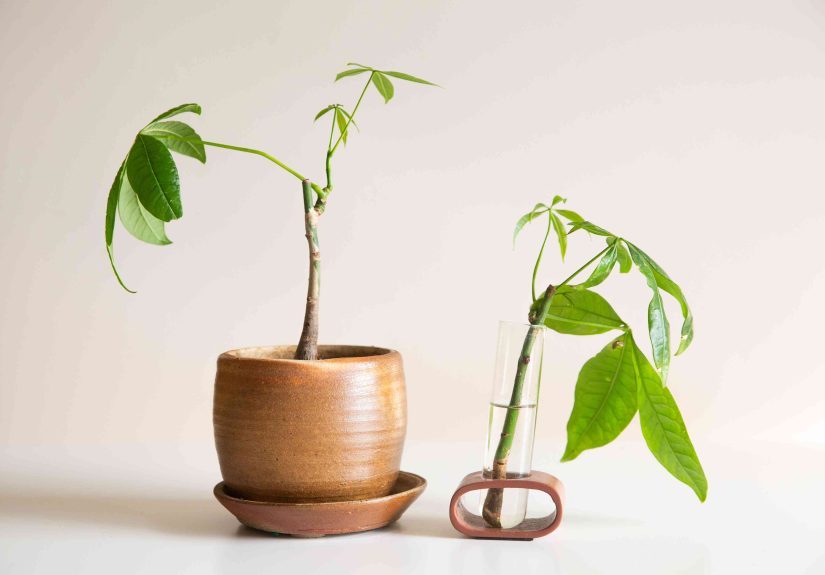
Method 1: Water Propagation (Easiest for Beginners)
Water propagation is popular because you can watch roots form in real time. It’s the plant equivalent of “live updates.”
Step 1: Pick the Right Stem
Choose a healthy green stem with at least 2–3 nodes (nodes are the little bumps where leaves attach and roots can emerge).
Aim for a cutting about 4–6 inches long. Cut just below a node with sterilized shears.
Step 2: Remove Lower Leaves
Remove leaves from the bottom half so no foliage sits underwater. Keep 1–2 leaves near the top for photosynthesis.
Too many leaves increase moisture loss and can stress the cutting.
Step 3: Optional Rooting Hormone
Dip the cut end in rooting hormone if you have it. It’s optional for many houseplants, but it can improve rooting speed and consistency.
Step 4: Place in Water Correctly
Put the cutting in a clean jar and submerge at least one node. Keep leaves above water.
Place the jar in bright, indirect lightnever harsh direct sun.
Step 5: Maintain and Monitor
- Change water weekly (or sooner if cloudy)
- Keep temperature warm and stable
- Watch for white root nubs, then longer roots
Root timing can vary. Some cuttings root in a few weeks, while others take longer.
Transfer to soil when roots are roughly 2–4 inches and branching.
Method 2: Soil Propagation (Stronger Early Root Habits)
Soil propagation skips water-to-soil transition shock and often builds sturdier roots early.
Step 1: Prepare Medium and Pot
Use a pre-moistened, airy mediumsomething that drains fast but stays lightly damp.
A small pot with drainage holes is non-negotiable.
Step 2: Take and Prepare Cutting
Take a 4–6 inch cutting with nodes, remove lower leaves, and optionally dip the cut end in rooting hormone.
Step 3: Plant at the Right Depth
Use a pencil or chopstick to make a hole first (so rooting powder stays on). Insert the stem so at least one node is buried;
gently firm media around it.
Step 4: Humidity and Light Setup
Place in bright, indirect light. If your room air is dry, loosely cover with a clear plastic bag or propagation dome to keep humidity up.
Vent briefly every day to reduce mold risk.
Step 5: Water Carefully
Keep media lightly moist, not soggy. Overwatering is the fastest route to a sad stem and root rot.
Step 6: Check Root Progress
In 3–6 weeks, gently tug the cutting. Resistance usually means roots are forming. Once established, move it into regular houseplant mix.
Method 3: Air Layering (Advanced, High-Success Option)
If you have a leggy money tree and want a larger propagated piece, air layering is a great technique.
Instead of cutting first, you trigger rooting on the stem while it’s still attached to the parent.
How to Air Layer a Money Tree
- Pick a healthy stem section below a leaf node.
- Make a shallow wound or remove a thin ring of bark (carefully).
- Apply moist sphagnum moss around the wound.
- Wrap with plastic and secure both ends.
- Keep moss slightly moist until roots develop in the wrapped zone.
- Cut below the rooted section and pot it.
Air layering takes more setup, but success is often high because the stem stays fed by the mother plant during rooting.
Propagation Environment: The Success Formula
A money tree cutting roots best when three variables stay stable:
- Light: bright, indirect light (too much sun scorches; too little slows rooting)
- Temperature: warm room conditions, roughly 65–75°F
- Humidity: moderate to high, especially during first weeks
Add airflow, but avoid strong drafts. That means no blasting AC vent, no heater-on-full-face, and no dramatic windowsill weather swings.
What Soil Mix Works Best After Rooting?
Once your cutting is ready to pot, use a well-draining mix. A practical blend:
- 2 parts indoor potting mix
- 1 part perlite
- Optional: 1 part bark fines or coarse coco chips for extra aeration
Money trees like moisture, but they do not like standing water around roots.
If water sits in saucers for hours, dump it.
Aftercare: First 8 Weeks After Propagation
Weeks 1–2
- Keep humidity up and light indirect
- Avoid fertilizing
- Keep moisture steady, not wet
Weeks 3–4
- Look for new leaf growth (a good sign of root activity)
- Begin reducing humidity cover time gradually
- Check drainage and airflow
Weeks 5–8
- Transition to normal watering rhythm (water when top layer dries)
- Start very light feeding only if growth is active
- Rotate pot weekly for even growth
Common Mistakes (and Fast Fixes)
1) Cutting without a node
Problem: No node, no root point. Fix: Recut below a visible node.
2) Too much direct sun
Problem: Wilting, scorched leaves. Fix: Move to bright indirect light.
3) Soggy media
Problem: Mushy stems, rot smell. Fix: Improve drainage, reduce watering, restart with healthy cutting if needed.
4) Zero humidity in dry rooms
Problem: Cutting dehydrates before roots form. Fix: Add dome/bag, humidifier, or pebble tray nearby.
5) Potting too early from water
Problem: Weak root system struggles in soil. Fix: Wait for multiple roots 2–4 inches long.
Quick FAQ
Can you propagate from a braided trunk?
Usually, you propagate from green stems or shoots, not thick braided trunk wood.
The braid is often multiple young stems grown together, so target healthy side growth.
How long does money tree propagation take?
You may see roots in a few weeks, but full establishment can take longer depending on season, light, warmth, and cutting quality.
Water or soilwhich is better?
Water is easier to monitor. Soil often produces roots already adapted to potting mix.
Beginners usually enjoy water propagation first, then shift to soil once confident.
Can money tree grow from seed?
Yes, but most indoor growers use stem cuttings because they’re faster, easier, and keep traits consistent with the parent plant.
Final Thoughts
If propagation feels intimidating, remember this: money tree cuttings are forgiving when you respect the fundamentalshealthy stem, visible node, clean tools,
bright indirect light, warm temps, and careful watering. Everything else is optimization.
Start with one cutting. Learn from it. Then do two. In a season, you can go from “I hope this works” to “I accidentally started a money tree nursery.”
And honestly, that’s a pretty wonderful problem to have.
Experience Notes: on Propagating a Money Tree
The first time I propagated a money tree, I made the classic rookie move: I grabbed the prettiest stem instead of the healthiest one.
It looked great, had shiny leaves, and seemed like a superstar. But the stem was too soft, and I cut above a node instead of below it.
Translation: zero roots, lots of optimism, and one very dramatic cutting that slowly gave up. That failure turned out to be useful because it taught me
the most important lesson in propagation: the node is the whole game.
On attempt two, I slowed down. I sterilized my pruners, chose a firm green stem with multiple nodes, removed lower leaves, and put the cutting in a clear jar.
I placed it near an east-facing window where it got gentle morning light and bright indirect light the rest of the day. I changed the water every week,
topped it up midweek, and kept the jar clean. For the first 10 days, nothing happened. I stared at that stem like it owed me rent. Then tiny root bumps appeared.
By week three, there were several roots; by week five, I had a small root system ready for soil.
The water-to-soil transfer was another learning moment. The first transplant I did years ago failed because I used dense potting soil that stayed wet forever.
This time I used a lighter mix with extra perlite and a small pot with real drainage holesnot a decorative cachepot pretending to be a nursery pot.
I watered lightly, let excess drain fully, and left the plant in stable conditions. No direct afternoon sun. No heavy fertilizer. No panic.
Within two weeks, the cutting pushed new leaves, which felt like a tiny green victory parade.
I also tested soil propagation side-by-side with water propagation. The water cutting rooted faster visually, but the soil cutting transitioned better once established.
The soil-rooted plant didn’t seem to sulk after potting up because it never had to switch from water roots to soil roots.
If I were advising beginners, I’d still recommend water first because it’s easier to read progress and avoid accidental drought stress.
But for people with a good moisture routine and stable indoor humidity, direct-to-soil propagation can be just as successful.
One underrated trick that improved my success rate was humidity control without overdoing it. Instead of sealing cuttings in a bag 24/7,
I used a loose cover and aired it out daily. That gave me higher humidity while lowering mold risk. I also stopped moving cuttings around “to help them.”
Plants hate indecision. A stable spot with consistent light and temperature outperformed all my micro-adjustments.
My biggest practical takeaway: propagation is less about magic and more about rhythm. Clean cuts, clean water, airy medium, patient timing.
If a cutting fails, it’s datanot disaster. Once you get the sequence down, you can reliably turn one money tree into many.
And yes, gifting rooted cuttings to friends is oddly satisfying. It feels like handing someone a small, leafy confidence boost that says,
“You’ve got thisand here’s a plant to prove it.”