Table of Contents >> Show >> Hide
- Quick Checklist: The “Bot Vibe” in 15 Seconds
- What Counts as a “Bot” on Tinder?
- 10 Telltale Signs You’re Talking to a Bot (or a Scam Profile)
- 1) The Profile Photos Look Like a Catalog (Not a Life)
- 2) The Bio Is Vague, Generic, or Weirdly “All Things to All People”
- 3) They Reply at Superhuman Speed (and Never Get Busy)
- 4) The Conversation Feels “Off”: Answers Don’t Match Your Questions
- 5) They Push You Off Tinder Almost Immediately
- 6) They Send Links, “Verification” Pages, or “Safety Checks”
- 7) They Start Talking Money, Crypto, or “Investing Together”
- 8) Their Story Has Convenient Obstacles (and They Won’t Video Chat)
- 9) They Get Intense Fast: Instant “Soulmate” Energy
- 10) Their Profile Details Don’t Add Up (or Keep Changing)
- How to Confirm Suspicion Without Turning Into a Detective TV Show
- What To Do If You Spot a Bot or Scam Profile
- How Tinder Tries to Reduce Bots (and How You Can Use Those Tools)
- FAQ: Quick Answers People Actually Want
- Real-World Experiences: What People Commonly Report (500+ Words)
- Conclusion: Swipe Smarter, Not Harder
Tinder can be fun: swipe, match, chat, repeat. But it’s also a playground for bots and scammersbecause anywhere humans gather, someone eventually shows up to
sell a “once-in-a-lifetime” crypto opportunity (somehow always before you’ve even learned their last name).
This guide gives you 10 practical, easy-to-spot signs that a Tinder profile is likely automated, fake, or part of a scam. You’ll also get a quick “what to do next”
plan, specific examples, and a set of real-world experiences people commonly reportso you can spend less time arguing with a robot and more time talking to actual
humans (the ones who occasionally misspell “definitely,” like nature intended).
Important note: Tinder is intended for adults (18+). If you’re not 18, the safest move is to use age-appropriate social spaces and talk to a trusted adult
about online safety.
Quick Checklist: The “Bot Vibe” in 15 Seconds
- Too polished (photos look like stock images or modeling portfolios)
- Too fast (instant replies, 24/7 availability, zero human delays)
- Too eager to move off-app (WhatsApp/Telegram/Snap before basic conversation)
- Too link-happy (URLs, “verification” sites, surveys, weird downloads)
- Too transactional (investment talk, gift cards, “help me out,” urgent money stories)
What Counts as a “Bot” on Tinder?
Not every suspicious profile is a literal computer program. On Tinder, “bot” often gets used as a catch-all for:
- Automated chatbots designed to keep you talking and push you to a link or a paid site.
- Human-run scam accounts using scripts, stolen photos, and copy-paste messages.
- Fake profiles created to farm attention, gather personal info, or lure you off the app.
The signs below help you identify all threebecause the end goal is the same: get something from you (money, data, clicks, or access).
10 Telltale Signs You’re Talking to a Bot (or a Scam Profile)
1) The Profile Photos Look Like a Catalog (Not a Life)
If every photo looks professionally lit, heavily edited, and stagedlike they’re auditioning for “Shampoo Commercial #4”pause. Real people usually have a mix:
a blurry group pic, a vacation shot, a random candid, maybe a pet that clearly runs the household.
Example: Five photos, all studio-quality, no friends, no messy backgrounds, no “human evidence.” That can be a sign of stolen images or a profile designed
to look universally appealing.
2) The Bio Is Vague, Generic, or Weirdly “All Things to All People”
Bots often rely on bios that don’t pin them to anything realbecause specifics are harder to fake consistently. Watch for bios that are all emojis, one-line clichés, or
oddly formal “About Me” text that reads like a brochure.
Examples: “Just here for fun 😊” with zero other details, or “I am a sincere person looking for genuine connection” with nothing about hobbies, neighborhood,
work, or interests.
3) They Reply at Superhuman Speed (and Never Get Busy)
Instant replies can happen sometimes, sure. But if every message gets an immediate responseno pauses, no interruptions, no “sorry, I was in the shower”it can indicate
automation or a scammer running multiple chats with scripts.
Reality check: Humans have jobs, classes, commutes, naps, and random “I forgot I opened this app” moments. Bots have uptime.
4) The Conversation Feels “Off”: Answers Don’t Match Your Questions
Bots are great at sounding friendly and terrible at being specific. They may respond with something that’s vaguely positive but doesn’t address what you askedlike you
said “Do you like hiking?” and they reply “Yes, I enjoy many fun activities and meeting interesting people.”
Try this test: Ask a simple, concrete question: “What neighborhood are you usually in?” or “What’s a good coffee spot near you?” If they dodge repeatedly
or answer with nonsense, that’s a red flag.
5) They Push You Off Tinder Almost Immediately
One of the most common scam patterns is: match → quick charm → “Let’s talk on WhatsApp/Telegram/Snap.” Moving off-platform reduces safety features and makes it harder
for the app to catch abuse.
Example: “I’m not on here much. Add me on WhatsApp right now.” If you’ve exchanged fewer than, say, 10 meaningful messages, that urgency is suspicious.
6) They Send Links, “Verification” Pages, or “Safety Checks”
Links are the bot’s love language. You might get a “check my photos here,” “verify you’re real,” or “complete this quick safety step.” U.S. law enforcement has warned
about “verification” schemes that trick people into paid subscriptions or collect payment details.
Rule: Don’t click links from new matches. Legit verification happens inside the app (like photo verification), not on a random website you’ve never met
in person.
7) They Start Talking Money, Crypto, or “Investing Together”
If a match starts pitching crypto, “guaranteed returns,” or “a platform my uncle uses,” you’re likely looking at a scam routesometimes called relationship investment fraud.
It can start sweet and shift into “help me set up an account” or “try this with me.”
Example: “I made $300 todaywant me to show you?” That’s not flirting; that’s marketing.
8) Their Story Has Convenient Obstacles (and They Won’t Video Chat)
A classic: they’re “from your area” but currently stuck elsewhere (traveling, deployed, working offshore). Then they avoid video calls, always with a reasonbroken camera,
bad signal, “I’m shy,” or sudden emergencies.
Healthy expectation: A quick in-app video call is one of the best ways to confirm you’re dealing with a real person. Consistent refusal is a major sign.
9) They Get Intense Fast: Instant “Soulmate” Energy
Bots and scammers often accelerate emotional intensity to build trust quickly. You might get excessive compliments, dramatic “I’ve never felt this way,” or pressure to
commit before you’ve even learned their favorite pizza topping.
Example: “I deleted the app because you’re the one” after three messages. That’s not romance; that’s a speedrun.
10) Their Profile Details Don’t Add Up (or Keep Changing)
Inconsistencies are common when someone is using a script or juggling multiple identities. Watch for mismatched age vs. life stage, conflicting locations, or details that
“drift” over time.
Examples: They say they’re local but can’t name anything nearby. Their job changes from “engineer” to “investor” to “military.” They claim to be in your
city but their timezone clues don’t match (always messaging at odd hours, never available when locals are).
How to Confirm Suspicion Without Turning Into a Detective TV Show
You don’t need a corkboard and red string. Use simple, low-risk steps:
- Keep chatting in-app until you’re comfortable.
- Ask one specific local question (neighborhood, coffee shop, nearby park).
- Request a quick in-app video call (even 30 seconds).
- Do not click links or download anything from a match.
- Don’t share personal info (home address, workplace, school, financial details).
What To Do If You Spot a Bot or Scam Profile
Once you’re reasonably sure, don’t debate them. Bots don’t “learn” shame. Scammers don’t “see the error of their ways.” Take action:
- Stop engaging (no more replies, no more “gotcha” questions).
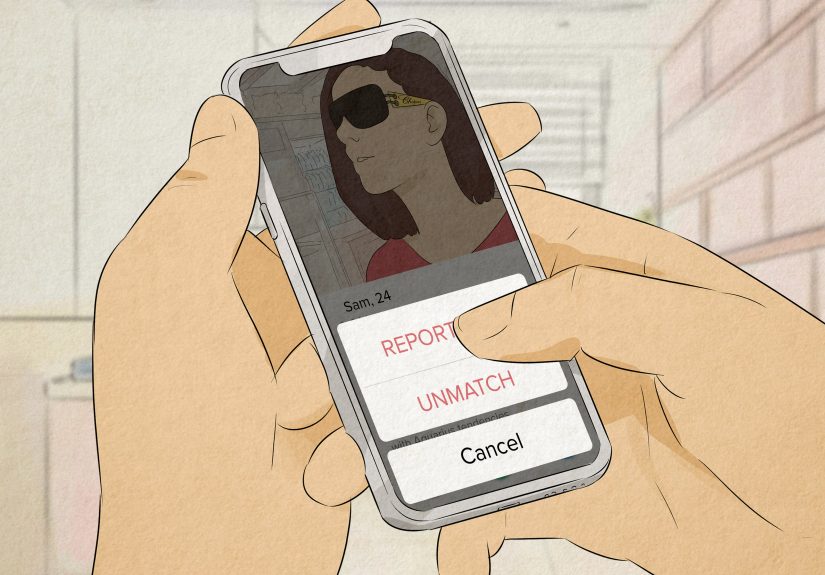
- Report the profile in Tinder (it helps protect other users).
- Block the account to prevent more messages.
- If you clicked a link, change passwords and run basic device security checks.
- If money was involved, contact your bank/payment provider quickly and consider reporting to relevant authorities.
How Tinder Tries to Reduce Bots (and How You Can Use Those Tools)
Tinder has reporting tools and safety resources, and it also uses verification features (like photo verification badges and newer facial verification efforts in the U.S.).
These tools aren’t perfect, but they raise the cost of faking identities at scale.
- Look for verification signals (but don’t treat them as magical immunity).
- Use in-app reporting when someone sends links, pressure tactics, or money requests.
- Trust behavior over badges: even a “good-looking” profile can be suspicious if it acts like a scammer.
FAQ: Quick Answers People Actually Want
Are all fast replies a bot?
No. Some people are just actively chatting. The key is the full pattern: instant replies + vague answers + link pushing + off-app urgency is where it gets suspicious.
What’s the biggest single red flag?
Links or “verification” requests from a brand-new match. That’s a common path to phishing, paid subscription traps, or worse.
Is talking about crypto always a scam?
In dating-app contexts, unsolicited “let me teach you crypto” conversations are a very common scam pattern. If it shows up early, treat it as a serious warning sign.
What if I’m not sure?
You’re allowed to be unsure. Stay in-app, avoid links, ask for a quick video call, and don’t share personal information. If their behavior stays evasive, trust that signal.
Real-World Experiences: What People Commonly Report (500+ Words)
People’s “bot stories” on Tinder tend to sound different on the surfacebut the structure is surprisingly similar. Here are experiences commonly reported by users,
written as realistic composites so you can recognize the pattern without needing to live it the hard way.
Experience #1: The “Perfect Profile” That Can’t Handle Simple Questions
A user matches with someone whose photos look like they belong on a billboard: crisp lighting, stylish outfits, zero clutter in the background. The bio is short and
sweetalmost too sweet. The conversation starts with enthusiastic compliments and lots of emojis. But when the user asks something normal, like “What part of town are you in?”
the answers get slippery. The match responds with vague lines like “I love exploring the city” or “I’m open to anywhere.” When asked for a favorite local spot, the match
offers a generic “coffee is great” response and immediately suggests moving to WhatsApp.
What made it click? The mismatch between polished charm and the inability to answer basic, low-stakes questions. Humans have specificseven if those specifics are “I don’t know,
I’m new here.” Bots often have only vibes.
Experience #2: The Instant Intensity Play
Another common experience: after two or three messages, the match starts laying it on thick“I feel a connection,” “You’re different,” “I want something serious.”
The compliments come fast and feel oddly scripted, like they’re pulled from a “Romance Dialogue Pack.” When the user slows things down“Let’s just chat a bit more first”
the match pressures them to commit to a call, share a phone number, or switch apps. If the user hesitates, the match may guilt-trip them: “Don’t you trust me?”
What users learn from this pattern: urgency is a tool. Real interest can be eager, but it still respects boundaries and time.
Experience #3: The Link That Arrives Before the Last Name
Many users report the conversation feeling normal for a few messagesthen suddenly the match sends a link. Sometimes it’s framed as “my private photos,” sometimes as a
“verification” step, sometimes as “a quick survey” or “my favorite site.” The user might feel awkward refusing because the match is friendly, attractive, and chatty.
But people who click often describe the same outcomes: the link leads to a login page, a subscription sign-up, or a site that asks for payment details “just to confirm”
they’re real.
The lesson people share: anyone genuine can keep talking without sending you to a random website. Chemistry does not require a URL.
Experience #4: The Crypto “Mentor” Disguised as a Match
A common newer twist is the match who seems normaluntil they pivot to money. They might mention a side hustle, investing, or how they “used to struggle” but now have a
system. They offer to “teach you” or “help you get started,” often insisting it’s easy and safe. Sometimes they ask you to open an account on a specific platform or talk
to a “friend” who will guide you. Users report that the tone shifts from personal to persuasive, like a sales pitch wearing a dating profile as a costume.
What people wish they knew earlier: on dating apps, investment talkespecially early, especially involving cryptois frequently a scam signal, not a coincidence.
Experience #5: The Vanishing Act After You Ask for a Video Call
One of the most consistent experiences is how quickly suspicious accounts disappear when asked for a simple in-app video call. Users describe matches who are chatty and
attentiveuntil the moment you ask for a quick live check-in. Suddenly they have a broken camera, a family emergency, or a reason they can’t “right now.” If you stay calm
and repeat the request later, they either keep dodging or vanish entirely.
That pattern is helpful because it’s low-drama: you don’t need to accuse anyone. Just set a reasonable safety boundary. The accounts that can’t meet it often remove
themselves from the situation.
Conclusion: Swipe Smarter, Not Harder
Spotting bots on Tinder isn’t about becoming cynicalit’s about recognizing patterns. Bots and scam profiles tend to be fast, vague, link-happy, and weirdly urgent.
Real people are imperfect: they take time to reply, they say specific things, and they can handle basic questions without redirecting you to a “totally safe verification site”
called DefinitelyNotAScam.biz.
Use the 10 signs as your early-warning system, trust behavior over appearances, and remember: your attention is valuable. Don’t donate it to a chatbot with a sales funnel.