Table of Contents >> Show >> Hide
- Indica vs. Sativa: What the Words Originally Meant
- Why “Indica = Sleepy” and “Sativa = Energizing” Often Falls Apart
- The Better Way: Tell the Difference by Reading the Chemistry
- Quick Field Guide: How to Tell the Difference in Real Life
- Two “Opposite Label” Examples (So You Don’t Get Tricked by Typography)
- A Simple Decision Tree for Choosing (Without Overthinking It)
- Safety and Common-Sense Guardrails
- Real-World Experiences: What People Actually Notice (and What They Don’t)
- Conclusion: The Difference That Actually Matters
Walk into a dispensary (or scroll a menu online) and you’ll see the same tidy split: indica, sativa, and hybrid.
It sounds like ordering coffeeone for chill, one for thrills. The reality is messier, funnier, and way more useful once you know what to look for.
Here’s the truth in one line: indica vs sativa can describe plant traits, but it’s a shaky shortcut for predicting how you’ll feel.
If you want to tell the difference in a way that actually helps you choose products, you’ll need to look past the label and read what’s inside the plant:
cannabinoids, terpenes, and your own “human settings” (tolerance, mood, food, sleep, and expectations).
Indica vs. Sativa: What the Words Originally Meant
Botanically speaking, “indica” and “sativa” started as ways to describe how the plant growsnot a guaranteed promise of “sleepy” versus “energized.”
Think of them like dog breeds: you can guess a few traits from the label, but you still need to meet the dog.
1) Plant shape: short-and-stout vs. tall-and-lanky
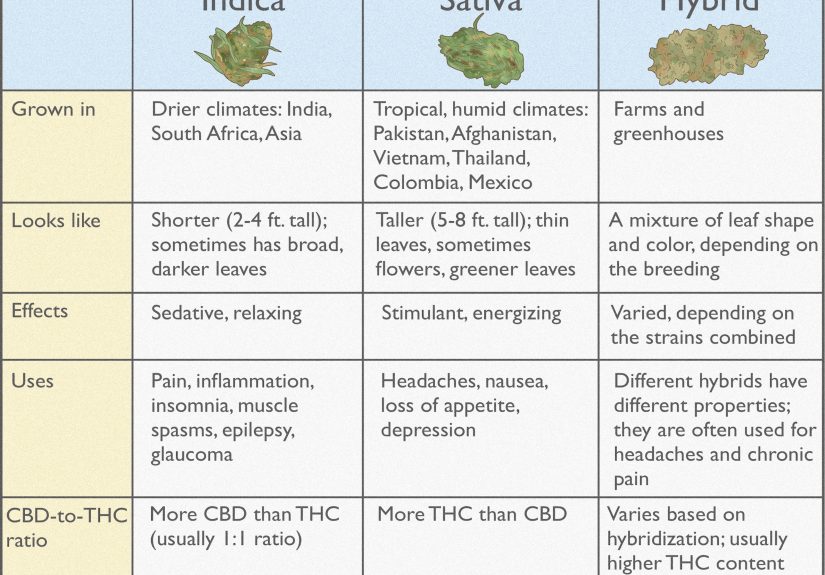
Indica-leaning plants are often described as shorter, bushier, and broader-leafed. Sativa-leaning plants are often taller, airier, and narrower-leafed.
If you’re staring at a living plant (not a jar), these traits can be noticeablelike the difference between a compact SUV and a long, lean sedan.
But modern cultivation has blurred these lines because most commercial strains are hybrids.
2) Growth and climate tendencies (the “where it thrives” clue)
Traditional descriptions suggest indica-leaning plants adapt better to cooler conditions and may flower faster, while sativa-leaning plants do better in warmer, longer seasons.
That’s helpful for growers and plant nerdsbut it still doesn’t tell you what your brain will do after two puffs and a questionable decision to text your ex.
3) Why plant appearance doesn’t reliably predict effects
The part you consume (flower, oil, edible) expresses a chemical profile shaped by genetics, environment, and processing.
Two plants can look “indica-ish” and still have wildly different cannabinoid/terpene combos. So the “leaf shape test” is a fun trivia night factnot a dependable shopping tool.
Why “Indica = Sleepy” and “Sativa = Energizing” Often Falls Apart
The indica/sativa effect stereotype became popular because it’s simple. Humans love simple. Unfortunately, cannabis chemistry didn’t get the memo.
Multiple large-scale analyses and research discussions have raised the same point: the label often doesn’t match consistent genetic or chemical differences.
Translation: you can buy “sativa,” feel sleepy, and then blame the universeor you can learn how to read the product like a pro.
Labels can be inconsistent across markets and batches
Cannabis naming is not like pharmaceutical naming. The same strain name can vary by producer, batch, and state testing rules.
Studies analyzing large numbers of samples have suggested that consumer-facing categories (indica/sativa/hybrid) can be poor predictors of what’s actually in the product.
Expectation is a real ingredient (even if it isn’t listed)
If you expect “sativa” to make you chatty and creative, you’re more likely to notice chatty/creative feelings.
That doesn’t mean it’s “all in your head”it means your head is part of the experience. (It’s also, inconveniently, where the experience happens.)
The Better Way: Tell the Difference by Reading the Chemistry
If you want a reliable way to tell one product from another, focus on what actually drives effects:
cannabinoids (like THC and CBD) and terpenes (aromatic compounds that also interact with the experience).
This is the difference between guessing a movie based on the poster… and reading the plot summary first.
Step 1: Check the cannabinoid profile (THC and CBD first)
THC is the primary intoxicating cannabinoid and is strongly associated with the “high,” including impairment and changes in perception.
CBD is not intoxicating in the same way and may change how some people experience THC.
The ratio matters: a product with high THC and near-zero CBD can feel sharper or more intense than one with a more balanced THC:CBD ratio, even if both are labeled “indica.”
- High-THC, low-CBD: often stronger intoxication; higher chance of anxiety or racing thoughts for sensitive users.
- Balanced THC:CBD: many people report a “smoother” experience than THC alone.
- CBD-dominant: minimal intoxication; effects vary widely person to person.
Quick reality check: “THC %” is not a complete effects forecast. It’s closer to engine size than driving style.
Terpenes, dose, and your personal context still matter.
Step 2: Look at terpenes (the aroma clues that can actually help)
Terpenes are the compounds that give cannabis its smellcitrus, pine, lavender, pepper, mango, “gas,” and yes, occasionally “my neighbor’s skunk got into a cologne store.”
Many labs list dominant terpenes on a COA (certificate of analysis) or on packaging. This is useful because products with different terpene profiles can feel different, even at similar THC levels.
Here are common terpenes and how people often describe their vibe. Treat these as helpful tendencies, not guarantees:
- Myrcene: earthy/musky; often associated with heavier, more relaxing experiences (“couch-lock” gets mentioned a lot).
- Limonene: citrus; commonly described as brighter or mood-lifting.
- Pinene: pine; often reported as clearer, more alert, or “less foggy” for some users.
- Linalool: floral/lavender; often described as calming.
- β-Caryophyllene: pepper/spice; frequently discussed in the context of body comfort.
- Terpinolene: fresh/herbal; often found in profiles people describe as more “up” or energetic, though not always.
Important nuance: the science around terpene-driven effects is still evolving. Some proposed “entourage effect” claims are debated, and not every mechanism is settled.
What’s practical for you is that terpene profiles can still serve as a consistent, repeatable way to compare productsespecially within the same brand or lab system.
Step 3: Use the COA like a menu, not a mystery novel
In regulated markets, you can often request (or scan) a COA showing cannabinoids and sometimes terpenes.
If a product only says “Indica” in giant letters with no numbers behind it, that’s like a cereal box that brags “BREAKFAST!” and refuses to list the ingredients.
A practical rule: pick based on the profile you’ve enjoyed before.
If you know you do well with moderate THC and myrcene + linalool, that’s a better compass than trusting “indica” alone.
Quick Field Guide: How to Tell the Difference in Real Life
If you’re looking at flower
- Bud structure: indica-leaning flowers are often described as denser; sativa-leaning can be a bit airier. (Hybridization makes this unreliable.)
- Aroma: smell can hint at terpene dominance. Citrus often suggests limonene; pine suggests pinene; floral suggests linalool.
- Lab info: always more reliable than vibe-based guessing.
If you’re buying vapes, concentrates, or edibles
- Ignore plant shape: you’re not consuming a leaf silhouette.
- Prioritize lab numbers: THC/CBD ratio and terpene list (if available).
- Ask how it’s made: full-spectrum products may carry more aromatic compounds than highly refined isolates.
Two “Opposite Label” Examples (So You Don’t Get Tricked by Typography)
Example A: “Sativa” that feels like a nap in a hoodie
Imagine a product labeled “Sativa” with high THC and a terpene profile led by myrcene plus some linalool.
Many users would describe that combination as heavier or more relaxing, especially at higher doses or later in the day.
The label says “daytime,” but your eyelids vote “bedtime.”
Example B: “Indica” that makes you reorganize your pantry at 11 p.m.
Now flip it: a product labeled “Indica” but dominated by terpinolene and pinene, with moderate THC and minimal myrcene.
Some people might experience that as clearer or more mentally activesometimes too active if they’re prone to anxiety.
The label says “couch,” but your brain says “spreadsheet.”
The point isn’t that terpenes are magic. The point is that the profile gives you something testable.
If you keep choosing products with similar profiles and getting similar results, congratulationsyou’ve escaped the marketing maze.
A Simple Decision Tree for Choosing (Without Overthinking It)
- Start with your goal: calm body? creative mood? sleep support? social ease?
- Set your THC comfort zone: low, moderate, or highbased on past experience.
- Choose a terpene direction: “earthy/relaxing” (often myrcene/linalool) vs “bright/clear” (often limonene/pinene/terpinolene).
- Test one variable at a time: don’t change product, dose, setting, and caffeine intake all at once and expect a clear conclusion.
Safety and Common-Sense Guardrails
Cannabis affects coordination, attention, and reaction time. Don’t drive or operate machinery while impaired.
Start low and go slowespecially with edibles, which can take longer to kick in and can feel stronger than expected.
If you’re new, choose lower THC products, consider CBD-inclusive options, and avoid mixing with alcohol.
If you have a medical condition, take medications, are pregnant or breastfeeding, or have a personal/family history of serious mental health conditions,
talk with a qualified clinician. “Natural” doesn’t automatically mean “risk-free.”
Real-World Experiences: What People Actually Notice (and What They Don’t)
Ask ten experienced consumers how to tell indica from sativa and you’ll get twelve answers, two conspiracy theories, and at least one person who swears they can “taste the genetics.”
But when you zoom out, real-world experiences tend to cluster around a few practical patternsespecially once people stop treating the label like a fortune cookie.
1) People often report different effectsyet the label isn’t the full explanation.
Many users genuinely describe “indica” as more body-heavy and “sativa” as more heady or energetic. That lived experience is real as a report.
The catch is that your experience can be influenced by what’s in the product (chemistry), what you expect (context), and how you use it (dose, time of day, food, and tolerance).
In other words, you can feel different effects without the label being a reliable scientific predictor.
2) Dose changes everythingsometimes more than strain.
A small dose of a high-THC product might feel uplifting to one person, while a larger dose of the same product feels sedating or anxious.
This is one reason “that sativa knocked me out” stories are so common: higher THC plus late-night use plus a big meal can turn almost anything into a pillow commercial.
People who keep a simple logproduct name, THC/CBD, top terpenes, dose, and settingtend to figure out their preferences faster than people who chase labels.
3) Terpene “families” become a shortcut people trust more than indica/sativa.
Over time, many consumers stop saying “I want an indica” and start saying “I want something citrusy and clear” or “I want something earthy and heavy.”
That’s terpene language in disguise. Even when someone can’t name limonene or myrcene, they’ll recognize the smell profile that usually works for them.
It’s like discovering you don’t need to memorize every wine regionyou just need to know you like “dry and crisp” versus “big and oaky.”
4) The same person can have different outcomes from the same product.
Sleep debt, stress, hydration, hormones, and even “did I eat?” can shift the experience.
People often report that a product that was relaxing on a quiet weekend feels jittery during a stressful workweek.
That doesn’t mean the product changed; it means the user did. Your nervous system is not a static deviceit’s a mood ring with opinions.
5) The biggest “aha” moment: the label is a starting point, not the destination.
The most consistent real-world strategy is boring (which is how you know it works): pick a product with a known profile, use a consistent dose, observe, and adjust.
After a few repeats, many people can predict their experience better than any indica/sativa tag ever could.
And once you can do that, the shopping process gets a lot less mystical and a lot more like… well, competent adulthood. (Sorry.)
Conclusion: The Difference That Actually Matters
If you’re trying to tell the difference between indica and sativa, here’s the clean takeaway:
the terms can describe plant growth traits, but effects are better predicted by cannabinoids, terpenes, and dose.
Treat “indica/sativa/hybrid” as a rough hint, then verify with lab data and your own notes.
When you shop by profile instead of mythology, you’ll get more consistent resultsand fewer surprise naps.