Table of Contents >> Show >> Hide
- Step 1: Decode the assignment (before you fall in love with a topic)
- Step 2: Choose a topic you can actually research
- Step 3: Write a research question that guides your paper
- Step 4: Find sources strategically (not randomly at 1:00 a.m.)
- Step 5: Evaluate sources like a skeptical grown-up (even if you still eat cereal for dinner)
- Step 6: Take notes that prevent plagiarism and save your future self
- Step 7: Develop a working thesis (a claim with a backbone)
- Step 8: Outline your essay so your argument doesn’t wander off
- Step 9: Draft like a human, revise like a professional
- Step 10: Quote and paraphrase correctly (aka “don’t anger the citation gods”)
- Step 11: Revise for clarity, structure, and strength
- Step 12: Final research essay checklist
- Conclusion: Your research essay is a guided argument, not a data dump
- Real-World Writing Experiences (About )
Writing a research essay is basically two jobs at once: (1) detective work (finding reliable information) and (2) storytelling with receipts (organizing that information into a clear argument and citing it). If you’ve ever opened 27 tabs and felt your soul briefly leave your bodycongrats, you’re already doing research. Now we’ll turn the chaos into a paper that sounds confident, reads smoothly, and doesn’t accidentally commit “citation oopsies.”
Step 1: Decode the assignment (before you fall in love with a topic)
Before you pick a topic, figure out what your instructor actually wants. A research essay can be argumentative (you make a claim and defend it), analytical (you break down a problem and interpret evidence), or informative (you explain a topic with organized support). The required structure, source types, and citation style (MLA, APA, Chicago) matter.
Quick assignment checklist:
- Purpose: argue, analyze, or explain?
- Length and format: pages/word count, font, spacing, headings
- Source requirements: number, type (scholarly articles? books? primary sources?)
- Citation style: MLA/APA/Chicago and whether you need annotated bibliography, etc.
- Audience: general reader, classmates, or a discipline-specific crowd?
If you’re unsure, rewrite the prompt in your own words. If you can’t do that yet, you’re not ready to researchyou’re ready to reread.
Step 2: Choose a topic you can actually research
Good research essay topics hit the sweet spot: specific enough to be manageable, broad enough to find credible sources. “Social media is bad” is a foggy swamp. “How TikTok’s algorithm affects teen news exposure and political polarization in the U.S.” is a trail with signposts.
How to narrow a topic (without crying)
- Start broad: “Renewable energy”
- Add a lens: costs, public health, policy, ethics, education
- Add a place/time: U.S. policy since 2020
- Add a population: low-income households, rural communities
- Turn it into a question: “What policies most effectively increase residential solar adoption in low-income U.S. communities?”
Step 3: Write a research question that guides your paper
A strong research question is your compass. Without one, your essay becomes a “fun facts parade,” and fun factswhile delightfuldo not automatically equal a coherent argument.
Strong research questions are: focused, researchable, and open to evidence (not just opinion). They also hint at what kind of sources you’ll need (statistics, scholarly studies, policy documents, interviews, historical records).
Examples:
- Weak: “Is vaping bad?”
- Better: “How do flavored e-cigarette restrictions affect youth vaping rates in U.S. states?”
- Weak: “Should schools have uniforms?”
- Better: “What does research show about school uniforms and disciplinary outcomes in U.S. middle schools?”
Step 4: Find sources strategically (not randomly at 1:00 a.m.)
Use research tools that match your question. Library databases, Google Scholar, academic journals, and books are usually stronger for research essays than open-web browsing alone. If you do use web sources, prioritize reputable institutions, major news organizations with transparent editorial standards, and government or university sites.
Know your source types
- Primary sources: original materials (studies, interviews, speeches, court cases, historical documents, datasets).
- Secondary sources: analysis or interpretation (scholarly review articles, books analyzing events, research summaries).
- Tertiary sources: overviews (textbooks, encyclopedias). Helpful for background, not always for your main evidence.
Use the “two-layer” research approach
Layer 1: Background understanding. Read a few high-quality overviews to learn key terms, debates, and major scholars.
Layer 2: Evidence hunting. Move into peer-reviewed studies, books, and primary sources that directly support (or challenge) your claim.
Step 5: Evaluate sources like a skeptical grown-up (even if you still eat cereal for dinner)
Not everything that looks professional is reliable. Use a structured method to evaluate credibilityespecially for web sources. One common framework is the CRAAP test (Currency, Relevance, Authority, Accuracy, Purpose). The goal isn’t to be cynical; it’s to be careful.
A quick credibility checklist
- Authority: Who wrote it? What are their credentials? Who published it?
- Evidence: Does it cite data, research, or primary documents?
- Bias and purpose: Is it selling something, lobbying, or persuading without evidence?
- Currency: Is it updated and appropriate for your topic?
- Corroboration: Do other reputable sources confirm the same facts?
Pro tip: If your source uses phrases like “experts are furious” but can’t name a single expert, proceed with caution. Your essay is not a gossip column.
Step 6: Take notes that prevent plagiarism and save your future self
When you research, you’re collecting ideassome yours, some borrowed. Your notes should clearly separate:
- Direct quotes (copy exactly, put in quotation marks immediately)
- Paraphrases (your own wording, still needs a citation)
- Your thoughts (questions, reactions, connections, possible thesis ideas)
Also record source details as you go (author, title, date, publisher, page numbers, URL/DOI if relevant). This is the academic version of “measure twice, cut once.”
Step 7: Develop a working thesis (a claim with a backbone)
A thesis is not a topic. It’s what you’re arguing or proving about the topic. A strong thesis is specific, debatable, and supported by evidence you can actually find.
Examples:
- Topic: “School start times”
- Weak thesis: “School start times should be later.”
- Stronger thesis: “Delaying U.S. public high school start times improves attendance and academic performance by aligning schedules with adolescent sleep patterns, but schools must address transportation and after-school impacts to sustain results.”
Notice the stronger thesis suggests a structure: benefits + why + counterpoint + solution. That’s the blueprint for your body paragraphs.
Step 8: Outline your essay so your argument doesn’t wander off
An outline turns a mountain of sources into a path. It also keeps you from writing three pages of background and realizing you forgot to make a point. (A classic.)
A practical research essay outline
- Introduction: hook + context + research question + thesis
- Body section 1: key point #1 + evidence + explanation
- Body section 2: key point #2 + evidence + explanation
- Body section 3: key point #3 + evidence + explanation
- Counterargument: what thoughtful critics say + your response
- Conclusion: what your findings mean + why it matters
Try the “claim-evidence-explanation” formula
Each body paragraph should do three things:
- Claim: the paragraph’s main idea (a mini-thesis)
- Evidence: data, quotes, examples from credible sources
- Explanation: why that evidence supports your thesis
If you have evidence but no explanation, you’re stacking bricks without building a house.
Step 9: Draft like a human, revise like a professional
Your first draft’s job is to exist. Make it messy if you need to. The real magic happens in revision, where you turn “I think this makes sense?” into “This argument is clear and supported.”
Write an introduction that earns attention
Skip the “Since the dawn of time…” approach. Start with a specific situation, surprising statistic (from a credible source), or a real-world problem that your essay addresses. Then give readers enough context to understand your thesis without drowning them in background.
Simple intro structure: Hook → Context → Gap/Problem → Thesis
Synthesize sources (don’t just stack them)
A research essay should sound like you running the conversation, not a parade of quotes. Synthesis means combining sources to show relationships: agreement, disagreement, patterns, and implications.
Example of synthesis:
Instead of: “Source A says X. Source B says Y.”
Try: “While several studies link X to improved outcomes, newer research suggests the effect depends on Yespecially in contexts where Z is present.”
Step 10: Quote and paraphrase correctly (aka “don’t anger the citation gods”)
Use quotes when the exact wording mattersdefinitions, powerful phrasing, or specific claims.
Paraphrase when you want to translate information into your own voice and focus on meaning rather than wording.
Either way, you cite the source. Citation is not optional. It’s how academic writing shows honesty and credibility, and it helps readers trace your evidence.
Common citation mistakes to avoid
- Paraphrasing too close to the original wording
- Citing only direct quotes but not paraphrases
- Forgetting page numbers when required (common in MLA and Chicago)
- Using one source repeatedly because it’s “easy,” not because it’s best
Step 11: Revise for clarity, structure, and strength
Revision isn’t just proofreading. It’s re-seeing your argument. Ask big questions first:
- Does every paragraph clearly support the thesis?
- Is the evidence strong and relevantor just interesting?
- Do I address counterarguments fairly?
- Is my reasoning explained, not implied?
- Are transitions guiding the reader smoothly?
Use a “reverse outline”
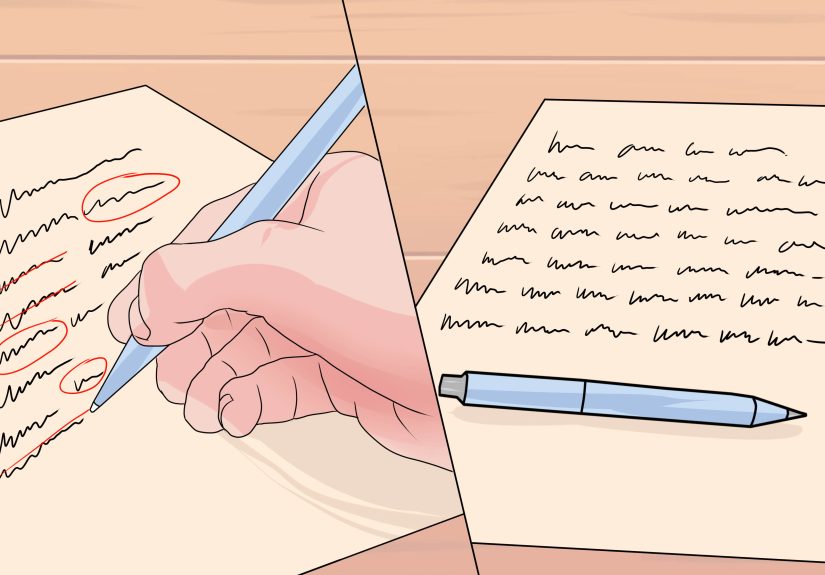
After drafting, write the main point of each paragraph in the margin (one sentence each). If you see repetition, tangents, or a missing step in your logic, you’ll catch it fast. Reverse outlining is like turning on the lights in a messy room.
Polish last: style and grammar
Once the structure is solid, edit for readability:
- Prefer clear sentences over fancy ones
- Define terms the first time you use them
- Use active voice when appropriate (“The study found…”)
- Cut filler (“It is important to note that…” usually isn’t)
Finally, proofread for grammar, punctuation, formatting, and citation consistency.
Step 12: Final research essay checklist
- I answered the prompt and stayed focused on my research question.
- My thesis is specific, debatable, and supported by evidence.
- Each paragraph has a clear claim and relevant support.
- I synthesized sources instead of summarizing one at a time.
- I cited all borrowed ideas, quotes, and paraphrases correctly.
- My conclusion explains significance (so what?) and doesn’t just repeat the intro.
Conclusion: Your research essay is a guided argument, not a data dump
Learning how to write a research essay gets easier when you treat it like a process instead of a single terrifying event. Start with a clear question, gather credible sources, evaluate them carefully, and build a thesis that can actually be supported. Then outline, draft, and revise until the paper reads like a confident guide leading the reader through evidence and reasoning. The final goal isn’t to sound “smart.” It’s to be clear, accurate, and persuasivewithout pretending your sources telepathically wrote the paper for you.
Real-World Writing Experiences (About )
Most writers don’t struggle because they “can’t write.” They struggle because research essays ask you to manage several moving parts at once: reading, evaluating, organizing, arguing, and citingwhile your brain occasionally tries to convince you that reorganizing your desk is suddenly urgent and meaningful. One common experience is the “tab explosion” phase: you find a bunch of sources, feel productive, and then realize you don’t remember which source said what. That’s why early note-taking habits matter more than people expect. Writers who label quotes, paraphrases, and personal thoughts from the start tend to feel calmer later, because their draft isn’t built on memory and panic.
Another experience is the “thesis glow-up.” Many students starto start with a thesis that’s basically a topic in a trench coat (“This essay will discuss…”) and gradually upgrade it as they read more. That’s normal. Research changes your mind. It’s supposed to. A helpful trick writers often discover is to write a working thesis earlysomething imperfect but specificthen revise it after you’ve found stronger evidence. The essay becomes easier once you know what you’re trying to prove, because you can stop collecting random facts and start collecting useful facts.
Writers also commonly run into the “quote trap”: the draft becomes a string of quotations with tiny bits of commentary glued between them. The experience teaches a key lesson: your job is not to act like a human photocopier. Your job is to interpret. When writers shift to synthesisgrouping sources by themes, disagreements, or patternsthe paper starts to sound like a real argument. A practical moment of growth happens when you write a paragraph and realize the most important sentence isn’t the quoteit’s your explanation of why the quote matters.
Then there’s the “counterargument anxiety.” Many writers worry that acknowledging opposing views will weaken their argument, but the opposite is usually true. In practice, addressing counterarguments thoughtfully makes the essay feel fair and credible. It shows you’ve considered the complexity of the topic instead of cherry-picking evidence. A common experience is discovering that the counterargument section can actually strengthen your thesis, because you clarify boundaries: “This is true in these conditions, but not in those.” That nuance is what separates strong research essays from shallow opinion pieces.
Finally, many writers discover that revision is where the paper becomes readable. The first draft often feels like a pile of partsgood parts, but still parts. A reverse outline can be a game-changer: when you summarize each paragraph in one sentence, you see gaps and repetition instantly. Writers often say the biggest relief comes from realizing they don’t need to “start over.” They just need to rearrange, tighten, and clarify. The process feels less like failure and more like craftsmanship. Over time, you learn that a research essay isn’t a test of geniusit’s a test of method. And methods can be learned, improved, and reused for every future paper.