Table of Contents >> Show >> Hide
- Fantasy Painting Is Really Worldbuilding in Disguise
- The Real Power of Watercolor: It Knows How to Whisper
- Why These 62 Paintings Feel Personal Instead of Generic
- What a 62-Picture Gallery Can Accomplish That a Single Image Cannot
- Why Fantasy Art Still Matters in a Very Tired World
- Experiences Inside an Imagined World
- Final Thoughts
Some artists paint what they see. Others paint what they remember. And then there are the brave little chaos wizards who look at reality, politely thank it for its service, and build a better version with watercolor, atmosphere, and the emotional range of a moonlit opera. That is the energy behind I Create My Own World In My Fantasy Paintings (62 Pics), a title that sounds like a confession, a creative manifesto, and the exact sentence you would say before opening a sketchbook and accidentally summoning a silver-haired queen, a flock of celestial birds, and at least one mysterious forest that definitely has opinions.
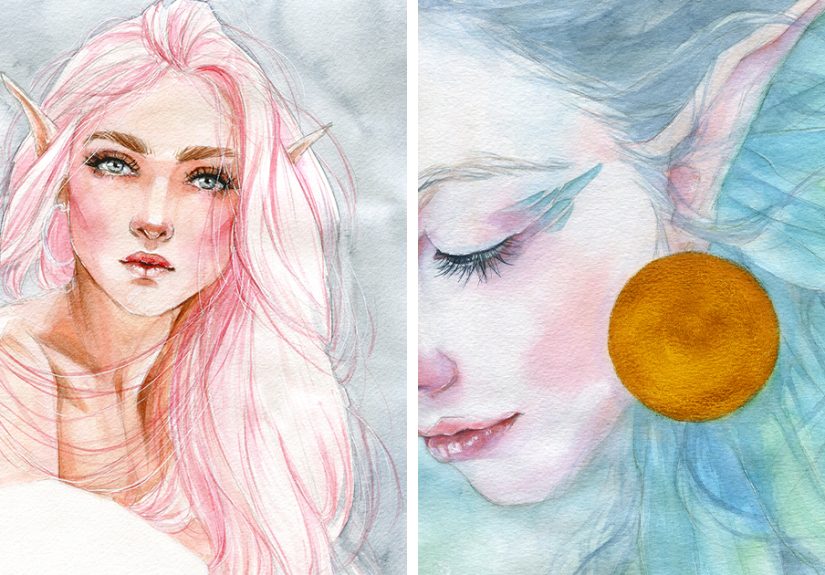
At the heart of this collection is a simple but powerful idea: fantasy painting is not only about making something pretty. It is about making meaning. The original artist statement behind this series describes fantasy art as a way to transform photos into dreamlike images, escape reality, and create a personal world. That world began with dancers and artists, with an interest in movement, then deepened into something more emotional, more human, and more intimate. Watercolor became the medium of choice, and experimentation with mixed techniques and gold accents helped turn feeling into visual atmosphere.
That matters because the best fantasy paintings are never just “girl in glowing dress near enchanted fog.” Anyone can toss sparkles at a canvas. Real fantasy art creates an internal logic. It gives the viewer a setting, a mood, a point of tension, and just enough mystery to keep the imagination doing cardio. This is why a strong fantasy painting feels less like decoration and more like a portal. It invites you in, then dares you to stay.
Fantasy Painting Is Really Worldbuilding in Disguise
One of the smartest things about this kind of art is that it borrows from storytelling without needing to explain itself with a thousand words. A successful fantasy painting can suggest a whole mythology through posture, costume, color, and setting. A crown can hint at duty. A cracked staircase can whisper about a fallen kingdom. A single sideways glance can imply betrayal, longing, or the uncomfortable realization that your dragon babysitter is late again.
That is why fantasy painting works so well when it behaves like narrative art. Even in one still image, the viewer instinctively looks for story elements: Where are we? Who is this? What happened right before this moment? What is about to happen next? Those questions create momentum. And once momentum exists, the painting stops being an image and starts behaving like a scene.
In a collection of 62 images, that effect gets even stronger. One painting can suggest a dream. Sixty-two can suggest a civilization. Repeated motifs, recurring moods, and familiar figure types create continuity. Suddenly, the viewer is no longer browsing artwork; they are touring a private universe with its own weather, rituals, and emotional climate. That is the secret sauce. Fantasy painting becomes memorable when it treats imagination like architecture.
Why the Human Figure Still Leads the Magic Show
Even in the most ethereal fantasy worlds, the human figure usually remains the anchor. That is not a weakness. It is exactly the point. The original inspiration for this series came from real people, real emotions, dancers, and the expressive movement of the human body. That choice gives fantasy painting its emotional voltage. No matter how surreal the setting becomes, the body keeps the image readable.
A tilted chin can communicate resistance. Open hands can suggest surrender, invitation, or awe. A twisting torso can imply transformation. Fantasy art often stretches reality, but it relies on believable emotion to keep the viewer invested. If the face, pose, and gesture feel true, the moon can be purple and the river can flow upward and we will still accept the ride. Humans are wonderfully gullible when the feelings make sense.
This is also why so many fantasy paintings center on women, dancers, and symbolic portraits. These subjects offer elegance, movement, and emotional clarity. They turn visual storytelling into a living language. The painting does not have to shout. A soft shoulder line, a lowered gaze, or a hand resting against light can do the heavy lifting.
The Real Power of Watercolor: It Knows How to Whisper
Fantasy art is often associated with huge digital landscapes, dramatic contrast, and enough cinematic lighting to make a thunderstorm jealous. But watercolor brings a different kind of magic. It is softer, less bossy, and more suggestive. Instead of pinning everything down with hard certainty, watercolor allows forms to bloom, fade, and dissolve. That quality makes it ideal for paintings about dreams, memory, longing, and emotional metamorphosis.
In other words, watercolor understands fantasy because fantasy is not always loud. Sometimes fantasy is the feeling that the world is thinner than usual and something luminous is waiting just past the obvious. Watercolor creates exactly that sensation. Edges melt. Color pools. Light seems to arrive from inside the paper rather than sit on top of it.
That softness does not mean the work lacks structure. Quite the opposite. Delicate painting demands control. The artist has to know when to let pigment drift and when to interrupt it with sharper detail. That push and pull between accident and intention gives the work its pulse. Add gold gilding or metallic accents, and suddenly the piece has both fragility and ceremony. It feels intimate but elevated, like a secret wearing jewelry.
Color Is Doing More Than Looking Pretty
Color in fantasy painting is not cosmetic. It is narrative. Cool blues and pale violets can suggest solitude, distance, dream states, or sacred calm. Warm blush tones may soften a portrait, making it feel romantic, nostalgic, or quietly human. Gold can imply divinity, memory, royalty, or transformation. Deep greens and smoky grays can turn a background into a psychological landscape rather than a literal place.
That is one reason pastel-heavy fantasy paintings often feel surprisingly emotional. They avoid the blunt-force drama of high-contrast spectacle and instead build mood through atmosphere. A viewer may not consciously say, “Ah yes, this lilac wash communicates melancholy with a note of hope,” but the nervous system gets the memo. Color arrives before interpretation. It works like emotional weather.
When artists understand that, they can guide the viewer with remarkable precision. A face lit in soft gold feels chosen. A figure surrounded by blue mist feels isolated. A rose-tinted sky makes the world feel forgiving, even when the subject looks heartbroken. Fantasy painting succeeds when color stops acting like decoration and starts acting like subtext.
Why These 62 Paintings Feel Personal Instead of Generic
The internet is full of fantasy images. Some are breathtaking. Some look like they were generated by a wizard who only learned three adjectives: mystical, epic, and cinematic. What separates memorable fantasy paintings from disposable ones is personality. This series feels personal because its imagery grows out of recognizable emotion rather than trend-chasing spectacle.
The artist’s own explanation gives that away immediately. These paintings are rooted in escape, yes, but not in empty escapism. They are rooted in the need to process reality, transform it, and make room for feeling. That difference matters. Empty fantasy asks the viewer to admire. Personal fantasy asks the viewer to connect.
That connection becomes stronger when the work draws from real bodies, real faces, and lived emotion. The dream world is not separate from life; it is built from life, rearranged. The sadness is real. The tenderness is real. The longing is real. Fantasy simply gives those feelings better costumes and dramatically improved lighting.
This is why viewers often describe this kind of art with words like serene, enchanting, dreamy, and transportive. The paintings do not overwhelm the viewer with lore. They create space. You feel as though you are looking at a moment that already existed before you arrived and will continue after you leave. That illusion of continuity is one of the hardest things to pull off in art, and one of the most rewarding.
What a 62-Picture Gallery Can Accomplish That a Single Image Cannot
A single fantasy painting can start a conversation. A gallery-sized collection can build a relationship. With 62 pictures, repetition becomes a creative asset rather than a flaw. Certain visual ideas can return in altered forms: the same mood in a different palette, the same feminine silhouette in a new symbolic role, the same spiritual tension rendered through another setting.
That accumulation creates a rhythm. Viewers begin to notice patterns. They understand what kinds of emotional weather this world contains. They learn its symbols without being handed a map. The collection starts to behave like a visual novel or a poem cycle. Not every image needs to explain itself fully because the surrounding work adds context.
This is especially effective in fantasy art, where mystery is half the charm. A repeated motif can make the imaginary world feel inhabited. A recurring glow can feel like magic. A sequence of portraits can suggest different archetypes within one mythic system: the guardian, the exile, the dreamer, the witness, the would-be queen who absolutely did not ask to manage all this destiny today.
In practical terms, a large collection also shows artistic development. The viewer can see experimentation with watercolor handling, mixed media, symbolic layering, and composition. That sense of growth keeps the gallery alive. It becomes more than a portfolio; it becomes a record of a mind learning how to make its inner world visible.
Why Fantasy Art Still Matters in a Very Tired World
Fantasy art survives every trend cycle for one very obvious reason: people need imaginative space. Not because reality is worthless, but because reality is noisy, repetitive, and frequently dressed like a spreadsheet. Fantasy offers room for symbolic thinking. It lets beauty and feeling carry equal weight. It gives form to moods that are hard to explain in literal language.
That is why narrative museums, art programs, and illustration schools continue to emphasize storytelling, character, mood, and worldbuilding. Humans do not outgrow the need for images that help them think and feel at the same time. We still want paintings that ask, “What if the world were stranger, softer, sadder, kinder, more enchanted, more honest?”
Fantasy painting answers that question without pretending to solve everything. It does something quieter. It reminds the viewer that imagination is not childish. It is interpretive. It is a way of reorganizing experience. It is how artists turn private feeling into shared visual language.
Experiences Inside an Imagined World
What I find most compelling about a project like I Create My Own World In My Fantasy Paintings (62 Pics) is the emotional experience of entering a world that clearly belongs to one artist, yet still feels available to everyone. That balance is rare. Usually, deeply personal work can feel closed off, while highly polished fantasy art can feel technically impressive but emotionally distant. Here, the experience lands in the sweet spot between intimacy and invitation.
Looking through a fantasy painting series like this feels a little like walking through a dream you almost remember from childhood. Not the chaotic kind where you show up to math class wearing medieval armor. I mean the beautiful kind: the one with impossible light, familiar sadness, and a strange certainty that every object means something. A ribbon is never just a ribbon. A bird is never just a bird. A gold halo around a figure is not just decorative sparkle; it becomes a sign of memory, grief, tenderness, or inner power.
As a viewer, the experience changes from image to image. In one painting, you may feel calm because the colors are soft and the figure appears suspended in silence. In another, you may feel a low hum of tension because the eyes are turned away or the composition seems slightly off-center, as if the world is beautiful but unstable. That emotional shift is part of the pleasure. Fantasy painting is often treated as visual escape, but the best examples do more than soothe. They let you rehearse feeling. They let you move through longing, awe, vulnerability, and wonder in a space that feels safe enough to explore.
I also think the experience of viewing 62 paintings together creates a special kind of trust between artist and audience. By the time you have spent time with dozens of works, you begin to understand the artist’s visual language. You notice which faces feel tender, which gestures feel guarded, which backgrounds feel sacred, and which colors usually signal transformation. You become fluent in the world without needing a glossary. That is incredibly satisfying because it mirrors how we learn the emotional logic of novels, films, and even friendships: through repetition, variation, and attention.
There is another layer to the experience too, and it is one that often goes unspoken. Fantasy paintings can make viewers feel seen without being literal. A person may not live in a palace of mist or wear gilded constellations on their sleeves, but they absolutely know what it feels like to carry unspoken emotion, to long for reinvention, or to want reality translated into something gentler and more meaningful. In that sense, fantasy is not an escape hatch from truth. It is a delivery system for truth.
For artists, I imagine the experience is equally powerful but even more vulnerable. To create an imagined world and then show it publicly is to reveal a private operating system. It says, “This is how I process beauty. This is how I organize sorrow. This is how I make room for hope.” That is a brave thing to share. And when viewers respond to it, they are not only praising technique; they are acknowledging the emotional architecture of the world itself.
Maybe that is why fantasy painting continues to resonate so strongly. It offers more than visual pleasure. It offers recognition. It tells us that imagination is not frivolous, mood is not weakness, and beauty can still carry substance. In a good fantasy painting, the world may be invented, but the feeling is absolutely real.
Final Thoughts
I Create My Own World In My Fantasy Paintings (62 Pics) works because it understands a truth many artists spend years learning: fantasy becomes convincing when it is built from honest emotion. The dream world matters because the human core matters. Watercolor softness, gold details, elegant figures, and ethereal palettes all help, of course. We are not above being seduced by beautiful things. But the deeper reason the work lingers is that it treats fantasy painting as a form of visual storytelling and emotional translation.
In the end, these paintings do not ask us to believe in magic literally. They ask us to believe that imagination can reveal something real. And honestly, that is the kind of fantasy worth hanging on the wall.