Table of Contents >> Show >> Hide
- Why I Even Bothered (A.K.A. The Great Static Rebellion)
- Quick Primer: What Each One Actually Does
- My Very-Not-a-Lab Test Setup
- Results: What Happened in Real Laundry
- 1) Static cling: who stopped the snap-crackle-pop?
- 2) Softness: “soft” vs. “fluffy” are not the same thing
- 3) Wrinkles: the “I forgot to fold for two hours” test
- 4) Drying time: did either one actually save minutes?
- 5) Scent: the “why does my hoodie smell like lavender forever?” phenomenon
- 6) Towels, athletic wear, microfiber, and “special fabrics”
- 7) Sensitive skin and fragrance sensitivity
- 8) Lint, pet hair, and general dryer weirdness
- Cost Breakdown: Which One Wins Over a Year?
- Safety + Fabric-Care Notes You’ll Thank Yourself For Later
- How to Use Dryer Balls Like You Actually Mean It
- So… Dryer Balls or Dryer Sheets? My Verdict
- Bonus: 500 More Words of Real-Life Dryer Drama (Because Laundry Is a Lifestyle)
- SEO JSON
There are two kinds of laundry people: the “I throw in whatever’s closest to my hand” crowd and the “I read the back of the box like it’s a thriller novel” crowd. I’ve been bothsometimes in the same week. But after one too many static shocks that made me look like I’d lost a fight with a balloon, I finally ran a real-world test: dryer balls vs. dryer sheets.
Spoiler: one of them is basically a reusable little workout team that bounces around doing cardio in your dryer. The other is a single-use spa towel that melts a coating onto your clothes and then asks to be thrown away. Both have their place. One just has fewer opinions from my skin.
Why I Even Bothered (A.K.A. The Great Static Rebellion)
I didn’t start this experiment because I’m a laundry scientist (I’m not). I started because I wanted a load of towels that felt like towelsnot crispy parchmentand shirts that didn’t cling to me like a needy ex. I also wanted to stop buying something over and over if there was a reusable option that worked.
So I tested both across the stuff that usually exposes laundry lies: cotton tees, a hoodie that loves static, gym clothes, towels, and bed sheetsaka “the fabric types most likely to humble you.”
Quick Primer: What Each One Actually Does
Dryer sheets: the “coating” strategy
Dryer sheets are thin sheets coated with softening agents plus (usually) fragrance. Heat and tumbling activate that coating, transferring it onto fabrics as the dryer runs. The result is that familiar “soft,” less-sticky feel and reduced static for many loads. They can also help with wrinkles by helping fabrics tumble without clinging together.
The trade-off: that same coating can build up on certain fabrics and surfaces over timeespecially things designed to absorb water or manage moisture. That’s why you’ll see repeated warnings about using dryer sheets on items like microfiber, moisture-wicking athletic wear, and some specialty fabrics.
Dryer balls: the “tiny bouncers in a nightclub” strategy
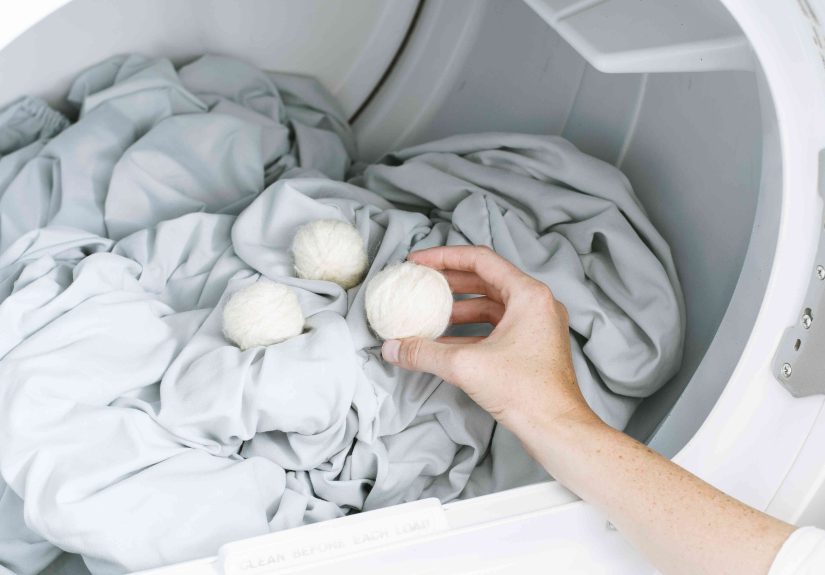
Dryer balls (especially wool ones) are reusable balls you toss into the dryer. They physically separate laundry as the drum turns, improving airflow and helping items dry more evenly. Many people notice less wrinkling, less clumping (especially with sheets), and sometimes shorter drying time.
Wool dryer balls are typically fragrance-free (unless you add scent yourself), and they don’t rely on a coating. The trade-off: they’re not magical, and they can be a little noisylike a polite thunderstorm in your laundry room.
My Very-Not-a-Lab Test Setup
I ran this comparison the way most of us actually live: with mixed loads, limited patience, and at least one moment of “wait… did I even start the dryer?” Here’s how I kept it fair:
- Same dryer settings whenever possible (medium heat for everyday loads; low heat for athletic wear).
- Same detergent and no liquid fabric softener (I wanted to isolate balls vs. sheets).
- Three categories of loads: everyday clothes, towels, and bedding.
- Dryer balls: 3 for medium loads, 5–6 for towels and bedding.
- Dryer sheets: 1 per medium load, 2 for big loads (following typical package guidance).
Then I judged them on the stuff that matters: static cling, softness, wrinkles, drying time, scent, and whether my towels still knew how to towel.
Results: What Happened in Real Laundry
1) Static cling: who stopped the snap-crackle-pop?
Dryer sheets were the more consistent anti-static option in my testingespecially on synthetics and blends. The loads came out with fewer clingy socks and fewer “why is this shirt attached to my arm” moments.
Dryer balls did reduce static in many loads, but not always. When the air was dry (hello, winter) or I over-dried a load, static came back like it pays rent. If you’re fighting chronic static, dryer balls helpbut the bigger fix is often not overdrying and using the right cycle.
Practical tip: if static is your villain, try stopping the cycle while clothes are still barely-damp, or use a lower heat setting with a longer tumble. Overdrying is basically static’s favorite hobby.
2) Softness: “soft” vs. “fluffy” are not the same thing
Dryer sheets deliver that classic “softener” feelslippery-soft, smooth, and noticeably conditioned. If you love that sensation (or your jeans feel like cardboard without it), sheets win this round.
Dryer balls gave me a different kind of comfort: more fluff and “loft,” especially on cotton tees and towels. Clothes felt less coated and more… breathable. It’s the difference between “hotel towel that’s been softened into submission” and “towel that’s fluffy because it isn’t clumped into a sad wad.”
3) Wrinkles: the “I forgot to fold for two hours” test
Dryer sheets did a better job on wrinkle control for cotton-heavy loadsespecially when I pulled items out right away. This tracks with the common guidance: sheets can help smooth and relax fibers during tumbling, reducing wrinkles.
Dryer balls helped, mainly because they prevented tangling and clumping (especially with sheets and hoodies). But if wrinkle control is your top priority, sheets are generally more reliable. The real MVP is still: don’t leave clean laundry sitting in the dryer. (I say that like I don’t do it.)
4) Drying time: did either one actually save minutes?
This is where dryer balls made their best case. With towels and bedding, I noticed fewer damp pockets and less clumping. Loads felt more evenly dried, and I often shaved a few minutes off because things weren’t drying in a giant fabric burrito.
Dryer sheets didn’t noticeably reduce drying time for me. Their superpower is more about feel (softness, static, scent) than airflow.
Important nuance: your mileage will vary based on dryer type, load size, and how tightly your sheets try to fuse into one mega-sheet. Dryer balls can help airflow, but they’re not a substitute for not overloading the dryer.
5) Scent: the “why does my hoodie smell like lavender forever?” phenomenon
Dryer sheets win on fragrance, obviously. If you want that “fresh laundry” scent, sheets are the easiest path. But the scent can lingerand sometimes migrate to items you didn’t intend to perfume (goodbye, neutral gym shirt; hello, floral punch).
Dryer balls are naturally unscented, which I personally loved for bedding and sensitive-skin days. If you like a little fragrance, some people add essential oilsbut proceed carefully. Oils can build up and are flammable, and some experts caution against using essential oils directly on dryer balls over time. A safer compromise is scenting a small cloth lightly and tossing it in, or choosing fragrance-free and letting “clean” be the vibe.
6) Towels, athletic wear, microfiber, and “special fabrics”
This category matters because laundry products that feel great on a T-shirt can quietly sabotage performance fabrics.
Dryer sheets can leave residues that reduce absorbency and interfere with moisture-wicking. That’s why many guides say to avoid dryer sheets on microfiber, fleece, performance fabrics, and flame-resistant items. Translation: towels may towel less, and gym shirts may hold onto sweat like it’s a collectible.
Dryer balls were friendlier here because they don’t coat fabric. My towels stayed more absorbent, and my athletic wear didn’t get that “waxy-soft” feel that sometimes shows up when residues build.
7) Sensitive skin and fragrance sensitivity
If you have sensitive skin, eczema-prone skin, or you just hate strong scents, dryer balls have an obvious advantage: fewer added ingredients touching your clothes. Fragrance and dyes can be common irritation triggers in laundry products, and medical sources often recommend fragrance-free options for people who react to detergents or scented products.
In my test, dryer sheets were fine for most everyday clothes, but on bedding and towels (things that spend longer touching skin), I preferred dryer balls. Less scent, less residue, fewer “why am I itchy?” mysteries.
8) Lint, pet hair, and general dryer weirdness
Dryer sheets can sometimes help reduce static-related clinging, which can make lint and hair less “stuck” to fabrics. But it’s not a magic de-furring. A clean lint trap, not overloading, and drying pet-hair-heavy items with airflow are still your main tools.
Dryer balls helped prevent bedding from balling up, which indirectly reduced the “everything dried except the middle of the sheet burrito” problem. If you’ve ever re-run a cycle because your fitted sheet trapped a damp hoodie inside it, you already understand why this matters.
Cost Breakdown: Which One Wins Over a Year?
Let’s talk money, because laundry is already expensive enough without paying a monthly subscription fee to The Kingdom of Static.
Dryer sheets (ongoing cost)
Dryer sheets are single-use. Even if you find a great deal, you’re buying them repeatedly. If you do several loads a week, that adds up over a year.
Dryer balls (upfront cost, then repeat use)
Wool dryer balls cost more upfront, but they’re reusable for many loads. Over time, the cost per load tends to drop dramatically compared to disposable sheets.
| Factor | Dryer Balls (Wool) | Dryer Sheets |
|---|---|---|
| Upfront cost | Higher (one-time purchase) | Lower (buy as needed) |
| Cost over time | Usually lower per load | Ongoing purchases add up |
| Waste | Minimal (replace after heavy use) | Single-use waste every load |
| Best “value” use case | High-frequency laundry households | Occasional use for static/wrinkles |
Safety + Fabric-Care Notes You’ll Thank Yourself For Later
- Avoid dryer sheets on microfiber, moisture-wicking athletic wear, and flame-resistant items. Coatings can reduce absorbency, interfere with performance finishes, or reduce effectiveness on specialty fabrics.
- Watch residue buildup: dryer sheets can leave residue on fabrics and potentially on dryer components (like moisture sensors), especially if overused.
- If fragrance bothers you, go fragrance-free. “Unscented” may still contain masking fragrances; “fragrance-free” is usually the clearer label.
- Pets: keep dryer sheets away from animalsingestion can be dangerous. Store them like you store chocolate: out of reach and not negotiable.
How to Use Dryer Balls Like You Actually Mean It
How many dryer balls per load?
For a standard load, 3 wool dryer balls is a common starting point. For bulky loads like towels or bedding, using more (often 5–6) can help keep items separated and reduce clumping.
Don’t overdry (static loves overdry)
If you want fewer wrinkles and less static, pull clothes out promptly and avoid cooking them into crispness. Use the moisture-sensor setting if your dryer has one, and consider a lower heat cycle if static is consistently bad.
Want scent? Do it safely
If you miss fragrance, consider:
- Using fragrance-free everything and letting “clean” smell like… nothing (my personal favorite).
- Using a lightly scented alternative designed for the dryer (and following directions).
- If you DIY scent, avoid heavy essential-oil application directly on balls over time. A lightly scented cloth (used carefully) is a safer middle ground.
So… Dryer Balls or Dryer Sheets? My Verdict
If I had to pick one for my everyday laundry life, I’d choose wool dryer balls. They’re reusable, play nicer with towels and performance fabrics, and help prevent clumpingespecially for bedding. They also keep my laundry routine simpler: no scent overload, no mysterious residue, no constant restocking.
That said, I’m not declaring dryer sheets “bad.” I’m declaring them situational. If you love fragrance, want consistent static control on synthetics, or need wrinkle help for certain cotton loads, dryer sheets can be usefulespecially when used occasionally and thoughtfully.
Choose dryer balls if you want:
- A reusable, low-waste option
- Better airflow and less clumping (towels and bedding)
- Less fragrance and less coating on fabrics
- A safer routine for towels, microfiber, and athletic wear
Choose dryer sheets if you want:
- Reliable fragrance (and you actually like it)
- Stronger, more consistent static control for certain loads
- Extra wrinkle help for cotton and linen items
Bonus: 500 More Words of Real-Life Dryer Drama (Because Laundry Is a Lifestyle)
After the initial “science” phase (said with the confidence of someone who owns exactly zero lab coats), I kept using both options for a couple weeks in the messiest way possible: whatever my household needed that day. And that’s where the real story livesbecause laundry doesn’t happen in controlled conditions. Laundry happens when you’re tired, hungry, and wondering why socks have the survival instincts of a wild animal.
The first unexpected perk of dryer balls showed up on bedding day. You know how a fitted sheet can swallow everything else in the dryer and quietly keep it damp in the center like it’s protecting a sacred moisture core? Dryer balls disrupted that little conspiracy. I didn’t get a miraclebedding still needs room to tumblebut I got fewer “why is this still wet?” surprises. The balls basically acted like tiny crowd-control bouncers separating the fabric VIPs from forming a clump.
Towels were the second revelation. I’m picky about towels because they have one job: absorb water. When towels feel ultra-soft from softeners, that can be nice… until you realize they’re also kind of pushing water around instead of grabbing it. With dryer balls, my towels felt fluffier without that slick finish. They weren’t spa-level plush (I’m not laundering them in a luxury resort), but they stayed absorbentand that’s the point. Plus, the drying felt more even, which meant fewer damp edges and less temptation to run the dryer twice.
Then came athletic wear: the land of synthetics, stretch, and smells that should be illegal. Dryer sheets did reduce static, sure, but I didn’t love the lingering fragrance mixing with “post-workout reality.” Dryer balls kept things more neutral, but static was inconsistent if I overdried. The best fix ended up being behavioral (rude, I know): I stopped overloading, used lower heat, and pulled items out sooner. Dryer balls helped; my own habits helped more.
The one thing dryer sheets still do better in my house is the “emergency presentation shirt.” If I need a button-down to look less wrinkled fast, a dryer sheet plus a short cycle can help, especially if I grab it immediately. But for day-to-day livingkids’ pajamas, towels, bedding, gym clothesI don’t want to add a coating to everything I own. I also don’t want to buy a disposable sheet for every load when a reusable option gets me 80–90% of what I want.
So where I landed is simple: dryer balls are my default. Dryer sheets are my occasional specialistlike calling in a consultant when static is acting up or wrinkles are trying to ruin my afternoon. And honestly? Laundry is a lot less annoying when you stop expecting one product to fix everything and start using the right tool for the right load. Also, I now respect the humble lint trap like it’s a household deity. Praise be.