Table of Contents >> Show >> Hide
- IBD in plain English: why treatment can feel like whack-a-mole
- Oxygen chambers 101: what “hyperbaric” actually means
- What the evidence says about HBOT for IBD
- Safety check: oxygen chambers are medical tools, not spa gadgets
- Apple Watch and IBD: why a smartwatch is suddenly in the conversation
- How to use an Apple Watch for IBD without becoming a full-time data analyst
- So… oxygen chambers + Apple Watches = the future?
- Experiences from the IBD world (about )
- Conclusion
- SEO Tags
Living with inflammatory bowel disease (IBD) can feel like you’re running an ultra-marathon where the course keeps changing… and someone occasionally swaps your water bottle for a mystery smoothie. One week you’re fine, the next week your gut is staging a Broadway-level protest complete with dramatic exits (to the bathroom) and surprise plot twists (flares).
Here’s the hopeful part: while the “classic” IBD toolbox still matters most (meds, labs, scopes, nutrition, stress management, and a gastroenterologist who knows your story), two very modern helpers are getting attentionhyperbaric oxygen therapy (aka medical oxygen chambers) and wearables like the Apple Watch. They aren’t magic. They aren’t replacements. But they may become useful sidekicks in the right situations.
IBD in plain English: why treatment can feel like whack-a-mole
IBD is an umbrella term mainly covering Crohn’s disease and ulcerative colitis. Both can cause belly pain, diarrhea, bleeding, fatigue, and weight lossoften in unpredictable “flare” cycles. Crohn’s can affect any part of the GI tract and may go deeper into the bowel wall, which is one reason complications like strictures and fistulas can happen. Ulcerative colitis is limited to the colon and rectum and tends to involve continuous inflammation in that area.
Modern IBD care usually blends: anti-inflammatory meds (like 5-ASA for some UC patients), steroids (often for short-term flare control), immunomodulators, biologics, and small-molecule drugsplus nutrition support, vaccinations, mental health care, and sometimes surgery. The big challenge is timing: catching inflammation early enough to prevent a full flare, and confirming what’s happening without living at the lab.
Oxygen chambers 101: what “hyperbaric” actually means
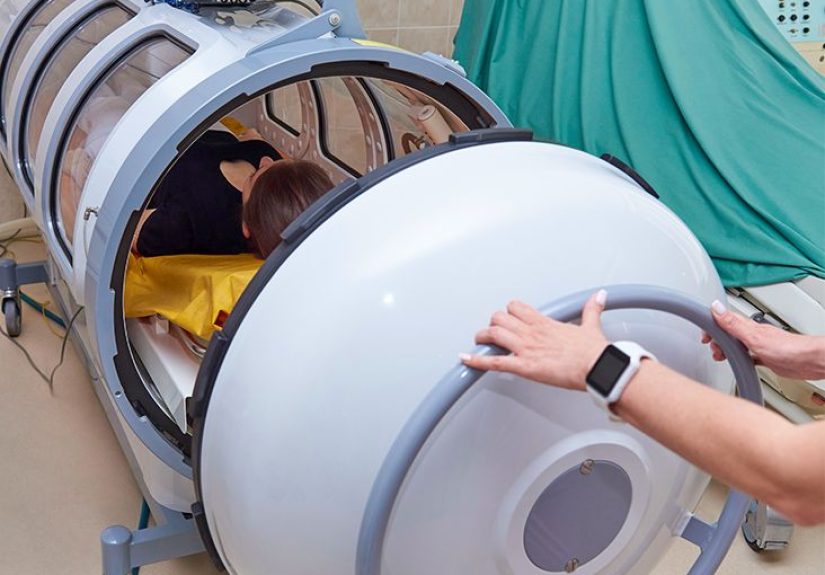
When most people say “oxygen chamber,” they’re usually talking about hyperbaric oxygen therapy (HBOT). It’s a medical treatment where you breathe 100% oxygen inside a sealed chamber at higher-than-normal air pressure. That combo increases the amount of oxygen your blood can deliver to tissues, which can support healing in certain conditions.
HBOT is well-known for specific medical uses like decompression sickness, carbon monoxide poisoning, and certain hard-to-heal wounds. For IBD, the interest is more “adjunct” than “main event”the idea that extra oxygen might help calm inflammation and support tissue repair in select scenarios.
Why oxygen might matter in gut inflammation
Inflamed tissue can become relatively low in oxygen. In theory, improving oxygen delivery may help with healing processes, blood vessel function, and inflammatory signaling. Researchers have explored HBOT’s potential to influence inflammation-related pathways and support repairespecially where poor healing is part of the problem (think stubborn ulcers, fistulas, or surgical complications).
What the evidence says about HBOT for IBD
1) Perianal fistulizing Crohn’s disease: where the signal looks strongest
One of the most discussed areas is therapy-refractory perianal fistulas in Crohn’s disease. These fistulas can be painful, disruptive, and notoriously difficult to treateven with biologics, antibiotics, setons, and surgery. Several studies have reported improvement after HBOT protocols that involve many sessions (often around 30–40 treatments).
In a notable prospective cohort study of Crohn’s patients with stubborn perianal fistulas, researchers reported meaningful improvements after HBOT, including clinical and imaging-related changes. The catch: much of the evidence is still limited by small sample sizes and non-randomized designs. Translation: promising, but not yet a slam-dunk standard of care everywhere.
2) Ulcerative colitis: intriguing… and complicated
For ulcerative colitis, the research story is mixed. Some analyses suggest that HBOT combined with usual treatment may improve outcomes for certain patients, which has fueled interest in using it as a complementary therapy. But other researchespecially in severe attackshas shown less clear benefit, and not every study agrees on how strong the effect is or which patients are most likely to respond.
The “where does this fit?” question is still being answered. Clinical trials have continued to explore HBOT in more severe or refractory IBD settings, aiming to clarify who benefits, how much, and what protocol makes the most sense (pressure, duration, number of sessions, and how it pairs with medications).
3) Practical reality: time, access, and “this is a lot of appointments”
HBOT isn’t like picking up a prescription and carrying on with your day. A typical protocol can mean daily sessions for weeks. That’s a serious commitment for someone who may already be juggling symptoms, fatigue, work, and life. Also, insurance coverage can be tricky when a treatment is considered off-label for a specific condition.
If HBOT ever comes up in your care plan, it’s usually because the team is dealing with a very specific problem (like refractory fistulizing disease), and they’re looking for an additional lever to pullnot a replacement for biologics or other proven therapies.
Safety check: oxygen chambers are medical tools, not spa gadgets
In a properly run medical setting, HBOT is generally considered safe, but it’s not risk-free. The most common issues are related to pressure changesespecially ear barotrauma (ear pain, fluid, and sometimes eardrum injury). People can also experience sinus discomfort, fatigue, lightheadedness, and temporary vision changes. Rare but serious risks include lung injury and oxygen toxicity, which can cause seizures in uncommon cases.
A less talked-about issue: the chamber environment. Claustrophobia is real. Also, oxygen-rich settings require strict safety procedures (this is not the time for “DIY wellness” energy). If you ever consider HBOT, do it through a reputable medical facility with trained staff and clear emergency protocols.
Apple Watch and IBD: why a smartwatch is suddenly in the conversation
Let’s be clear: your Apple Watch does not measure intestinal inflammation directly. It can’t look at your colon and say, “Ma’am, your mucosa is offended.” What it can do is collect a steady stream of physiological and behavioral datathings like heart rate patterns, sleep, and activity. Those signals can shift when your body is under stress, fighting inflammation, or moving toward a flare.
Wearables may detect changes before you feel the flare
Research groups have tested whether wearable data can help identify or even predict IBD flare-ups. In one large “real-world” style research effort using commonly available wearables (including smartwatches), investigators reported that certain wearable metrics shifted weeks before inflammatory or symptomatic flare periodssuggesting a possible early-warning system. Mount Sinai researchers also reported results indicating wearable devices could identify and predict IBD flares, pointing toward a future of more continuous monitoring.
This doesn’t mean your watch will give you a perfect “flare forecast” like a weather app. It means trendslike rising resting heart rate, changes in sleep, reduced activity, or altered recovery patternsmight become useful prompts: “Hey, maybe check in, look for patterns, and consider objective testing (like stool calprotectin) before things escalate.”
Beyond Apple Watch: the next generation is aiming at inflammation itself
The wearable frontier isn’t just about steps and sleep. Researchers and organizations focused on IBD have also supported work on sensors that aim to detect inflammatory biomarkers in noninvasive ways (for example, analyzing sweat). These are still emerging, but the direction is clear: less waiting for a crisis, more gentle surveillance that fits real life.
How to use an Apple Watch for IBD without becoming a full-time data analyst
Wearables work best when they’re used like a smoke detector, not a courtroom judge. Here are practical, low-stress ways patients often use smartwatch data to support IBD management:
1) Track trends, not single weird days
Everyone has an odd night of sleep or a random high heart rate because they watched a thriller at 11:47 p.m. Look for patterns across several days: consistent sleep disruption, sustained higher resting heart rate, or a big shift in activity tolerance.
2) Pair watch signals with symptom notes
The most helpful combo is subjective + objective. If your watch shows poor sleep and higher resting heart rate and you notice more urgency, pain, or fatigue, that’s a stronger signal than either alone. Many people use a simple daily note: “stool frequency, pain level, energy, bleeding (yes/no), and stress.”
3) Use it for habits that reduce flare risk
Even when inflammation is the driver, supportive habits matter. Smartwatch nudges can help with gentle movement, sleep regularity, and stress managementthings that may not “cure” IBD, but can improve resilience and quality of life.
4) Share summaries with your care team (selectively)
Doctors don’t need 11,000 lines of minute-by-minute heart rate data. But a short summary“resting HR up 8–10 bpm for 10 days, sleep down, symptoms creeping up”can be very actionable. The goal is earlier conversations, not later emergencies.
So… oxygen chambers + Apple Watches = the future?
Think of these tools as living in two different neighborhoods of the IBD universe:
- HBOT (oxygen chambers): a specialized medical therapy that may help certain hard-to-treat complications (especially fistulizing disease), but often requires many sessions and more evidence.
- Apple Watch and wearables: a daily-life tool that may support earlier detection of worsening health patterns, reinforce helpful routines, and enable remote monitoringbut it’s not a direct inflammation test.
The sweet spot is using technology to reduce uncertainty: fewer “wait and see” weeks, more timely check-ins, and better matching of treatment intensity to what your body is actually doing. As research improves, the best outcome would be simple: fewer flares, fewer hospital visits, and more normal Tuesdays.
Experiences from the IBD world (about )
Because IBD is so personal, “does this help?” often comes down to lived experiencewhat people can realistically do, tolerate, and maintain. The stories below are composite, anonymized experiences drawn from common patient-and-clinician themes (not a single individual’s medical story), meant to illustrate how these tools can feel in day-to-day life.
The HBOT experience: hope, headphones, and a lot of calendar reminders
Patients who pursue HBOT for difficult Crohn’s complications often describe the first week as a mix of optimism and logistics panic. The chamber schedule can be intensedaily weekday visits, sometimes for several weeks. People joke that their new hobby is “driving to the chamber,” but beneath the humor is a real concern: Will this be worth it?
Many report that the physical sensation is like flying in an airplane: pressure changes, ear popping, and the need to “equalize” slowly. Some breeze through it with podcasts and a blanket. Others hit a wall with claustrophobia and need coaching, calming techniques, or (in some cases) mild medication. The most consistent tip patients swap is surprisingly practical: “Bring entertainment, and don’t schedule something exhausting right after your session at first.”
When HBOT helps, people often describe the change as gradual rather than dramaticless drainage, less pain, better wound healing, and fewer “bad days.” When it doesn’t, the frustration is realnot just from symptoms, but from the time investment and the emotional energy spent hoping. Clinicians who use HBOT in select IBD cases often emphasize expectation-setting: it’s an adjunct, not a miracle, and it belongs in a coordinated plan with gastroenterology and (when relevant) colorectal surgery.
The Apple Watch experience: “My wrist knew before my gut did” (sometimes)
Wearables are more accessible, and patients often start using them informally: tracking sleep during steroid tapers, watching step counts during fatigue-heavy weeks, or checking whether stress and poor sleep correlate with symptom spikes. Some people say the watch helps them feel more in controllike they finally have a dashboard instead of a guessing game.
Others have the opposite reaction: constant numbers can fuel anxiety. A high heart rate notification during a stressful workday can send someone down a rabbit hole of doom-scrolling and symptom-checking. Many end up finding a “middle way”: turning off nonessential alerts, checking trends weekly instead of hourly, and using the watch primarily for sleep consistency and gentle movement. As one common patient joke goes: “I bought a watch. I accidentally adopted a tiny, judgmental coach.”
One of the most useful patterns people describe is when wearable changes become a prompt for objective testing. For example: a week of worse sleep, higher resting heart rate, and increased fatiguefollowed by a stool inflammation test and an earlier message to the care team. Even if the result is “not a flare,” patients often appreciate the earlier reassurance. And if it is inflammation, catching it sooner can mean faster adjustments and fewer catastrophic flare escalations.
Ultimately, the best “experience-based” lesson is simple: technology helps most when it supports your planyour meds, your testing strategy, your symptom awareness, and your relationship with your care teamwithout becoming another stressor you have to manage.
Conclusion
Oxygen chambers and Apple Watches sit at two very different ends of the IBD care spectrumone is a specialized medical therapy being studied for tough complications, and the other is a widely available wearable that can turn daily-life signals into earlier, smarter conversations about disease activity. Neither replaces proven IBD treatment. But both point to a future where fewer decisions are made in the dark.
If you’re curious about either option, bring it up with your gastroenterology team and ask the most powerful IBD question of all: “For my specific disease pattern, what would success look likeand how would we measure it?”