Table of Contents >> Show >> Hide
- What the Industry Data Actually Suggests
- Why Bigger Booths Often Win at Top Events
- Why Bigger Booths Sometimes Fail (and Finance Gets Grumpy)
- The Metrics That Make a Bigger Booth Worth It
- When a Bigger Booth Is Absolutely Worth It
- When You Should Not Go Bigger (Yet)
- A Practical “Go Bigger” Scoring Framework
- Experience From the Floor: What Actually Happens When Brands Go Bigger (500+ Words)
- Conclusion
- SEO Tags
If you’ve ever stared at a trade show floor plan and thought, “Do we really need to pay for a bigger booth, or can we just charm people from a 10×10 with a ring light and snacks?” you are asking exactly the right question.
The short answer: yes, a bigger booth is often worth it at top industry events but only when it’s tied to a clear objective, a smart layout, trained staff, and a post-show follow-up plan that doesn’t die in someone’s inbox. In other words, square footage helps, but strategy closes.
After reviewing current U.S. event-industry research, exhibitor guidance, and organizer benchmarks, the pattern is pretty consistent: exhibitors still care most about lead quality, buyer access, and ROI. A larger booth can improve all three by increasing visibility, capacity, and on-floor experience especially at major events where foot traffic is dense and competition is loud.
But here’s the catch: a bigger booth without a plan is just a more expensive place to stand.
What the Industry Data Actually Suggests
Let’s start with the part executives care about: market reality. The trade show world is not “back” in a vague, motivational-poster way. It is actively stabilizing and maturing. Industry reporting shows exhibitor participation, revenue, and exhibition space have recovered strongly, even as attendance in some sectors still trails pre-pandemic levels. That means the people who are showing up are often highly intentional buyers, not just casual badge collectors.
And at top-tier events, scale still matters. Large shows continue to pull serious audiences, global buyers, and senior decision-makers. That creates a simple equation: if the event itself is high-value, your booth presence carries more leverage. A bigger footprint at the right event can become a force multiplier for meetings, demos, and visibility.
Freeman’s exhibitor research reinforces this. Exhibitors consistently rate the quality of expected attendees and lead outcomes as more important than cost concerns. That doesn’t mean cost doesn’t hurt (it does), but it does mean companies are willing to invest when an event reliably delivers the right audience.
Here’s the more nuanced insight that many teams miss: bigger is not always the answer for every show. In fact, many exhibitors are planning to keep booth size the same year over year. Why? Because the winning move is not “buy more floor space.” The winning move is match booth size to booth objective. If you need demos, meetings, and high-volume engagement, go bigger. If your goal is niche relationship-building with a narrow target list, a smaller booth can still outperform especially with strong pre-show outreach.
Why Bigger Booths Often Win at Top Events
1) More Open Sides = More Traffic Opportunities
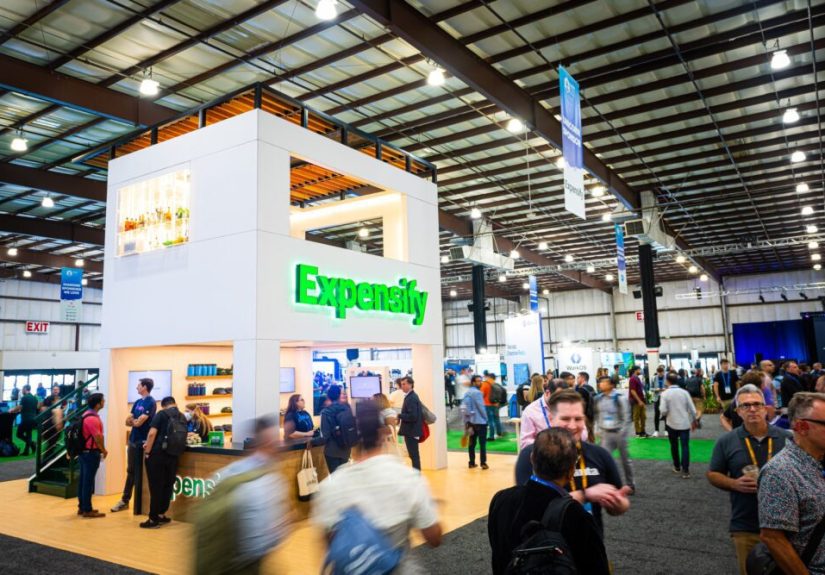
Booth geometry matters more than most marketers admit. A standard in-line booth (the classic 10×10 or 10×20) is usually budget-friendly, but it limits access and visibility. Peninsula and island booths, on the other hand, are open on three or four sides, which gives you more sightlines, more entry points, and more chances to intercept the right attendee before they wander off toward a drone demo and free espresso.
At crowded shows, this matters a lot. Visibility is not just branding it’s throughput. A booth that is easier to see and easier to enter can support more conversations per hour, better traffic flow, and fewer awkward bottlenecks around your product display.
2) Bigger Booths Increase “Interaction Capacity”
One underrated reason larger booths outperform is simple physics: they let you do more things at once. A bigger footprint can support:
- Live demos without blocking the aisle
- Private or semi-private meeting space
- Lead capture stations that don’t create a line jam
- Brand storytelling zones (video, samples, touchscreens)
- Staff circulation that doesn’t feel like airport security
In smaller booths, teams are often forced to choose between demo space and conversation space. In larger booths, you can build both. That is where a bigger booth starts paying for itself not because it looks impressive, but because it increases your ability to create quality interactions with more of the right people.
3) Bigger Booths Work Better When Paired With Sponsorships
At major events, the best-performing exhibitors rarely rely on booth space alone. They stack visibility. That usually means combining floor presence with sponsorships, speaking opportunities, digital placements, and pre-show promotion.
This combo matters because sponsorships can push people to your booth, while the booth gives them a place to experience your brand. Think of sponsorship as the invitation and the booth as the proof. Industry research and organizer guidance repeatedly point to this pattern: exhibitors get better results when booth design, sponsorship activations, and audience targeting are coordinated rather than purchased as separate line items.
So yes, a bigger booth can be worth it but it gets even more worth it when it is part of a larger event strategy.
Why Bigger Booths Sometimes Fail (and Finance Gets Grumpy)
Now for the uncomfortable truth: a bigger booth can flop. Spectacularly. Sometimes it looks great, wins internal applause, and still produces underwhelming pipeline.
The most common reasons:
- No clear objective: “We wanted more visibility” is not a KPI.
- Undertrained staff: People are friendly, but no one qualifies leads or books next steps.
- Weak pre-show outreach: You spent on square footage but not on meeting-setting.
- No follow-up system: Leads get scanned, then spiritually abandoned.
- Bad booth design: Big space, poor flow, confusing message.
This is why rising costs are a real issue in the industry. Exhibitors are feeling pressure from show services pricing, flat budgets, and growing scrutiny from leadership. In that environment, “bigger booth” only survives budget review if it can be tied to measurable outcomes.
And to be fair, exhibitors themselves admit measurement is still messy. Many teams care deeply about lead quality, but they don’t consistently track what “quality” means at the show level. If you can’t show how the bigger booth improved meeting volume, qualified conversations, or revenue velocity, it becomes an easy target in next year’s budget meeting.
The Metrics That Make a Bigger Booth Worth It
Let’s make this practical. If you’re trying to justify a larger booth at a top industry event, don’t pitch “brand presence.” Pitch a measurement plan.
Core Metrics to Track Before You Upgrade
- Cost per meeting: Total exhibit investment divided by qualified customer/prospect meetings held
- Cost per qualified lead: Total investment divided by leads that meet your ICP criteria
- Meeting-to-opportunity rate: How many booth meetings become real pipeline
- Booth traffic from sponsorship: Visits attributable to sponsored sessions, app ads, or speaking slots
- Pre-booked meeting rate: Scheduled meetings before day one
- Post-show follow-up speed: Time to first outreach (hours, not “sometime next week”)
- Revenue influence window: Pipeline and revenue attributed within 30/60/90 days
Freeman’s trade show measurement guidance is especially useful here because it translates booth performance into simple formulas. One sample compares event spend to the number of customer meetings and shows how a booth can reduce per-meeting costs versus individual travel. The exact number will vary by brand and event, of course, but the framework is what matters: if a larger booth lets you host substantially more high-quality meetings, the cost per meeting often drops.
That’s the argument finance understands.
A Simple Example
Let’s say your current booth investment is $18,000 and you generate 20 qualified meetings. Your cost per meeting is $900.
You upgrade to a larger booth and total cost rises to $30,000. That sounds painful until the booth design now supports demos, a meeting pod, and better traffic flow, and your team runs 50 qualified meetings. Your cost per meeting drops to $600.
Now add sponsorship and pre-booked appointments, and the bigger booth doesn’t just “look bigger.” It performs better.
That is the difference between a vanity spend and a strategic investment.
When a Bigger Booth Is Absolutely Worth It
Based on the data and common exhibitor outcomes, a larger booth is usually the right move when most of these are true:
- You are exhibiting at a top-tier event with proven buyer density
- You need space for demos, equipment, or hands-on experiences
- You already have (or can generate) a high volume of meetings
- You can train booth staff to qualify and route leads properly
- You are combining booth space with sponsorships or speaking
- You have a real follow-up process tied to CRM
- You can measure success beyond “traffic looked busy”
In these cases, a bigger booth improves both capacity and conversion opportunity. It helps you handle more interactions without sacrificing quality, and that is exactly what you want at a major show.
When You Should Not Go Bigger (Yet)
Sometimes the smarter move is to stay put and improve execution.
Do not upgrade booth size yet if:
- Your team has no pre-show outreach plan
- You cannot define a qualified lead
- No one owns follow-up timing
- Your booth staff rotates randomly and isn’t trained
- Your product doesn’t require extra space to sell effectively
- Your current booth underperforms mainly because of messaging, not size
In that situation, a bigger booth will just give your confusion more room to stretch.
A better path is often: improve messaging, staff training, and sponsorship alignment first, then scale footprint once your metrics are stable.
A Practical “Go Bigger” Scoring Framework
If you want a fast decision tool, use this 100-point score before committing to more square footage:
Booth Upgrade Scorecard
- Buyer density of the event (20 points): Are target buyers consistently attending?
- Experience requirements (20 points): Do you need space for demos, samples, or meetings?
- Meeting volume potential (15 points): Can your team realistically fill the booth with qualified conversations?
- Sponsorship leverage (15 points): Can sponsorships or speaking drive traffic to the booth?
- Staff readiness (15 points): Do you have trained people for qualification and follow-up?
- Measurement readiness (15 points): Can you track cost per meeting, lead quality, and pipeline?
Score 70 or above: A bigger booth is probably a smart investment.
Score 50–69: Consider a moderate upgrade or a better location plus sponsorship.
Score below 50: Fix execution first; don’t buy more carpet.
Experience From the Floor: What Actually Happens When Brands Go Bigger (500+ Words)
Here’s the part spreadsheets rarely capture: how a bigger booth changes the rhythm of a real event.
In one common scenario, a company moves from a 10×20 to a 20×20 because the sales team says, “We need more room for demos.” At first, leadership hears “more room” and translates that into “more cost.” Fair reaction. But on the floor, the difference is dramatic. In the smaller space, every demo steals oxygen from everything else. If three people stop to watch, the aisle clogs. If a prospect wants a serious conversation, the rep has to lean in over a counter while someone else scans badges two feet away. Nothing is private, nothing is smooth, and the best buyers tend to leave fast.
With the larger booth, the team can build zones. One side is for quick demos. One corner is for scheduled meetings. The center remains open and visible, which helps passersby feel comfortable stepping in. Suddenly, the booth feels less like a kiosk and more like a mini experience. The sales team stops competing with marketing for the same square feet. The product team can actually explain something without shouting over the aisle. And prospects stay longer because they don’t feel like they’re standing in a doorway.
Another real-world shift: staff behavior improves when the space is designed well. In cramped booths, people bunch together, chat with each other, and accidentally block traffic. In larger booths, you can create natural positions for greeters, demo staff, and closers. It sounds simple, but it changes outcomes. A trained greeter qualifies. A specialist demos. A closer books the next meeting. That flow is hard to maintain in a booth that physically can’t support it.
That said, bigger booths do not magically fix weak teams. I’ve seen oversized booths with beautiful lighting and almost no results because nobody owned the process. The staff smiled, handed out swag, and talked to everyone exactly the same way. No qualification. No CRM tags. No next steps. By day three, the booth looked busy in photos and empty in pipeline. That’s the dangerous part of going bigger: it can hide bad execution behind good design.
The best-performing teams treat a larger booth like a stage with a run-of-show. They pre-book meetings before the event. They coordinate sponsorships so attendees have a reason to visit. They brief the team every morning. They track what happened every afternoon. They know which conversations count, which product messages are landing, and what follow-up goes out on day one after the show closes. In those cases, the bigger booth absolutely pays off not only in leads, but in better meetings, better brand perception, and better internal confidence.
And here’s something that surprises people: even when the bigger booth costs more, teams often feel less chaos and more control. There’s room to move, room to talk, and room to actually work the event instead of just surviving it. At top industry events, that operational advantage matters. You’re not just buying square footage. You’re buying the ability to execute your strategy in public, under pressure, with competitors ten feet away.
That’s why, in practice, the question is rarely “Is a bigger booth worth it?” The better question is: “Are we ready to use a bigger booth well?” If the answer is yes, the investment is usually very worth it.
Conclusion
So, is a bigger booth worth it at top industry events?
Surprisingly, yes and often more than teams expect. But the ROI comes from what the larger booth enables: more visibility, more qualified conversations, better demos, stronger sponsorship synergy, and smoother follow-up execution. The data consistently points in the same direction: exhibitors will spend more when the event delivers the right audience and the booth strategy is built to convert attention into outcomes.
If you remember one thing, make it this: don’t buy a bigger booth to look bigger buy it to perform better.