Table of Contents >> Show >> Hide
- What Klopf Architecture Is Really Known For
- The Klopf Architecture Style: Warm Modernism, Not Cold Perfection
- Why Klopf Architecture and Eichler Homes Make So Much Sense
- Project Examples That Show the Range
- Sustainability Without Losing the Plot
- What Homeowners Can Learn From Klopf Architecture
- Why Klopf Architecture Matters in Today’s Design Conversation
- Experiences Inspired by Klopf Architecture
- Conclusion
If modern architecture had a love language, Klopf Architecture would be speaking it fluently through glass walls, clean lines, warm materials, and the kind of indoor-outdoor flow that makes you wonder why every house doesn’t come with a better relationship to daylight. Based in San Francisco, the firm has built a strong reputation for homes that feel open, calm, and deeply connected to the landscape. In plain English: these are houses that know how to exhale.
Klopf Architecture is especially well known for thoughtful work on Eichler homes and other mid-century modern properties, but boxing the firm into a single niche would be a little like calling a chef “someone who boils water.” Technically true, wildly incomplete. What makes Klopf stand out is not just a recognizable look. It is a consistent way of thinking about how people actually live: how they move through a house, how light changes a room, how a kitchen should connect to daily life, and how modern design can feel welcoming instead of cold.
For homeowners, design fans, and anyone who has ever stared at a dark, awkward floor plan and muttered “this could be so much better,” Klopf Architecture offers a compelling case study in what modern residential design can be when it is both disciplined and human.
What Klopf Architecture Is Really Known For
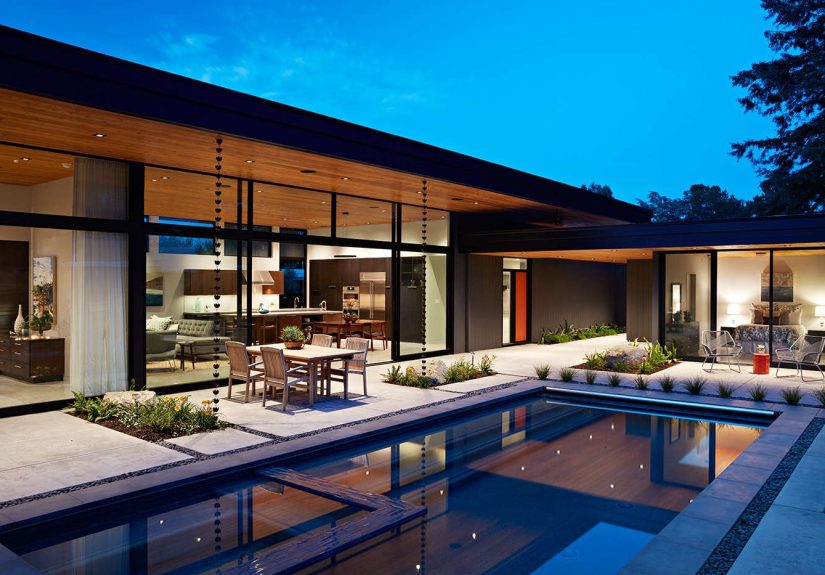
At the center of the firm’s identity is a simple but powerful idea: bring the outside in. That phrase can sound like design-magazine wallpaper if it is not backed up by real architectural decisions. Klopf backs it up. In project after project, the firm uses openings, views, patios, atriums, skylights, and flowing room relationships to blur the line between house and landscape. The result is not just pretty photography. It changes the daily experience of living in the home.
This approach is one reason Klopf Architecture has earned so much attention in modern residential design. The firm’s work often feels light-filled without being flashy, minimal without being severe, and edited without becoming sterile. There is a difference between a home that looks modern and a home that actually feels good to inhabit. Klopf usually aims for the second one first, which is exactly why the first one tends to follow.
That balance matters. Many people love the look of modern architecture right up until they imagine living in it and start worrying they will need to whisper around the furniture. Klopf’s projects tend to avoid that trap. These homes are designed for families, routines, guests, work-from-home life, cooking, retreat, and the happy mess of real existence. In other words, they are not museums for expensive chairs.
The Klopf Architecture Style: Warm Modernism, Not Cold Perfection
Clean Lines With a Pulse
One of the most appealing things about Klopf Architecture is how it handles restraint. The firm clearly loves modernist principles: strong geometry, horizontal lines, open plans, uncluttered surfaces, and honest materials. But it usually tempers that discipline with warmth. Wood ceilings, natural light, soft textures, and carefully framed views keep the spaces from feeling too slick or too clinical.
This is where the firm’s work becomes especially relevant to American homeowners. Plenty of people admire modern design in theory, yet still want their home to feel inviting at 7:15 p.m. on a Tuesday when someone is making pasta, someone else is doing homework, and the dog is trying to negotiate an extra dinner. Klopf’s architecture tends to support that reality. The spaces feel organized, but never uptight.
Flow Over Formality
Another defining trait is flow. Klopf Architecture often removes unnecessary barriers between kitchen, dining, and living areas, then strengthens the connection from those rooms to outdoor spaces. That does not simply make a house feel larger. It also makes it more social, more flexible, and more useful. A patio becomes an extension of the living room. An atrium becomes more than a decorative pause. A backyard stops being “the part you visit on weekends” and starts functioning like a real room.
That seamlessness is especially effective in California, where climate and lifestyle naturally support outdoor living. But the larger idea applies anywhere: good architecture should reduce friction. It should make movement intuitive, daylight generous, and everyday use feel just a little more graceful.
Why Klopf Architecture and Eichler Homes Make So Much Sense
If you know mid-century modern homes, you know the Eichler name carries serious weight. Joseph Eichler’s developments helped define a distinctly Californian version of modern living, with post-and-beam construction, walls of glass, atriums, and strong indoor-outdoor relationships. They are beloved for good reason. They are also, in many cases, aging, altered, underperforming, or burdened by decades of questionable updates that can only be described as “someone had confidence.”
Klopf Architecture has become especially respected for working in this territory because the firm understands the difference between preservation and paralysis. A good Eichler renovation is not about freezing the home in amber. It is about keeping the spirit intact while making the house work beautifully for contemporary life.
That means opening up cramped layouts without destroying character. It means adding square footage without making the addition look like it crash-landed from another neighborhood. It means improving kitchens, bathrooms, storage, and energy performance while respecting the visual rhythm that made the original architecture special in the first place.
And that is where Klopf often shines. The firm’s Eichler work tends to feel respectful but not timid. It honors the DNA of the home while still giving clients what they actually need: better circulation, brighter spaces, modern amenities, and more useful connections between interior and exterior zones.
Project Examples That Show the Range
The “Truly Open” Eichler Mindset
One of the clearest examples of Klopf Architecture’s philosophy can be seen in projects where the firm pushes the indoor-outdoor concept further than usual, especially in Eichler remodels. In these homes, the boundary between living room and yard becomes delightfully fuzzy. Large glass openings, coordinated exterior living areas, and carefully aligned sight lines turn the home into something closer to a pavilion than a box. It is architecture that behaves less like a barrier and more like a filter.
Modern Inversion and the Smart Rethink
Klopf is not locked into nostalgia. Projects like Modern Inversion show the firm’s willingness to rethink a house at the level of concept, not just finishes. Reworking which spaces face views, opening large volumes, and extending the great room outward demonstrates a larger point: good design is not about keeping everything where it has always been. Sometimes the smartest move is to turn assumptions upside down and let the house work harder for the people inside it.
San Mateo and the Art of the Seamless Addition
In mid-century renovations, additions are where many architects start to sweat. Klopf Architecture has shown a knack for making them feel integrated rather than apologetic. In projects like the San Mateo Eichler renovation, added space is handled in a way that respects the original post-and-beam rhythm and visual language. That is harder than it sounds. Plenty of additions technically add space while emotionally subtracting charm. Klopf’s best work avoids that tradeoff.
Sacramento and Climate-Responsive Design
The firm’s range also extends into new homes shaped by site and climate. A Sacramento project designed for intense heat shows that Klopf Architecture is not only interested in aesthetics. Shade, breezes, overhangs, and siting matter. This kind of climate-responsive thinking is increasingly important in American residential architecture. Fancy renderings are nice, but a house that knows where the sun is? That is romance with practical benefits.
Sustainability Without Losing the Plot
One of the most interesting things about Klopf Architecture is how it approaches sustainability. Some green design still carries the tired stereotype of being worthy but joyless, as if energy efficiency must arrive wearing sensible shoes and carrying a clipboard. Klopf pushes against that idea. The firm’s work shows that high-performance homes can still be glassy, open, and visually refined.
That matters because energy-conscious architecture is no longer a side conversation. Homeowners increasingly care about comfort, operating costs, all-electric systems, building performance, and healthier interiors. Klopf’s interest in net-zero energy, Passive House principles, and all-electric modern homes suggests a practice trying to integrate performance into design rather than bolt it on later like an awkward afterthought.
In the best scenarios, sustainability here is not treated as a marketing garnish. It becomes part of the architectural logic. Better envelopes, smarter systems, more useful daylight, and stronger connections to site all contribute to homes that are not just stylish, but resilient and comfortable. That is good architecture doing double duty.
What Homeowners Can Learn From Klopf Architecture
Even if you are not hiring Klopf Architecture tomorrow, the firm’s work offers several practical lessons for anyone planning a remodel or new build.
1. Open Plans Work Best When They Are Organized
Openness is not the same thing as emptiness. Klopf projects often feel open because the relationships between spaces are clear. There is usually a sense of visual order, natural circulation, and intentional zoning. Translation: do not just knock down walls and hope vibes will handle the rest.
2. Natural Light Is a Material
Klopf treats daylight almost like wood, tile, or steel: something to shape and place carefully. Skylights, glass walls, atriums, and framed views are not random gestures. They create atmosphere. If a house feels flat or gloomy, the answer is not always “paint it white and buy a larger lamp.” Sometimes the architecture needs to do more of the heavy lifting.
3. Respect the Original House, But Do Not Be Ruled by It
This is especially important in mid-century modern renovations. Original character is worth preserving, but function matters too. A home should serve the present-day household, not just salute the past with perfect manners.
4. Outdoor Space Should Be Designed, Not Left to Chance
Patios, courtyards, decks, and side yards work best when they are treated as part of the architecture. Klopf projects often succeed because the outdoor areas are not leftovers. They are integral rooms in the composition.
5. Sustainability Is Better When It Feels Invisible
The smartest high-performance homes do not constantly announce how virtuous they are. They simply feel comfortable, bright, efficient, and calm. That may be the most persuasive sustainability argument of all.
Why Klopf Architecture Matters in Today’s Design Conversation
In a crowded architecture landscape, Klopf Architecture matters because it occupies a valuable middle ground. The firm is modern but not performative. It is respectful of history without becoming nostalgic cosplay. It is interested in sustainability without sacrificing livability. And it understands something many homeowners learn the hard way: the best houses do not just photograph well. They support a better daily rhythm.
That may be why the firm’s projects continue to attract attention. They tap into several enduring desires at once: more light, more calm, more connection to nature, better use of space, and homes that feel personal rather than generic. In an era of visual overload, that kind of clarity is refreshing.
Klopf Architecture also reflects a broader shift in American residential design. People are increasingly asking for houses that are adaptable, energy-conscious, emotionally grounding, and connected to place. The old model of chopped-up rooms, weak indoor-outdoor relationships, and decorative clutter is losing ground to something more intentional. Klopf’s body of work fits squarely into that evolution.
Experiences Inspired by Klopf Architecture
To understand Klopf Architecture, it helps to imagine the lived experience of one of these homes rather than just the floor plan. You approach through a modest facade, and at first it seems calm, maybe even reserved. Then the house opens. Not in a dramatic, reality-show way where someone yells “surprise,” but in a quiet architectural way that feels smarter. You notice an atrium catching the morning light. You glance through glass and see the patio beyond. Suddenly the home is not one thing. It is a sequence.
In a Klopf-inspired house, breakfast is not trapped in a dark corner of the kitchen. Light slides in from multiple directions. The coffee tastes better, probably because you are not staring at a wall from 1994 with motivational fruit decals. You move from kitchen to dining to living area without a hallway trying to interrupt the conversation. A child is drawing at the table, someone else is reading near the glass, and a door is open to a patio where the air feels like part of the room.
By afternoon, the experience shifts again. Sun angles change, shadows lengthen across wood or concrete floors, and the architecture starts performing in ways that are subtle but powerful. Overhangs cut glare. Views frame trees instead of parking lots. A breeze drifts through when windows are aligned thoughtfully. The house starts to feel less like shelter alone and more like an instrument tuned to site, season, and routine.
Even the quiet moments land differently. A Klopf-like bedroom facing a garden or filtered daylight feels calmer than one that simply stores a bed. A hallway with a view becomes a pause instead of a leftover space. An atrium stops being a luxury move and becomes a daily reset button. You notice weather. You notice time. You notice that architecture, when it is done well, edits stress without asking permission.
Then evening arrives, and this is where the whole indoor-outdoor idea really earns its keep. The glow from inside spills onto the patio. The dining table feels connected to the yard. Sliding doors are open just enough to blur boundaries. Dinner with friends does not feel boxed in. Even a regular weeknight gains a little ceremony. Nothing magical happened, exactly. The architecture just stopped fighting the life inside it.
That is the real experience behind Klopf Architecture. Not just modernism as an image, but modernism as atmosphere. It is the feeling of breathing room. It is the relief of spaces that make sense. It is the pleasure of seeing a house finally align with the way people want to live now: open but grounded, minimal but warm, efficient but beautiful. No gimmicks, no unnecessary drama, just architecture doing its job extremely well.
Conclusion
Klopf Architecture has earned its reputation by doing something that sounds simple and turns out to be surprisingly difficult: designing modern homes that people genuinely want to live in. The firm’s best work combines clarity, comfort, sustainability, and respect for context, whether the project is an Eichler renovation, a mid-century rescue, or a contemporary new residence. If you are drawn to homes filled with light, connected to nature, and shaped around real life rather than rigid formality, Klopf Architecture offers a strong example of what that ideal can look like in practice.