Table of Contents >> Show >> Hide
- Why the Leica M6 Became the “Practical Legend”
- So… Did Leica Actually “Resurrect” the M6?
- What Stayed Classic (Because Messing with It Would Start a Riot)
- What Changed in the Reissue (The “Modern, But Don’t Panic” Upgrades)
- Why Bring It Back Now? The Film Photography Renaissance Isn’t Just Nostalgia
- New Reissue vs Used Classic: How to Choose Without Spiraling
- How to Shoot the Leica M6 Like You Mean It
- What the M6 Comeback Really Signals
- Field Notes: of M6-Style Experience (What It Feels Like to Shoot One)
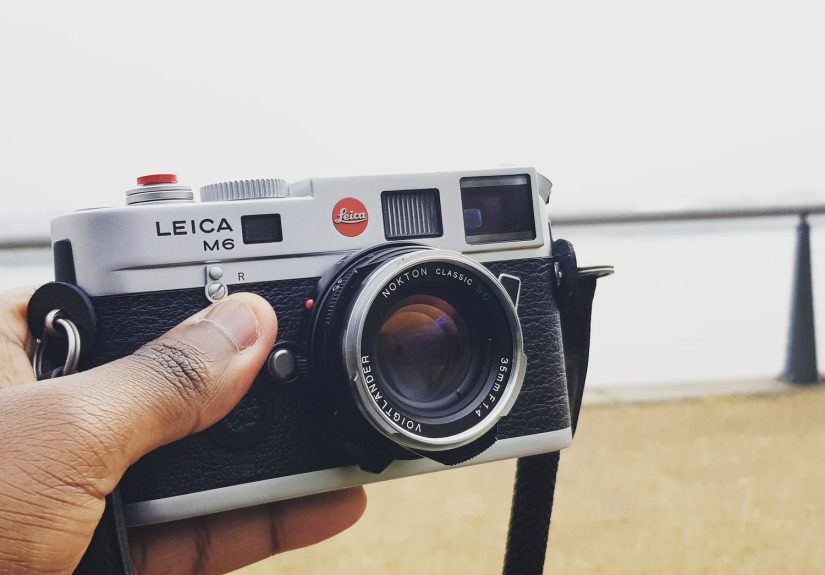
If you’ve spent any time around film photographers lately, you’ve probably noticed a curious phenomenon: people will argue about grain, scanning, and the “right” way to load a bottom plate with the seriousness of a Supreme Court hearing. At the center of that analog court drama sits one camera name that reliably sparks equal parts nostalgia and wallet panic: the Leica M6.
The headline claim“best ever”is obviously a spicy take. (And yes, you can start sharpening your pitchforks made of brass and vulcanite.) But in terms of practical usability, the M6 has long been the Leica film camera people actually use: fully mechanical, fast in the hands, and just “metered enough” to keep you moving. So when rumors swirled that Leica might bring it back, it wasn’t just gear gossipit was a signal flare for the film photography renaissance.
Why the Leica M6 Became the “Practical Legend”
Leica’s M-series rangefinders have always had a certain stubborn charm: they don’t try to do everything, and that’s the point. The original Leica M6 era (mid-1980s through the early 2000s, including the later M6 TTL variant) landed in a sweet spot: classic manual shooting, paired with a built-in light meter that doesn’t demand your attention like a needy pet.
Unlike many electronic film bodies, the M6 is mechanically timedmeaning it can keep shooting even if the battery is dead. The battery is there to power the meter, not the shutter. That single design choice is a big reason the M6 has stayed desirable: it’s less “vintage technology” and more “reliable tool that happens to be vintage.”
The meter that helps without hijacking your brain
The M6’s through-the-lens (TTL) metering communicates in the simplest possible language: little LED arrows telling you to go brighter or darker. No big LCD. No menu. No exposure “moods.” Just a quick nudge so you can set shutter speed and aperture and get on with the important worklike not missing the moment.
Rangefinder focusing: weird at first, fast forever
Rangefinders aren’t for everyone, and that’s okay. (Some people also don’t like olives. We can still be friends.) But once you “get” the focusing patchalign the split/superimposed image and shootit can be remarkably quick, especially for street photography and documentary work where you’re reacting in real time.
Seeing outside the frame is a superpower
A brightline viewfinder lets you see beyond your framelines, which means you can watch a subject enter your composition before they’re “in the shot.” It’s a subtle advantage that feels almost unfair once you’re used to it. It’s also part of why rangefinder shooters sound like they joined a tiny cult that only meets in good light.
So… Did Leica Actually “Resurrect” the M6?
Here’s the plot twist: the “may resurrect” chatter turned into a real product story. Leica ultimately brought the M6 back into production as a modern reissuestill an analog rangefinder film camera, still unapologetically manual, but with a handful of updates aimed at improving reliability and the viewing experience.
In other words, it’s not a museum piece. It’s Leica saying, “Yes, film is still a thingand we’re going to build you a camera to shoot it.” That’s a bigger deal than it sounds in an era where most new cameras are software platforms wearing a lens mount like a fashionable hat.
What Stayed Classic (Because Messing with It Would Start a Riot)
The modern M6 reissue keeps the soul of the original formula intact:
- 35mm film rangefinder with manual focus and manual exposure
- Mechanical operation (battery for metering, not for basic camera function)
- Cloth shutter with a traditional, tactile feel
- Brightline framelines arranged in pairs (so you can compose efficiently with multiple focal lengths)
- The M experience: deliberate, quiet, compact, and built around the essentials
It still wants you to participate. It still expects you to know what you’re doingor at least to enjoy learning. And it still makes you slow down in a way that’s oddly refreshing, like reading a paperback instead of doomscrolling.
What Changed in the Reissue (The “Modern, But Don’t Panic” Upgrades)
Leica didn’t reinvent the M6 so much as tighten a few screwsliterally and figuratively. The updates focus on durability, viewfinder performance, and metering clarity.
A refined 0.72x viewfinder built to fight flare
The reissue uses a modernized Leica M rangefinder system with 0.72x magnification and coated optical surfaces designed to reduce stray light and improve contrast. If you’ve ever heard rangefinder users complain about viewfinder flare, this is Leica acknowledging that, yes, humans do occasionally shoot in challenging light on purpose.
Meter info you can read at a glance
The metering display keeps the familiar arrows but adds clearer signaling (including an extra indicator for correct exposure and a battery warning). It’s still simplejust less “interpretive dance” and more “helpful road sign.”
Brass top plate and tough finishes
One of the most talked-about upgrades is construction: the reissue’s top cover is milled from solid brass and finished with a more abrasion-resistant lacquer. Brass isn’t just a vibes upgradeit’s durable, and it ages in a way that Leica fans treat like character development.
Modern electronics where it counts
Leica also refreshed internal electronic components related to metering and ISO setting. The goal isn’t to make the M6 “smart.” It’s to make it dependableespecially for new buyers who expect a premium camera to behave like a premium camera.
Why Bring It Back Now? The Film Photography Renaissance Isn’t Just Nostalgia
Leica’s M6 comeback makes sense when you look at the broader market: film photography has been gaining momentum for years. Labs have waitlists, film stocks disappear and reappear like seasonal candy, and “analog workflow” is now a phrase people say out loud without irony.
The used market also turned the original M6 into a kind of unicornhigh demand, limited supply, and prices that can feel like a down payment on a small moon. Reissuing the M6 does two things at once:
- It gives new shooters a way to get a film Leica with warranty support, rather than rolling the dice on decades-old electronics and unknown service history.
- It reinforces Leica’s long-term commitment to the M ecosystemlenses, repairability, and the idea that a camera can be a “forever object,” not a yearly upgrade.
Is it affordable? In Leica terms, it’s “less terrifying.” In normal human terms, it’s still Leica. But the strategic message is clear: film isn’t a novelty. Leica is treating it like a living product line.
New Reissue vs Used Classic: How to Choose Without Spiraling
The emotionally honest answer is: you’ll probably want both. The financially responsible answer is: pick the one that matches your priorities.
Buy the new Leica M6 reissue if…
- You want warranty support and modern manufacturing tolerances.
- You’d like a cleaner viewfinder experience with updated coatings.
- You don’t enjoy “mystery problems” like intermittent meters or sticky shutters.
- You plan to keep it long-term and treat it like a primary camera, not a collectible.
Buy a used Leica M6 (or M6 TTL) if…
- You value original-era details, patina, and historical character.
- You find a body with documented service history (this matters more than cosmetic condition).
- You prefer the ergonomics or features of specific variants (some shooters love the TTL model’s handling changes).
- You want to allocate more budget toward lenses, film, and lab work (aka the stuff that actually makes photos).
A practical tip: whichever route you choose, budget for a baseline checkup and calibration. A well-tuned rangefinder is the difference between “why are my shots soft?” and “oh no, I understand the hype now.”
How to Shoot the Leica M6 Like You Mean It
The M6 doesn’t reward complexityit rewards confidence. Here are a few ways to get there faster.
Use the meter as confirmation, not permission
A great M6 workflow is to set an exposure based on the light (Sunny 16 or a quick mental estimate), then glance at the LEDs to confirm. For example: bright midday street? You might start around 1/500 at f/8 with ISO 400 film, then tweak if the meter suggests otherwise. You stay fast because you’re not negotiating with the camerayou’re just verifying your call.
Zone focus for street, rangefinder focus for portraits
For moving street scenes, try zone focusing: set your lens to f/8 or f/11, pre-set focus to a distance you expect (say 2 meters), and shoot as subjects move through that zone. For portraits or lower light, use the focusing patch for precision. The beauty is that both methods live happily in the same system.
Pick a “home” focal length and stick with it
If you’re new to rangefinders, choose one lenscommonly 35mm or 50mmand commit for a month. Your brain will learn framing faster than you expect. And once framing becomes instinct, the camera becomes invisible, which is the highest compliment you can give any tool.
Don’t underestimate the scanning step
Film is only “done” when it’s developed and scanned (or printed). A consistent lab, clear scanning preferences, and a repeatable workflow will improve your results more than obsessing over tiny exposure differences. The M6 gives you great negatives; the rest is follow-through.
What the M6 Comeback Really Signals
The Leica M6 reissue isn’t about specs. It’s about values: simplicity, durability, and a tactile process that pulls you into the act of making an image. In a world of cameras that can identify birds, cars, and possibly your unresolved childhood feelings, the M6’s message is radical: you are the autofocus system.
Whether you buy one or simply appreciate that it exists, the “resurrection” matters because it validates film as a serious, ongoing craft not just a retro aesthetic filter. Leica didn’t bring the M6 back because it was easy. Leica brought it back because enough people still care about photography that feels like photography.
Field Notes: of M6-Style Experience (What It Feels Like to Shoot One)
Spend an afternoon with a Leica M6 and you quickly realize the camera isn’t trying to impress youyou are trying to impress it. Not in an elitist way, but in a “this tool is honest, so you should be too” way. You raise it to your eye and the viewfinder feels bright, uncluttered, and strangely calming. There’s no screen asking to be checked, no blinking icons screaming for attention. Just framelines, a focusing patch, and a little metering guidance that’s basically the photographic equivalent of a friend quietly whispering, “Maybe one stop brighter, champ.”
The first few frames can be humbling. You’ll likely miss focus once or twice because your hands are still learning the dance: compose, align the patch, breathe, release. But then it clicksliterally and mentally. The shutter has a soft, confident sound that doesn’t announce itself to the world. It’s not silent, but it’s polite. On a busy street, it disappears into the noise. In a quiet room, it feels ceremonial, like you’re sealing an envelope instead of firing a device.
What surprises many photographers is how quickly the camera makes them decisive. With only a few controls available, you stop negotiating with options. You pick a shutter speed, choose an aperture, and commit. That commitment spills into your seeing. You start anticipating light rather than reacting to it. You notice reflections and backlight and the way a subject’s face turns into the brightest object in the frame for half a secondlong enough. You also start thinking in sequences, because film rewards patience: you don’t machine-gun a moment, you stalk it.
Then there’s the quiet joy of constraints. You have 36 exposures, not 360. You can’t “fix it in post” because you don’t even have post yet. You can only make good choices nowmeter thoughtfully, focus deliberately, and trust the process. It’s not that the M6 makes you a better photographer. It’s that it removes distractions until your habits show up clearly. If you’re sloppy, you’ll see it in the negatives. If you’re attentive, you’ll see that too. And when you finally get the scans back, the experience feels earnedlike the camera didn’t hand you an image, it let you build one.