Table of Contents >> Show >> Hide
- What the T5632-W Is (and What It Isn’t)
- Quick Specs at a Glance
- Why People Buy It: A Real-World Convenience Upgrade
- Tamper-Resistant: The Small Feature With Big Safety Energy
- Charging Performance: Set Expectations (and You’ll Be Happy)
- Design Details That Matter Day-to-Day
- Electrical and Code Considerations (Without Turning This Into a DIY Dare)
- How It Compares to Newer USB-C and Power Delivery Options
- Buying Tips: Get the Right Version and Avoid Surprises
- FAQ
- Common Experiences With the Leviton T5632-W (Realistic Scenarios, 500+ Words)
- Conclusion: Who Should Buy the Leviton T5632-W?
There are two kinds of people in this world: the ones who keep a “drawer of mystery chargers,” and the ones who
have finally accepted that wall-wart adapters multiply when the lights go out. The Leviton T5632-W exists for both
camps. It replaces a standard duplex outlet with a modern Decora-style receptacle that still powers your lamp, but
also adds two built-in USB charging portsso your phone can stop living on the floor like it’s been grounded.
This article breaks down what the Leviton T5632-W actually is, what it’s good at, where it’s a little behind the
times (hello, USB-C), and how to decide whether it’s the right in-wall USB outlet for your home, office, or
short-term rental.
What the T5632-W Is (and What It Isn’t)
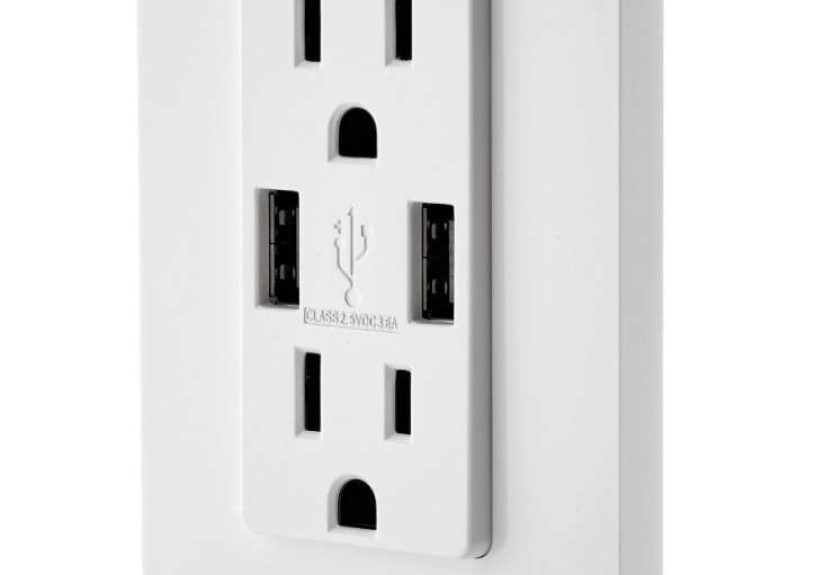
The Leviton T5632-W is a combination device: a 15-amp, 125-volt duplex receptacle plus two USB charging ports. In
plain English, you still get the two “regular plug” slots, and you also get two USB-A ports that supply 5V charging
power. It’s designed for charging portable electronicsphones, earbuds, e-readers, small accessorieswithout needing
bulky adapters.
What it isn’t: a data port, a laptop charger, or a USB-C Power Delivery rocket booster. The USB ports are for power
only (no data transfer), and the total USB output is shared between the two ports. Think “clean, convenient,
dependable charging,” not “warp-speed charging for a 16-inch laptop.”
Quick Specs at a Glance
- Receptacle rating: 15A, 125V (standard household outlet)
- USB ports: Dual USB-A charging ports (power only, no data)
- Total USB output: 5V with a combined charging capacity of 3.6A (shared)
- Form factor: Decora-style (wallplate typically sold separately)
- Safety feature: Tamper-resistant shutters in the AC receptacle
- Intended use: Charging portable electronics; not intended to power appliances via USB
Why People Buy It: A Real-World Convenience Upgrade
The main appeal is simple: fewer adapters, less clutter, and fewer arguments about “who stole my cube charger.”
Built-in USB outlets shine in places where people naturally charge devicesbedrooms, living rooms, entryway drop
zones, guest rooms, offices, and anywhere a charging station tends to form organically.
Where it shines
-
Nightstands and bedsides: Keep a lamp plugged in while charging a phone and smartwatch without
hunting for an adapter at 1 a.m. -
Living rooms: Charge phones on the couch without turning your power strip into a modern art
sculpture. -
Home offices: Ideal for topping off accessories (wireless headphones, mice, keyboards) while
leaving outlets free for monitors and laptops. -
Guest spaces and rentals: Visitors may forget a charging brick; an in-wall USB charger reduces
the “do you have an iPhone charger?” chorus.
Where it’s not the best fit
-
USB-C-only households: If most of your cables are USB-C to USB-C, a USB-A-only outlet may feel
like buying a VHS player because it’s on sale. -
Fast-charging expectations: If you want modern USB-C PD speeds, you’ll want a different model
designed for Power Delivery. -
Wet-location requirements: Many kitchens, baths, garages, and outdoor areas require GFCI
protectionmeaning you may need a GFCI-protected circuit or a different device type depending on location and code.
Tamper-Resistant: The Small Feature With Big Safety Energy
The “TR” part of “tamper-resistant outlet” is easy to ignore until you learn what it does. Tamper-resistant
receptacles include internal shutters that block the energized contacts unless a proper plug is inserted. This helps
prevent foreign objects from being pushed into an outletone of those safety upgrades that’s invisible until it
matters.
It’s also not a trendy add-on; tamper-resistant receptacles have been required by electrical code in many
residential situations for years. In other words: this device isn’t just “nicer,” it’s aligned with modern safety
expectations for everyday outlets.
Charging Performance: Set Expectations (and You’ll Be Happy)
The Leviton T5632-W’s USB output is shared across two USB-A ports. That “shared” part is the key: if one device is
charging, it can draw more of the available power; if two are charging, they split the total. This is normal for
in-wall USB outlets, and it’s exactly why these devices feel great for overnight charging and “keep me topped off”
situations.
Specific examples: what it’s great at
-
Phone + earbuds: Usually a smooth pairing because earbuds typically sip power while phones do the
heavier lifting. - Phone + smartwatch: Another low-drama combo that works well for bedside charging.
-
Tablet charging: Works, but charging time depends on the tablet’s appetite and what else is
plugged into the USB ports.
What to avoid expecting
-
USB-C Power Delivery behavior: This model is USB-A charging at 5V. Many modern “fast charge”
experiences (especially with USB-C) rely on higher voltages and negotiated profiles that this outlet simply isn’t
built to provide. -
Laptop charging: Some small laptops can trickle-charge from USB-A in a pinch, but this isn’t a
reliable “laptop outlet.” If laptops are your goal, look for a USB-C PD in-wall charger model instead.
Design Details That Matter Day-to-Day
The T5632-W uses the Decora-style format, which is popular because it looks clean and modern. The USB ports sit on
the face of the device, reducing the need for bulky adapters and helping cords sit closer to the wall. The result is
a setup that feels more like “built-in charging” and less like “I lost control of my accessories.”
One practical note: wallplates are often sold separately. If you’re swapping a traditional duplex outlet (with the
classic two-screw cover) to a Decora device, you’ll likely need a Decora wallplate as well. It’s a small detail, but
it’s also the difference between “sleek upgrade” and “why does my cover not fit?”
Electrical and Code Considerations (Without Turning This Into a DIY Dare)
Anything involving household wiring can be dangerous if handled incorrectly, so treat this as a planning and
purchasing guidenot a how-to. If you’re upgrading outlets, the safest move is to use a licensed electrician,
especially if you’re unsure what type of circuit you have or where GFCI protection is required.
Key compatibility points to know before you buy
-
Standard circuits: This device is designed for typical 15A household circuits and standard wall
boxes, but space can be tighter in older homes. -
USB is for portable electronics: Built-in USB ports are intended for charging devices like phones
and tabletsnot powering appliances via USB. -
Not for split receptacles: Some older installations have the top and bottom outlet controlled by
different breakers or by a wall switch. Many USB combo devices are not meant for those “split” configurations. If
you’re not sure, an electrician can identify it quickly. -
GFCI protection may be required by location: Bathrooms, kitchens, garages, outdoors, and other
damp/wet areas often require GFCI protection under modern codes. Sometimes that protection is provided upstream by
a GFCI breaker or another GFCI device; sometimes you want a GFCI receptacle device in that spot. -
Look for “listed” products: In the U.S., electrical products are typically evaluated by a
Nationally Recognized Testing Laboratory (NRTL) to relevant safety standards. That third-party listing is a big
part of how safety claims become more than marketing.
How It Compares to Newer USB-C and Power Delivery Options
If you’re reading this in 2026, you’re probably surrounded by USB-C cables. So why even consider a USB-A-only outlet?
Because not every device in a home needs Power Delivery. Plenty of accessories still charge perfectly fine on USB-A:
earbuds, speakers, e-readers, wireless keyboards, battery packs, and older devices that live in drawers until they
suddenly become important again.
That said, if you’re doing a full refreshespecially in a home office or near a couch where people want quick boosts
a USB-C (or USB-A + USB-C) in-wall outlet may feel more future-proof. The best approach is to match the outlet to
the “charging culture” of the room: overnight and low-stress? USB-A is fine. High-turnover, modern phones, and “I
need 40% in 20 minutes”? Consider USB-C PD models.
Buying Tips: Get the Right Version and Avoid Surprises
-
Check the port type: The T5632-W is dual USB-A. If you need USB-C, shop intentionally so you don’t
end up with the wrong ports for your household. -
Plan for the wallplate: If you’re switching from a standard duplex outlet to Decora, budget for a
matching Decora wallplate. -
Availability can vary: Some distributors list the T5632-W as discontinued or replaced, while other
retailers still carry it. If consistency matters (e.g., you’re upgrading multiple rooms), confirm availability
before you start the project. -
Consider where it’s going: For kitchens, baths, garages, and outdoors, verify whether you need
GFCI protection at that location. Your electrician can confirm the simplest compliant option.
FAQ
Does it charge two devices at the same time?
Yes. The two USB ports can charge two devices simultaneously, sharing the total available USB output.
Does it support fast charging?
It provides dependable 5V USB charging and uses circuitry designed to optimize charging for many devices, but it is
not a USB-C Power Delivery outlet. If you want modern PD fast charging, choose a PD-rated in-wall charger model.
Will it transfer data?
No. The USB ports are for charging onlyno data transfer.
Is it safe for a home with kids?
The AC receptacle is tamper-resistant, which helps prevent foreign objects from contacting energized parts.
(As always, good supervision and safe habits are still the real MVPs.)
Common Experiences With the Leviton T5632-W (Realistic Scenarios, 500+ Words)
Most people don’t buy an in-wall USB outlet because they’re bored. They buy it because a tiny daily annoyance has
become a permanent roommate: the adapter pile. And the “experience” of living with the Leviton T5632-W is basically
the story of that roommate moving outquietly, without drama, and leaving your countertops looking like they just
got a makeover.
In a typical bedroom setup, the first thing you notice is how fast the nightstand area becomes calmer. A lamp stays
plugged in. Your phone cable stays plugged in. And you’re no longer juggling an adapter block that hogs the second
receptacle like it pays rent. People who charge overnight often say the biggest win isn’t speed; it’s consistency.
You’re more likely to plug in when it’s effortless, and you’re less likely to wake up to the dreaded 11% battery
because your charging brick fell behind the bed during a midnight cable tug-of-war.
In living rooms, the experience is about reclaiming space. The “charging zone” usually starts innocently: one phone
cable by the couch. Then comes another cable. Then a power strip appears “temporarily,” like a houseguest who starts
receiving mail. With a USB outlet in the wall, you can often eliminate that strip (or at least downgrade it from
“command center” to “occasional visitor”). It’s a small aesthetic upgrade that makes a room feel less cluttered,
especially if you’re trying to keep cords from becoming part of your décor.
Home office use is where expectations matter. If your experience is mostly “charge a headset, top off a mouse, keep a
phone alive during calls,” you’ll probably love it. Those devices tend to be happy with 5V charging, and the outlet
keeps your desk from turning into a charging-brick museum. But if your experience is “I want to fast-charge my newest
phone while my laptop sips power from a USB-C hub,” you may feel the limits of a USB-A-only, shared-output design.
The outlet will still charge devicesbut the emotional experience changes when you expect it to behave like a modern
USB-C PD charger. If you go in expecting a tidy, reliable, built-in charging solution, it feels like a win. If you
go in expecting next-gen PD speed, it feels like showing up to a bicycle race with roller skates.
Guest rooms and rentals have their own unique “experience”: fewer questions. Guests may forget adapters. They may
bring the wrong brick. They may be nervous about unplugging anything. When they see USB ports right on the outlet,
it reduces friction immediately. It’s one of those hospitality upgrades that doesn’t scream “luxury,” but it does
whisper “this place is thoughtfully set up.” And because the T5632-W still includes standard receptacles, you’re not
sacrificing normal power access to add USByour guests can charge a phone while still plugging in a travel steamer
or a bedside fan.
Finally, there’s the long-term experience: you stop thinking about it. That’s the best compliment for a wall device.
After the novelty wears off, it becomes part of the house’s “infrastructure,” like a light switch that works every
time. You just plug in, charge up, and move on. The biggest day-to-day benefit is that it reduces the number of
charging accessories you need in common areas, which means fewer lost bricks, fewer occupied outlets, and fewer
moments of crawling behind furniture to find a free plug. It’s not a flashy upgradebut it’s a quietly satisfying
one.
Conclusion: Who Should Buy the Leviton T5632-W?
The Leviton T5632-W is a practical, clean-looking upgrade for anyone who wants fewer adapters and more convenient
charging in everyday spaces. It’s especially good for bedrooms, living rooms, guest rooms, and offices where
overnight or steady charging is the norm. The tamper-resistant receptacle adds a real safety benefit, and the Decora
look helps the install feel modern.
The main decision point is your household’s charging style. If you’re still living in a mixed world of USB-A cables
and smaller devices, this outlet is a simple win. If your world is heavily USB-C and you want Power Delivery speeds,
you’ll likely be happier choosing a USB-C PD in-wall outlet instead. Either way, the “best” choice is the one that
matches how people actually charge devices in that roomnot how we all pretend we charge devices in our perfectly
organized imaginary homes.