Table of Contents >> Show >> Hide
- Why a 1500s House Feels Like the Ultimate “Slow Home”
- Meet the Maker: A Ceramicist, a Shopkeeper, and a House With “Very Few Secrets”
- House Tour Highlights: The Kind of Details You Can’t Fake
- 1) Color That’s Not “Inspired By” HistoryIt Is History
- 2) The Middle Kitchen: A Practical Heart With a View
- 3) Reeds in the Ceiling, Tiles Underfoot, and a Whole Lot of “Keep It”
- 4) The 1730 “Manor House” Wing: When the House Decides to Flex
- 5) Bedrooms That Treat Pink Like a Neutral (And Honestly? Fair.)
- The “Tender” Philosophy: Repair, Don’t Replace (and Listen to the Building)
- Decor Lessons From a Pottery Studio Disguised as a House
- The 1690 Store: When Home and Shop Become One Story
- How to Steal the “Gently Cared-For Historic Home” Look (Without Owning a Manor)
- Conclusion: The House as Collaborator, Not Project
- + of Experience-Driven Notes: What “Tender Living” Looks Like in Real Life
If you’ve ever toured a “historic home” that looks suspiciously like a brand-new build wearing an antique hat, you already know the plot twist:
history doesn’t like being cosplay. The real magic of a 1500s house in England is that it’s not trying to be perfectit’s trying
to keep breathing.
And that’s what makes ceramicist and shopkeeper Sophie Wilson’s 16th-century home in The Fens feel so different. This is not a “before-and-after”
story with a heroic demolition montage. It’s more like a love letter written in limewash, old paint, and the soft creak of floorboards that have
heard four centuries of footsteps and one modern family’s laughter.
Why a 1500s House Feels Like the Ultimate “Slow Home”
In a world where furniture arrives in two days and becomes landfill in two years, a 16th-century English house has the audacity to say:
“I’ve been here since the Tudors. Calm down.” The slow-home appeal isn’t just romanceit’s a practical philosophy. Old buildings were made to be
repaired, not replaced; they were built from materials that respond to weather, moisture, and time with a kind of stubborn honesty.
A house like this doesn’t hide its quirks. It announces them. It shows you every patch, every crack, every layer of paint like a timeline you can
touch. And if you let it, it teaches you to stop treating “imperfection” like a defectand start seeing it as proof of life.
Meet the Maker: A Ceramicist, a Shopkeeper, and a House With “Very Few Secrets”
Sophie didn’t set out to buy a 1500s manor-adjacent puzzle box in the countryside. She was hunting for a renovation projectideally Georgian, in
Londonand then widened her search and found what she describes as a “wonderful and terrible discovery”: a grand but decaying house that had been
neglected for decades and sitting in persistent damp for an astonishingly long time.
The oldest section dates to the mid-1500s, but the building is really a mash-up: multiple dwellings pushed together across centuries. The carved
“1690” markings around the property nod to a major era of repair and investment tied to an owner connected to the East India Trading Company, with
later additions dating to the early 1700s. It’s architectural layering as lived experienceless “museum,” more “ongoing saga.”
Then there’s the vibe. Sophie describes the building as revealing everythingexposed plasterwork, peeling limewash, woodworm, reeds in the ceiling,
cracks and crevicesan unfiltered autobiography of materials. Her approach is refreshingly non-tyrannical: she aims to halt decay and make the
house sound for the next 150 years, not turn it into a sterile set piece.
House Tour Highlights: The Kind of Details You Can’t Fake
1) Color That’s Not “Inspired By” HistoryIt Is History
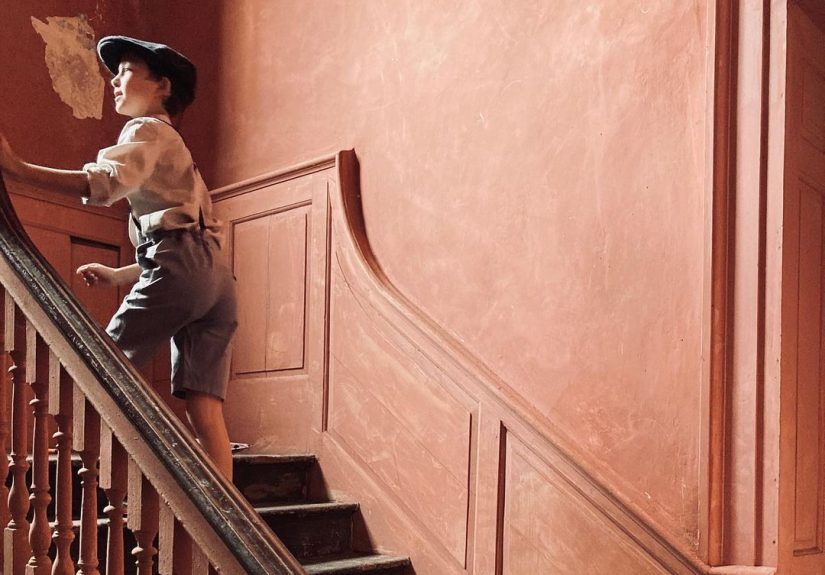
Some rooms still wear rich original paint colorssalmon pinks, deep greens, earthy redslike they’ve been waiting patiently for modern taste to
circle back and apologize. Sophie calls the inherited palette a gift that made her braver with design. The effect isn’t trendy; it’s cinematic,
the way old pigments and uneven surfaces catch light and shadow like a period drama that forgot to hire a stylist.
2) The Middle Kitchen: A Practical Heart With a View
The house contains three kitchens (because history loves redundancy). In the “Middle Kitchen,” Sophie’s major change was adding a
window aimed at the gardenand, beyond it, the spire of Crowland Abbey. It’s a small decision with big emotional payoff: one modern rectangle of
glass that stitches daily life to the landscape, like the house is quietly letting you join the conversation.
3) Reeds in the Ceiling, Tiles Underfoot, and a Whole Lot of “Keep It”
In an untouched historic home, surprises come baked in. Reeds used as insulation in the ceilingestimated to be centuries oldshow up like a
message from a past builder: “You’re welcome.” Patterned ceramic tiles survive because they were made to outlast us; Victorian Minton encaustic
tiles appear in the hall, their color and pattern embedded into the clay rather than printed on topmeaning time has fewer ways to erase them.
4) The 1730 “Manor House” Wing: When the House Decides to Flex
One section is described as the “real” manor wing: early 18th-century panelling, stonework, fireplaces, and those classical details that feel like
the building briefly got ambitious and started reading Palladio. Yet even here, the charm is in restraintoriginal features remain intact, and the
house doesn’t pretend it hasn’t lived a long life.
5) Bedrooms That Treat Pink Like a Neutral (And Honestly? Fair.)
One child’s room is painted in an untouched salmon hue. Sophie’s take is deliciously specific: pinkor any redcan behave like a neutral when
you build layers around it. In a 1500s house, color isn’t a “pop.” It’s a climate. It’s atmosphere.
The “Tender” Philosophy: Repair, Don’t Replace (and Listen to the Building)
If you want to live in a historic English home (or just steal the mindset for your 2006 townhouse), the key lesson is this:
tenderness beats control. Preservation pros say it in more formal languagerepair rather than replace, match old materials when you
must intervene, and avoid changes that erase character. But emotionally it’s the same idea: keep what works, stabilize what doesn’t, and resist the
urge to “optimize” the soul out of the place.
Start With Water: The Unromantic Hero of Historic House Restoration
Moisture is the main villain in old buildings, and it’s not even subtle. Preservation guidance in the U.S. consistently treats uncontrolled moisture
as a top cause of deteriorationleading to rot, corrosion, and structural damageand emphasizes diagnosis before dramatic fixes.
Sophie’s first big job was exactly what many preservation checklists preach: redirect drains and dry the foundations. That’s not glamorous content
for social media, but it’s the stuff that keeps centuries-old timber from turning into compost.
If you’re applying this lesson at home, the basics are surprisingly universal: keep gutters functioning, extend downspouts away from the foundation,
and manage surface runoff so water doesn’t loiter next to your walls like it pays rent.
Let Old Walls Breathe: Limewash, Mineral Finishes, and the Beauty of “Not Plastic”
Modern paint can behave like shrink-wrap. On older plaster, brick, and stone, that can trap moisture and invite trouble. Limewashand other mineral
finishesare celebrated for their breathable, chalky, nuanced look, but their bigger superpower is functional: they allow moisture to move through
rather than sealing it in.
You can see the logic in Sophie’s house: peeling limewash isn’t just “patina.” It’s evidence the building is doing what it was designed to do,
especially in a damp landscape like The Fens. Old houses don’t want to be hermetically sealed; they want to exhale.
Warmth Without War: Drafts, Layers, and the Humble Art of Acceptance
Some rooms reportedly lack electricity. The roof needs major work. Winters can be cold. And Sophie’s approach“put another jumper on”is both
amusing and genuinely wise. In preservation terms, it’s the “do no harm” principle wearing wool.
Practical upgrades can still be tender. Weatherstripping and sealing obvious gaps around windows and doors can reduce drafts dramatically without
ripping out original fabric. When historic windows are maintained and repaired (rather than replaced), they can often be improved for comfort with
caulk, reglazing, and storm windowskeeping the character while raising livability.
Decor Lessons From a Pottery Studio Disguised as a House
Sophie’s work as a ceramicist isn’t just a job that happens inside the building. It’s a design language that matches the house: handmade objects,
evidence of process, small variations that make a room feel alive rather than staged.
Use the “Good Stuff” Every Day
A cozy-home mindset (the Danes have opinions here) encourages lighting candles, leaning into natural materials, and pulling out the special dishes
instead of saving them for a mythical future dinner party with perfectly behaved guests. Handmade ceramics belong in daily lifenot behind glass.
Collected, Not Coordinated
Many U.S. design editors push the same antidote to algorithmic sameness: mix eras, mix silhouettes, mix materials. Pair something curvy and vintage
with something modern. Build a mismatched set of plates. Let the “set” be the story.
Imperfect Beauty, On Purpose
The Japanese concept of wabi-sabi gets summarized as “perfect imperfection,” but in practice it’s simpler: don’t panic when your home looks lived in.
In a 1500s house, “lived in” is the entire point. Scratches, patina, uneven plasterthese aren’t problems to hide; they’re texture and truth.
The 1690 Store: When Home and Shop Become One Story
Inside the house, Sophie launched the 1690 Store, named for the date carved around the property. She describes it with a grin as a
sort of Diagon Alley-style placepart whimsical provisions shop, part maker’s atelierselling her ceramics alongside soaps, cloth, jams, and other
essentials. The shop feels like a natural extension of the “tender” philosophy: practical, handmade, and rooted in place.
One of the most charming details: the kiln setup. She installed a kiln in a laundry room for very real reasonsworking after the kids were asleep,
and drying laundry faster. It’s peak old-house life: romance powered by logistics.
How to Steal the “Gently Cared-For Historic Home” Look (Without Owning a Manor)
Not everyone can buy a 1500s house in England. (Also: not everyone wants to discover that “parts of the supporting structure” are finger-poke soft.)
But you can borrow the principles anywhere.
- Stabilize first, style second: prioritize water management and basic maintenance before aesthetic upgrades.
- Choose breathable finishes where it makes sense: especially on older masonry or plaster where moisture movement matters.
- Repair rather than replace: preserve original features when possible; match originals carefully when replacement is unavoidable.
- Layer light like you mean it: candles, lamps, and warm pools of glow beat one overhead spotlight interrogating your entire living room.
- Collect objects with a pulse: handmade ceramics, vintage textiles, old framesthings with evidence of touch.
- Let color be historic, not “on trend”: try deep greens, muted reds, and warm pinks as background tones, not accents.
Conclusion: The House as Collaborator, Not Project
Sophie Wilson’s 16th-century home reminds us that the most compelling historic interiors aren’t the ones that look newly “restored.” They’re the
ones that feel continuousas if the house is still in conversation with everyone who has ever lived there.
“Make it tender” isn’t a slogan. It’s a strategy. It means fixing what threatens the structure, respecting what makes the place itself, and letting
beauty be flawed, honest, and a little bit theatrical. Because if every shadow is a story, then your job isn’t to repaint the scriptit’s to keep
the stage standing.
+ of Experience-Driven Notes: What “Tender Living” Looks Like in Real Life
Think of this as a field guide to the day-to-day experience of living with old-house energyeven if your house was built in the age of streaming
subscriptions. “Tenderness” isn’t passive. It’s active care with a light touch, and it shows up in small, repeatable habits.
First: you stop expecting the building to behave like a gadget. Modern homes are often treated like sealed systemstight envelopes,
uniform temperatures, surfaces you can scrub with anything short of a power washer. Older buildings (and old-building-inspired interiors) reward a
different approach: you watch, you learn patterns, and you intervene with restraint. Moisture control becomes a lifestyle. You notice where damp
gathers after heavy rain, how airflow changes from season to season, and which corners “sweat” when you cook pasta for eight people like it’s your
love language. In other words, you build a relationship with the house’s habits.
Second: you get comfortable with maintenance as a form of respect. Historic preservation guidance is full of practical reminders:
diagnose before you treat; don’t trap moisture; handle drainage; keep gutters and downspouts working. In lived terms, it’s a calendar rhythm.
You clear debris before storms. You check that water is leaving the foundation area instead of circling back like it forgot its keys.
You treat small problems early because small problems in old structures have a gift for becoming dramatic monologues.
Third: you redefine “cozy.” Cozy isn’t only central heat and perfect insulation. Cozy can be layered light, candles, a wool throw,
and a room that feels like it has memory. Even big design outlets that cover hygge tend to emphasize mood: soft lighting, natural materials, and
the invitation to use what you love rather than saving it. A handmade mug is cozy because it fits your hand and your story, not because it matches
the backsplash.
Fourth: you learn to love the collected look because it’s forgiving. When you mix old and new, your home gets more resilient.
One scratch doesn’t “ruin the set” because there is no set. A thrifted plate can join the dinner party without anyone asking for its pedigree.
Vintage pieceseven weird onescarry charm because they already come with patina permission. If you’ve ever felt trapped by matchy-matchy decor,
a tender, layered approach is basically decor therapy.
Finally: you let the house (or the idea of the house) lead. Sophie’s home works because she isn’t wrestling it into a different
personality. She’s stabilizing it, living in it, and making things that belong thereprops for a stage where every shadow is allowed to be a story.
That mindset scales down beautifully: keep what’s meaningful, repair what’s tired, choose finishes that age well, and allow your home to look like
a life is happening inside it. Because it is.