Table of Contents >> Show >> Hide
- The Make: Story That Turns Bystanders Into Co-Creators
- Why Connecting Glass Is Both Easy (In Theory) and Hard (In Reality)
- Three Ways Makers Connect Glass
- What Makes a Glass Connection “Good” (Besides Surviving Tuesday)
- Safety: The Unsexy Connector That Keeps You Making
- Learning the Craft (and the Community) Side of Connections
- Conclusion
- Experiences: What “Making Connections With Glass” Feels Like (and Teaches You)
Glass has a reputation for being delicatelike it’ll shatter if you look at it the wrong way. And yet, in the hands of a skilled maker, glass becomes one of the most connectable materials on Earth: it can be fused, slumped, solder-framed, laminated, glued, drilled, bolted, stitched with wire, and even “welded” into branching sculptures that look like frozen lightning.
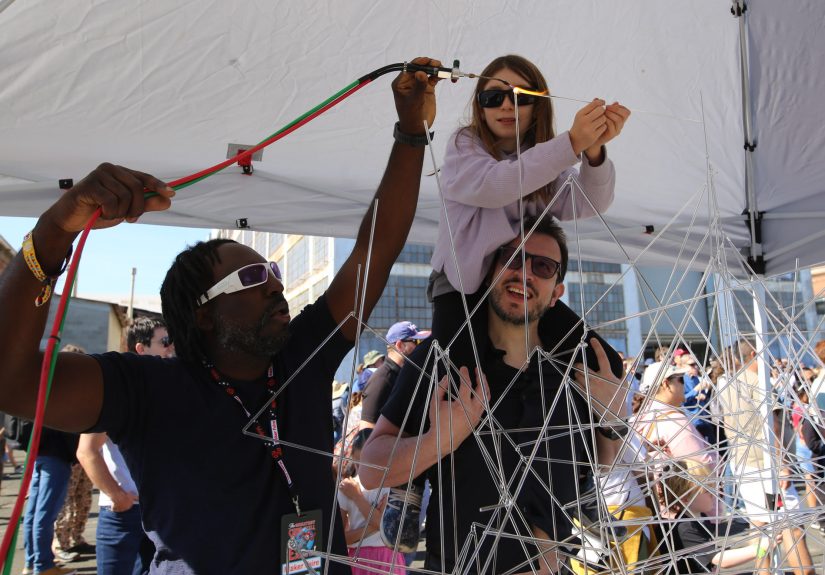
That contradiction is exactly what makes glass such a perfect metaphor for human connection: it’s strong when supported, vulnerable when stressed, and downright radiant when light gets involved. Which brings us to a delightfully literal take on the idea: Chris Mosley’s interactive “Social Networking Project,” featured by Make:, where strangers help build an ever-growing glass sculpture by placing glass rods wherever they wantthen Mosley fuses each new “connection” in place with a torch. The pun is wholesome. The result is stunning. And the lesson is sneaky: connection doesn’t need a perfect planjust a safe way to join what’s already there.
The Make: Story That Turns Bystanders Into Co-Creators
In Make:, Mosley comes across as the kind of artist who’d rather invite you into the work than stand behind a velvet rope guarding it. His “Social Networking Project” is built from glass rods that participants position on the sculpture however they likestraight lines, little bridges, dramatic arcsthen Mosley fuses them in place using a technique he calls “networking.” The artwork becomes a physical record of many micro-decisions made by many hands: bold choices, cautious choices, “I-don’t-know-what-I’m-doing” choices, and “I absolutely know what I’m doing” choices.
The best part is the emotional arc Mosley describes: kids jump in immediately (fire + making = instant buy-in), while adults often hesitate because they’re worried about being wrong. But in this format, “wrong” is basically not invited. The sculpture evolves. The point is participation. The glass becomes a social icebreakerexcept shinier, and with better lighting.
Why Connecting Glass Is Both Easy (In Theory) and Hard (In Reality)
Glass connects beautifully when you respect two realities:
- Heat changes everything. Glass can be joined when it’s hot enough to soften and flow, but it can also crack later if it cools unevenly or carries hidden stress.
- Compatibility matters. Some glasses play nicely together; others look fine at first and then break up like a band after their first tour.
In real studios, the “connection” isn’t just the moment two pieces touch. It’s the full chain: choosing compatible material, joining with the right method, and cooling in a controlled way so internal stress doesn’t turn your masterpiece into a dramatic sound effect at 2:00 a.m.
Three Ways Makers Connect Glass
Most glass connections fall into three big families. Think of them like social styles: hot (intense, immediate), warm (slow-burn, committed), and cold (practical, reliable, sometimes involves hardware).
1) Hot Connections: Flameworking (Lampworking) and Torch Joining
Flameworking (also called lampworking) is the technique of shaping glass rods and tubes by heating them in a flame until they soften and can be manipulated. This is the realm Mosley works in for live “networking” connections: adding a rod, softening the joint area, and fusing the new piece into the structure.
Hot connections are incredible for sculptures, small functional parts, and organic forms because the join can become seamlessno visible “glue line,” no frame, no apology. The tradeoff is that you’re working with heat, glare, and materials that can burn, cut, and crack if mishandled. In other words: hot connections are magical, but they demand respect and training.
Best use cases: branching sculptures, interactive demos, small components, repair work on compatible glass, and any project where you want the connection to feel like it grew there.
2) Warm Connections: Kilnforming (Fusing, Tack Fusing, Slumping)
Kilnforming connects glass by heating it in a kiln until pieces soften and stick together (tack fusing), fully melt into a smoother single layer (full fusing), or relax over a mold (slumping). Makers love kilnforming because it scales well: you can create tiles, plates, panels, layered imagery, and controlled textures without having to “hold” the glass in a flame.
The secret is that kilnforming is less “set it and forget it” than it sounds. Firing schedules depend on your glass, thickness, project size, and the effect you want. The connection isn’t only about temperatureit’s also about time, controlled cooling, and using glass designed (and tested) to work together.
Best use cases: panels, trays, decorative elements, layered art, repeatable production, and projects where you want precision and consistency across multiple pieces.
3) Cold Connections: Metal, Adhesives, and Mechanical Joinery
Cold connections join glass without melting it. This category is broader than it sounds, and it’s how a lot of glass shows up in the real worldarchitecture, furniture, lighting, and mixed-media art.
- Stained glass joins use metal as the connector: copper foil or came (often lead or zinc) wraps/holds glass edges, and solder bonds the metal together. The glass is “captured,” not melted.
- Adhesives (epoxies, silicones, UV-curing glues) bond glass to glass or glass to metal/wood. They’re useful when heat would damage components, or when you want a clean, minimal look.
- Mechanical connectionsthink screws, clamps, standoffs, channels, or wire-wrappingcan create strong, serviceable joints and are often the safest choice for larger pieces.
Best use cases: frames, panels, furniture elements, installations, and anything you might need to disassemble, repair, transport, or scale.
What Makes a Glass Connection “Good” (Besides Surviving Tuesday)
A good glass connection usually nails three things:
Stress management
Glass hates surprise. Uneven cooling, mismatched materials, or a connection that forces the glass to flex can create internal stress that eventually turns into cracks. Controlled cooling (annealing) is the quiet hero hereespecially when your connection involves heat.
Clear load paths
If a piece will hang, stand, or get handled, the connection should have an obvious “load path”a way for weight and force to travel through the structure without concentrating stress on one tiny point. Frames, ribs, and repeated connection points often beat “one heroic joint.”
Visual intent
Connections are design features, not just engineering. A visible solder seam can look like a drawing line. A fused joint can look like a branch intersection. A metal clamp can read industrial and confident. Decide whether your connection should disappearor star in the show.
Safety: The Unsexy Connector That Keeps You Making
Glasswork ranges from “peaceful and meditative” to “miniature sun in your hand,” sometimes in the same afternoon. Here are the safety ideas that show up again and again across reputable studio and agency guidance:
- Ventilation matters. Torch work and some soldering/flux processes can generate combustion products or fumes that shouldn’t build up indoors.
- Eye protection is not optional. It helps protect against flying glass and reduces glare from bright flame-related effects, making the work easier to see and safer to do.
- Lead awareness is real. Traditional stained glass materials can involve lead came or leaded solder. Good hygiene, ventilation, and smart material choices reduce riskespecially around kids.
- Respect sharp edges and hot surprises. Broken glass, freshly cut glass, and recently heated pieces all have a way of volunteering to teach lessons you did not sign up for.
If you’re new, the safest “shortcut” is also the best learning accelerator: take a class at a reputable studio or school where the setup, ventilation, and supervision are handled professionallyso you can focus on skill instead of improvising risk.
Learning the Craft (and the Community) Side of Connections
The glass world is famously community-driven: studios share kilns, artists share techniques, and beginners often learn fastest when they can watch someone else’s hands. That’s why places like museum demos, community studios, and dedicated schools are such big dealthey turn a solitary material into a social one.
If Mosley’s project proves anything, it’s this: people don’t just want to see glass. They want to be invited into it. “Making connections” isn’t only what happens between rods and jointsit’s what happens when someone realizes they’re allowed to participate, experiment, and contribute to something beautiful.
Conclusion
Connecting glass is part technique, part physics, and part philosophy. It can be as bold as torch-joining a new branch onto a growing sculpture in front of an audienceor as quiet as designing a metal frame that lets glass panels float like light. Either way, the best connections do the same thing great communities do: they distribute stress, support growth, and let the whole structure shine.
Experiences: What “Making Connections With Glass” Feels Like (and Teaches You)
Makers often talk about glass like it’s a material with moods, and honestly? That’s not wrong. One of the most common first experiences is surprise at how alive it looks when it’s being workedsolid becomes soft, edges round over, and gravity suddenly has opinions. You’ll see people lean in the way they do around a campfire: equal parts fascinated and cautious, as if the flame is telling an ancient story in a language made of light.
In interactive demos like Mosley’s, the emotional “connection” happens before the physical one. A participant approaches with curiosity, then pausesbecause adults are trained to avoid mistakes in public. The maker running the demo usually has to offer permission more than instruction: “Pick a spot. Any spot. There’s no wrong.” And then you can almost watch a person’s shoulders drop. The moment they place a rod, they go from spectator to collaborator. Their choice becomes part of the sculpture’s history. That tiny decisionstraight line or curve, close to the center or reaching outwardfeels oddly personal, like signing your name without ink.
Another shared experience: learning that glass remembers. Beginners often assume that if a piece looks fine when it’s finished, it is fine. Then they encounter the delayed consequencean unexpected crack later onbecause stress was trapped inside. It’s a humbling lesson, but also a strangely empowering one: once you understand controlled cooling and compatibility, you stop feeling like glass is “randomly fragile” and start seeing it as “predictably honest.” It doesn’t betray you; it reports what happened.
Makers also describe the “connection” as a design moment, not just a technical one. In stained glass, a solder seam isn’t merely a joinit’s a line in your drawing. In kilnformed work, a tack-fused edge can preserve texture and shadows, while a fuller fuse can smooth everything into a unified surface. In mixed media, a clamp or channel can look intentional and architectural, turning structure into style. The experience becomes less about hiding the join and more about deciding what story the join tells.
And then there’s the social side: glass communities tend to be generous. People trade tips, warn you about the mistakes they already paid for, and celebrate your first “it didn’t crack!” win like it’s a small holiday. Studios and classes create a rhythm of shared makingsomeone grinding edges, someone sketching a pattern, someone cleaning up a mystery pile of shards with the seriousness of a forensic investigator. Over time, you realize the title “Making Connections With Glass” is literal in two directions: you connect pieces of glass, and you connect with people through the act of making. The finished object is beautifulbut the best part might be the moment you realize you’re not building alone.