Table of Contents >> Show >> Hide
- What Happened, Exactly?
- Why This Blew Up So Fast
- The Special, the Backlash, and the Brand Problem
- Comedy, Cruelty, and the Audience’s New Rules
- What the Incident Says About Matt Rife’s Public Image
- The Bigger Lesson for Online Entertainment
- Experiences Related to the Story: When Online Jokes Spill Into Real Life
- Final Thoughts
- SEO Tags
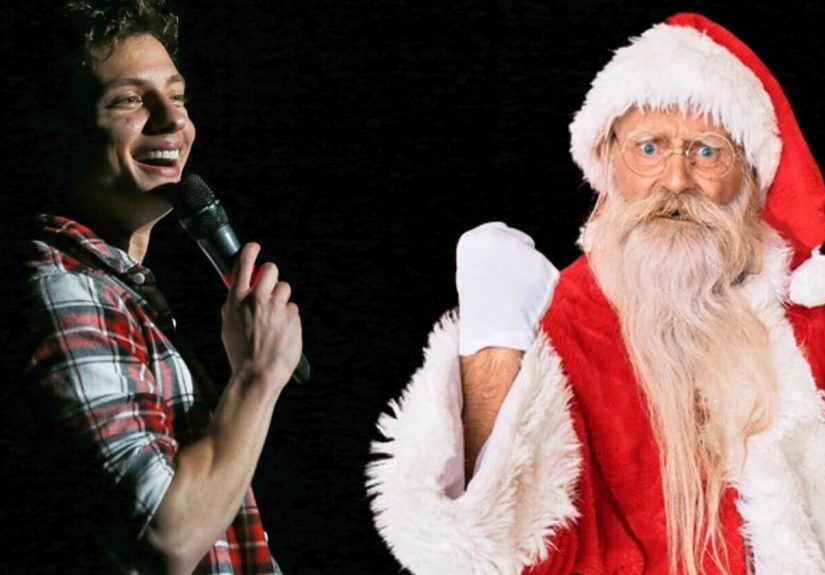
Some celebrity controversies arrive with smoke, sparks, and a very obvious red button somebody absolutely should not have pushed. This one arrived wearing a Santa hat and carrying a screenshot. The headline-grabbing moment centered on comedian Matt Rife, a deleted social media comment, and a young critic who did what the internet loves most: corrected a famous adult with the confidence of a tiny science teacher.
The story spread fast because it was not just about a joke. It was about tone, timing, audience expectations, and the strange modern reality that a stand-up comic can go from Netflix success to social media backlash in the time it takes most people to reheat leftovers. And in this case, the backlash was turbocharged by one especially eye-popping detail: the critic in question was a little kid.
At the center of the uproar was Bunny Hedaya, a creator whose son responded to one of Rife’s jokes by correcting his planet facts and adding a blunt little review that landed harder than some professionally written takedowns: he was “mean to girls.” What followed, according to multiple reports, was a now-deleted comment attributed to Rife that told the child Santa Claus was not real and took a crude swipe at the boy’s mother. Suddenly, the internet was no longer debating whether a comedy bit was edgy, lazy, or offensive. It was debating why a grown man was allegedly trying to win an argument with a first-grader.
What Happened, Exactly?
The chain reaction reportedly began after Rife’s Netflix special Natural Selection stirred criticism for jokes about women, including a widely condemned domestic-violence bit and a separate joke about astrology. In the astrology portion, he mocked women for blaming their decisions on planets and used Jupiter’s rings as part of the punch line. That caught the attention of Hedaya’s son, who is known online for loving space. In a post that circulated widely, he corrected the planet reference, noting that Saturn is the one famous for its rings, and then delivered the kind of clean, devastating closer comedians dream about: “And you’re mean to girls.”
That should have been the end of it. Cute kid, funny correction, internet moves on, everyone has lunch. But the moment reportedly escalated when a deleted response attributed to Rife surfaced. The comment, as quoted across entertainment outlets, said Jupiter also has a ring, then spoiled Santa Claus and claimed the boy’s mom bought gifts with money from OnlyFans. That combination of defensiveness, cruelty, and December-grade chaos turned what could have been a minor social media blip into a full-blown pop-culture controversy.
One wrinkle worth noting is that some coverage referred to Hedaya’s son as six, while an earlier caption on one post called him seven. That discrepancy did not really change the public reaction, because either way the internet saw the same basic image: an adult entertainer appearing to punch down at a child after being corrected online. And in the court of public opinion, that is not exactly a charming character note.
Why This Blew Up So Fast
Part of the reason the story exploded is simple: the phrase “there’s no Santa Claus” aimed at a child is the kind of detail that spreads on its own. It is instantly legible, instantly shareable, and instantly outrageous to a lot of people. But the bigger reason is that this was not happening in a vacuum. Rife was already dealing with criticism over the tone of Natural Selection, especially the opening joke about a hostess with a black eye. For many viewers, the alleged reply to Hedaya’s son did not feel like an isolated lapse. It felt like confirmation.
That is what made the story more damaging than a standard celebrity pile-on. It reinforced an emerging narrative about Rife’s public persona at exactly the wrong time. He had become famous in large part through social media clips that sold him as charming, quick-witted, and flirtatiously self-aware. But once the Netflix special landed, many critics argued that the version of Rife presented there was harsher, more combative, and much more interested in proving he could be offensive than in proving he could be funny.
In other words, this controversy hit because it seemed to answer a bigger question audiences were already asking: who exactly is Matt Rife when the crowd-work charm gets stripped away?
The Special, the Backlash, and the Brand Problem
Natural Selection mattered because it was a milestone project. Netflix positioned it as Rife’s first comedy special for the platform, and the service’s own materials emphasized his social media success, quick wit, and sold-out tour momentum. This was supposed to be a graduation moment, the kind that turns viral popularity into mainstream staying power.
Instead, the special became a test of whether internet fame can survive a tonal swerve. Rife’s rise had been fueled heavily by short-form clips, especially crowd-work moments that made him look nimble and naturally funny. But a full special asks different questions. Can you build a point of view? Can you sustain an hour? Can you make risky material feel purposeful rather than cheap? Those are much harder tasks, and a lot of viewers were not convinced.
Then came the response to the response. When criticism of the domestic-violence joke intensified, Rife posted what he framed as an official apology, only for the link to send users to a site selling special-needs helmets. That move made things worse, not better, because it turned criticism about one topic into criticism about another. By the time the Santa-comment controversy surfaced, many people were no longer reacting to a single joke. They were reacting to a pattern of doubling down.
And yet the story was not a clean fall-from-grace tale. The special still performed strongly on Netflix. His touring profile remained huge. He kept a passionate fan base. That contrast is important. Online backlash can wound a celebrity’s image, but it does not always collapse their business. In Rife’s case, the controversy seemed to deepen a split between people who saw him as unserious, mean-spirited, or trying too hard to be “edgy,” and fans who saw the outrage as proof that he was saying exactly what comedians are no longer “supposed” to say.
Comedy, Cruelty, and the Audience’s New Rules
Stand-up has always argued with its audience a little. That tension is part of the form. Comics provoke, audiences groan, somebody claps too hard, somebody storms out, and then everyone writes a think piece. But the old stage-to-crowd relationship has been replaced by something much messier. Now the audience does not just react in the room. It clips, captions, stitches, remixes, reposts, and drags. The review is not in tomorrow’s paper. The review is on your phone before the joke has cooled off.
That new environment changes what counts as “part of the bit.” When a comedian responds to criticism online, audiences do not always read it as an extension of performance. They read it as character. And when that response involves a child, even people who normally defend offensive comedy may decide a line has been crossed. Plenty of viewers can shrug off rude stand-up. Far fewer want to watch a celebrity look petty toward a little kid.
That is why the “Santa Claus” detail mattered so much. It took the conversation out of the abstract world of comedy ethics and dropped it into a much more emotional space: protecting kids, respecting parents, and not acting bizarrely online because your feelings got bruised by a child with astronomy facts.
What the Incident Says About Matt Rife’s Public Image
The controversy also revealed the risk of building a career on digital intimacy. Rife’s fame was born in the internet age, where audiences often feel like they know a performer personally. That can be powerful when the persona is warm, playful, and easy to root for. But it also means the backlash can feel unusually personal when the public mood shifts.
For a lot of viewers, the problem was not just the content of the alleged comment. It was the insecurity it seemed to reveal. A comic at the top of his game is supposed to roll with criticism, especially when it comes from a child in a goofy social media clip. Responding at all made the moment feel small. Responding in that tone made it feel worse. It suggested that the comic who thrived in crowd work and live banter was suddenly thin-skinned when the tables turned.
That perception is hard to shake because it clashes with the confidence of his act. Confidence can be funny. Defensiveness usually is not.
The Bigger Lesson for Online Entertainment
The Matt Rife six-year-old controversy is really a story about what happens when every corner of entertainment gets flattened into the same feed. A Netflix special, a parenting creator, a child with a fact-check, a deleted comment, a TikTok response, a pile-on, a brand conversation, and a debate about comedy boundaries all ended up in one chaotic digital room. That is modern fame in one sentence: nobody gets one audience anymore.
Comedians, especially, now perform in overlapping spaces with very different rules. A joke that lands in a comedy club may fail on a streaming special. A moment that feels like banter onstage may look nasty in a screenshot. A sarcastic response that might have passed in a green room can become a national headline if aimed at the wrong person in the wrong format. That is not censorship. It is context. And context, inconveniently, matters.
Experiences Related to the Story: When Online Jokes Spill Into Real Life
If there is a reason stories like this stick around, it is because they tap into experiences a lot of people recognize. Parents know the weird tension of trying to raise kids in a world where adult internet culture leaks into everything. One minute a child is talking about planets, dinosaurs, or Minecraft; the next minute a social media feud drags them into a conversation they were never supposed to have. That is part of why so many people reacted so strongly here. The Santa line was not just a rude comeback. It felt like an adult reaching into a kid’s space and replacing a harmless moment with ugliness.
There is also a broader, very modern experience behind the outrage: watching famous people forget that normal social rules still exist online. Most adults know, instinctively, that if a child says something mildly embarrassing about you, you laugh it off. You do not try to “win.” You definitely do not reach for a nasty, sexualized insult aimed at the child’s parent. But social media has a way of turning basic maturity into optional equipment. Everyone is always one notification away from acting like they are in the comments section of their own worst impulse.
For comedians, this problem is even trickier. Their professional identity is built around saying the thing other people will not say. That can create a dangerous habit: confusing shock with skill, or assuming every criticism is proof that the joke worked. Sometimes the criticism is just criticism. Sometimes the audience is not “too sensitive.” Sometimes they are simply noticing that the joke punches down, or that the response sounds meaner than clever. That does not make comedy dead. It makes audience judgment alive.
There is another experience wrapped up in this story too: the whiplash of internet fame. A performer can look unbeatable one month and overexposed the next. Fans who once felt protective can become disappointed quickly when the image they bought no longer matches the person they think they are seeing. In Rife’s case, a lot of the online reaction suggested exactly that kind of disillusionment. People were not just angry about one comment. They were reacting to the gap between the charming, viral comic they thought they knew and the version of him that seemed to emerge under pressure.
And then there is the holiday angle, which sounds silly until you think about why it works. Santa is not just a joke here. It is cultural shorthand. When someone tells a child Santa is not real, even in a throwaway way, the line lands with extra force because it symbolizes spoiling innocence for no good reason. That is why the phrase carried so much emotional weight online. It was not merely mischievous. To many readers, it felt mean and unnecessary, like kicking over a snowman because somebody corrected your trivia.
Ultimately, the experience many readers took from this story was not “comedy is doomed” or “celebrities are canceled.” It was much simpler: being funny and being cruel are not the same thing, and the internet is very good at spotting the difference when a child is standing in the frame.
Final Thoughts
Matt Rife telling a six-year-old critic there is no Santa Claus became a viral story because it was messy, ridiculous, and strangely revealing. On the surface, it was one deleted comment and one very unfortunate attempt at a comeback. Beneath that, it was a stress test for a celebrity brand built on likability, a case study in how fast comedy backlash evolves online, and a reminder that audiences are often less interested in “offense” than in motive.
People will keep arguing about what comedians should be allowed to joke about. That debate is not going anywhere. But this controversy felt less complicated than some of those culture-war arguments. For many viewers, it was not about policing humor. It was about basic judgment. If you are a famous comic and a little kid fact-checks your planet joke, maybe the winning move is to smile, take the correction, and leave Santa out of it.