Table of Contents >> Show >> Hide
- What MozBar Actually Is (and Why It Lives Rent-Free in SEO Toolbars)
- Quick Setup: Install, Sign In, and Avoid the “Why Are My Metrics Blank?” Moment
- The Moz Metrics You’ll See (and How to Interpret Them Like a Grown-Up)
- The Feature Tour: What MozBar Can Do in a Real Workflow
- The metrics bar + popup interface: instant context while you browse
- SERP overlay: scout competition without clicking every result
- Page Analysis: on-page SEO checks without opening dev tools
- Schema markup inspection: find it, review it, copy it (sanely)
- Highlight Links: see link types at a glance
- Export SERPs to CSV: research that survives beyond your browser session
- HTTP status and redirect clues: catch technical potholes early
- Practical Use Cases (With Examples You Can Steal)
- MozBar + Google + Bing: How to Stay on the Right Side of Reality
- Free vs. Pro: When MozBar’s Paid Features Are Worth It
- Common MozBar Mistakes (So You Don’t Become a Spreadsheet Goblin)
- Conclusion: MozBar Is Small, Fast, and Surprisingly Mighty
- Field Notes: of MozBar Experiences (The Kind SEOs Actually Have)
If you’ve ever tried to “just quickly check” a competitor and accidentally opened 17 tabs, two spreadsheets, and an existential crisis, MozBar is about to become your browser’s best friend. It’s a free SEO toolbar for Chrome from Moz that drops key metrics right where you’re already working: on the page, in the SERPs, and in that sacred place where your productivity goes to either thrive or die (your toolbar).
This guide pulls together what the MozBar extension itself says it does, plus how working SEOs use it alongside Google Search Central and Bing Webmaster guidance, and the real-world playbooks shared by reputable U.S.-based SEO publications and agencies. No fluff, no copy-paste, no “SEO is like a garden” metaphors (okay… maybe one small metaphor, as a treat).
What MozBar Actually Is (and Why It Lives Rent-Free in SEO Toolbars)
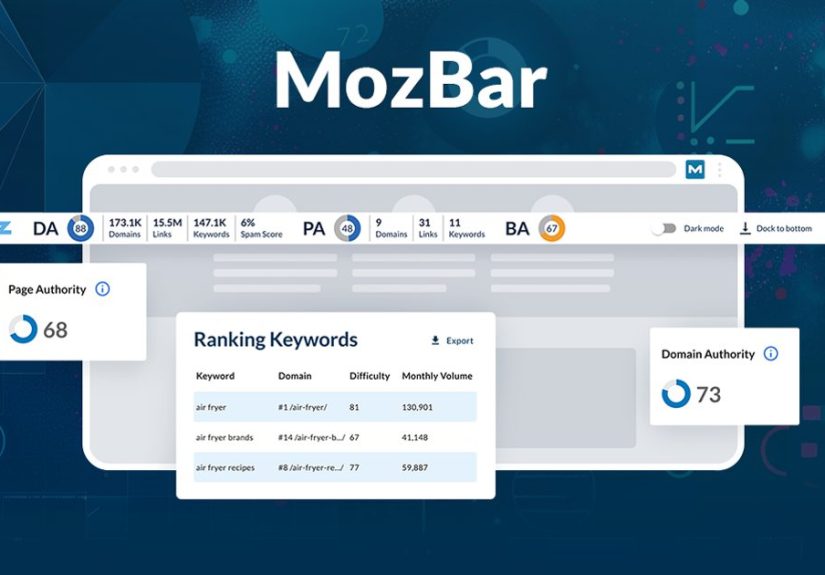
MozBar is a Chrome extension that overlays SEO data as you browse. Think of it as a “nutrition label” for web pages: you can see authority metrics, link details, and on-page elements without leaving the page. It’s especially useful during research sprintskeyword scouting, competitor comparisons, link prospecting, and quick auditsbecause it keeps you moving fast while still giving you enough information to make smarter decisions.
The current generation of the extension (MozBar V4) pairs the classic metrics bar with a newer popup-style interface, adds quality-of-life improvements like dark mode, and expands on-page and SERP analysis workflows. In plain English: fewer clicks, more context, less “wait, which tab has the data?”
Quick Setup: Install, Sign In, and Avoid the “Why Are My Metrics Blank?” Moment
1) Install MozBar from the Chrome Web Store
Add the extension, pin it, and take a second to admire how your toolbar slowly becomes an SEO utility belt. (You’re one bat-shaped icon away from fighting crime.)
2) Log in with a free Moz account
MozBar’s free experience typically requires signing in. Once you do, you’ll start seeing Moz metrics like Domain Authority and Page Authority. If the toolbar looks like it’s “on” but metrics are missing, signing in (or re-signing in) is usually the fix.
3) Know the free usage limits
Free/community access commonly comes with monthly limits on certain metric calls. Practically, this means MozBar is great for research sessions, but you don’t want to leave it refreshing authority metrics like it’s day trading.
The Moz Metrics You’ll See (and How to Interpret Them Like a Grown-Up)
Domain Authority (DA): a comparative strength score, not a Google “grade”
Domain Authority is Moz’s predictive metric designed to estimate how likely a domain is to rank compared to other domains. It’s scored on a 1–100 scale, and it’s best used for comparisons: your site vs. competitors, one prospect vs. another, or how the “SERP neighborhood” looks for a query.
Two reality checks that will save you years of stress:
- DA is not a Google ranking factor. It’s a third-party metric that correlates with signals that often matter (like backlinks), but it’s not a direct input to Google’s algorithm.
- DA is logarithmic. Jumping from 15 to 25 is usually far easier than jumping from 65 to 75. Big numbers are stubborn on purpose.
Page Authority (PA): the page-level cousin of DA
Page Authority is similar, but focused on an individual URL. This is handy when a domain is strong overall, but the page you’re competing with is either a heavyweight (high PA) or surprisingly beatable (moderate PA on an otherwise strong domain).
Spam Score: a risk signal, not a scarlet letter
Spam Score is Moz’s attempt to flag patterns that are more common among sites that look spammy or manipulative. It’s most useful during link building and outreach triage: if a prospect has weird signals, you can slow down, investigate, and avoid future regret.
Use it like a smoke alarm: it’s there to warn you, not to diagnose the entire building with one beep.
Brand Authority: brand strength signals (when available)
Moz has also introduced Brand Authorityanother 1–100 style metric aimed at capturing brand influence signals. When you see it in Moz ecosystems, treat it as directional. It can be useful for benchmarking brand momentum and comparing “brand gravity” across competitors, but it’s still a modelan estimate, not a law of physics.
The Feature Tour: What MozBar Can Do in a Real Workflow
The metrics bar + popup interface: instant context while you browse
MozBar’s core value is speed. With the toolbar active, you can eyeball authority metrics and link signals without breaking your research flow. The newer popup-style interface complements the classic bar, helping you jump into deeper checks without turning your browser into a tab museum.
SERP overlay: scout competition without clicking every result
One of MozBar’s most loved tricks is showing metrics directly on search results pages (SERPs). When you’re evaluating a keyword, you can quickly see whether the top results are dominated by high-authority giants or if there’s a mix of reachable pages.
This is especially useful for content planning:
- If the SERP is full of monster domains with strong pages, you may need a better angle (or more authority) to compete.
- If the SERP includes smaller sites or weaker pages, you may have a realistic path with strong content and solid internal linking.
Page Analysis: on-page SEO checks without opening dev tools
MozBar’s Page Analysis features help you inspect the stuff that quietly decides whether your page looks like a trustworthy answer or a messy closet: titles, meta descriptions, headings, and other on-page elements. Newer builds also surface technical breadcrumbs like hreflang tags and references to robots.txt and sitemap locations, which is helpful when diagnosing indexing quirks or international SEO setups.
Schema markup inspection: find it, review it, copy it (sanely)
Structured data matters when you’re aiming for rich results and clean entity signals. MozBar can help identify schema markup on a page, making audits easierespecially when you’re reviewing competitors or validating templates across many pages.
Highlight Links: see link types at a glance
MozBar can highlight and categorize links (internal vs. external, followed vs. nofollowed). This is gold for quickly understanding how a page “votes” with its linkswhether it’s tightly internally linked, heavily citing external sources, or marking outbound links cautiously.
Important nuance: Google treats rel attributes like nofollow, sponsored, and ugc as hints, and they’re used to communicate link intent. So link highlighting is not just triviait helps you spot editorial links vs. paid placements vs. user-generated link patterns.
Export SERPs to CSV: research that survives beyond your browser session
If you’ve ever tried to “remember the good results” from a SERP and ended up with a vague memory and an empty notes doc, exporting SERP data is the cure. Pull the results into a spreadsheet, add columns for intent, content type, and opportunities, and suddenly your “quick check” becomes a repeatable process.
HTTP status and redirect clues: catch technical potholes early
MozBar can surface HTTP status insights and redirect information. That matters when you’re auditing a site that “should be ranking” but is quietly doing the SEO equivalent of tripping over its own shoelaces (chains of redirects, messy status codes, or misrouted pages).
Practical Use Cases (With Examples You Can Steal)
Use Case 1: Keyword triage in minutes
Say you’re considering a new blog post targeting “best project management software for nonprofits”. With MozBar on the SERP, you can quickly scan:
- Are the results dominated by mega-authority sites (software directories, giant publications)?
- Do you see niche sites rankingsuggesting the query rewards relevance and specificity?
- Are top pages individually strong (high PA) or is the domain carrying weak pages?
That quick read can influence your strategy: maybe you publish a comparison post, or maybe you narrow the intent to “free” tools, or maybe you build a nonprofit-specific template and aim for long-tail variations first.
Use Case 2: Link prospecting without wasting outreach cycles
MozBar is a popular companion for guest post and digital PR prospecting. When you land on a potential partner site, you can check authority signals and scan link patterns. Combine that with human judgment (quality, relevance, real audience), and you avoid pitching sites that exist solely to trade links like baseball cards.
Pro tip: if a site’s link profile looks suspicious, don’t argue with your gut. Your future self will thank you.
Use Case 3: On-page QA before you hit publish
Before publishing, run a quick MozBar Page Analysis check:
- Is the title tag descriptive and click-worthy (without sounding like a robot wrote it)?
- Is the meta description persuasive and aligned with intent?
- Are headings structured logically (H1 once, H2s for sections, H3s for subtopics)?
- Is schema present where it makes sense (and not stuffed in like a fake mustache)?
Use Case 4: Competitive teardown (without the doom spiral)
Competitive analysis can be motivating… until you realize your competitor has been building links since the Bush administration. MozBar helps you focus on what’s actionable:
- Identify which competitor pages are truly strong vs. which just ride the domain’s authority.
- Spot content patterns: format, depth, FAQs, schema usage, internal linking habits.
- Decide whether you should compete head-on or choose a better angle.
Use Case 5: International and technical breadcrumbs
If you’re working on international SEO, MozBar’s ability to surface hreflang and other technical markers can speed up audits. It won’t replace a full crawler, but it can help you quickly validate whether a page is even “speaking the right language” to search engines.
MozBar + Google + Bing: How to Stay on the Right Side of Reality
MozBar is best viewed as a research accelerator, not the final judge. The healthiest workflow looks like this:
- Use MozBar to quickly benchmark competition, authority signals, and on-page basics.
- Use Google Search Central guidance to validate link practices (especially rel attributes) and avoid spammy patterns.
- Use Bing Webmaster Tools when diagnosing indexing, visibility, and crawl issues for Bing.
A concrete example: MozBar may highlight nofollowed links and help you understand outbound linking patterns. Google’s documentation clarifies that link attributes (nofollow, sponsored, ugc) are treated as hints and should reflect the nature of linksespecially paid or user-generated ones. That means MozBar can help you spot a pattern, while Google’s guidance helps you interpret whether it’s appropriate.
On the Bing side, when pages are indexed but not performing (or not visible as expected), Bing’s guidance and tools (like URL inspection and indexing troubleshooting workflows) are where you should confirm what the search engine actually sees.
Free vs. Pro: When MozBar’s Paid Features Are Worth It
For many people, the free version is enough to do meaningful research: DA/PA checks, basic SERP overlays, link highlighting, and quick on-page reviews. If you’re doing occasional audits, content planning, or outreach prospecting, free MozBar punches above its weight.
Paying tends to make sense when:
- You rely on Moz metrics daily and need higher limits and more metrics.
- You want deeper SERP and page optimization insights tied into Moz Pro workflows.
- You’re evaluating link risk more frequently and want Spam Score visibility where available.
Translation: if SEO is your job, the upgrade can be a time-saver. If SEO is your “I should probably do this” task, free is a great place to start.
Common MozBar Mistakes (So You Don’t Become a Spreadsheet Goblin)
- Chasing DA like it’s the One True KPI. DA is a comparative metric. You want better rankings, better traffic, better conversions. DA is a cluenot the trophy.
- Comparing across totally different industries. A “good” DA in local plumbing is not the same universe as a “good” DA in SaaS marketing. Benchmark against direct competitors.
- Assuming MozBar replaces a full audit tool. MozBar is fast, but it won’t replace crawlers, log analysis, server-side diagnostics, or deep backlink audits.
- Reading SERP overlays without considering intent. A weak-looking SERP might still be hard if the intent is strict and users expect a specific kind of result (tools, calculators, official docs).
- Overusing exports instead of making decisions. Exporting SERPs is great. Exporting SERPs and then never acting is just hoarding with extra steps.
Conclusion: MozBar Is Small, Fast, and Surprisingly Mighty
MozBar earns its keep because it speeds up the parts of SEO that are supposed to be quick: competitive checks, SERP scouting, on-page sanity tests, and link prospecting triage. Use it to move faster and make better callsbut keep your feet on the ground with official search engine guidance and your own judgment about quality, relevance, and intent.
Install it, learn the signals, and you’ll spend less time guessing and more time doing the work that actually moves rankings. And if you ever catch yourself whispering “just one more SERP export,” take a break. The toolbar will still be there when you come back.
Field Notes: of MozBar Experiences (The Kind SEOs Actually Have)
There’s a very specific SEO feeling that MozBar understands: you’re on a call, someone asks “How strong is that competitor?”, and you have exactly eight seconds before the silence becomes loud enough to qualify as a podcast. MozBar turns that moment into a calm, casual glance at the toolbar. “Looks like a strong domain, but the page-level competition is mixed.” Boom. You sound prepared. You are prepared. Everyone lives.
Another classic moment: link prospecting. You’re browsing a site that looks decent at firstnice design, real articles, maybe even a staff page. Then you toggle link highlighting and realize the page is basically a holiday parade of outbound links. Some are followed, some are nofollowed, and the anchor text reads like a ransom note made of keywords. MozBar doesn’t “decide” for you, but it gives you enough signals to ask the right question: is this a real site with an audience, or a link-shaped object pretending to be a website?
MozBar also shines in content planning when you’re trying to be honest with yourself. You know the moment: you found a keyword you love, you can already picture the headline, and your brain starts writing the intro while your calendar quietly cries. Then you check the SERP overlay and see a wall of powerhouse domains. MozBar is the friend who taps the table and says, “Okay, but what if we aimed one notch lower first?” That’s not negativityit’s strategy. Sometimes the move is to publish the supporting piece, earn internal links, build topical depth, and come back for the big term later.
On-page QA is where MozBar feels like an editor with a flashlight. You’re reviewing a page and everything “seems fine,” but Page Analysis reveals a missing meta description, a title tag that’s doing interpretive dance instead of communicating intent, or headings that jump from H2 to H4 like they’re skipping leg day. These aren’t glamorous fixes, but they’re the kind that prevent slow leaks in performance. And yes, it’s mildly satisfying to fix them like cleaning a smudged window and suddenly realizing the view was always there.
Lastly, MozBar helps SEOs stay humble about metrics. DA, PA, Spam Scorethese numbers are useful, but they’re not commandments. The best “MozBar experience” is when you use the data to form a hypothesis, then confirm the truth with better evidence: search intent analysis, content quality review, technical validation, and actual performance data in Search Console and Bing Webmaster Tools. MozBar gets you to smarter questions faster. The rest is you doing SEO like a craft, not a casino.