Table of Contents >> Show >> Hide
- The Story Hit a Nerve Because the Real Problem Wasn’t Dessert
- Why So Many Readers Immediately Took His Side
- Etiquette Makes This More Clear Than Family Group Chats Ever Will
- The $400 Cake Sounds Wild, But It’s Not the Least Believable Part
- Was It Actually Unauthorized? The Real-World Money Angle
- What This Story Really Says About Family Boundaries
- The Internet’s Verdict Wasn’t Really About Being Cheap
- Related Experiences: Why This Kind of Story Feels So Familiar
- Conclusion
There are surprise parties, and then there are surprise charges. One gives you candles, applause, and a decent excuse to eat frosting in public. The other gives you a knot in your stomach and the sudden urge to inspect your credit card statement like it’s the Zapruder film.
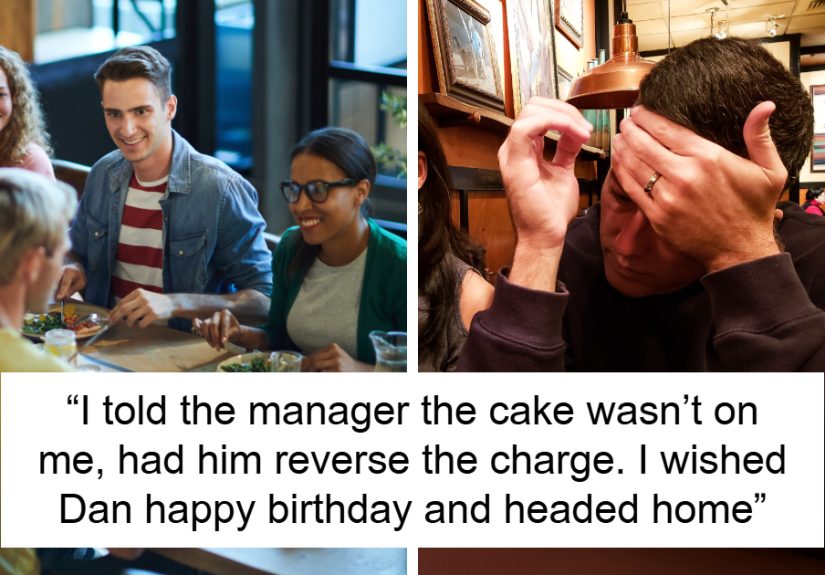
That’s why this family drama struck such a nerve online. According to a widely discussed post, a man thought he was simply helping organize his brother’s 40th birthday dinner at a restaurant. He booked the table, expected the bill to be split the usual way, and showed up ready for a normal evening of cocktails, conversation, and maybe a sentimental toast if everyone got emotional enough. Instead, the manager informed him that a lavish cake costing about $400 had been arranged in his name and was supposed to go on the card used for the reservation. The catch? He says nobody asked him first.
He had the charge reversed, wished his brother a happy birthday, and left. Then came the family backlash. Suddenly, the man who didn’t authorize the cake was being treated like the villain for not quietly funding the dessert finale. Online readers, however, saw something else entirely: a story about entitlement, fuzzy financial boundaries, and the deeply unsettling moment when generosity stops being a gift and starts being assumed.
This is what made the story so sticky. It is not really about sponge, buttercream, or whether the cake had enough tiers to qualify as architecture. It is about consent, money, etiquette, and the strange social gymnastics people perform when they decide someone else’s wallet is part of the party budget.
The Story Hit a Nerve Because the Real Problem Wasn’t Dessert
Most people are not scandalized by cake. Americans have tolerated outrageous cake behavior for years. We have accepted gender-reveal cakes, gravity-defying wedding cakes, and sheet cakes decorated with photos that should never have been printed in icing. A $400 custom cake, while eye-popping, is not inherently absurd. Elaborate celebration cakes can cost hundreds of dollars once you factor in design work, premium ingredients, delivery, setup, and the kind of decorative flourishes that make bakers question their life choices.
What shocked readers was the stealth. If the sister-in-law had asked, “Hey, would you be willing to cover a big birthday cake?” the answer might have been yes. In fact, the man himself reportedly suggested he likely would have paid had anyone been upfront about it. That detail matters. People are often happy to be generous when they are invited into the decision. They become significantly less thrilled when generosity is drafted into military service without their consent.
That is why the whole thing gives off, to use the post’s own memorable phrase, “my biggest ick.” Sneaking a luxury expense onto someone else’s card is not a misunderstanding. It is a boundary test. And once people feel tested, they stop tasting the frosting and start tasting the disrespect.
Why So Many Readers Immediately Took His Side
1. The reservation card was not a blank check
This is the part people instinctively understood. Putting down a card to secure a restaurant reservation is not the same thing as volunteering to underwrite every surprise add-on that appears later. A hold card says, “Please don’t give away the table.” It does not say, “Go ahead and build Versailles in fondant and send the bill my way.”
That distinction matters in both social and financial terms. In everyday etiquette, unclear money expectations create resentment at warp speed. In consumer terms, unauthorized use gets murky fast, especially when someone tries to leverage information connected to your card without direct permission. Even when the law depends on the precise facts, the social rule is much simpler: if the money is not yours, you ask first.
2. Wealth does not equal obligation
The post also suggested the man was relatively well-off, which likely fueled the family’s assumption that he could absorb the charge. But “he can afford it” is not the ethical mic drop some people think it is. It is just a shinier version of “let’s spend his money because it hurts him less.” That logic is how perfectly reasonable people get cast as selfish simply for refusing to be quietly volunteered.
This happens in families all the time. Once one relative is perceived as the successful one, the group can begin treating their financial stability as communal cushioning. Little assumptions creep in. They can pay for the upgrade. They can cover the shortfall. They won’t mind. They should be the bigger person. Before long, the family is no longer asking for generosity; it is budgeting around it.
3. The backlash targeted the wrong person
Another reason the story exploded is that the family’s anger seemed aimed at the easiest target rather than the person who created the mess. That is a classic move in tense group dynamics. Instead of confronting the relative who made the unilateral choice, everyone gets upset at the person who disrupted the illusion that the choice was fine. In plain English: people often get madder at the boundary than at the behavior that made the boundary necessary.
That is how someone can be called rude for refusing to pay a bill they never approved. It feels upside down because it is upside down.
Etiquette Makes This More Clear Than Family Group Chats Ever Will
Good etiquette is basically the opposite of this incident. It is about making expectations visible so nobody gets trapped in embarrassment. When people organize a group dinner at a restaurant, the responsible thing is to be clear about whether one person is hosting or whether everyone is paying their own way. That clarity is not stiff or old-fashioned. It is merciful.
If you are just coordinating the evening, you are not automatically the host. If you are the host, you own the bill you created. What you do not do is blur the roles until dessert arrives, then reveal a hidden financial plot twist like you are auditioning for a reality show called Keeping Up With the Passive Aggression.
That is also why the cake itself matters symbolically. Dessert is supposed to be the sweet ending, the thing that ties the evening up with a ribbon. In this case, it became the receipt-shaped jump scare that exposed who had been quietly volunteering someone else to pick up the tab.
The $400 Cake Sounds Wild, But It’s Not the Least Believable Part
Let’s be honest: a custom cake can absolutely get expensive. Once you add tiers, specialty fillings, premium ingredients, delivery, setup, restaurant coordination, and decorative details, the price can move from “cute little celebration” to “why is this cake dressed like a trust fund?” in a hurry. Industry pricing guides routinely show that event cakes are charged by complexity as much as by size.
So the real issue here was never whether a $400 cake could exist. Of course it could. The issue was who decided it should exist and who silently got nominated to finance it. That is why the number matters emotionally even more than financially. Four hundred dollars is large enough to feel deliberate. It is not a mistaken side of fries. It is an executive decision.
Was It Actually Unauthorized? The Real-World Money Angle
In plain consumer language, unauthorized credit card use generally means someone used a card without having the right to do so. But this category can get messy when a cardholder voluntarily shares access for one purpose and another person stretches that permission into something broader. That nuance matters. If you hand someone your card and say, “Grab party supplies,” you may still end up fighting over where “party supplies” ends and “mini nightclub package” begins.
That is one reason this story resonates. The man did not describe handing over his card to buy a cake. He described using his card to secure a reservation. Those are not the same thing. So even if the exact legal outcome in real life would depend on the merchant, the issuer, and the facts, the everyday lesson is straightforward: keep payment authority painfully clear.
For anyone dealing with a similar situation in real life, the smartest response usually looks like this:
- Address it immediately with the merchant. If a charge is not yours, say so right away instead of hoping the awkwardness will evaporate on its own.
- Contact the card issuer quickly. Prompt reporting matters, especially when a charge is disputed or suspicious.
- Document everything. Save receipts, emails, texts, and the names of anyone you spoke to.
- Replace the card if needed. If someone used your card details or tried to route charges through your account, shutting that lane down is often worth the hassle.
- Separate the financial process from the family drama. One is paperwork. The other is emotional weather. Do not let the storm confuse the paperwork.
What This Story Really Says About Family Boundaries
The most revealing line in the entire ordeal may be the one about how he likely would have covered the meal, but hated the sneakiness of the cake charge. That sounds trivial until you realize it explains the whole thing. People can tolerate expensive requests. What they struggle to tolerate is manipulation disguised as inevitability.
Healthy families do not make private calculations about who is easiest to stick with a bill. They ask. They check. They clarify. And when someone says no, they do not react as if consent has personally offended them.
Money boundaries are often treated as less important than emotional boundaries, but they are not. In fact, money boundaries are emotional boundaries wearing a spreadsheet. They signal respect, autonomy, and whether people feel safe being generous without getting exploited. Once those boundaries are crossed, the argument is rarely about dollars alone. It becomes about trust, status, and whether you are valued for your presence or your purchasing power.
That is why stories like this spread so quickly. Almost everyone has lived some version of it. Maybe it was not a luxury cake. Maybe it was a surprise party fee, a family vacation upgrade, a wedding “little extra,” or the mysterious group dinner where the check lands next to the one person least likely to make a scene. Different frosting, same recipe.
The Internet’s Verdict Wasn’t Really About Being Cheap
Calling the man stingy misses the point by a mile. This was not a debate over whether birthdays deserve cake. They absolutely do. Birthdays deserve cake, candles, and at least one aggressively blurry photo that nobody should post but everyone will anyway. The real issue is that no celebration becomes more meaningful because one person was cornered into funding it.
That is why readers largely sided with him. Refusing an unapproved charge is not mean. It is basic self-respect. And walking away after clearing up the charge may have been the only move that prevented the evening from turning into an even louder fight. Sometimes the most graceful exit is, quite literally, an exit.
In the end, the cake was never the true scandal. The scandal was the assumption that someone else’s card could be treated like a family utility. Once that assumption surfaced, the party was over. Frosting can cover many things, but it does a terrible job hiding entitlement.
Related Experiences: Why This Kind of Story Feels So Familiar
Part of what makes this cake drama so compelling is how recognizable it feels. A lot of people have had their own smaller, less photogenic version of it. Maybe it was not a three-tier dessert with a restaurant manager and a stunned expression. Maybe it was a cousin who upgraded the rental car and expected everyone else to split it, or a friend who added bottle service to a birthday table and acted shocked when the group did not cheerfully absorb the cost. The details change, but the emotional math stays the same.
One common version happens at family dinners. Someone says, “Let’s all celebrate together,” which sounds warm and wholesome right up until the check arrives with a few mysterious extras nobody discussed. Suddenly there is a premium appetizer tower, a second round of cocktails, or a personalized dessert tray “for the table.” The person most likely to pay without making a fuss becomes the unofficial backstop. Everyone knows it, even if nobody says it out loud.
Another version pops up around weddings and baby showers, where emotions run high and budgets run even higher. A relative offers to help with planning, and somehow that gets translated into “would love to cover whatever last-minute luxury we forgot to mention.” It might be custom signage, upgraded flowers, monogrammed party favors, or a cake that looks like it was designed by an architect with a sugar addiction. When the spending is wrapped in the language of love, it gets harder to challenge without looking like the Grinch in semi-formal wear.
There are also everyday versions that feel smaller but sting just as much. A family member borrows a card for one errand and comes back with three. A sibling says they will “sort you out later,” which is the international anthem of money that may never return home. An in-law assumes your online account, reservation, or card on file is basically community property if the event seems festive enough. None of these experiences are just about cash. They are about whether your permission matters.
That is why so many people read stories like this and feel immediate secondhand irritation. They remember the weird pressure to stay agreeable, not ruin the mood, be generous, be chill, be the bigger person, and preferably do all of that while quietly covering a bill they never approved. It is exhausting. And it explains why the phrase “my biggest ick” landed so well. The ick is not the expense. It is the presumption. It is the moment someone decides your politeness is a better resource than their own honesty.
In that sense, the $400 cake is just a very dramatic symbol for a much more common problem: celebrations go wrong when communication gets replaced by assumption. Ask first, charge later, and never confuse someone’s ability to pay with their duty to pay. That simple rule would save a lot of birthdays, a lot of relationships, and quite possibly a lot of innocent cake from being dragged into family warfare.
Conclusion
This story took off because it captured a universal social nightmare in one frosted, overpriced moment: being volunteered for generosity you never agreed to provide. Readers were not scandalized by cake. They were scandalized by the audacity. A celebration becomes sour fast when one person is expected to bankroll the sparkle without being asked.
The lesson is simple, and it goes far beyond one birthday dinner. Money conversations may be awkward, but silent assumptions are worse. If you want to “go big,” use your own card or have an honest conversation before the candles are lit. That is not just better budgeting. It is better manners, better boundaries, and a much smarter way to keep family celebrations from turning into courtroom drama with buttercream.