Table of Contents >> Show >> Hide
- The Black Dahlia Case, Without the Myth-Making
- What “New Evidence” Usually Means in a 1947 Cold Case
- The Recent Sparks: New Books, Old Letters, and Fresh Claims
- The Science Angle: Could Modern Forensics Reopen Doors?
- Why the Case Stayed Unsolved: The Obstacles That Don’t Go Away
- So What Would a Real “Revival” Look Like?
- Experiences: How the Black Dahlia Mystery Feels Up Close (500-Word Bonus)
- Conclusion: The Mystery Isn’t Short on TheoriesIt’s Short on Proof
Some mysteries don’t fadethey ferment. The Black Dahlia case has spent nearly eight decades doing exactly that: turning old headlines into modern obsession,
transforming scraps of paper into supposed “smoking guns,” and making every newly discovered document feel like it just slid under a newsroom door in 1947.
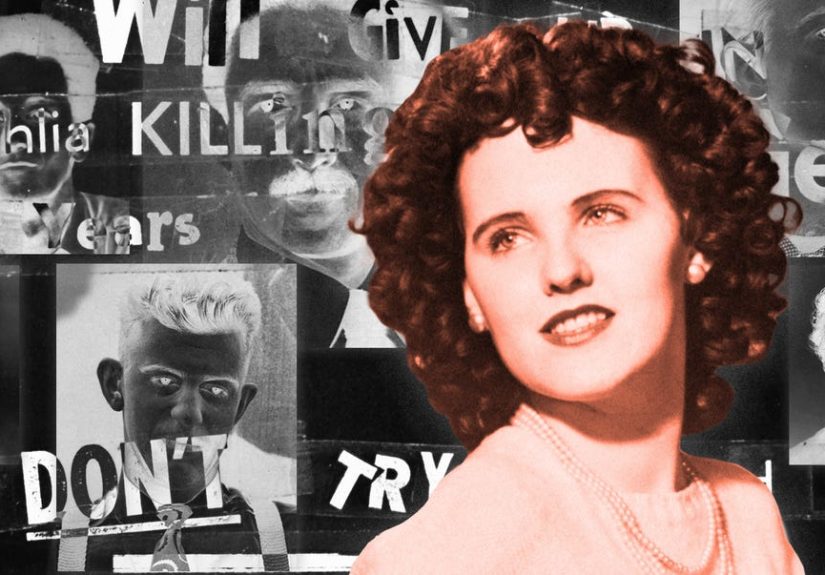
The victim was 22-year-old Elizabeth Short, and the Los Angeles murder that took her life remains officially unsolved.
So when you see the phrase new evidence attached to the Black Dahlia, it’s tempting to picture a dramatic revealone lab test, one confession,
one detective dramatically removing sunglasses indoors. Reality is less cinematic and more procedural: “new” usually means newly surfaced records,
newly interpreted old material, or newly possible science applied to evidence that’s been sitting quietly (and sometimes questionably) for decades.
The Black Dahlia Case, Without the Myth-Making
Elizabeth Short’s death became a national sensation in part because the press gave it a nickname that stuck: “Black Dahlia,” a label widely tied to her style
and to the film noir era’s fascination with glamour and menace. From the beginning, the investigation drew intense attentionlaw enforcement effort, public tips,
and a wave of claims that ranged from plausible to painfully performative.
Federal involvement also helped fuel the legend. The FBI supported the investigation through records checks and identification work using fingerprints and other
early investigative tools. Yet even with broad attention, the case never reached the finish line that matters most in court: a provable suspect, backed by admissible evidence.
What “New Evidence” Usually Means in a 1947 Cold Case
In a case this old, “new evidence” rarely means a brand-new object. More often, it means one of these:
- Newly discovered documents (letters, memos, reports, private files) that were never publicor never known to exist.
- New claims built on old facts, often in books or documentaries that reframe the timeline or elevate a suspect.
- New technology applied to old items (DNA methods, advanced fingerprint work, improved archival search, digital cross-referencing).
- New context as people pass away, estates open, and private collections surfacesometimes revealing what was whispered but never recorded.
Why “New” Can Still Matter
A single credible detailone date that locks a person to a place, one verified note that confirms a relationship, one chain-of-custody-proven sample that yields a usable profilecan
change the entire shape of a case. But “new” has to be more than interesting. It has to be testable.
The Recent Sparks: New Books, Old Letters, and Fresh Claims
1) Newly Surfaced Documents and the “GH” Letter Narrative
One recurring thread in modern Black Dahlia coverage is the emergence of private letters said to reference a suspect using initialsmaterial that, if authentic and properly contextualized,
can add weight to an existing theory. A widely discussed example is a letter reported as having been discovered decades after it was written, pointing to a man referred to as “GH.”
That tidbit has repeatedly been used to bolster suspicion around Dr. George Hodel, a figure long argued about in Black Dahlia literature and media.
Here’s the catch: a letter can be important and still not be enough. For a document to move a case forward, investigators would need to answer basic questions:
Who wrote it? When? Based on what first-hand knowledge? Was the author reliable? Can the claims be corroborated independently? And critically, does it introduce a lead that can be verified
with evidence rather than vibes?
2) The “Sisters in Death” Approach: Connecting Cases to Find a Suspect
A newer wave of interest comes from authors who argue the Black Dahlia case links to other crimessuggesting patterns, shared acquaintances, or a repeat offender. In 2025,
publicity around the book Sisters in Death promoted previously unreleased documents and a suspect described as having been pursued during the original investigation but
allegedly under-examined in popular retellings.
This approach can be genuinely usefulserial offenders and linked cases are real investigative methodsbut only when the link is more than thematic. “Both cases were shocking”
is not a link. A link is shared geography, shared associates, matching timelines, matching behaviors that can be independently demonstrated, and ideally forensic evidence that connects across scenes.
3) The 2025–2026 Buzz: A Zodiac Crossover Theory (and the Pushback)
If the internet has taught us anything, it’s that a theory becomes 30% more viral when it includes a second famous mystery. In late 2025, major coverage discussed a claim tying the Black Dahlia case
to the Zodiac killings, elevating a suspect named Marvin Margolis and presenting the idea as a multi-case solution. That coverage also included skepticism and criticism from longtime case researchers,
highlighting a familiar pattern: bold claims, contested sourcing, and debates over what police files actually say about whether a suspect was “cleared.”
This doesn’t automatically make the theory wrongbut it does show why “revival” can look like chaos: a new idea floods the conversation, then researchers and journalists pressure-test it
against records, timelines, and documented investigative steps.
The Science Angle: Could Modern Forensics Reopen Doors?
The most practical reason people talk about “new evidence” today is that forensic science has changed the rules of possibility. Cold cases that once stalled due to limited lab methods
can now move when old items yield new kinds of results.
Forensic Genetic Genealogy: The Cold-Case Game Changer (Sometimes)
Forensic genetic genealogy (often abbreviated FGG/FIGG) has helped identify suspects in violent cold cases by using advanced DNA analysis and genealogical research to generate leads.
Think of it like this: CODIS searches for direct matches; genetic genealogy can search for relatives, then investigators build family trees to narrow to a likely person.
That technique gained mainstream attention after the Golden State Killer investigation, and since then it has expandedalongside increasing guidance, ethics debates, and formal policies.
In the U.S., the Department of Justice published interim policy guidance, and research organizations have described best practices and limitations.
Could the Black Dahlia case benefit from this? Possiblybut only if there is preserved biological evidence with a clean chain of custody that can produce a usable DNA profile.
In many older cases, contamination, handling practices from earlier eras, and uncertain provenance can make testing difficult or inconclusive. “We should just do DNA” sounds simple until
you meet the evidence locker’s reality.
Fingerprint Advances, Document Authentication, and Digital Reconstruction
Not every breakthrough needs DNA. Improved fingerprint comparison tools, better chemical analysis for inks and paper, and modern authentication methods can help evaluate letters and documents
associated with famous cases. Meanwhile, digitization allows investigators and researchers to compare timelines, locations, and names at a scale that was impossible in 1947.
That said, digitization can also supercharge misinformation. A bad scan of a rumor becomes a “source.” A repeated anecdote becomes “confirmed.” The benefit comes from rigorous sourcing, not just searchable PDFs.
AI Can Sort CluesBut It Can’t Replace Proof
Modern analysis tools (including AI) can help sift large document sets: flag name variants, map relationships, cluster similar accounts, and find timeline inconsistencies. But the end product still has to be
evidence a court would recognize. The goal isn’t a clever theoryit’s a provable narrative.
Why the Case Stayed Unsolved: The Obstacles That Don’t Go Away
1) Evidence Quality and Chain of Custody
Evidence from mid-century cases often lacks the meticulous documentation we expect now. Even when items exist, the questions pile up: Who handled it? How was it stored? Was it exposed to the public, media,
or uncontrolled environments? In a case as famous as this one, contamination isn’t a possibilityit’s practically a personality trait.
2) Sensationalism and the “Confession Economy”
High-profile cases attract false confessions, opportunistic tips, and dramatized retellings. The Black Dahlia mystery has been marketed and remixed for so long that it can be hard to separate investigation from entertainment.
The press attention that kept the case alive also created a fog: more stories, more suspects, more noise.
3) Suspect Theories Multiply Faster Than Evidence
Over the decades, the case has collected famous-name theories the way L.A. collects parking tickets. But “intriguing” isn’t the same as “indictable.” Many claims hinge on circumstantial detailsassociations,
alleged remarks, coincidenceswithout the kind of forensic or documentary proof that survives adversarial scrutiny.
So What Would a Real “Revival” Look Like?
A true investigative revival would be less about a dramatic reveal and more about a checklist:
- Inventory and verify evidence: What physical items exist, and what can be authenticated?
- Establish provenance: Where did each item come from, and can its history be documented?
- Prioritize testable leads: Which claims can be corroborated with records, witnesses (if any remain), or forensic analysis?
- Apply modern methods carefully: DNA and genealogy only help if the inputs are reliable.
- Separate narrative from proof: Popular suspects aren’t automatically the best suspectsjust the most discussed.
In other words, the revival isn’t one clue. It’s a disciplined process that turns “maybe” into “show me.”
Experiences: How the Black Dahlia Mystery Feels Up Close (500-Word Bonus)
If you’ve ever wandered into the Black Dahlia story the way people wander into old Hollywoodthinking it’ll be stylish, smoky, and a little dramaticyou quickly learn the emotional whiplash.
You start with the aesthetics: noir photos, vintage headlines, the phrase “Black Dahlia” that sounds like a movie title. Then the human reality hits: this was a real young woman, and a real death,
not a plot twist designed to entertain you on a Tuesday night.
One common experience is the “paper trail rabbit hole.” You read a clean, modern summary and think you’ve got the basics, so you go looking for original reporting, archival notes, and timelines.
That’s when you notice how stories mutate. A single detailwho saw her where, who said what, what a date really meansshifts from version to version like a rumor playing telephone across 80 years.
You find yourself making little mental sticky notes: “Is this documented?” “Is this a quote or a paraphrase?” “Is this coming from a police file, a book, or a documentary trying to sell you suspense?”
Another experience is the “suspect carousel.” Every few years, a new name surges into the spotlight, usually escorted by a confident author voice and a promise that this time the case is solved.
You can almost feel the marketing copy clearing its throat. The details can be fascinatingwiretaps, rumored letters, old acquaintances, alleged patternsbut the feeling you’re left with is often the same:
if the claim is true, you want the evidence to survive bright lights, skeptical questions, and the kind of cross-examination that doesn’t care about a bestseller list.
For some people, the experience is geographic. Los Angeles becomes a map of memory: a hotel name that shows up repeatedly in retellings, neighborhoods that have changed while the story stayed frozen,
libraries and archives that quietly preserve photographs and clippings. Even without playing detective, you can feel how a city holds layershow one corner can be both ordinary and historically charged,
depending on what you know.
And then there’s the modern true-crime experience: podcasts, threads, documentaries, comment sections that swing between empathy and spectacle. The best of these spaces treat Elizabeth Short as a person first,
keeping the focus on facts and dignity. The worst treat the case like a trivia contest with a body count. If you spend time with the mystery, the most grounding experience is often the simplest:
pausing to remember that “unsolved” doesn’t mean “story.” It means unanswered questions, incomplete justice, and a family history permanently altered.
If new evidence really does revive the case, the most meaningful shift won’t be a viral theory. It will be a careful, evidence-based step forwardone that honors the victim by valuing truth over drama.
Conclusion: The Mystery Isn’t Short on TheoriesIt’s Short on Proof
The Black Dahlia case keeps resurfacing because it sits at the intersection of fame, fear, and unfinished business. Recent attentionnewly discussed letters, new books promoting overlooked suspects,
and headline-grabbing crossover theoriescan absolutely “revive” the conversation. But reviving a conversation is not the same as solving a case.
The most credible path forward is boring in the best way: authenticate documents, verify provenance, apply modern forensics only where evidence supports it, and demand corroboration over confidence.
If that happens, “new evidence” could become more than a headline. It could become a real investigative turning point.