Table of Contents >> Show >> Hide
- Why “Space and Time” Feel So Untouchable (Until They Don’t)
- Meet the “Fragments of Energy” Idea
- Two Classic Reality Checks: Mercury’s Wobble and Light’s Bend
- So… Did It Actually Upend Space and Time?
- What Would Make This More Than a Clever Repackaging?
- Zooming Out: This Fits a Bigger Trend in Modern Physics
- Conclusion: A Fun Idea, a Serious Challenge
- Experiences: of Living in a Universe That Won’t Sit Still
There are two kinds of physics headlines. The first kind says: “Scientists confirm what we already knew, but now with a fancier laser.”
The second kind kicks open the door, tracks cosmic mud onto your rug, and announces: “Also, your rug is an illusion.”
New Theory Casually Upends Space and Time is very much in Category Two.
The hook is simple (and a little audacious): what if the universe isn’t fundamentally built from particles or waves?
What if those are just the costumes matter wears when we look at itwhile the real “stuff” underneath is something like
flowing fragments of energy stitched through space and time?
Before we all start high-fiving our houseplants for being “energy,” let’s take this seriously the way science deserves:
with curiosity, a sense of humor, and the mild suspicion that the universe enjoys messing with us.
Why “Space and Time” Feel So Untouchable (Until They Don’t)
In everyday life, space is the place where your keys are not, and time is the thing you’re “running out of”
while your microwave insists only 12 seconds have passed. Physics, unfortunately, refuses to honor these lived experiences.
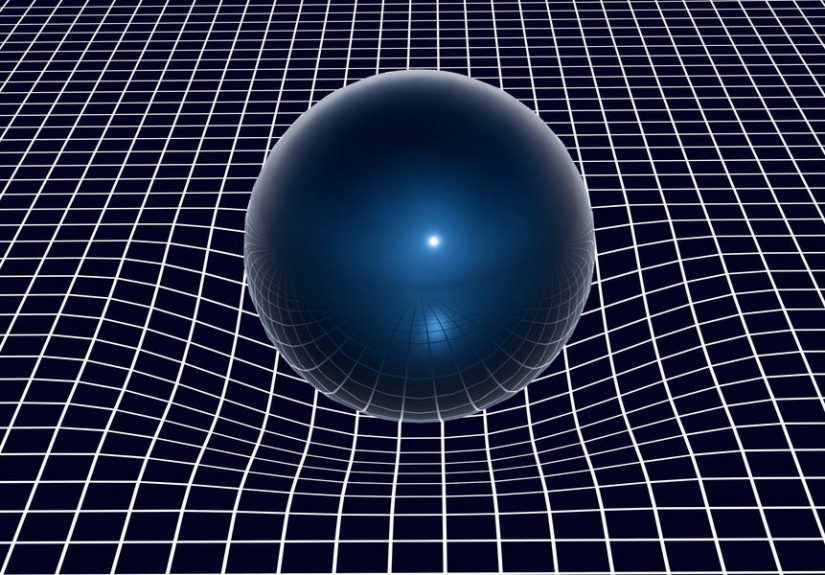
Einstein’s general relativity fused space and time into spacetime, a flexible geometry that can curve, stretch, and
generally behave like a trampoline under the weight of massive objects. Gravity, in this view, isn’t a mysterious invisible
tug-of-warit’s the path objects follow through curved spacetime.
Meanwhile, quantum mechanics showed that reality at tiny scales is not just weird, it’s weird with confidence. Light can behave like a wave,
then like a particle, then like it’s actively trolling the lab equipment. The famous double-slit experiment isn’t just a classic;
it’s the science equivalent of the “I can’t believe that worked” meme, repeated for a century.
Modern physics lives with this uneasy truce: relativity rules the cosmos, quantum mechanics rules the microscopic, and we’re still negotiating
the peace treaty that unifies them. Which is why a “new theory” that claims to reframe the building blocks of reality gets attentionespecially
if it can reproduce the same answers as Einstein on famous tests.
Meet the “Fragments of Energy” Idea
The theory making the rounds comes from two mechanical engineers, Larry Silverberg and Jeffrey Eischen, who propose that matter is more fundamentally
made of fragments of energyobjects that are concentrated like particles yet spread out like waves.
The vibe is: “Stop arguing particle vs. wave. It’s both. Next question.”
The yoga-instructor version: “Embrace the flow.”
A central premise is that energy always flows through regions of space and time. Picture energy as lines that enter and exit a region,
never beginning or ending, and never crossing each other. If that sounds like a cosmic highway system with impeccable lane discipline, yes, that’s the point.
Starting with this “flow” picture, they look for one fundamental building block that can describe both the concentrated “here-ness” of a particle and the
spread-out “everywhere-ish” character of a wave. Their candidate: a fragment of energyhighest at the center and fading with distance, like a bright city
that becomes a glow from far away.
The math-ish version: a field + a fragment
In their published work, the “fragment” isn’t just a poetic phrase. It’s embedded in a field-theory-style formulation where the field satisfies continuity
conditions, and the fragment takes a specific radial form. That’s important because if you want to replace particles and waves, you don’t get to do it with vibes alone.
Physics demands receiptspreferably in the form of equations that make correct predictions.
Their claim is not merely “spacetime is warped,” but that you can build a consistent description starting from a flowing energy field and a fragment primitive,
then recover familiar gravitational resultssometimes by introducing what they call a space-time adjustment.
Two Classic Reality Checks: Mercury’s Wobble and Light’s Bend
If you want to impress physicists, you don’t start by explaining why your horoscope was “basically right.” You start by reproducing the famous tests of established theories.
Einstein did exactly that, using general relativity to explain:
-
Mercury’s perihelion precession: Mercury’s orbit doesn’t repeat perfectly; its closest approach to the Sun shifts over time in a way Newtonian gravity
can’t fully account for. - The bending of light near the Sun: light passing through a gravitational field follows curved spacetime, so starlight grazing the Sun appears deflected.
Silverberg and Eischen argue that their fragments-of-energy framework can match the same outcomes on these problems. In their treatment, the Sun is modeled as a large
fragment of energy and Mercury as a smaller fragment orbiting it. For light bending, the Sun remains the big fragment, while the photon is treated as a tiny, fast-moving
entity (and in some descriptions, effectively “massless,” as photons are in modern physics).
Here’s the key nuance: “matching Einstein” on two classical tests is necessary for a rival framework to be taken seriouslybut it’s not sufficient to replace
relativity. Physics history is full of clever formalisms that can be tuned to mimic known results. The real test is whether the new framework produces
new, distinctive predictions that survive experiments.
So… Did It Actually Upend Space and Time?
“Upend” is a spicy word. It sells magazines. It also makes working physicists squint like they just read a restaurant menu listing “deconstructed water.”
What this proposal really does is shift the storytelling: instead of making spacetime curvature the starring role, it treats a certain kind of energy field
(with a fragment primitive) as the foundational concept, and then derives motion through something like path curvature and change equations.
In one of their follow-on formulations, they even frame motion with a relationship like “action force equals curvature,” replacing the iconic F = ma
with a new kind of dynamical rule.
If you’re thinking, “Waitdon’t we already have fields everywhere?”yes! In quantum field theory, fields are central, and particles are often treated as excitations of fields.
That’s why any proposal claiming to replace “particles and waves” has to be careful in how it relates to what quantum field theory already does extremely well.
A new primitive has to earn its keep by clarifying something we currently find confusing, or by extending our predictive power.
What Would Make This More Than a Clever Repackaging?
The physics community is not allergic to radical ideas. It’s allergic to radical ideas that don’t cash out into testable results.
Here’s what would move a theory like this from “interesting” to “impactful”:
1) Predictions beyond the two “greatest hits”
Mercury and light bending are famous, but general relativity has been tested in many other ways: gravitational time dilation with ultra-precise atomic clocks,
gravitational waves from black hole mergers, frame dragging, and more. A serious challenger needs to match the full suite of testsor clearly explain where it differs and why.
2) A clean bridge to quantum behavior
The original motivation is to make wave-particle duality feel less like a paradox. Great. But “feels less paradoxical” isn’t the same as “reproduces the full quantum
statistical machinery.” Can fragments naturally generate interference patterns, entanglement behavior, and the precise probabilities quantum mechanics predicts?
If yes, show it. If no, show how the model nests inside existing quantum theory without breaking what already works.
3) A distinctive experimental signature
The dream outcome is a prediction that differs slightly from Einstein in a regime we can test: near strong gravity, at extreme precision, or at tiny scales where
quantum gravity effects might peek through. If a fragment-based approach predicts a different relationship between curvature and energy flow under certain conditions,
then experimentalists get a clear target.
Zooming Out: This Fits a Bigger Trend in Modern Physics
Even if this specific “fragment” framework ends up being a stepping stone rather than a destination, it’s aligned with a wider movement in physics:
the suspicion that spacetime might not be fundamental.
In several leading research programs, spacetime is treated as something that emerges from deeper structuresoften tied to information and quantum entanglement.
The holographic principle and related “it-from-qubit” style ideas explore how a space-time geometry could arise from patterns of quantum information.
In that sense, “space and time are not the bottom layer” is not fringeit’s mainstream-adjacent, actively investigated, and deeply debated.
The fragment-of-energy proposal is different in flavorit leans on flow, continuity, and a universal primitivebut it shares the same rebellious impulse:
maybe our most basic categories are just convenient approximations.
Conclusion: A Fun Idea, a Serious Challenge
The best way to read “New Theory Casually Upends Space and Time” is as an invitation: not to throw Einstein out, but to remember that physics advances by daring re-frames
that still respect evidence.
If fragments of energy and flowing lines can reproduce old results, simplify conceptual puzzles, andmost importantlypredict something new that nature confirms,
then “upending space and time” won’t be a headline. It’ll be a chapter title in the next physics textbook.
Experiences: of Living in a Universe That Won’t Sit Still
If you want an “experience” of spacetime getting politely dismantled, you don’t need a particle accelerator. Start with your phone.
The GPS in your pocket works only because engineers account for time behaving differently in different gravitational fields and at different speeds.
Somewhere in the background, clocks are being corrected because Earth is not a neutral stageit’s a lumpy gravitational actor.
The next time your map app nails a weird turn perfectly, you can whisper, “Thanks, relativity,” and feel briefly smug at the universe.
Then try the “Mercury experience,” minus the scorching heat and existential dread. Imagine running on a track where every lap is almost the same,
but the finish line creeps a tiny bit each time. Most days you’d blame your shoes. In physics, that creeping finish line is a clue.
Mercury’s orbit shifting isn’t just trivia; it’s what happens when gravity isn’t a simple Newtonian tug but a geometry (or, in alternative framings,
something that behaves like it). It’s the kind of subtle, repeatable weirdness that makes scientists fall in love with data.
Now do a wave-particle duality “experience” without breaking any lab rules: watch a slow-motion visualization of the double-slit experiment and
let your brain do its very best impression of a laptop fan spinning up. One dot on a screen looks like a particle. Thousands of dots build into a wave-like
interference pattern. The experience here is less “I understand this” and more “I accept that reality is not obligated to match my intuitions.”
That humility is not a consolation prize. It’s a skill.
Next, try the “flow” experiencebecause if a new theory is telling you to “embrace the flow,” you may as well do it literally.
Watch smoke rise from a candle or steam curl from coffee. You’ll see lines that never really start or stop; they just reorganize, twist, and merge into a
bigger pattern. No, your latte is not a model of quantum gravity. But it can train your mind to see processes rather than objects:
motion instead of statues, relationships instead of isolated things.
That shift in attentionaway from “what is it?” toward “how does it change?”is where many big physics ideas begin.
Finally, try the “cosmic perspective” experience: go outside at night, find a bright star, and remember you’re seeing the past.
Light is time travel in the mildest sense: a delay between event and experience.
If spacetime is emergent, or if energy flow is the deeper story, then what you call “now” is less like a universal timestamp and more like a local agreement
among nearby observers. You don’t have to solve equations to feel the philosophical jolt of that.
The experience is a quiet reorientation: you are not watching the universe from the outside. You are a moving part inside its timing system.
Whether the “fragment of energy” framework becomes foundational or fades into the museum of clever attempts, the experience it offers is valuable:
it reminds you that physics is not a pile of facts. It’s a continuous redesign of the concepts we use to make reality legibleone surprisingly sturdy idea at a time.