Table of Contents >> Show >> Hide
- What Counts as a Nonsurgical Hair Loss Treatment?
- Step One: Figure Out Why the Hair Loss Is Happening
- Minoxidil: The Workhorse of Nonsurgical Hair Loss Treatment
- Prescription Medications: Stronger Options for the Right Person
- Corticosteroids for Alopecia Areata and Inflammatory Hair Loss
- Low-Level Laser Therapy: Legit Option or Fancy Red Hat?
- PRP Hair Treatment: Promising, Popular, and Not Cheap
- When the Best Treatment Is Fixing the Trigger
- Do Supplements, Shampoos, and “Miracle” Products Work?
- How Long Do Nonsurgical Hair Loss Treatments Take?
- The Best Strategy: Build a Treatment Plan, Not a Product Collection
- Common Real-Life Experiences With Nonsurgical Hair Loss Treatments
- Conclusion
- SEO Tags
Hair loss has a special talent for showing up at the worst possible moment. Maybe you notice more strands on your pillow, more scalp in bright bathroom lighting, or a ponytail that suddenly feels a little too “minimalist.” The good news is that surgery is not the only road available. In many cases, nonsurgical hair loss treatments can slow shedding, improve density, support regrowth, and help you keep more of the hair you still have.
The less-good news? The hair-loss marketplace is crowded with dramatic promises, moody before-and-after photos, and enough miracle serums to stock a small apothecary. That is why the smartest approach is not buying the loudest bottle on the shelf. It is matching the right treatment to the right cause. Pattern hair loss, stress-related shedding, autoimmune patchy loss, hormone-related thinning, and nutritional deficiencies do not all respond to the same plan.
This guide breaks down the most important hair loss treatment without surgery options, including what they do, who they may help, and what kind of patience they demand. Spoiler: your hair usually works on “slow cooker” timing, not microwave timing.
What Counts as a Nonsurgical Hair Loss Treatment?
When people hear “hair restoration,” they often jump straight to transplants. But nonsurgical hair loss treatments include a wide range of options that do not involve surgery at all. These may include:
- Topical medications such as minoxidil
- Prescription oral medications for certain types of hair loss
- Corticosteroid treatments for autoimmune-related patchy loss
- Low-level laser therapy devices
- Platelet-rich plasma (PRP) treatments
- Correcting triggers such as thyroid problems, iron deficiency, illness, stress, or undernutrition
The big idea is simple: some treatments stimulate follicles, some reduce inflammation, some block hormones that shrink follicles, and some work best by fixing the reason your hair started shedding in the first place.
Step One: Figure Out Why the Hair Loss Is Happening
Before talking about treatments, it helps to say the quiet part out loud: hair loss is not one condition. It is a symptom category. If you treat every kind of shedding like male or female pattern hair loss, you can waste time, money, and emotional energy.
Common causes include:
- Androgenetic alopecia, also called male or female pattern hair loss
- Telogen effluvium, a stress- or illness-related shedding pattern
- Alopecia areata, an autoimmune condition that causes patchy loss
- Hormonal changes, including postpartum shifts and androgen-related thinning
- Medical issues, such as thyroid disease or nutrient deficiencies
- Hair care practices, especially chronic tension from tight styles
This matters because a person with temporary telogen effluvium may improve once the trigger settles down, while someone with pattern baldness usually needs ongoing treatment to keep results going. A dermatologist may recommend scalp exam, medical history, or lab work if the pattern suggests iron deficiency, thyroid dysfunction, or another underlying issue. In other words, sometimes the best hair-loss treatment begins with a blood test, not a shopping cart.
Minoxidil: The Workhorse of Nonsurgical Hair Loss Treatment
If minoxidil for hair loss had a personality, it would be the reliable friend who never brags but quietly gets things done. It is one of the most established nonsurgical options for pattern hair loss and is widely available in topical liquid or foam form.
How it helps
Minoxidil can help slow hair loss and encourage regrowth in some people. It tends to work best when follicles are still active but shrinking, which is common in early to moderate pattern hair loss. It is not a time machine, and it usually does not recreate a teenage hairline. What it can do is help many users keep more hair, improve density, and sometimes regrow finer strands into stronger ones over time.
What to expect
Consistency matters more than enthusiasm. Using it for one week with the passion of a motivational speaker and then forgetting it for ten days will not impress your scalp. Most people need several months before they can judge whether it is helping. Early shedding can happen at the beginning, which feels rude, but it does not always mean the treatment is failing. Many people also need to keep using minoxidil to maintain any gains.
Best fit
Topical minoxidil is commonly used for male and female pattern hair loss, and dermatologists may also use it as part of a broader plan for other types of thinning. It is often the first nonsurgical option people try because it is accessible and does not require surgery, scalp incisions, or a second mortgage.
Prescription Medications: Stronger Options for the Right Person
Some cases of hair loss respond better when treatment moves beyond over-the-counter products.
Finasteride for men
For men with androgenetic alopecia, finasteride is one of the most important prescription options. It works by reducing the effect of the hormone pathway that contributes to follicle miniaturization in male pattern hair loss. In practical terms, that means it may help slow progression and improve hair retention, especially on the crown and top of the scalp.
Like minoxidil, finasteride is usually not a one-and-done treatment. Results take time, and stopping it can mean losing ground. That is why the best candidates are usually people who understand that hair maintenance is, well, maintenance.
Spironolactone for some women
For some women with female pattern hair loss, dermatologists may prescribe spironolactone. This medication is often used when hormone-related thinning seems to be part of the picture. It is not the right fit for everyone, but it can be useful when selected carefully and monitored by a clinician.
What matters most
The goal with prescription therapy is not “throw every pill at the problem.” It is matching the medication to the type of hair loss, medical history, and risk profile. A targeted plan beats random experimentation every single time.
Corticosteroids for Alopecia Areata and Inflammatory Hair Loss
Not all hair loss comes from genetics. If the problem is alopecia areata treatment, the strategy changes. Alopecia areata is an autoimmune form of hair loss that often causes smooth, patchy bald spots. In these cases, corticosteroids are often part of the nonsurgical treatment conversation.
How they are used
Corticosteroids may be given as injections into affected areas, used topically, or included in a broader medical plan. For localized patchy disease, injections are often considered a mainstay because they target inflammation near the follicle. In less dramatic terms, they tell the immune system to please calm down and stop picking fights with hair follicles.
Why diagnosis is crucial
If a person assumes patchy hair loss is just “stress” and skips evaluation, they may miss a type of hair loss that needs a different approach. That is why sudden bald patches, eyebrow loss, or rapid changes deserve medical attention sooner rather than later.
Low-Level Laser Therapy: Legit Option or Fancy Red Hat?
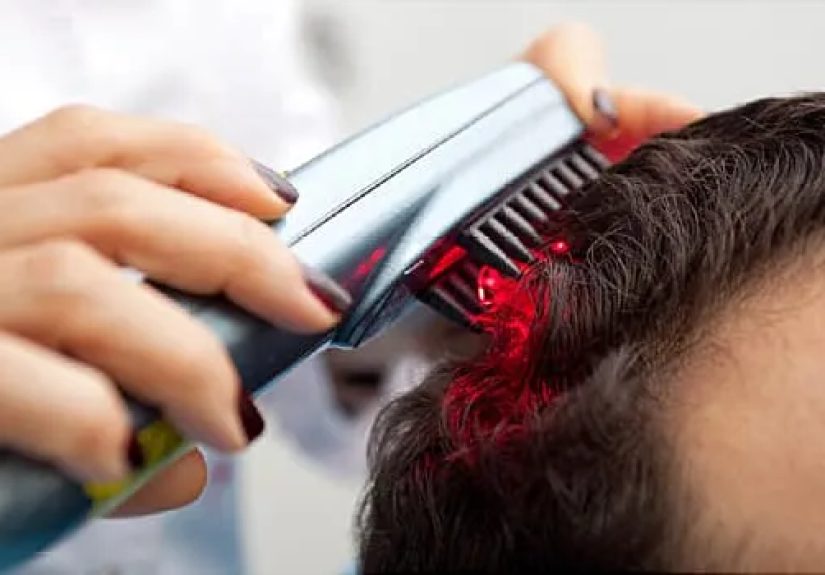
Low-level laser therapy for hair loss has earned a place in the conversation, but it should be discussed with realistic expectations. These devices may come in the form of caps, combs, or helmets and use light-based technology intended to stimulate follicles.
The appeal
Laser devices are attractive because they are noninvasive, do not involve surgery, and can sometimes be used at home. For people who dislike topical medications or want an add-on treatment, that convenience is appealing.
The reality
Evidence suggests laser therapy may help some people, especially with pattern hair loss, but it is generally not considered as proven or as foundational as first-line medication-based therapy. In plain English: it may be helpful, but it is not a magic helmet that turns three follicles into a rock-band mane by Friday.
Who may consider it
People who want a non-drug option, or an adjunct to a broader routine, sometimes explore laser devices. The smartest way to view them is as a possible supporting player rather than the unquestioned star of the show.
PRP Hair Treatment: Promising, Popular, and Not Cheap
PRP hair treatment has become one of the buzziest nonsurgical options in dermatology clinics. PRP stands for platelet-rich plasma, which involves processing a person’s own blood and then using the platelet-rich portion in treatment of the scalp.
Why people are interested
PRP sounds appealing because it is personalized and procedure-based without being surgical. Many people like the idea of stimulating hair growth with their own biological material instead of relying only on medication.
What the evidence says
PRP is promising, and many clinics offer it for pattern hair loss, but the evidence is still less settled than it is for core therapies like minoxidil or finasteride. Some patients report improved thickness or density, especially when PRP is part of a broader regimen. But it is not universally effective, it often requires repeated sessions, and it can get expensive quickly.
Bottom line
PRP may be worth discussing if you want an in-office, nonsurgical option and understand that the price tag can be enthusiastic even when the results are modest. It is a “maybe helpful” treatment, not a guaranteed comeback tour.
When the Best Treatment Is Fixing the Trigger
Sometimes the right answer is not a scalp serum or a procedure. It is solving the problem behind the shedding.
Telogen effluvium
Stress, high fever, illness, major weight loss, childbirth, surgery, and other body-level stressors can push more hairs into the shedding phase. The frustrating part is timing: the shedding often shows up a while after the trigger, which makes people think the loss is random. It is not always random. It is often delayed.
In these cases, hair often improves after the trigger is corrected or the body stabilizes. That does not make the process feel quick or fun, but it does mean recovery is often possible without surgery.
Nutrient or hormone issues
Iron deficiency, thyroid problems, low protein intake, and certain other medical issues can contribute to thinning. Treating the deficiency or medical condition can be a key part of the hair-loss plan. This is one reason why blanket supplement use is not always the answer. Taking random hair gummies because the jar is pink and optimistic is not the same thing as correcting a real deficiency.
Do Supplements, Shampoos, and “Miracle” Products Work?
This is the part where the internet gets a little dramatic. Some supplements can help if a person has an actual deficiency. But for the average person with no deficiency, the evidence for many popular hair supplements is mixed or weak. Biotin, in particular, gets celebrity treatment in marketing, but that does not mean it deserves celebrity treatment in every hair-loss routine.
Supportive scalp care can be useful, and some products may improve the look or feel of the hair you already have. But if a product implies it can outsmart genetics, hormones, inflammation, stress, and time itself with one botanical blend, skepticism is healthy.
The most productive question is not, “What is the trendiest product?” It is, “What does my type of hair loss usually respond to?”
How Long Do Nonsurgical Hair Loss Treatments Take?
This is where many people get discouraged. Hair growth is slow, which means results are slow. Most legitimate treatments need months, not days, before progress becomes visible. The first win is often not dramatic regrowth. It is simply losing less hair, shedding more slowly, or keeping existing strands thicker for longer.
That is why photos, consistent lighting, and patience matter. Your bathroom mirror at 6:15 a.m. after bad sleep is not a peer-reviewed measurement tool.
The Best Strategy: Build a Treatment Plan, Not a Product Collection
The best nonsurgical approach usually combines three ideas:
- Get the cause right. Pattern hair loss, autoimmune loss, and stress shedding need different plans.
- Choose evidence-based treatment first. Start with what is medically grounded before chasing novelty.
- Stick with it long enough to judge it fairly. Hair follicles do not respond to panic-buying.
For one person, the best plan may be topical minoxidil plus patience. For another, it may be prescription medication and lab work. For someone else, it may be steroid injections for alopecia areata or PRP as an add-on. The point is not to copy someone else’s routine. The point is to build the right one for your scalp.
Common Real-Life Experiences With Nonsurgical Hair Loss Treatments
One of the most frustrating parts of hair loss is that the emotional experience is often bigger than people expect. At first, many people tell themselves they are imagining it. They change lighting, change shampoo, change part lines, and briefly become amateur forensic analysts of the shower drain. Then comes the moment when denial gives way to math: more strands on the sink, more scalp in photos, less volume in a bun, less density at the temples or crown.
From there, the experience usually splits into two tracks: panic and research. People often spend a few days, or a few months, bouncing between worst-case thinking and late-night scrolling. That is usually when they discover two equally unhelpful extremes. One side says, “Do nothing, it will pass.” The other says, “Buy twelve products, a red-light cap, marine collagen, onion oil, and a level of optimism normally reserved for lottery winners.” Most people eventually realize the truth lives in the less glamorous middle.
For those who start minoxidil, the early experience is often emotionally confusing. They may feel hopeful on day one, annoyed by the routine on day seven, and deeply suspicious by week three if they notice extra shedding. Many people need reassurance that the process takes time and that early changes do not automatically mean failure. Then comes the next phase: learning whether they can actually stick to the routine. A treatment can be effective in theory and still fail in real life if the person hates using it.
People who move into prescription treatment often describe a different experience: more confidence because the plan feels medically directed, but also more questions. They want to know how long it takes, what side effects matter, and whether the treatment is fixing the problem or just pressing pause. That uncertainty is common. Hair loss treatment is often less about instant transformation and more about preserving ground, which can feel underwhelming until you compare photos six months apart and realize things are no longer getting worse.
PRP and laser therapy tend to create another kind of experience altogether. These options often attract people who want something more active, more high-tech, or more “professional” than a foam or pill. The emotional upside is that it feels proactive. The downside is that expectations can outrun reality. Some people feel encouraged by subtle thickening or less shedding. Others feel disappointed that an expensive treatment produced a result best described as “kind of better in flattering lighting.” That does not mean the treatment is useless. It means hair restoration wins are often incremental, not cinematic.
Then there are the people with stress-related shedding, thyroid issues, postpartum hair loss, or nutritional problems. Their experience is often defined by confusion more than vanity. They may not have had gradual thinning at all. Instead, they suddenly notice handfuls of hair and assume they are going bald overnight. For them, one of the most powerful moments is simply learning that the trigger may be temporary and that regrowth is possible. Knowing the pattern has a name can reduce a lot of fear.
Across almost every hair-loss journey, one emotional theme keeps showing up: people do better when they stop chasing miracles and start tracking patterns. Progress usually looks boring before it looks impressive. Less shedding. Better density. A steadier hairline. A part that no longer seems to widen every month. In the world of nonsurgical hair loss treatments, those “boring” wins are often the ones that matter most.
Conclusion
Nonsurgical hair loss treatments can absolutely be worth pursuing, but they work best when expectations are realistic and the diagnosis is accurate. Minoxidil remains a major first step. Prescription medications can be game-changers for the right candidate. Corticosteroids matter in autoimmune patchy loss. PRP and low-level laser therapy for hair loss may help as part of a larger plan. And sometimes the best treatment is not adding something to your routine, but correcting the reason your hair started falling out.
If there is one takeaway to keep, make it this: hair loss is easier to manage when you stop treating it like one universal problem. The right plan is personal, evidence-based, and patient. Your scalp may be dramatic, but your treatment plan does not have to be.
Educational note: This article is for general informational purposes and is not a substitute for personalized medical advice, diagnosis, or treatment.