Table of Contents >> Show >> Hide
- Why the Basic French Enamel Thermometer Still Turns Heads
- What Enamel Brings to the Outdoors
- How to Get Accurate Readings from an Outdoor Thermometer
- Why Gardeners and Outdoor People Love Thermometers
- How to Style an Enamel Thermometer Outdoors
- Who Should Buy This Kind of Thermometer?
- Conclusion: A Small Outdoor Detail with Big Personality
- A 500-Word Experience Section: What It Feels Like to Live with an Enamel Thermometer Outdoors
Some outdoor accessories whisper. Others politely clear their throats. An enamel thermometer from Basic French does neither. It hangs on a wall, catches the light, flashes a little color, and says, with delightful French-schoolhouse confidence, “It is exactly this warm, thank you very much.” That is part of its charm. The other part is that it manages to be both useful and absurdly good-looking, which is the dream résumé for anything that lives on a porch, patio, shed, garden wall, or mudroom threshold.
Outdoor decor usually falls into one of two camps: practical but forgettable, or beautiful but suspiciously unhelpful. A classic enamel thermometer slips right between those extremes. It gives you real temperature information, yes, but it also delivers mood, character, and the kind of old-world visual punch that makes a plain exterior wall feel styled instead of merely finished. In a design culture that loves “curated outdoor living,” this is the rare object that earns the phrase without trying too hard.
The appeal of enamel thermometers is not just nostalgia. It is the combination of readable temperature tracking, durable construction, and timeless color. And when the piece in question is tied to Basic French, the object picks up an extra layer of personality: a little flea-market romance, a little bistro utility, and a little “I definitely know how to arrange terracotta pots” energy.
Why the Basic French Enamel Thermometer Still Turns Heads
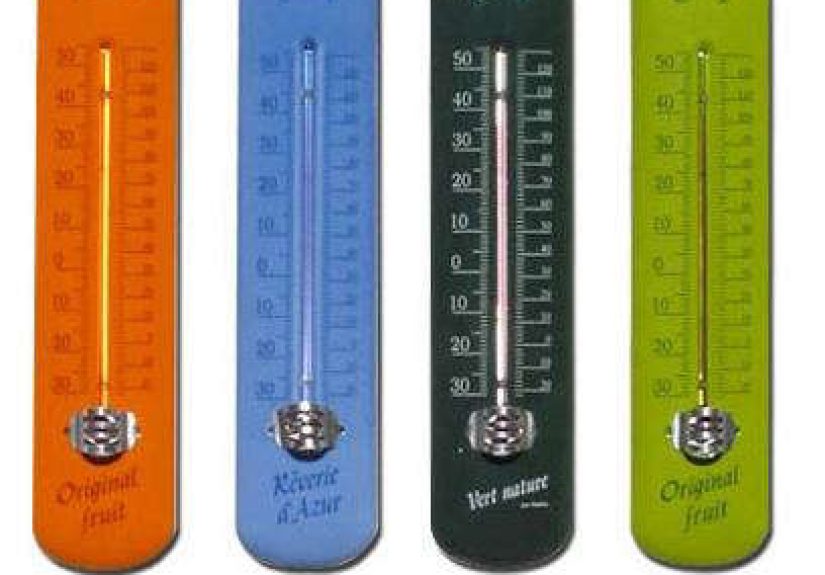
Years ago, the design world took notice of Basic French enamel thermometers for a simple reason: they were cheerful, mercury-free, and unapologetically decorative. Instead of looking like lab equipment that got lost on the way to science class, they looked like something you might discover outside a garden shop in Provence or on the wall of a countryside café where someone serves strong coffee and acts unimpressed by your order.
That balance matters. A good outdoor wall thermometer should be easy to read at a glance, but it should also belong visually to the space. The Basic French version hits that sweet spot with a slim profile, traditional analog scale, and glossy enamel finish that feels crisp rather than fussy. It is the sort of object that makes a humble side yard feel intentional.
Color Does a Lot of Heavy Lifting
One reason these thermometers became memorable is color. Outdoor pieces are often trapped in a parade of beige, black, and “weathered gray,” as if every yard is legally required to look like a brochure for tasteful restraint. Enamel changes the mood. A bright red or navy thermometer can act like punctuation on a fence or clapboard wall. White and black feel graphic and classic. Green and yellow lean playful. Lavender says, very softly, “This garden has opinions.”
That color story is not frivolous. It is one of the reasons French enamel decor has stayed appealing across decades. A glossy finish reflects light beautifully, helps details stay visible, and lends an object the polished sturdiness that plain painted metal often lacks. In outdoor spaces, where materials can quickly look tired, that visual resilience matters almost as much as physical durability.
Old-School Form, Everyday Function
Analog thermometers have a quiet superpower: they do not beg for attention. No batteries. No app. No notifications. No dashboard insisting that your patio has “updated its climate profile.” You look, you know the temperature, and life goes on. For many homeowners, gardeners, and porch-sitters, that simplicity is exactly the point.
There is also something pleasingly human about a thermometer you can read from the kitchen door or garden path. It becomes part of daily rhythm. Before you water herbs, before you open the windows, before you decide whether dinner happens outside, you glance at it. Done. That kind of usefulness ages well.
What Enamel Brings to the Outdoors
When people hear “enamel,” they sometimes think of cookware first. Fair enough. But the material story is bigger than a Dutch oven and a chili recipe. Porcelain enamel on steel is valued because it combines the strength of metal with a glass-like coated surface that is decorative, hard-wearing, and well suited to repeated exposure in everyday environments. That is one reason enamel shows up in everything from household goods to architectural applications.
For an outdoor enamel thermometer, that matters in three ways: finish, feel, and longevity. Finish gives the piece its signature shine and rich color. Feel gives it substance; it looks intentional rather than flimsy. Longevity gives buyers confidence that the object can live outside without instantly turning into a sad, streaky relic by Labor Day.
Durability Without Looking Industrial
Some weather-ready products lean so hard into toughness that they look as if they belong on a loading dock. Enamel offers another path. It can be durable without feeling aggressive. That is perfect for outdoor spaces where function matters, but beauty matters too. A garden wall, back porch, or greenhouse entry often benefits from objects that feel like tools and ornaments at the same time.
And that is where the Basic French angle becomes especially charming. The object reads as practical, but never sterile. It fits naturally beside galvanized watering cans, old wood benches, wicker baskets, brick paths, painted shutters, or a zinc-topped potting table. It is, in other words, a utility item with excellent manners.
How to Get Accurate Readings from an Outdoor Thermometer
Now for the unglamorous truth: even the prettiest thermometer can lie to you if you hang it in the wrong place. Direct sun, reflected heat, trapped air, and hot wall surfaces can all distort readings. If you want your decorative outdoor thermometer to be useful, placement matters.
Best Placement for an Outdoor Wall Thermometer
A shaded, well-ventilated location is ideal. A north-facing wall is often recommended because it receives less direct sun exposure, which reduces radiant heat bias. If that is not possible, aim for a spot that stays protected from long stretches of direct sunlight and is not tucked into a heat pocket.
Height matters too. In general, thermometer guidance favors mounting around eye level and roughly 4.5 to 6 feet above the ground. That range helps create more representative air-temperature readings while keeping the scale practical to read. Try to avoid placing a thermometer right above concrete, dark decking, grills, or heat-radiating masonry that can throw off the number.
Also skip the “cute but wrong” locations: directly under a black metal eave, pressed against a baking-hot garage door, or mounted beside the world’s sunniest patio stone wall. Your thermometer is trying to measure air temperature, not the personal feelings of scorched siding.
Analog Does Not Mean Guesswork
Many classic outdoor thermometers use a spirit-filled tube rather than mercury, which makes them a safer and more appealing everyday choice for home use. In well-made designs, the scale is clear, the contrast is good, and the readout is dependable for normal household and garden purposes. No, it is not a laboratory instrument. But for deciding whether it is jacket weather, seed-starting weather, or iced-tea-on-the-porch weather, it does the job beautifully.
Look for easy-to-read numerals, a visible temperature column, and dual Fahrenheit/Celsius markings if your household likes options. A beautiful thermometer that requires squinting, guessing, and one dramatic kneel in the shrubbery is less “classic outdoor accessory” and more “tiny backyard feud.”
Why Gardeners and Outdoor People Love Thermometers
There is a reason thermometers remain useful beyond mere curiosity. Air temperature shapes comfort, frost risk, plant survival, and the timing of outdoor chores. Gardeners pay attention because a light frost can injure tender plants, and a hard freeze can end warm-season dreams very quickly. Meanwhile, soil and air temperature help guide planting decisions for vegetables, herbs, and seedlings.
That makes a wall thermometer more than decorative theater. It becomes a quiet decision-making tool. Should you leave the basil out overnight? Open the cold frame? Delay planting heat-loving crops? Bring the cushions in? A quick glance often answers the question.
Useful in Every Season
In spring, an outdoor thermometer helps you watch those roller-coaster temperature swings that make gardeners both hopeful and suspicious. In summer, it tells you whether the patio will be relaxing or whether your chair is about to become a lightly toasted skillet. In fall, it becomes part harvest guide, part frost-warning companion. In winter, it has one noble mission: confirming that yes, it really is that cold, and no, you are not imagining it.
That four-season usefulness is why analog thermometers continue to appeal even in the digital age. Plenty of people own smart weather devices and still want a visible wall thermometer outside. The reason is simple: speed and presence. You do not need to unlock anything. You do not need a signal. You just look outside and know.
How to Style an Enamel Thermometer Outdoors
The styling advantage of a French outdoor thermometer is that it behaves like exterior hardware. It is small enough not to dominate, but distinct enough to finish a space. Think of it the way you think of a great mailbox, a handsome latch, or a charming house number: minor in scale, major in impression.
Best Places to Hang One
- Garden shed wall: Adds charm and gives you useful temperature information before potting, pruning, or seed sowing.
- Back porch or patio post: Makes it easy to check conditions before breakfast outside or evening drinks.
- Near a potting bench: A perfect match for gardeners who like practical tools with style.
- Entry courtyard or side door: Adds a decorative accent in a spot people actually pass every day.
- Greenhouse exterior: Looks right at home and reinforces the classic utility vibe.
How to Pair It with Other Outdoor Materials
Enamel pairs especially well with wood, brick, stone, and galvanized metal. On painted clapboard, it reads crisp and graphic. Against old brick, it feels collected and a little European. On natural wood, it brings welcome contrast. Near terracotta, it adds color without fighting the earthy palette.
If your outdoor style leans cottage, farmhouse, French country, or vintage industrial, an enamel thermometer slides in almost suspiciously well. If your style is more modern, choose a restrained color like white, black, or navy and let the clean vertical shape do the work. The result is less quaint and more quietly intelligent.
Who Should Buy This Kind of Thermometer?
An enamel thermometer is ideal for people who want outdoor decor with function. That includes gardeners, design lovers, porch people, weather-watchers, vintage enthusiasts, and anyone who has ever looked at a bare outdoor wall and thought, “This needs one smart little object, not a giant sign yelling about coffee.”
It is especially right for homeowners who prefer analog tools, appreciate durable materials, and want everyday objects to contribute to the atmosphere of a space. The Basic French style is not flashy in the modern gadget sense. It is better than that. It is calm, useful, colorful, and charmingly self-assured.
In a market full of disposable decor, that matters. A good enamel thermometer does not feel trendy. It feels established. It looks as though it belongs, which may be the highest compliment any outdoor accessory can receive.
Conclusion: A Small Outdoor Detail with Big Personality
Outdoors: Enamel Thermometers from Basic French is not really a story about temperature alone. It is a story about the pleasure of objects that do more than one thing well. These thermometers help you read the day, but they also shape the mood of a garden, porch, or entry in a way plastic gadgets rarely can.
They offer color without chaos, utility without ugliness, and nostalgia without dust. Hang one in the right spot, and it becomes part weather guide, part exterior jewelry, part daily ritual. That is a lot to ask of one slim piece of enamel and glass. Yet somehow, it delivers. Quietly. Elegantly. With just enough French attitude to make the forecast feel chic.
A 500-Word Experience Section: What It Feels Like to Live with an Enamel Thermometer Outdoors
The experience of living with an enamel thermometer outdoors is less dramatic than buying a new patio set and somehow more satisfying. It sneaks up on you. At first, it is just a handsome object on the wall. A nice detail. A little color. Something you notice when you are carrying grocery bags through the side gate or stepping out with your morning coffee. Then, without ceremony, it becomes part of how you understand the day.
You begin to look at it instinctively. Not because you are obsessed with weather, although that hobby is more common than people admit, but because the thermometer turns temperature into something visible and immediate. A phone app can tell you it is 61 degrees. A wall thermometer lets you see that number in the actual place where you are standing. The difference sounds small. It is not. One feels abstract. The other feels lived in.
On spring mornings, the thermometer becomes a negotiator between optimism and common sense. The sun is out, the birds are busy, and you want to believe the season has fully arrived. Then you glance at the scale and realize the air still has bite. Suddenly the sweater stays on, the seedlings stay protected, and the coffee tastes even better because you earned it through restraint. The thermometer saves you from seasonal overconfidence, which is a public service few objects perform so elegantly.
In summer, the experience shifts. The thermometer is no longer a warning against false spring; it is your porch-side truth teller. It tells you whether lunch outside will feel breezy and charming or like a personal challenge issued by the sun. It helps you decide when to water containers, when to move cushions into shade, and when to postpone every ambitious outdoor task until evening. It does all this without beeping, buzzing, or requiring a password. Frankly, more household objects should be this polite.
There is also a visual pleasure that grows over time. Because the thermometer is always there, it begins to anchor the space around it. A blank stretch of siding feels finished. A potting corner feels more purposeful. A shed wall looks less like a storage zone and more like a tiny destination. You start noticing how well the glossy enamel plays against wood grain, brick texture, trailing vines, or worn terracotta. The piece becomes part of the outdoor composition, the same way a well-placed lantern or old bench becomes part of the identity of a garden.
Then fall arrives, and the thermometer takes on a slightly more serious tone. It helps you track the edge between cool and cold, pleasant and punishing, open-window weather and definitely-not. If you garden, it starts to feel like a partner in planning: when to harvest the last tender herbs, when to cover something precious, when to admit that tomato season has made its final speech. In winter, it becomes almost comic in its honesty. You peer outside, hoping for mercy. The thermometer offers none. Yet even that has charm. There is comfort in a tool that simply tells the truth.
Ultimately, the experience is about attention. An enamel thermometer encourages a slower, more grounded relationship with outdoor life. It asks you to look up, step outside, notice the air, and adjust accordingly. Not every useful object creates that kind of ritual. This one does, and it does it with style.