Table of Contents >> Show >> Hide
- What is the PASI score?
- What PASI actually measures
- How to calculate PASI (step by step)
- Worked examples (with real math, not “math vibes”)
- How PASI is used (and why you hear about PASI 75, PASI 90, and PASI 100)
- Interpreting a PASI score: what counts as mild, moderate, or severe?
- Limitations of PASI (a.k.a. why this isn’t a “perfect score”)
- Practical tips if you’re tracking psoriasis severity
- FAQ
- Real-world experiences with PASI (about )
- Conclusion
- SEO tags
If you’ve ever wondered how dermatologists turn “wow, that looks uncomfortable” into a number that can be tracked, compared, and studied, meet the
PASI scoreshort for Psoriasis Area and Severity Index. Think of it as a report card for plaque psoriasis that blends two things:
how much skin is involved and how intense the plaques look. It’s widely used in dermatology research and clinical trials, and it also shows up in
specialist clinics when your care team wants a consistent way to measure changes over time.
This guide breaks down what PASI means, how the math works, and what the final number can (and can’t) tell youwithout turning your brain into a scaly plaque.
What is the PASI score?
The PASI score is a standardized scoring system that estimates psoriasis severity by combining:
- Extent: the percentage of skin affected in different body regions
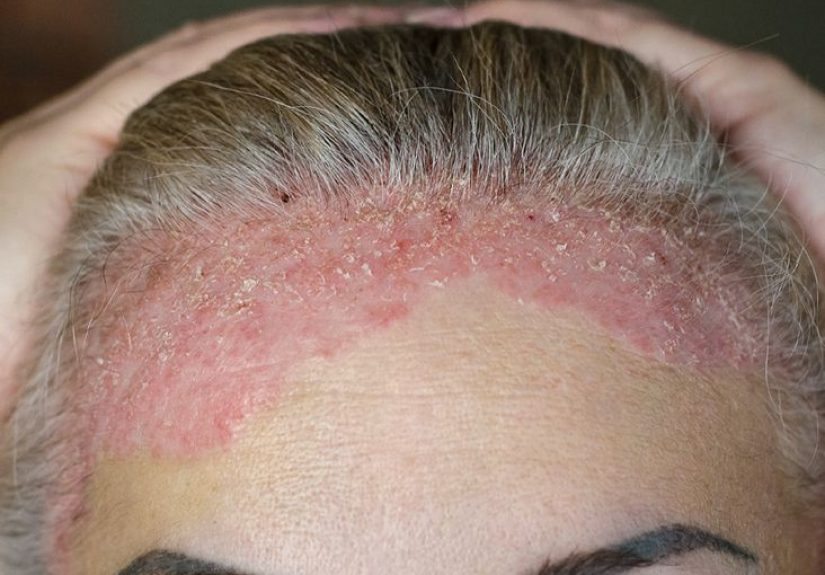
- Severity: how red (or discolored), thick, and scaly the plaques appear
The result is a single number that typically ranges from 0 (no psoriasis) to 72 (maximum severity). PASI is especially common in
dermatology clinical trials, where researchers need consistent yardsticks to compare treatmentslike when a new biologic or systemic therapy is being tested.
What PASI actually measures
1) Severity (appearance of plaques): 3 features, each scored 0–4
For each body region, the clinician grades three visible features of plaque psoriasis:
- Erythema (redness) or discoloration (important across different skin tones)
- Induration (thickness)
- Scaling (flaking/desquamation)
Each feature is scored from 0 to 4:
- 0 = none
- 1 = mild
- 2 = moderate
- 3 = severe
- 4 = very severe
These three numbers are added together for that region, creating a regional severity sum from 0 to 12.
2) Area (coverage): scored 0–6 based on percent involvement
Next comes coverage. PASI doesn’t use the exact percent (like 17%); it uses brackets called an area score.
Here’s the commonly used PASI area scoring scale:
| Area score | Percent of that region affected |
|---|---|
| 0 | 0% |
| 1 | 1–9% |
| 2 | 10–29% |
| 3 | 30–49% |
| 4 | 50–69% |
| 5 | 70–89% |
| 6 | 90–100% |
3) Body regions and weighting (because legs are not the same size as your forehead)
PASI divides the body into four regions and assigns each one a weighting factor based on its approximate share of total body surface area (BSA):
| Region | Common abbreviation | Weight |
|---|---|---|
| Head/neck | h | 0.1 |
| Upper extremities (arms) | u | 0.2 |
| Trunk (chest/back) | t | 0.3 |
| Lower extremities (legs) | l | 0.4 |
Translation: the same-looking plaques on your legs “count” more in PASI than the same-looking plaques on your head, because the legs represent more skin area overall.
How to calculate PASI (step by step)
The PASI formula looks intimidating at first glance, but it’s basically a repeatable recipe performed four times (once per region), then added together.
Step 1: Estimate percent coverage in each region
For each region (head, arms, trunk, legs), estimate what percentage of that region has psoriasis plaques. Then convert that percent into the
area score (0–6) using the table above.
Step 2: Score erythema/discoloration, induration, and scaling (0–4)
In each region, rate:
E (erythema/discoloration), I (induration/thickness), and S (scaling).
Step 3: Calculate each region’s subtotal
For each region:
- Add the severity scores: (E + I + S)
- Multiply by the area score: × A
- Multiply by the region weight: × W
Written as a formula for one region:
Regional PASI = (E + I + S) × A × W
Step 4: Add all four regional subtotals
Total PASI = PASI(h) + PASI(u) + PASI(t) + PASI(l)
The final number falls between 0 and 72.
Worked examples (with real math, not “math vibes”)
Example 1: Mild, mostly on arms
Imagine psoriasis is mainly on the arms, with a few small plaques elsewhere:
- Head (h): 0% affected → A = 0; severity irrelevant → regional score = 0
- Arms (u): about 12% affected → A = 2
- Trunk (t): about 5% affected → A = 1
- Legs (l): 0% affected → A = 0
Now score severity (0–4) in each involved region:
- Arms: E = 2 (moderate), I = 1 (mild), S = 2 (moderate) → (E+I+S) = 5
- Trunk: E = 1, I = 1, S = 1 → (E+I+S) = 3
Calculate region totals:
- Arms subtotal: (5) × A(2) × W(0.2) = 5 × 2 × 0.2 = 2.0
- Trunk subtotal: (3) × A(1) × W(0.3) = 3 × 1 × 0.3 = 0.9
Total PASI = 0 (head) + 2.0 (arms) + 0.9 (trunk) + 0 (legs) = 2.9
That’s a low PASI scoreoften consistent with mild disease by many definitionsthough severity labels can vary depending on the clinic, guideline, and what areas are affected.
Example 2: Moderate-to-severe, widespread plaques
Now imagine a bigger flare:
- Head: 20% affected → A = 2
- Arms: 35% affected → A = 3
- Trunk: 50% affected → A = 4
- Legs: 60% affected → A = 4
Severity scores (E/I/S):
- Head: 2 / 2 / 2 → sum = 6
- Arms: 3 / 2 / 3 → sum = 8
- Trunk: 3 / 3 / 3 → sum = 9
- Legs: 4 / 3 / 4 → sum = 11
Regional totals:
- Head: 6 × 2 × 0.1 = 1.2
- Arms: 8 × 3 × 0.2 = 4.8
- Trunk: 9 × 4 × 0.3 = 10.8
- Legs: 11 × 4 × 0.4 = 17.6
Total PASI = 1.2 + 4.8 + 10.8 + 17.6 = 34.4
A PASI in the 30s signals substantial disease burdensomething you’d often see in moderate-to-severe plaque psoriasis, and a level where systemic treatment is commonly discussed.
How PASI is used (and why you hear about PASI 75, PASI 90, and PASI 100)
In everyday language, PASI is used in two main ways:
- Absolute PASI: the current score (like 2.9 or 34.4). This helps describe how severe psoriasis is right now.
- Relative improvement: how much the score drops from baseline after treatment. This is where terms like PASI 75 show up.
Here’s the cheat sheet:
- PASI 75 = at least a 75% improvement from the starting PASI
- PASI 90 = at least a 90% improvement (near-clear for many people)
- PASI 100 = 100% improvement (completely clear skin by this metric)
Why do trials love these cutoffs? Because they’re simple, consistent endpoints. A study can report, “X% of participants achieved PASI 90,” and everyone reading knows what that means.
Interpreting a PASI score: what counts as mild, moderate, or severe?
You’ll see different severity cutoffs depending on the source and context. Some frameworks describe PASI > 10 as a marker of
moderate-to-severe psoriasis, especially when paired with quality-of-life impact or involvement of high-impact areas (hands, feet, face, genitals).
Others use lower cutoffs for “mild” when discussing treatment goals or remission.
The most useful way to interpret PASI is usually:
- Track your baseline (your starting number)
- Watch the direction and magnitude of change after treatment adjustments
- Pair it with patient experience (itch, pain, sleep, confidence, daily function), because PASI alone doesn’t capture those
Limitations of PASI (a.k.a. why this isn’t a “perfect score”)
PASI is respected, but it’s not magic. Common limitations include:
- It’s partly subjective: two clinicians might grade thickness or scaling slightly differently, especially if one has more experience using PASI.
- Area scoring is non-linear: jumping from 9% to 10% in a region changes the area score bracket, even though the skin change might be small.
- It can underweight “small but mighty” psoriasis: a small patch on the palms can wreck your day, but not move PASI much because it covers little surface area.
- Special sites like nails, scalp, and intertriginous areas (skin folds) may be underrepresented unless separate tools are used.
- Skin tone considerations: redness is not the only expression of inflammation; discoloration can look different across skin tones, and clinicians need to evaluate thoughtfully.
That’s one reason many guidelines and clinics also use tools like BSA (body surface area), PGA (Physician Global Assessment),
and quality-of-life measures like DLQI.
Practical tips if you’re tracking psoriasis severity
If you’re a patient (or a caregiver) and you want your visits to be more productive, these habits can helpwithout turning your bathroom into a research lab:
- Ask what metric your clinician uses: PASI, BSA, PGA, or a combination. Consistency matters more than the specific tool.
- Track what PASI doesn’t capture: itch intensity, pain, sleep disruption, stress triggers, and how symptoms affect school, work, sports, or social life.
- Take consistent photos: same lighting, similar distance, and the same body area. (Bonus points for not using the “horror-movie flashlight under the chin” angle.)
- Log treatment timelines: when you started or changed a topical, phototherapy schedule, or systemic therapy. This makes “before vs. after” clearer.
FAQ
Can I calculate my own PASI score at home?
You can estimate it, but PASI was designed as a clinician-rated measure, and accuracy improves with training and practice. If you want a patient-friendly approach,
ask your dermatologist what tracking method makes sense for you (sometimes BSA, PGA-style ratings, or symptom diaries are more useful for day-to-day monitoring).
Is PASI used for all types of psoriasis?
PASI is most commonly used for plaque psoriasis. Other forms (like pustular or erythrodermic psoriasis) may require additional assessment tools and clinical judgment.
Does PASI measure itch or pain?
No. PASI focuses on visible plaque features and coverage. That’s why quality-of-life tools (like DLQI) and symptom measures are often used alongside PASI.
What does “PASI 75” mean for a real person?
It means your PASI score has improved by at least 75% compared with your baseline. For example, if you started at PASI 20, getting to PASI 5 or lower meets PASI 75.
Many newer therapies aim for higher response targets like PASI 90 or PASI 100, depending on your situation and treatment goals.
Real-world experiences with PASI (about )
PASI is a number, but living with psoriasis is a full-body, full-calendar experienceappointments, routines, flare surprises, and the emotional math of
“Will this outfit feel comfortable today?” Here are a few realistic scenarios that show how PASI thinking can play out in everyday life.
Experience 1: “My skin looks better, but I want proof.”
A lot of people start tracking severity because memory can be unreliableespecially when flares come and go. Someone might feel like their psoriasis is “about the same”
until a clinician scores PASI at baseline and again after treatment. Seeing a drop (say, from the high teens to single digits) can be validating.
It turns improvement into something you can point to, which is helpful when you’re deciding whether to stay the course, step up treatment, or troubleshoot triggers.
Experience 2: “My PASI barely moved… but my life improved a lot.”
PASI can miss the drama of “high-impact areas.” Imagine psoriasis mainly on hands: the total affected area might be small, so PASI doesn’t skyrocket.
But the impact can be hugepain with gripping a pencil, discomfort while washing hands, embarrassment during a handshake, or cracked skin that makes sports miserable.
In these cases, clinicians often combine PASI with BSA, PGA, and quality-of-life questions. The real win isn’t just a number droppingit’s being able to do normal stuff
without negotiating with your skin first.
Experience 3: “The score changed because the season changed.”
Many people notice patterns: winter dryness, stress during exams, certain infections, or skipping moisturizer for a week (because life happens).
PASI-style thinking helps separate “I’m having a bad day” from “my disease activity is truly trending upward.” Even if you don’t compute the full PASI,
paying attention to the three severity features (redness/discoloration, thickness, scaling) plus coverage can make your symptom reports clearer:
“The plaques are thicker and scaling more, and the area spread from my elbows to my forearms.” That kind of detail helps clinicians adjust treatment efficiently.
Experience 4: “PASI goals can be motivating… and sometimes stressful.”
In the age of high-performing biologics, you’ll hear about PASI 90 and PASI 100 more often. For many people, those targets feel hopefullike a future where
psoriasis doesn’t take up mental space every morning. But it can also create pressure, especially if you improve significantly but don’t hit a specific benchmark.
The healthiest approach is usually goal-setting with your dermatologist: aiming for meaningful clearance and meaningful life improvement, while balancing safety,
side effects, convenience, and cost.
Bottom line: PASI can be a useful measurement tool, but the best “score” is the one that matches how you actually feel, function, and live.
Conclusion
The PASI score is one of the best-known psoriasis severity scales because it combines how much skin is involved with
how intense plaques look across four body regions. Once you understand the ingredientsseverity (E/I/S), area score (0–6), and region weightsthe
calculation becomes a repeatable process that helps compare psoriasis over time and across treatments.
Just remember: PASI is powerful for consistency, especially in research, but it doesn’t capture everything (like itch, pain, or high-impact locations). The most helpful
approach is using PASI (or another consistent tool) alongside quality-of-life and symptom trackingthen making treatment decisions with a qualified clinician.