Table of Contents >> Show >> Hide
- Why This “Straight Pride Prep” Video Went Viral
- The Real-World Backdrop: The Boston “Straight Pride” Story
- What the Video “Preparations” Joke Is Really Saying
- Why People Keep Asking for “Straight Pride” in the First Place
- How to Talk About “Straight Pride” Without Turning Thanksgiving Into a Cage Match
- Where Eva Victor’s Moment Fits in Internet Culture
- Conclusion
- Experiences Related to the “Straight Pride Preparations” Conversation (Extended)
Every so often, the internet hands us a perfect little time capsule: a short video that’s funny on the surface, but also sharp enough to poke holes in a bigger cultural argument.
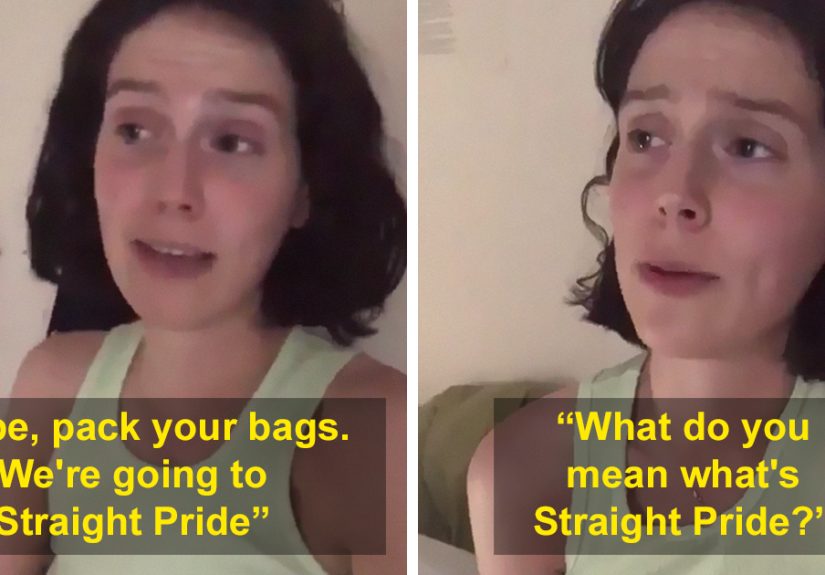
That’s exactly what happened when comedian and writer Eva Victor posted a parody video in 2019 imagining what “getting ready” for a so-called Straight Pride event would look like.
The premise is simpleshe’s “explaining” to her boyfriend why they must attendyet the jokes land because they expose something real: when you’re used to being treated as the default, it can be hard to recognize what pride celebrations are actually responding to.
The timing mattered, too. The parody hit social media during renewed attention around a proposed “Straight Pride Parade” in Bostonan idea that drew national headlines, pushback, and a lot of eye-rolling.
The result was a wave of satire, commentary, and criticism that spread far beyond one city, and Victor’s video became one of the most shared comedic takes on the moment.
Why This “Straight Pride Prep” Video Went Viral
1) It flips the script in a way people immediately get
Pride Month exists because LGBTQ+ people have historically been punished, marginalized, or excluded for being themselves. “Straight pride,” on the other hand, often shows up as a rhetorical comebackless a celebration of identity and more a protest against someone else’s visibility.
Victor’s satire works because it treats “straight pride” with the same emotional urgency people usually reserve for survival and recognition… then lets the absurdity speak for itself.
You don’t need a long lecture; the joke structure does the explaining.
2) The comedy is character-based, not mean-spirited
The video isn’t about bullying anyone; it’s about the frantic, overconfident logic of someone who has never had to fight for basic acceptanceyet suddenly wants a parade.
That tone is a big reason people shared it so widely: it’s playful and theatrical, but still points at the underlying power dynamic.
3) It arrived during a real news momentso it felt “useful”
Virality loves context. In 2019, Boston officials and local outlets were covering the permit process and the controversy, while national outlets framed the parade as part political theater, part culture-war bait.
When news is tense, people reach for humor that helps them process itand a quick parody is often more shareable than a 1,500-word think piece.
The Real-World Backdrop: The Boston “Straight Pride” Story
A proposal that became a headline magnet
The Boston “Straight Pride Parade” was associated with the group Super Happy Fun America, which pitched the event as a celebration of heterosexual identity.
City leaders publicly criticized the idea while also noting a key legal reality: governments generally can’t deny permits based solely on an organizer’s viewpoints if basic safety and logistics requirements are met.
The event was outnumbered by counterprotesters
When the parade took place on August 31, 2019, reporting described a relatively small group of marchers compared with a much larger crowd of counterprotesters.
Police made 36 arrests, a detail that later appeared in multiple local reports and follow-up coverage about arraignments and legal disputes.
Even brands got dragged into it
One of the strangest side plots involved public claims about corporate sponsorships. TripAdvisor, for example, sent a cease-and-desist letter after organizers suggested an affiliation.
Local coverage highlighted how the letter itself became a mini pop-culture moment, referencing LGBTQ-related song titles while making the legal point crystal clear.
What the Video “Preparations” Joke Is Really Saying
It spotlights “default settings” privilege
A core comedic engine in Victor’s parody is the idea of preparing intensely for something that, for straight people, is already socially affirmed almost everywherefamily expectations, mainstream media storylines, greeting cards, casual workplace talk, and the assumption that your relationship is “normal.”
The “prep” becomes funny because it’s unnecessary, which is the point: the need for Pride is tied to real-world exclusion, not a desire for extra attention.
It critiques the “what about me?” reflex
“Straight pride” rhetoric often borrows the language of minority rights while ignoring the reason that language exists.
The parody exposes that mismatch. It’s the comedic version of holding up two keys: one key opens a door (visibility for a historically stigmatized group), the other key opens… an already-open door.
It’s a reminder that satire can be civic participation
Not everyone marches, organizes, or writes op-eds. Some people contribute through artespecially humor.
In moments of social conflict, satire can lower the temperature while still calling out nonsense. In that sense, a viral parody can function like a cultural pressure valve: it lets people say, “I see what’s happening here,” without escalating into personal attacks.
Why People Keep Asking for “Straight Pride” in the First Place
Because Pride is misunderstood as a party instead of a response
If someone thinks Pride is simply “celebrating who you sleep with,” then “straight pride” sounds like symmetry.
But Pride is more accurately understood as a response to stigma and suppressionhistorically, LGBTQ+ people were pushed into secrecy, punished by institutions, and denied public recognition.
“Pride” flips shame into visibility. “Straight pride” usually isn’t flipping anything; it’s trying to re-center the already-centered.
Because culture-change can feel like loss to people who were never excluded
When society expands who gets seen and celebrated, some people interpret that as a subtraction: “If you get a month, what do I get?”
The more helpful frame is multiplication: expanded dignity doesn’t erase anyone else’s identity. It just removes the monopoly on being considered “normal.”
Because trolling works (until it doesn’t)
Several reports described the Boston parade as having elements of trolling and provocationdesigned to generate outrage, attention, and media oxygen.
But trolling has a flaw: it invites response. And sometimes the response isn’t angerit’s comedy that makes the original idea look even smaller than it already was.
How to Talk About “Straight Pride” Without Turning Thanksgiving Into a Cage Match
Try a history-based one-liner (calm, not snarky)
“Pride started because people were punished for being LGBTQ+. Straight people weren’t.”
That’s often enough. If the conversation is in good faith, history does the heavy lifting.
Use an analogy people already accept
- Breast cancer awareness doesn’t imply other cancers don’t matter.
- Veterans Day doesn’t imply non-veterans are less human.
- Accessibility ramps aren’t “special treatment”they’re equal access.
Set boundaries when it’s clearly bait
If someone’s goal is to provoke, not understand, you’re allowed to exit.
A simple “I’m not doing this debate today” is a complete sentence.
Where Eva Victor’s Moment Fits in Internet Culture
Victor’s “straight pride preparations” parody has had staying power because it’s tied to a recognizable pattern: when marginalized groups gain visibility, a counter-movement often appears insisting the majority needs the same kind of recognition.
Years later, entertainment profiles still referenced that viral clip as one of Victor’s early internet breakoutsproof that a single well-timed piece of comedy can become part of the cultural record.
Conclusion
People loved this “Straight Pride preparations” video because it’s funnybut also because it’s clarifying.
It captures, in a couple of minutes, why Pride exists, why “straight pride” is usually a misunderstanding (or a provocation), and how humor can do what endless arguments often can’t: reveal the logic gap without making anyone read a 40-tweet thread.
In a world where outrage travels fast, satire that’s smart, light on its feet, and grounded in reality can travel even fasterand sometimes that’s exactly what we need.
Experiences Related to the “Straight Pride Preparations” Conversation (Extended)
If you’ve ever spent time around Pride Month conversations onlineor just tried to survive group chats in Juneyou’ve probably seen a familiar cycle play out. Someone posts a Pride flag or a joyful parade photo. Most people react normally: hearts, supportive comments, maybe a “Happy Pride!” Then, almost like a scheduled notification, a reply shows up: “When is Straight Pride?” or “Where’s my parade?” It’s not always said with open hostility. Sometimes it’s framed as a sincere question. But the effect is the same: it shifts attention away from LGBTQ+ visibility and back toward the comfort of the majority.
One common experience for LGBTQ+ people is the emotional whiplash of celebration and defensiveness happening at the same time. Pride can feel like a rare public “exhale”a day where you don’t have to translate your life into something more palatable. But that exhale gets interrupted when someone demands a debate about whether Pride should exist at all. A lot of people describe learning, over time, to protect their joy by setting boundaries: muting threads, leaving comment sections, or saving their energy for relationships that feel safe.
Allies often have their own learning curve. Many straight supporters remember the first time they heard “Why isn’t there straight pride?” in real life. At first, they try to answer with factshistory, discrimination, legal inequalityonly to realize the question wasn’t a request for information. It was a test: “Will you take the bait?” That’s why humor like Eva Victor’s parody is so powerful for allies. It gives them a way to respond without turning every moment into a classroom lecture. A quick laugh can reset the conversation: “Oh… that’s what this sounds like.”
Another experience people share is how satire can create unexpected connection across viewpoints. Plenty of straight viewers who had never thought deeply about “default” privilege still found the parody hilarious because it matched something they recognized: the urge to be the main character in every story. The video doesn’t require you to know policy or history to understand the punchline. You just have to understand social awkwardnessand most of us have a PhD in that.
For creators, this topic also highlights what it feels like to make comedy in a polarized climate. A parody can be misread on purpose, clipped out of context, or used as fuel for arguments you never intended to start. Yet the flip side is that a well-crafted joke can also become a “shortcut to empathy.” People remember the feeling of a joke long after they forget the details of a news article. That’s why many comedians and writers say they see satire as part entertainment, part translation: taking a messy social argument and turning it into something the brain can grasp in one bite.
Finally, there’s the real-world experience of watching a “troll” idea leave the internet and enter the street. The Boston parade coverage showed how quickly provocation can become logisticspermits, routes, police planning, counterprotests, arrests, and headlines. For many people, that’s the moment the conversation stops being abstract. “Straight pride” stops sounding like a dumb comment under a post and starts looking like a deliberate political signal. And in that environment, a parody video isn’t just a jokeit’s a cultural receipt. It documents what the moment felt like, in a way that’s hard to deny later.